By Houssem El Ghoul
System heads to Shanghai to speak to the founders of Our Legacy and the creative community they enlisted to help create their first Chinese space.
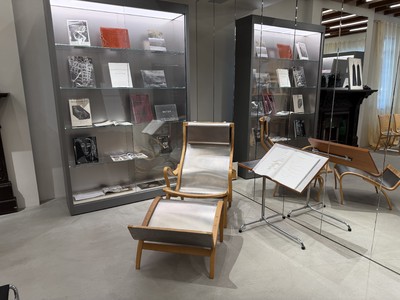
Coming from Sweden, Our Legacy has built its identity around a curiosity in culture that extends beyond clothing, drawing on music, art and design. Now in partnership with the pioneering Chinese multibrand retailer DONGLIANG, the label opens its first permanent store in China with a Shanghai space that brings together its own design language and the city’s creative scene.
Set within a Spanish-style villa, the space contains Swedish furniture, artworks by Kris Ruhs and photography by Mikael Olsson, while retaining elements of the original house. System’s Houssem El Ghoul spoke with Our Legacy’s co-founders Cristopher Nying and Jockum Hallin, as well as DONGLIANG owners Charles Wang, Daniel Du and other members of their creative community, to discuss the thinking behind the space, the brand’s arrival in China and what it means to build foundations in a new creative scene.
Cristopher Nying, co-founder and creative director of Our Legacy and Jockum Hallin, co-founder and creative director of OUR LEGACY WORK SHOP
System: This space was originally designed as a Spanish-style residence. Can you tell me how you approached turning this old house into a boutique?
Cristopher Nying: I have to give Charles and Daniel credit for finding the space. They found it and weren’t sure whether we were going to like it, but when I saw it, I thought, ‘Wow.’ It was a very positive surprise.
The house itself isn’t far from DONGLIANG’s taste, although the interior and the way we manage the space are different. Charles and Daniel have also spent a lot of time in Spain. We had similar experiences of the country, and we could recognise the Spanish references in the house from different perspectives.
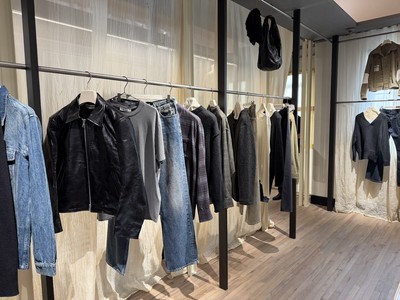
I wondered how we could show the space without destroying it. If you have too strong a personal vision of how you want to do things, you can sometimes destroy the originality of a place. I wanted it to feel a little like a work in progress, so that you could still see the original house.
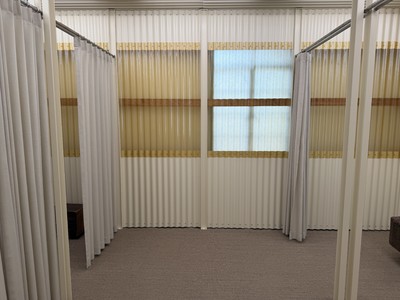
Nowadays, boutiques and houses often want everything to look perfect, with no stains on the curtains for example. Why was it important for you to bring these dirtier, more mixed elements into the boutique?
I love when things are a bit fragile. I’m interested in that border between something being finished and unfinished. I think I’m a bit obsessed with it. Sometimes it almost looks like a mistake, and I like that idea.
The garden and terrace also give people somewhere to hang out, have a drink and sit down. Is it important that people take their time rather than rush through the store?
Exactly. We don’t want to rush people. We want them to stay, discover things and take their time. We’re not going to pull them in, but we want them to feel comfortable hanging out here.
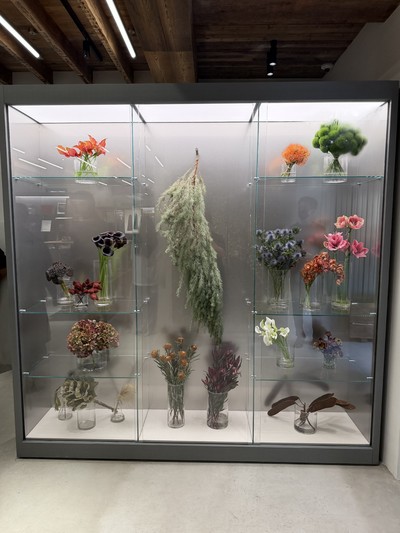
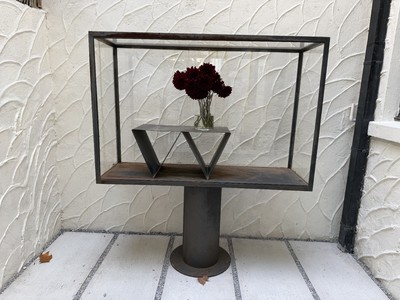
I wanted to create an artificial garden here because Shanghai already has such beautiful flowers. You can’t really compete with the flower shops. The idea was to combine Mikael Olsson’s photographs with Kris’s artificial flowers, almost like a flower shop. I think that’s a unique opportunity, and I’m happy to be able to include his art and his way of thinking in the project.
What do you think needs to remain Swedish about the brand in China?
Maybe we’re still a bit low-key. I hope so, although I could be wrong. Sweden has a minimalist way of thinking, so I guess that’s something we keep.
We’re also very impressed by China and Shanghai. We could have bought ceramics and other things here because what’s available is incredible. But we wanted to maintain our own point of view. I think our minimalism needs to stay.
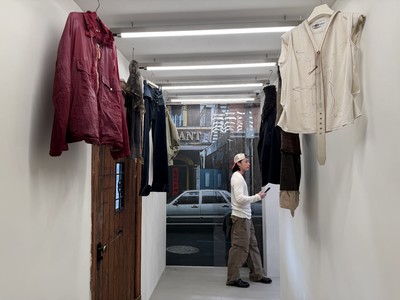
Jockum Hallin: At Our Legacy, we’ve always been curious about the cultural world beyond clothing. Clothes are at the heart of the brand and the business, but we’re also inspired by music, art, food and everything else happening in culture.
When we come to a new city, we want to understand its creative scene. That’s what’s exciting about coming to Shanghai: building a network of people and creatives we can exchange ideas with. We’ve already started that work, and it’s exciting to meet new people and get a fresh perspective.
You see how the brand goes beyond clothing, where there are magazines, music and a DJ. Why is it important to bring all these elements together in a store in Shanghai?
Jockum Hallin: I think it comes from personal experience. When you go into a store, you’re not always looking for something specific. You might want to look at clothes, pick up a book, see something on a wall or discover an object that catches your attention.
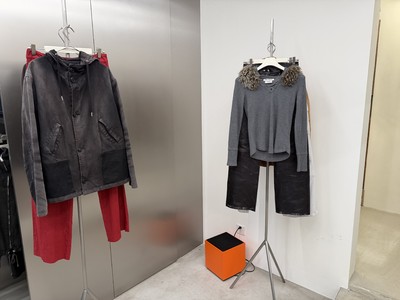
We think a purely transactional space is quite boring. We want an experiential space where you can come in without feeling forced to try things on, and simply look around and have a good experience.
Our Legacy has always existed in that space where something feels recognisable and familiar, but there’s also something new added to it. That’s what’s exciting about coming here, too: taking what’s recognisable about the brand and allowing it to meet the local context.
The WORK SHOP, where artisans upcycle, recycle and craft unique pieces in-store, is being introduced alongside the main line. Why did you choose to combine the two in this space?
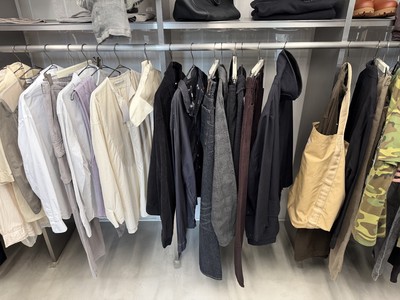
Jockum Hallin: We’re in a beautiful villa, and the space really allowed us to experiment with combining the two. The main line occupies the majority of the store, and we like to think of it as the mothership, while the WORK SHOP is a satellite that goes out, tests things, explores and brings information back to the mothership. That’s what we’re trying to show here.
Qiu Bohan, founder of BOH Project
What does this opening in Shanghai mean to you, now that you’re working with the brand?
Qiu Bohan: What I really love about Our Legacy is its spirit and attitude. The brand feels relaxed but serious at the same time. The people are genuine and authentic, and they stay true to the spirit of the founders and the people they work with.
They’re relaxed, but they’re very serious about what they do, what they design and what they put out. I also like their global outlook. They work with artists from Japan, China, the US and Europe, and they really look at what’s happening around the world.
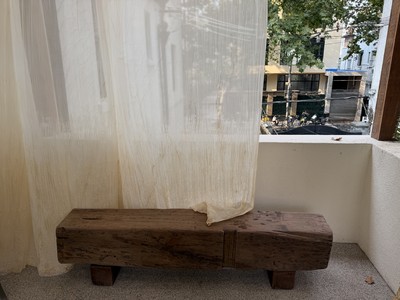
I think their Swedish-ness comes through naturally and beautifully here, particularly in the appreciation of music, subtlety and balance. Music culture has influenced the founders and designers, but they also look at surf and skate culture in California, Japanese street style, and the way people dress and live in China and across Asia.
All these influences become part of the brand, which is why it feels universal to customers around the world.
Especially in China today, as elsewhere, it’s rare to walk into such an immersive brand experience. Loving a brand is no longer just about loving a shirt or a pair of jeans, even though Our Legacy makes great jeans. It’s about feeling the energy, the taste, the music, the smell, the photography, the furniture details and even the way the team speaks to you.
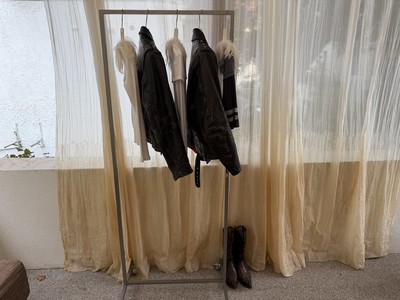
You’re buying into a world, and you want to learn from it or adapt parts of it to your own personality. I think that has become more important than ever. It’s no longer just about finding a rack of products.
Audrey Hu, editor-in-chief of Dazed China
Shanghai has such a rich creative scene. Why is storytelling important for a brand, rather than simply looking at things superficially?
Audrey Hu: I think it’s important to co-create with the local community and build a collaborative relationship. It means involving everyone and respecting people’s roots and cultures, while also discovering new identities and concepts. For a foreign brand coming to China, I think it’s about blending into the community and understanding how that community talks back to you.
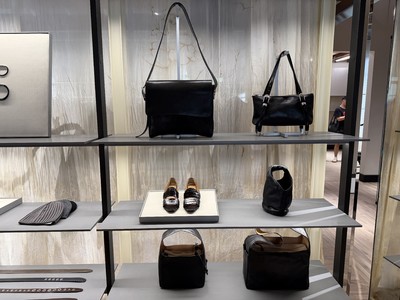
I think that conversation is very important. It’s a great combination: the store is set in an old Shanghai lane house, and while the original structures are preserved, Kris Ruhs brings a very contemporary language to the interior. I think that contrast is amazing.
Chinese audiences are very informed and recognise design languages. They connect with identities that resonate with them culturally. These days, it’s not just about brands or names; it’s about details and whether something resonates.
It’s also about creating a conversation with the local audience. What do you think a brand like Our Legacy can bring to these different communities and styles?
When I think about Our Legacy, music and art immediately come to mind. They can bring communities together here because there’s so much talent in the music industry. Many people have different jobs but are also involved in art or music. Everyone has different identities, and I think Our Legacy can do a lot in that area. It’s not just fashion anymore. It’s about blending all these different things together and providing a stage for everyone.
Charles Wang & Daniel Du, owners of DONGLIANG
DONGLIANG was founded around supporting and discovering independent Chinese designers. How has the idea of independent fashion changed in China since you started?
Charles Wang: When we founded DONGLIANG in 2009, independent Chinese design was still a very niche concept. Many people didn’t know what it meant or who the designers were. Most shoppers were focused on big luxury names and commercial brands in shopping malls and department stores.
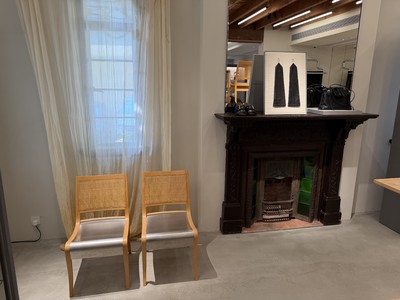
Over the past few years, taste in cities like Shanghai and Beijing has become much more refined. Today, the new generation of customers is more interested in comfort and good quality. They’re a bit tired of loud branding and fast trends. They’re looking for something more authentic, but still with a strong attitude.
I think Our Legacy is in a good position in that respect, which is why its community in China has been growing.
What made Our Legacy feel like the right brand to build a deeper physical presence with in Shanghai?
Charles Wang: People discover Our Legacy through online shopping and multibrand stores, but we felt it was the right time to create and curate a dedicated space together, allowing the brand to present itself more fully in the local market, especially in a city like Shanghai.
The more I communicated with the team, the more I realised how much they had to say to their customers. With a permanent space in Shanghai, they can present the world of Our Legacy more fully. That’s why we started this project.
What does a physical store need to offer a customer today that discovering a brand online cannot?
Daniel Du: Online shopping is great for quick browsing and efficiency, but it flattens everything. You can’t feel the weight of a coat or see how a fabric moves on a screen. For me, a physical store isn’t just a place to shop; it provides an atmosphere.
Here, in the Our Legacy Shanghai flagship store, we have design pieces by Bruno Mathsson, artworks by Kris Ruhs and photography by Mikael Olsson. A physical store gives people something to feel and experience, and a space for dialogue. That tactile experience and sense of calm can never be fully replicated by a digital screen.
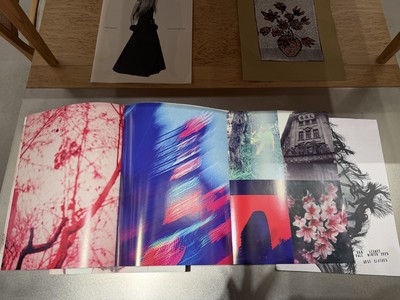
When Our Legacy finds a home here, at 689 Yongjia Road, it completely changes how people experience the brand. It’s no longer just a few highlights from a single season. It becomes an ongoing, living moment where people can hang out, drop in, stay as long as they like and discover how the brand evolves over time.
What do you think Shanghai can offer Our Legacy that another city in China might not?
Daniel Du: I think Shanghai has a very mature and open-minded fashion community. People here don’t need giant logos or the latest trends to feel confident in what they wear. They care more about unique styles, special fabrics and subtle details. That makes Shanghai a perfect fit for Our Legacy as its first city in China.
The urban character of Shanghai is also very interesting. You have this mix of historic lane houses and old villas alongside modern creative spaces. It provides an authentic backdrop for Our Legacy. Shanghai is a city that likes to mix old and new, which aligns with the brand’s approach of taking classic wardrobe pieces and turning them on their head.
Kris Ruhs, artist
The space combines the Spanish house with industrial elements and furniture. How did that influence how your work is in the store?
Kris Ruhs: What interested me was that they didn’t want to create just a shop. They wanted to bring something more into it, beyond the clothes. In the beginning, we talked more about design and bringing furniture from Sweden than about the clothes themselves.
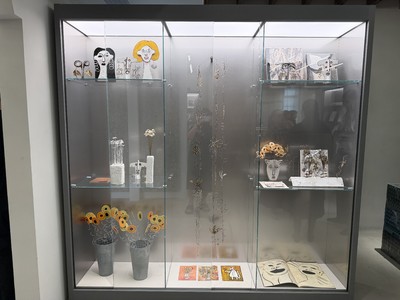
When they saw my studio, they felt that some of my objects and organic forms could work within their concept. That was the attraction. It was very easy. They showed me the project and the space and explained what they wanted to do. They left the door open for me to display my work in a way that made sense.
You have such a strong identity in your work, and you know what works for you. How do you approach working within someone else’s vision?
I also like being challenged by something new. It’s always nice to do something different or rework something. I don’t want to do the same thing ever again.
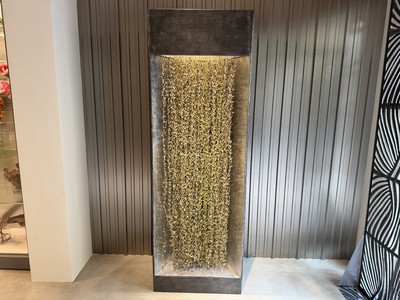
At the same time, there were things here that they appreciated and wanted to keep, so I kept them in the project. I didn’t go in the opposite direction just to make something totally abstract or completely different. I tried to find a balance between what they wanted and what I could bring to it.
Carla Sozzani, founder of 10 Corso Como and Fondazione Sozzani
What is your relationship with Our Legacy, and what first connected you to the brand?
Carla Sozzani: Since the founding of Our Legacy, Cristopher Nying and I established an immediate dialogue, based on a shared vision of fashion and creativity. The collections have always had a place at 10 Corso Como, as we have the same belief in individuality and the freedom to express one’s own identity.
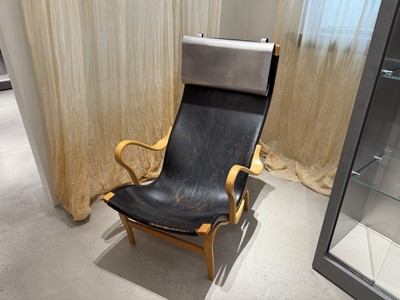
I have always been drawn to designers who follow their own path rather than trends, who remain authentic to their vision and develop a personal language. Our Legacy represents this spirit of independence, which has always been at the heart of my own philosophy. Our relationship has grown naturally over the years through this mutual understanding and respect.
What interested you about being involved in this Shanghai project and the collaboration with Our Legacy?
During the seven years that 10 Corso Como was in Shanghai, on Nanjing Road, I developed a very special relationship with the city. I have always loved Shanghai, its vibrant energy, its constant evolution and its extraordinary openness to creativity. 10 Corso Como Shanghai was also Our Legacy’s first retailer in China, introducing the brand to the Chinese market. This makes our relationship even more meaningful, as we have shared a journey that began many years ago.
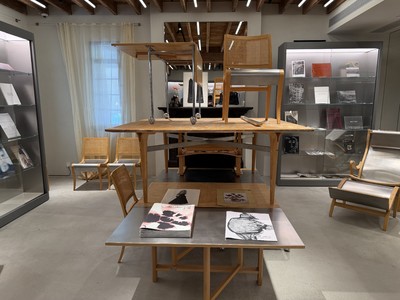
To be indirectly involved in this new Our Legacy project through Kris Ruhs’ work feels, in a way, like coming home. I see it as a beautiful continuation of a dialogue that began many years ago, bringing together creativity and shared values.
What do you feel Our Legacy brings to Shanghai that feels relevant to the city and its creative culture today?
I believe Cristopher is bringing something much more meaningful than a fashion store to Shanghai. By creating a home for his collections within an environment where fashion, design and art coexist, through the furniture of Bruno Mathsson and the works of Kris Ruhs, he is creating an emotional connection with the brand.
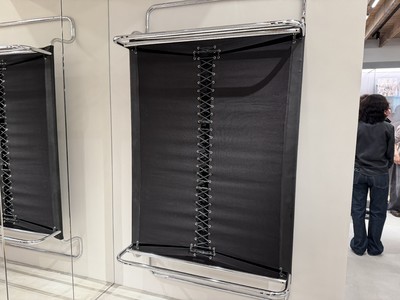
I have always believed that a space should be more than a place to discover or buy objects. It should inspire curiosity, encourage encounters and create a sense of belonging.
Mikael Olsson, photo artist
Your photographs of Bruno Mathsson’s houses in Kosta, Sweden, explore the relationship between architecture and the natural landscape. As with all of your artistic projects, this has been developed over a long period of time, starting in the early 2000s. What continues to interest you about this dialogue, and how did you approach revisiting these images for the Shanghai project?
Mikael Olsson: Time is central to my practice in many ways. When working with the Bruno Mathsson project, I stayed in his abandoned summer house for longer periods to get deeper knowledge of the architecture and the natural landscape surrounding it; how the climate, weather, and rhythms of day and night affected and changed the spatial structure.
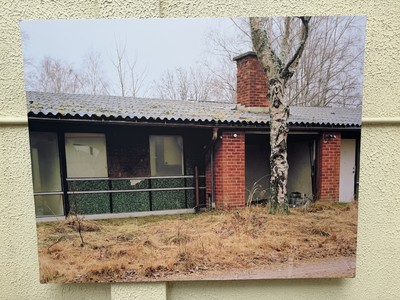
Mikael Olsson, Kosta 1, 2002.
I like to be engaged in long-term projects and collaborations, even when I work with commercial clients, like Our Legacy. I have followed the brand for many years, through different phases and scales, getting a closer understanding of their design ethos and how to transform it into visual images.
In Shanghai, the KOSTA photographs have been dramatically enlarged and printed onto textiles. How does this change the essence and experience of the images, and how does it emphasise the idea of ‘artificial nature’ within the space?
Enlarging and printing the photographs onto textiles means creating another autonomous space with other sensorial qualities than a traditional print on paper in a museum or gallery setting.
Photography is, to somewhat simplify it, the technique of transferring light onto a surface, either chemically or digitally. In this case the images have been transferred, once again, onto another surface, another material, in another context, far from its ‘home’.
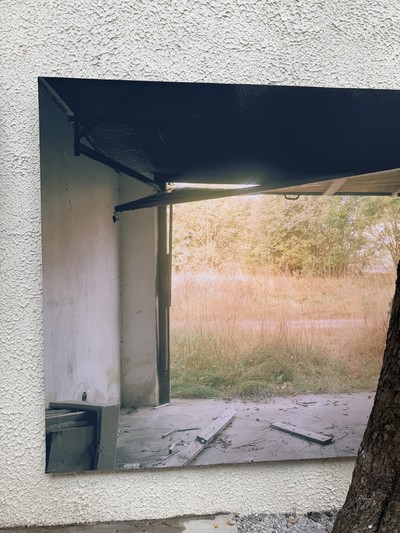
Mikkael Olsson, Kosta 3, 2002.
This raises questions about the constant evolution of photography and image, space, landscape, time and history. What does it mean when taking a modern Swedish landscape to a contemporary Chinese metropolis? How can it be anything other than an ‘artificial nature’ in this spatial context?
Architecture is often experienced through images. In Shanghai, the KOSTA photographs have been ‘spatialised’, creating a full circle – space, image, space. This process is in line with the conceptual idea of displacement, which has guided me since I started to work as an artist: avoiding nostalgia and sentimental attitudes through new contexts such as fashion and film.