Graduates of the prestigious Master’s course share what they’ve learned about the industry so far, and how they hope to change it.
In 1986, six graduates of the fashion program at the Royal Academy of Fine Arts in Antwerp piled into a van and drove to London, where they presented their collections at that year’s British Designer Show. The designers, Dirk Bikkembergs, Ann Demeulemeester, Walter Van Beirendonck, Dries Van Noten, Dirk Van Saene and Marina Yee, otherwise known as ‘the Antwerp Six’, would change the course of fashion history with their radical approach to design. One that challenged industry norms and christened Antwerp as a new fashion capital.
Forty years later, a new cohort of students is graduating from the school, preparing to find their place in the industry – perhaps becoming one of the next big names within it. On the occasion of their graduation presentation, System visited Antwerp to speak to them about what it means to be a young person in fashion today, and what they hope to achieve in fashion’s future.
By Houssem El Ghoul
Graduates of the prestigious Master’s course share what they’ve learned about the industry so far, and how they hope to change it.
In 1986, six graduates of the fashion program at the Royal Academy of Fine Arts in Antwerp piled into a van and drove to London, where they presented their collections at that year’s British Designer Show. The designers, Dirk Bikkembergs, Ann Demeulemeester, Walter Van Beirendonck, Dries Van Noten, Dirk Van Saene and Marina Yee, otherwise known as ‘the Antwerp Six’, would change the course of fashion history with their radical approach to design. One that challenged industry norms and christened Antwerp as a new fashion capital.
Forty years later, a new cohort of students is graduating from the school, preparing to find their place in the industry – perhaps becoming one of the next big names within it. On the occasion of their graduation presentation, System visited Antwerp to speak to them about what it means to be a young person in fashion today, and what they hope to achieve in fashion’s future.
Feng Zhangchong (China)
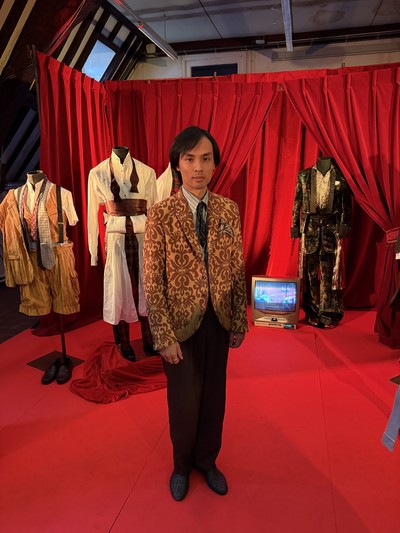
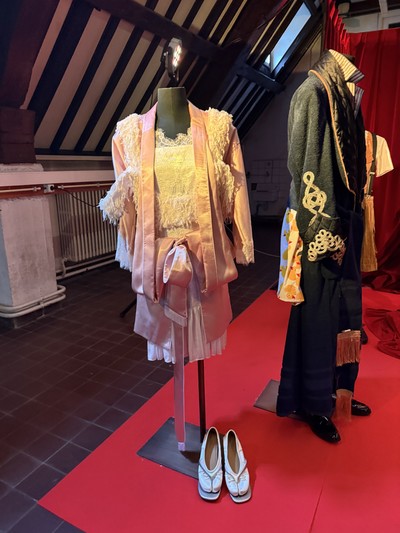
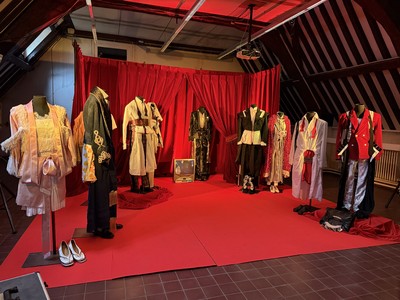
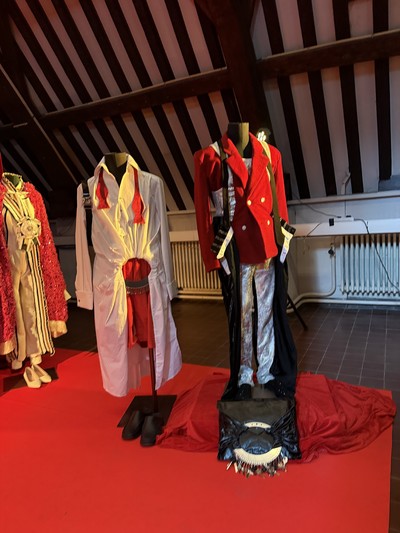
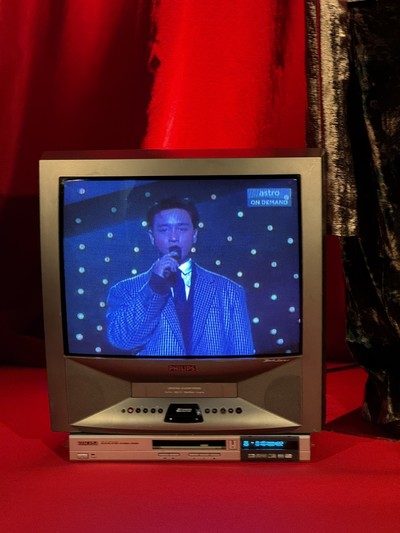
Can you tell us about your collection?
The starting point of my collection was a visit to a ballroom in my hometown with a high school classmate, which was about to be demolished. Seeing all the people dancing there, I suddenly felt that this world was going to disappear: my father’s generation, the way they entertained, the environment I grew up in.
I wanted to depict all of that, the Cantonese pop songs, the celebrities on TV, the singers and dancers, the way they moved. I grew up in a Cantonese-speaking area, and all of those things combined make up my collection. It’s a memory collection. I add a lot of volume to the garments to capture that flow and movement. There’s also a lot of funny slang in our dialect. The humour in our language is, I think, a gift we’re born with, and I wanted to bring that humour into the collection too.
What is the best thing about being a student at the Royal Academy?
The best thing is that it allows you to meet different kinds of people and opens your mind to how different people think. If you’re working alone, you only have one perspective. Here, you can meet with people, discuss with them, talk about what they’re interested in and introduce what you’re interested in. Then you can find new things and new directions within that dialogue.
Also, the fashion industry is always running on limited time, which pushes you a lot. Sometimes in that pressure you will figure things out in a new way. Working within a limited time frame forces you to think much, much better than when you are thinking in your leisure time.
You also always critique yourself, because sometimes you wonder if you’re good enough, given how much time you’ve put into it. The teachers always push me out of my comfort zone. They always say, “You have to think about it in a different direction. Don’t just stop here.”
What do you think your generation can express through fashion that older generations could not?
I think every designer has their own personality no matter which generation they are from. Different people see the world from different angles, singularity cuts across all generations. You just have to stay yourself, no matter what generation you’re born in. Even twins cannot copy each other’s experiences.
Where do you see yourself in five years?
After graduation, I’ll go back to China and run my brand. But I’m still considering the bigger market, the whole world. If my brand runs smoothly and steadily, I would of course want to come back to Europe with my products, my garments, my design, my creations.
Conor Turley (Belgium/Ireland)
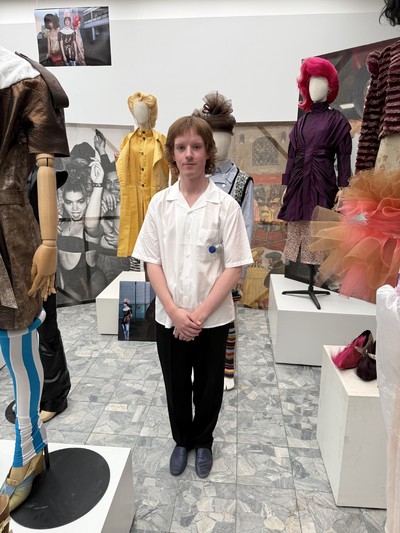
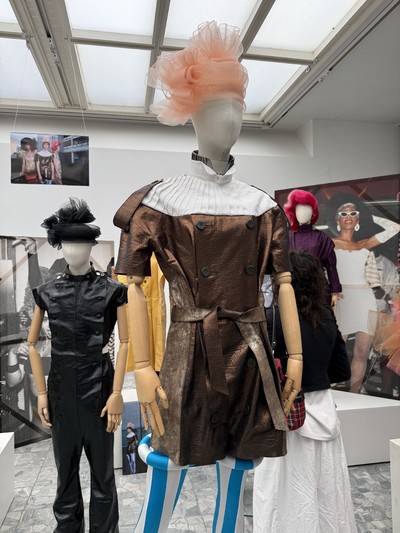
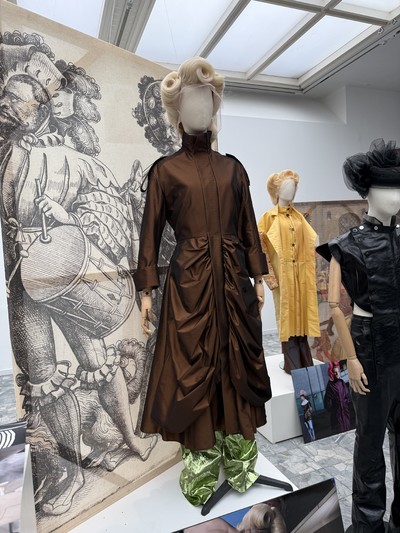
Can you tell us about your collection?
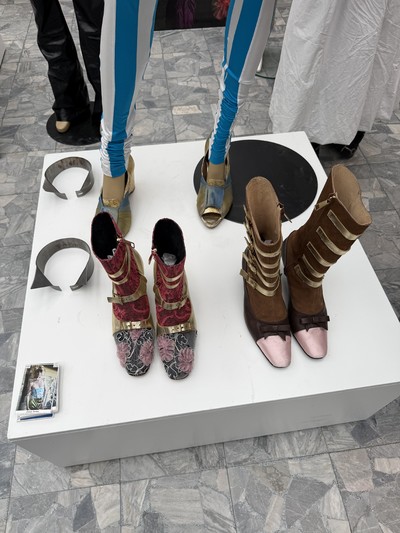
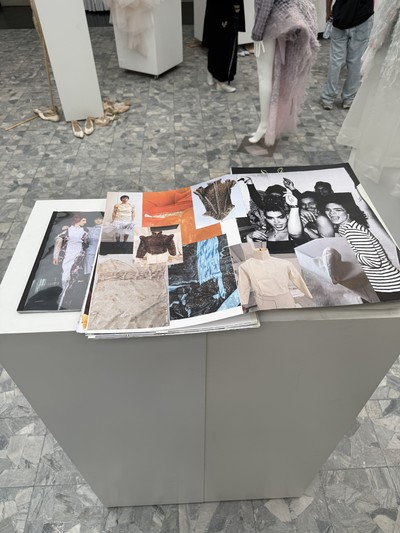
The starting point of my collection was a duality between the clothing of the ballroom scene in New York in the 1980s and 1990s, and historical paintings of men from periods when menswear was what we would usually think of as feminine now, such as the 16th, 17th and 18th centuries. My work is a combination of those two eras. I’m finding a new masculinity, looking for images of certain masculinities that I find interesting and playing on that.
What is the best thing about being a student at the Royal Academy?
At the Royal Academy, I feel students are very free to express themselves in any way: drawing, painting, sculpture, anything. There are no boundaries here at school.
What do you think your generation can express through fashion that older generations could not?
I think for a younger generation, there are so many possibilities now. You have social media, you have a big network, and I think through that connection you can find interesting ways to work with other people. So I think for this young generation, it’s limitless.
Where do you see yourself in five years?
In five years I would love to be working in Paris, Milan, or Antwerp. I would be very satisfied working for a brand, being involved in a team, creating a collection.
Do you have a brand in particular in mind?
I mean, I’ve always loved Margiela. That would be the dream, but I’m open to anything.
Anna Laknar (Austria)
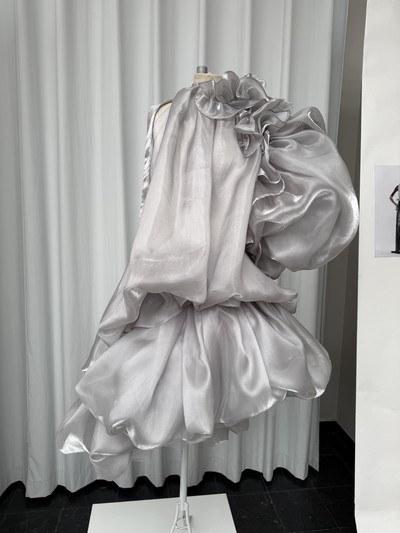
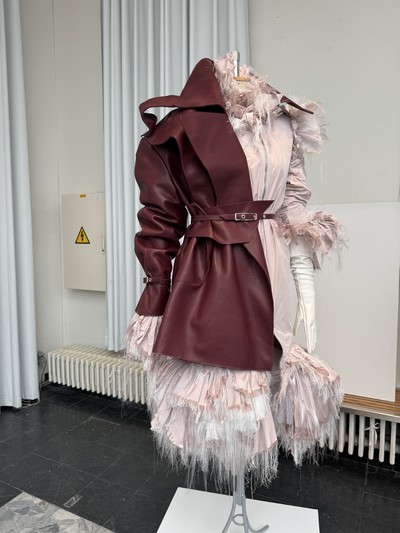
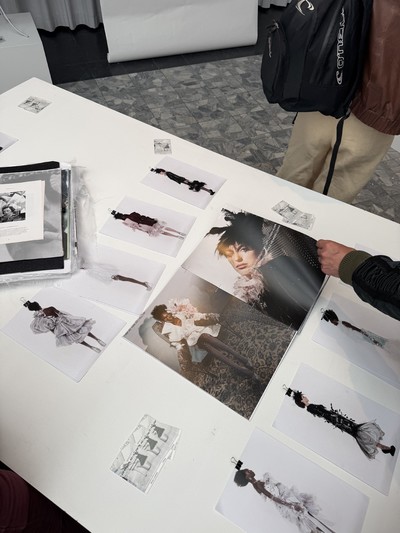
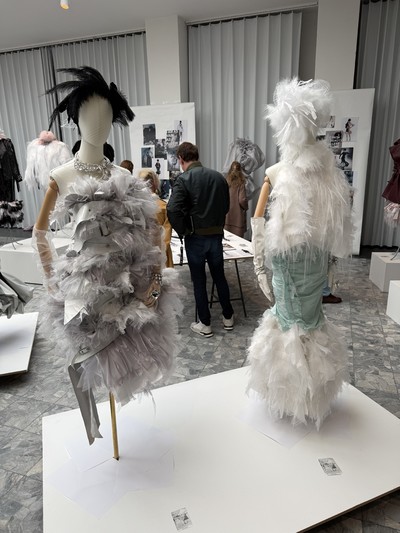
Can you tell us about your collection?
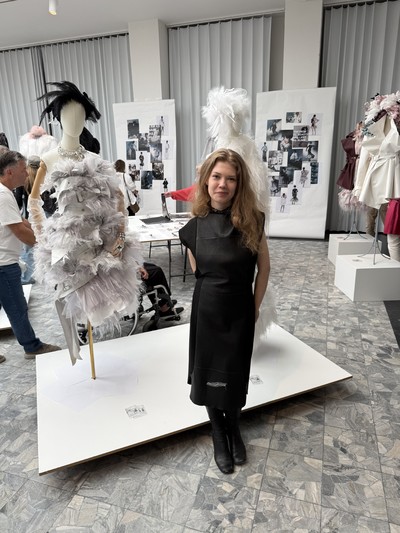
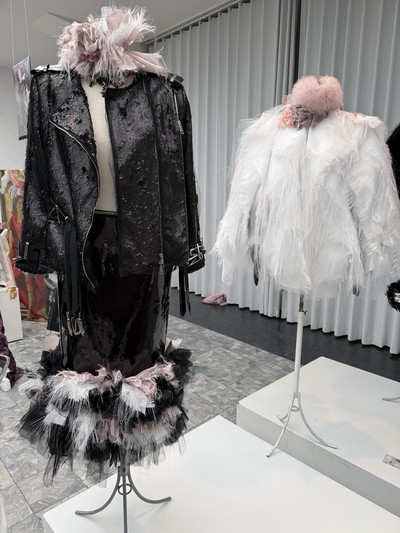
To put it shortly, my collection is about a diva going through a mental breakdown. It is inspired by a photography book of Juergen Teller images during his time at W Magazine when he photographed Claudia Schiffer, Kate Moss, and other famous, beautiful models from the 1990s, but made them look super dishevelled and messy. I love that they still look beautiful in all of this mess. It was such a different way of portraying women.
What is the best thing about being a student at the Royal Academy?
I think the best thing is freedom and honesty. I love when people are just honest to me and just tell me what I can change, what I can improve, because I don’t like to sugarcoat things.
How do you think the designers of your generation differ from designers in the past?
The biggest difference is that we grew up with the internet, and I think that can be a disadvantage and an advantage. It’s definitely a new perspective that we bring to the table.
Do images from social media platforms like Pinterest or Instagram influence you?
Not really. Personally, I really love to go look at museums like The Met or The V&A. They have these huge [digital] archives, and it’s so practical to look through.
Where do you see yourself in five years?
I have a big love of embroidery and textiles and I would love to dive more deeply into that. I would also love to work for any brand where I feel comfortable.
Do you have a particular brand in mind?
Yes, but it’s a bit my own secret; it’s manifesting in a way. I’m quietly manifesting and wishing that everything will come.
Yvonne Schichtel (USA)
Can you tell us about your collection?
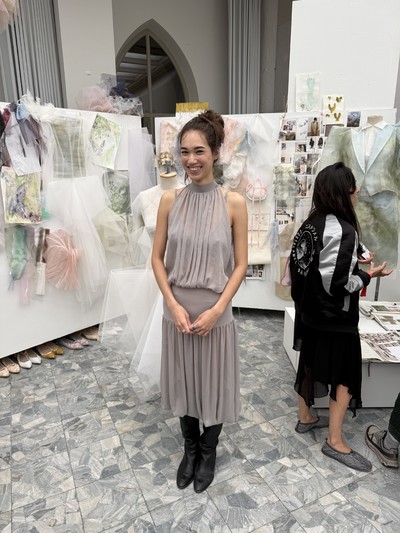
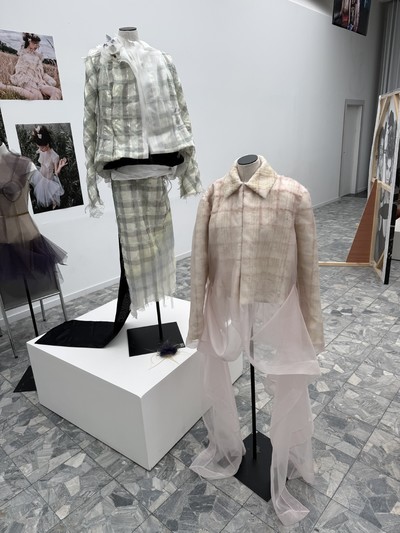
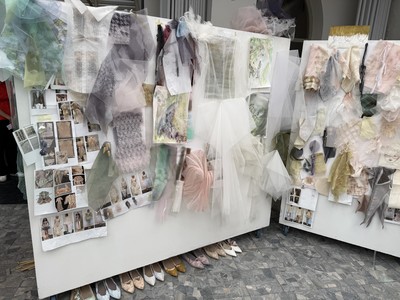
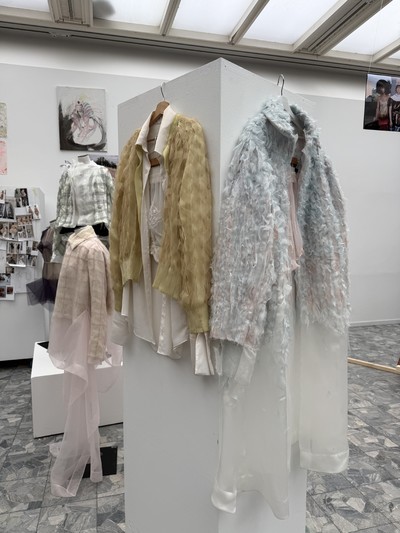
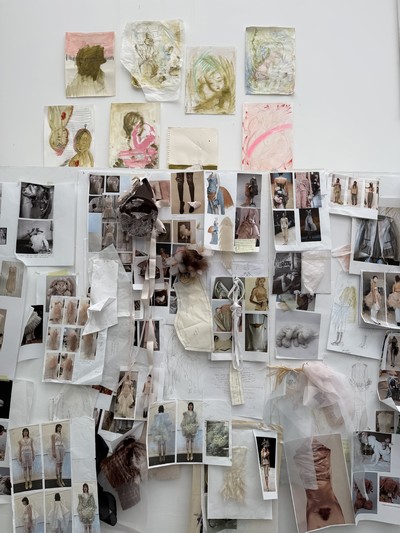
The starting point of my collection was when I learned about the work of Marija Gimbutas. She wrote that we once had a matrilineal and peaceful society before we became the war-like patriarchal society that we still exist in today. I thought if systems are collapsing, maybe we will restart in this way.
So I was looking a lot at her work and all of the goddess shapes and triangles that she discovered, and seeing femininity, freedom, peace and softness in a new kind of way. She also studied a lot how we were very connected to nature in this cycle of change and rebirth. So everything in the collection has dégradés, it changes from one print to another; it is a transformation.
What is the best thing about being a student at the Royal Academy?
There are many amazing things, but I think the best is the focus that you’re able to get here. You work so intensely that you really reach your best potential, and you just tap into another creative world, which is amazing.
Do you think AI will have an effect on fashion design in the future?
For sure. I think it’s crazy what has happened even in the past year with AI in how we work, and I would be lying if I didn’t say I’m kind of scared of it. But I think you have to get on top of it before it gets on top of you, and I hope we can find a way to always be creating for ourselves before we start asking a robot.
Where do you see yourself in five years?
In five years, I would love to be working at a fashion house in Paris.
Do you have one in mind?
I love Matthieu Blazy’s Chanel. I think the softness and the femininity, it’s everything that I was also trying to do this year, so it was very beautiful to see.
Carla Lázaro Bonet (Spain)
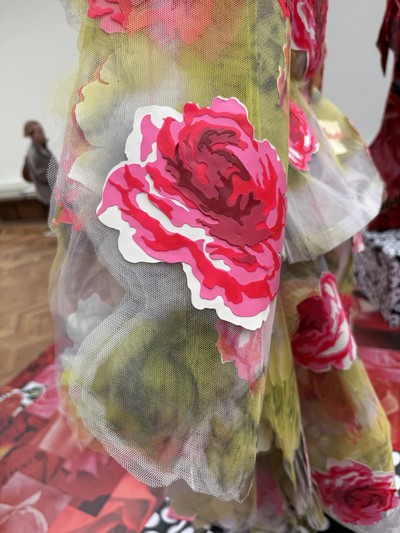
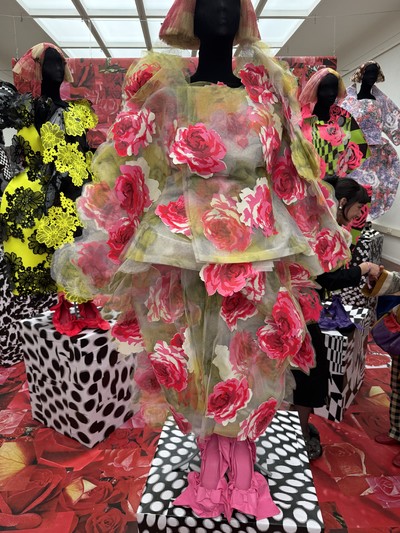
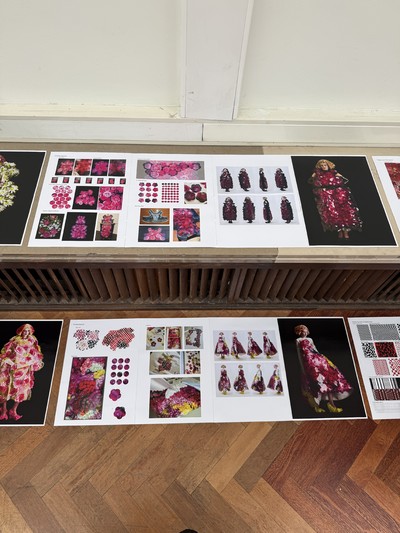
Can you tell us about your collection?
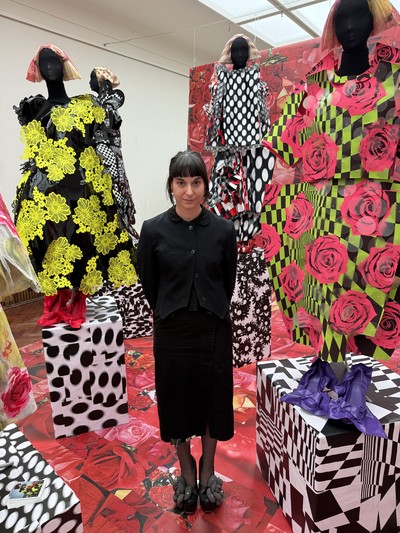
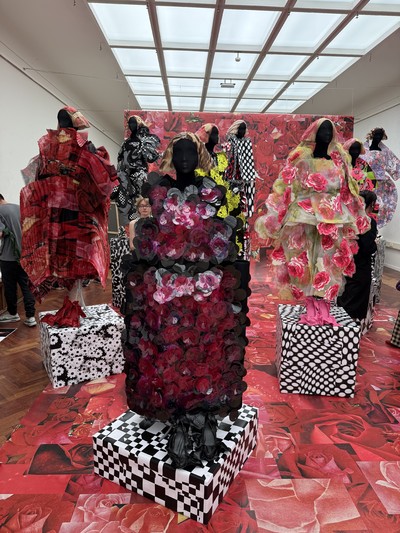
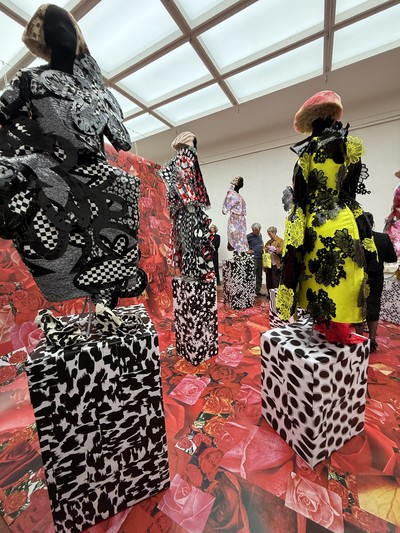
My collection is inspired by my grandmother and this point that some older women reach when they start not giving a fuck about social norms. I think that’s what she did, and I would love to experience that soon, if possible!
I expressed this idea through flowers because I think it’s a symbol for women, but to me it’s not about the beauty of them – it’s about resilience and growing through cracks and still remaining flawless. I wanted to work with a lot of experimental materials like latex, developed appliqués, and also my own printed sequins.
What is the best thing about being a student at the Royal Academy?
The best thing about the Royal Academy is the freedom and creativity that teachers give you to express yourself as you want. They really push you to find yourself, who you are as an artist and as a designer, and I’m really grateful for that.
You’re from Barcelona, which has a growing fashion scene. Why did you choose to go to Antwerp?
I studied in Barcelona before. After that, it felt that I needed more, and it felt that I wanted to still know who I am as a designer and creative. So I just thought this was the perfect place to find myself.
What is your advice for young designers today?
Work with what you have. There are some limitations in budget and materials, and for me this year it was about finding the way of making what I want to make. Maybe it’s not the easiest way. It would perhaps have been easier working with a company, but I wasn’t able to.
For example, with the sequins, I could have found a place to maybe laser cut them for me, but when I tried that, they got burn marks and it wasn’t working. So in the end I just had to hand cut everything myself and with help from my family. I think there’s also beauty in that, in just trying to find a way of making it work, even though it’s not the easiest or the most perfect one.
Where do you see yourself in five years?
In five years I would like to be working for a brand, working hard with a team and sharing a vision, sharing a passion and working together to achieve something.
Studying is wonderful, but it can also be very lonely sometimes because you carry the weight of the whole collection. So I’m very excited to start in a brand and just have a team and share a vision and a goal.
Do you have a brand in mind, or people you want to work with?
I don’t want to name a brand specifically, but I would love to be related to any kind of artisanal or more experimental line or brand because it’s what I enjoy the most.
Vincent Körber (Germany)
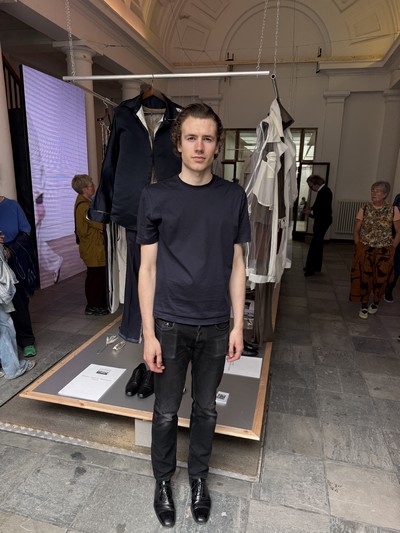
Can you tell us about your collection?
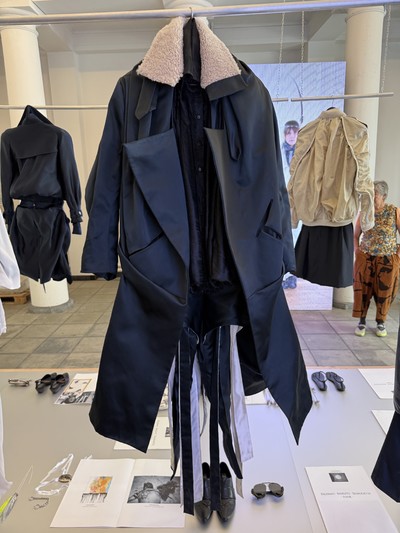
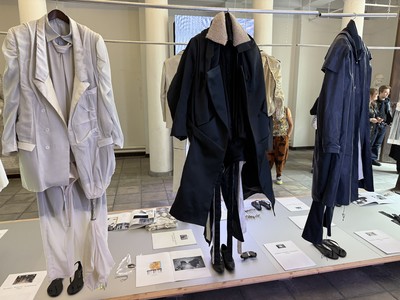
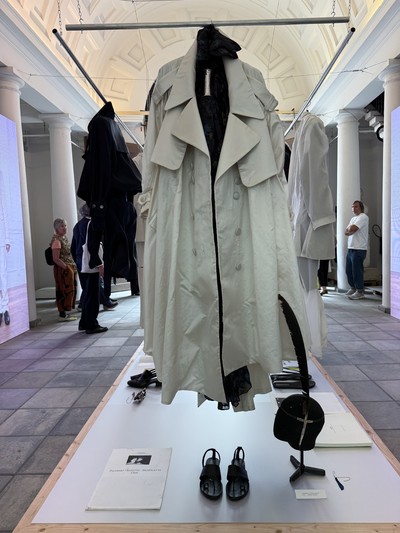
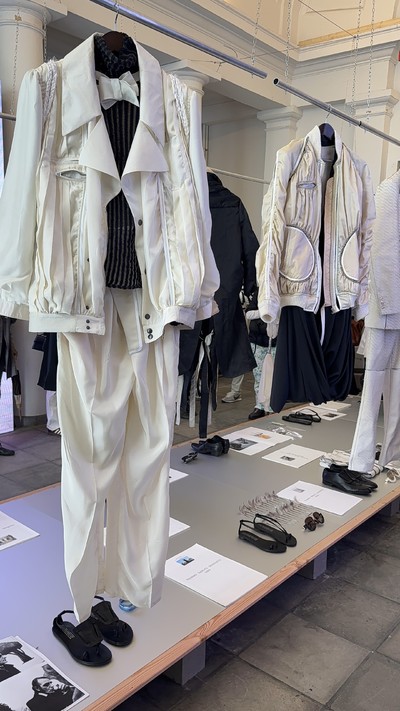
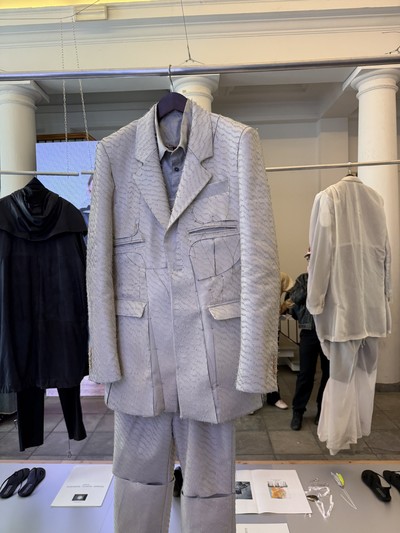
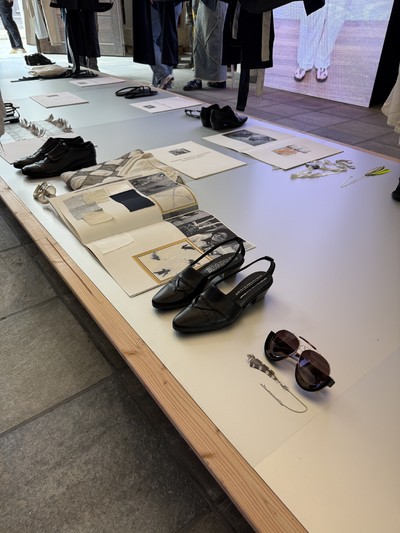
I started my collection with a research trip to Palermo. While I was there, it became very apparent to me that the rich history of the area, starting with its Ancient Roman influences to the Arabic influences and Venetian influences, to a very important 19th and 20th century, is still very apparent in the modern-day infrastructure, which is very rare for most European historical cities, where one historical domain tends to take over.
By this pattern of how the future progresses in Palermo, I was able to see how time actually changes in Palermo from its history into its current state, because it gave me a very clear lineage from the Roman sculptures that were there in 200 BC, to the first towers that were shaped by the Arabic influences, to the palaces that were made in the Venetian era.
But the most interesting part is that in the 19th and 20th centuries, the mafia took away all of the money that was being put into the infrastructure. So you have all of these palaces and this rich, decadent history, but actually when you look at pictures from the 1920s, and you’re walking through the same exact room, the only difference is that back then it was a little bit more unkempt than it is now. So the actual progression of how the future happens in Palermo is a little bit in reverse, where you normally think of a more modernistic future. In Palermo, the future has more of a relevance to decay.
Out of this pattern, my thesis was created: How can I predict the next near and far future step based on this pattern of history? And how does this affect the garments? How can real clothing be an element of life within this new world, which will be there maybe in five or ten years?
What is the best thing about being a student at the Royal Academy?
For me, it is two things. First of all, the people that you meet here. You get into an environment where you can have much more interesting conversations that maybe previously were only found on forums online.
The second thing is just the way that the lessons are structured. There’s a certain pressure for you to learn on your own, which I think is really helpful. That pressure allows you to really deal with circumstances of collection progression in a very refined and thoughtful way, where your focus is very clear. It gives you a certain confidence in your process, which not just helps you for your collection, but I think also in general.
What can young designers express through fashion that older designers cannot?
I think the game is going to be interesting now. There is a lot of room for disruption. The industry has become much more global than back in the day.
Young designers with a very small team can make extremely high-quality work and produce not just physical clothing, but also an extremely high-quality online presence, which is something that could not have been done previously.
Where do you see yourself in five years?
In five years, it’s very hard to say because everything is changing so fast. I hope there’s a research avenue I can follow, where I’m looking at aesthetics and automation of online aesthetics. Product is so often seen and experienced only through an online format. If you think of the collections you’ve seen, how often have you actually seen them in real life? I think there is a certain avenue in thinking about world-building that brands so desire to do, but yet so many fail at actually doing. So, I hope that in five years I will be doing some kind of broader research into how you can become more adaptive as a brand in this general holistic world-building.
Bartosz Borowski (Poland)
Can you tell us about your collection?
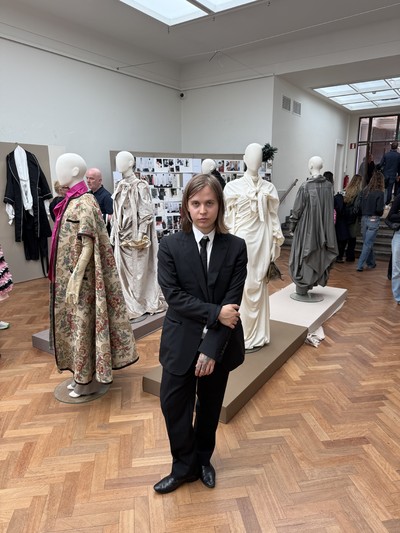
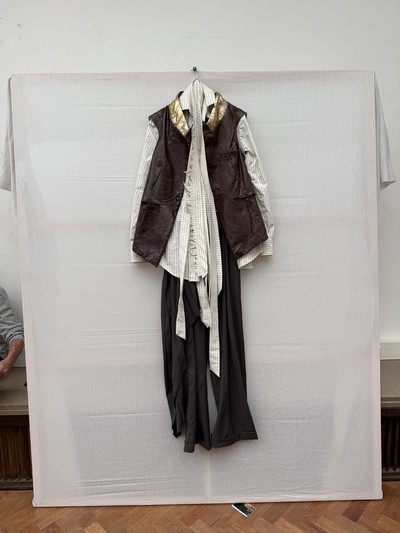
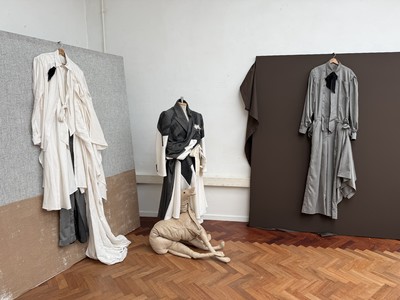
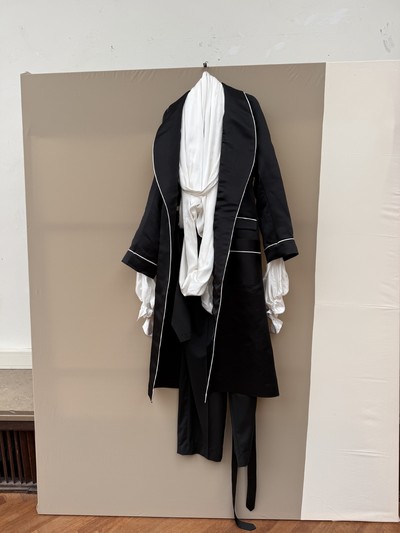
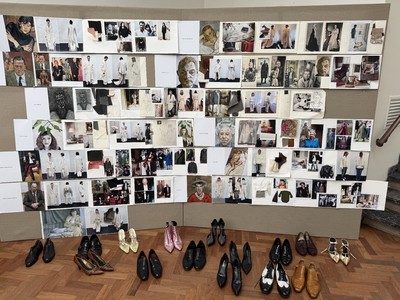
My collection is inspired by Lucian Freud and his sitters. I looked at all the characters in his paintings, then narrowed the selection down to twelve characters. Each of those characters turned out to be real people–like Bella Freud,Queen Elizabeth, Francis Bacon– so I did research on what they were wearing. I analysed what they are wearing, how they carry themselves, and I combined all of that with how Lucian’s life, his studio, his house looked. I merged all of this into twelve looks.
What is the best thing about being a student at the Royal Academy?
The attitude towards work. It can be really demanding to work in fashion, but also you can develop so much in such a short period of time. It really pays off the amount of effort you’re putting out.
How do you think the designers of your generation differ from designers in the past?
I think there is a lot of space for new tools that are being given to us, so there is a lot of space for development in that way. Also, the amount of research we can do right now and the access that we can have to it can really allow you to produce countless ideas.
Where do you see yourself in five years?
Not quite in five years, because that’s still quite a short time, but at some point I would really like to have my own brand. First I would like to work for a brand, learn, gather more experience, and see how a real house works, and let’s see where it gets me. I’m really obsessed with Anthony Vaccarello at Saint Laurent. That’s my personal favourite if I had to say, for what I wear. But I also really like Matthieu Blazy at Chanel.
Yichun Liu (China)
Can you tell us about your collection?
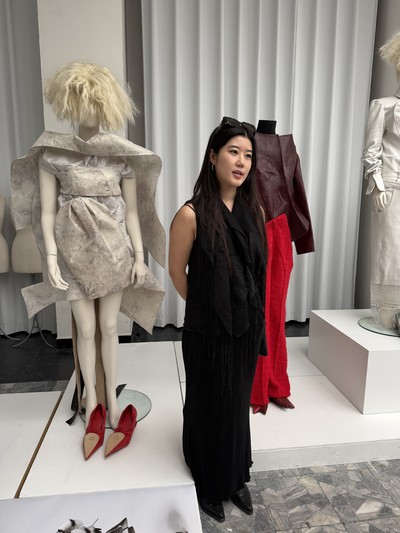
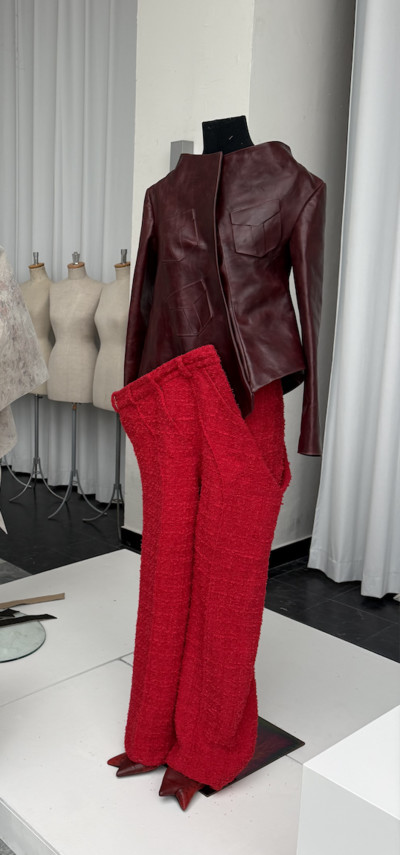
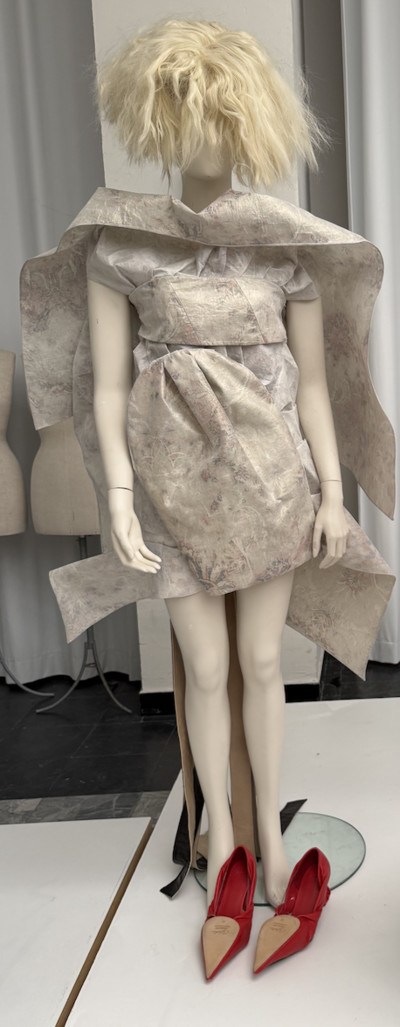
My collection is basically about how female characters depart from their normal life. I was born in a very traditional Chinese family, and I always wanted to escape from the family expectation and also the social expectations for a girl in China. So it’s always about escaping and the shifting structure. You can see from my collection that it’s always the structure going outside. I wanted to see how, if I use shaping, it can be beautiful. I want to create beauty using this kind of structure.
What is the best thing about being a student at the Royal Academy?
For me it’s the colleagues here. Every student here is so talented. You can’t get this kind of atmosphere in another school because they work so hard.
There is also something like a sorority among students. We don’t necessarily have a formal sisterhood, but we help each other because we know everyone is trying to survive this together.
Why did you choose this school?
Because I really loved Margiela and Ann Demulemeester from an early age, and I have a lot of archival pieces from them. I want to create garments, but in an art way. I think there is no other school better than this one for that.
What do you think your generation of designers can express through fashion that older generations could not?
I think it’s the attitude. The older generation had their own attitude also, but they were more focused on creating pure beauty. For our generation, we also want to express our attitude and our personalities. Designers now have more of themselves in their collections. It’s almost like they become part of the brand.
Where do you see yourself in five years?
Over the next five years, I really want to dig into accessories: shoes and bags. I think that is really interesting for me.
Would you rather create your own brand directly, or pass through a big house first?
I want to create my own brand. My girlfriend and I also want to start a brand in China, but we’ll see.
Jeron Grünewald (Germany)
Can you tell us about your collection?
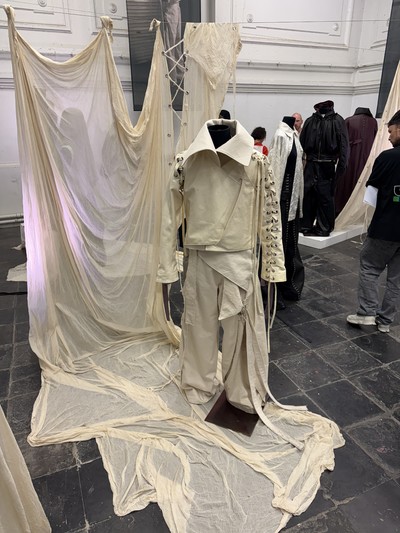
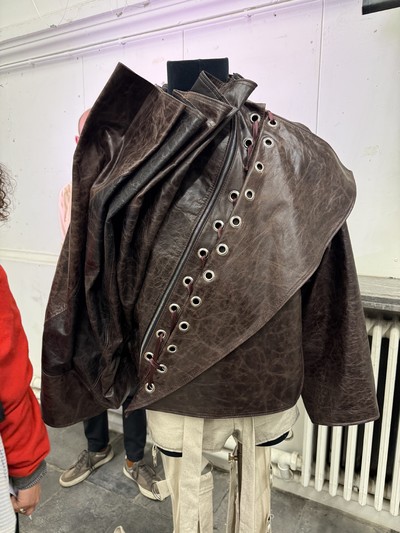
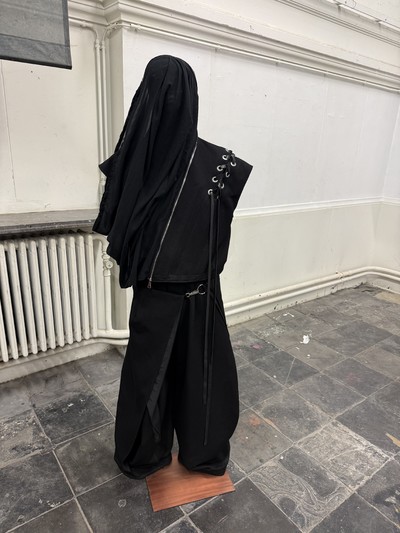
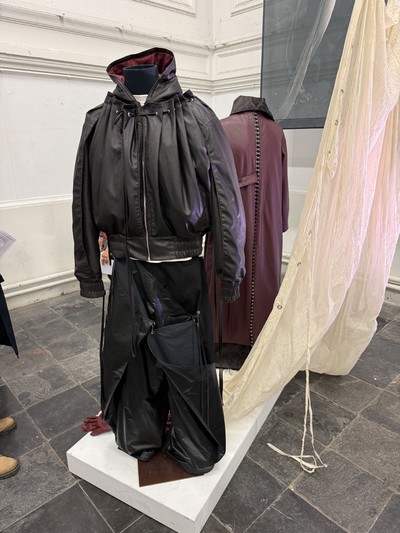
My collection started with the title of Rainer Werner Fassbinder’s movie Angst essen Seele auf, which translates to ‘ear Eats the Soul.’ At the same time, I was looking at a lot of Goya paintings like Saturn Devouring His Son and movies from the German Expressionist era like Nosferatu.
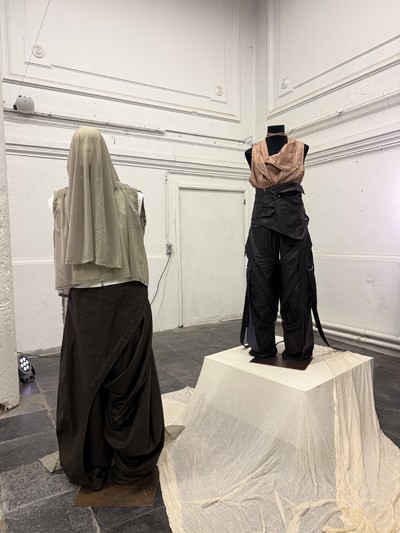
With this collection, I wanted to create a black-and-white contrast, inspired by the image of a demon creature next to a virginal white dress. So, it starts with an all-white look and then goes darker, more demon-esque. A lot of the fabrics that I use are deadstock leather that are really, really dirty, very scratched, and I combined that with the sensitivity of a lot of veils to create a sense of eeriness.
What is the best thing about being a student at the Royal Academy?
I think the best but also the most challenging thing is that you have to do everything by yourself. I mean, of course you are in conversation with teachers and with other students, but you are the one that’s scouting for the fabrics and [other logistical things] in addition to creating the designs.
Why do young designers have an advantage when it comes to understanding what people want?
I think young minds are closer to young people, both through social media and through real life, through school, on the street. They still have that connection to what young people want. And I think that comes more naturally to young people to narrow it all down, to see the thread that runs through everything.
Where would you like to be in five years?
I would love to still be designing menswear and, hopefully one day, maybe five years, I’ll also be back in Germany.