A passion project turned industry resource, the Milano Fashion Library contains 80,000 magazines and lookbooks from the mid-19th century to today.
By Ludovica Tauro Cortina
A passion project turned industry resource, the Milano Fashion Library contains 80,000 magazines and lookbooks from the mid-19th century to today.
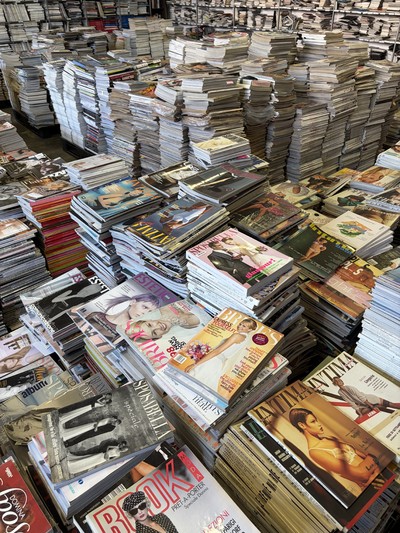
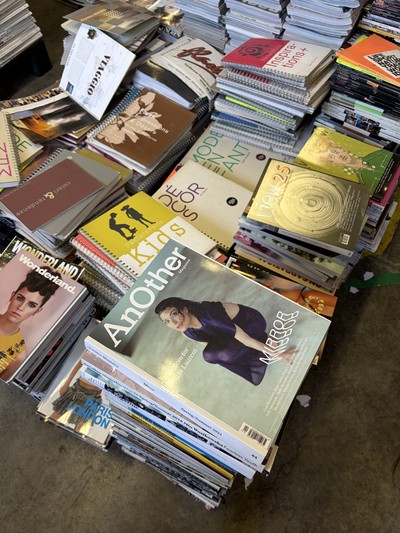
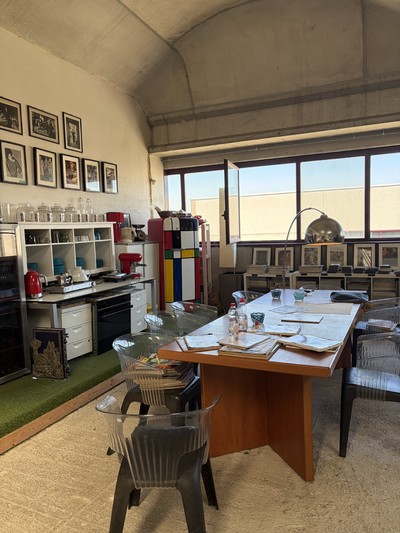
As Milan Design Week was winding down, System escaped the city’s restless bustle and headed to the Milanese countryside, where Milano Fashion Library has made its home inside an old industrial building. What began as the personal project of its founder, Diego Valisi, is now one of the largest archives of its kind in the world. With more than 80,000 magazines and lookbooks, it’s a faithful mirror of the fashion publishing industry, from the mid-19th century to today.
System’s Ludovica Tauro Cortina sat down with Diego to discuss how the project came to life: the years spent as a publisher at L’Uomo Vogue, the decision to sell his own publishing house, and his thoughts on the future of print.
System: I’m curious to know why you started this archive?
Diego Valisi: Like most people who accumulate things, the beginning was quite empirical. My whole life was spent within the fashion publishing industry: first at a German publishing house, then at Condé Nast, where I served as the publisher of L’Uomo Vogue, Vogue Sport, and Vogue Tessuti, which back in the day were autonomous publications, and, finally, another 10 years as an independent publisher. Around 2018 I sold the company to an investment fund.
Alongside all those years in publishing, I started accumulating material, partly for professional reasons and partly out of personal passion, as I was travelling a great deal. Back in the day, personal relations were a big thing. At Condè Nast, every six months I had to visit our offices in Paris, London, and New York, and on those professional trips I would carve out time to pick up things that simply weren’t available in Italy.
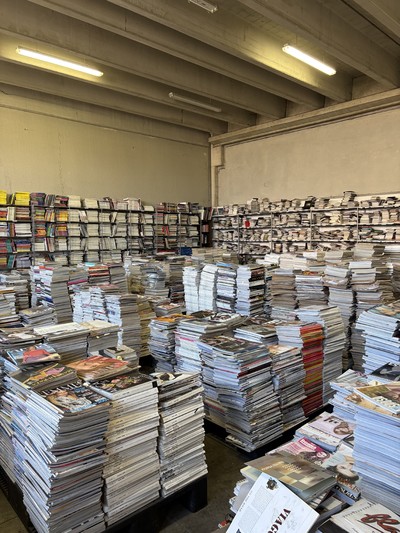
By the end, this led to an archive of around 20,000 to 25,000 publications. Since they were not tied to the sale of the company, I kept them and began wondering what I could do with them. During the long months of the first lockdown, with little else to occupy me, I reflected on the fact that this collection – while already significant in relative terms – was still woefully insufficient compared to other publicly accessible fashion archives around the world, and far short of what I actually wanted to build.
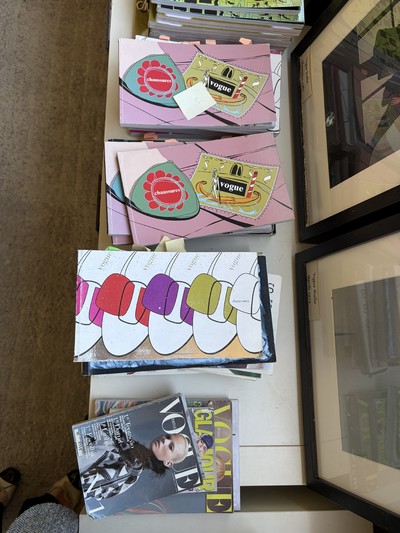
Just a few days ago, we surpassed 80,000 titles, which in my view is still not enough. And it’s not only magazines. There is also a section dedicated to brand catalogues and lookbooks, which are often objects of extraordinary editorial quality. All the great houses have tried their hand at being their own publishers, particularly in the 1980s and 1990s when they produced incredible material.
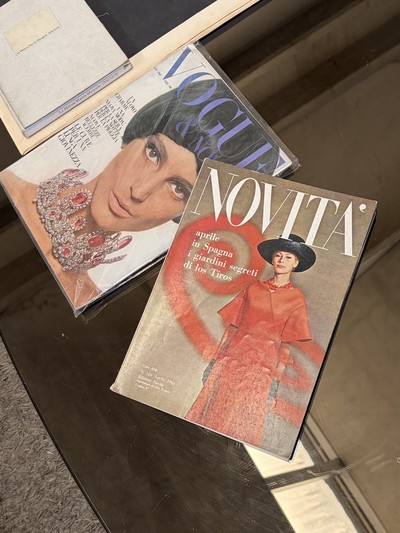
If we look at a Versace catalogue from that era, for example, it might be shot by Bruce Weber. These were monumental shoots, magnificent photography books self-published and self-edited by the brand, and they are far rarer than any magazine. While magazines once had print runs you wouldn’t believe today – four out of five publishers now produce 3,000 copies, whereas back then they might print 150,000, so statistically copies have survived on the market – the Dolce & Gabbana lookbook from 1982, for instance, , is extraordinarily rare. It was printed in a run of 500 and distributed only to buyers and press who then discarded most of them within minutes.
What are most people coming to the archive for?
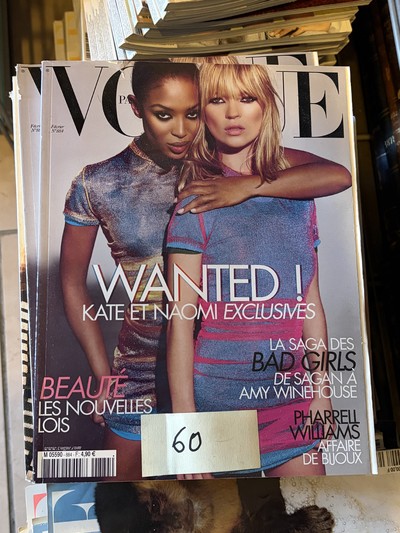
Our best-known role is our private library, where we host major international style offices from big fashion brands, who pay annual membership fees to access the archive and study publications unavailable anywhere else. We also have the vintage bookshop which is primarily online, where we sell these titles.
But the real business revolves around ancillary services: image research for the most varied purposes (photography exhibitions, book content), involvement in brand acquisitions and sales by reconstructing the history of the brand being bought or sold, and lastly a great deal of work in disputes between brands over copyright. All of this flows from a single source. The uniqueness of this archive and the impossibility of finding this body of material anywhere else.
Which, at this point, is not fully digitised, right?
It is not digitised at all. The first digital initiatives will appear by the end of this year, and they are entirely distinct from the archival material. The first is a series of technical e-books for the fashion community. The e-book on Margiela will illustrate what his catalogues looked like, his brand communication, the merchandising that accompanied the product – a highly professional and technical perspective, distributed exclusively digitally.
The second initiative concerns digitisation of the material itself, but not starting from the printed publications. We have acquired an archive of 12,000 photo-CDs. For at least a decade, as brand investment in printed catalogues began to decline, these were replaced by CD-ROMs or DVDs containing product images, brand communications, or runway footage. We will begin there, creating a members-only area on the site, with AI-driven indexing to enable retrieval of the material.
Digitising the physical archive, on the other hand, is an enormously complex undertaking: 80,000 publications at an average of 180 pages each, and every page must be scanned and indexed. It’s a bit of a time-consuming activity for the small team we have now.
Shifting to the magazine industry more broadly: how have you seen the role of printed magazines change throughout the years you spent in the industry?
The number of publications has declined catastrophically. Back when I started, there were years, especially over the 1980s and 1990s, when you couldn’t keep count of the titles being launched, by structured publishers, independents, or publishers from other sectors entirely. It was always harder than it looked, but the advertising money was there.
Bear in mind that a periodical in its prime years generated 75% of its revenue from advertising and 25% from copy sales. The moment advertising collapsed, both in terms of quantity but also cost-per-page, the economics no longer worked. Now advertising revenue has fallen off a cliff, and copy sales have fallen even further.
To give you an idea: Italy had 45,000 newsagents in the 1990s, and they all thrived because the newsagent model runs entirely on sale-or-return: no inventory to finance, the retailer keeps around 25% with no staff or management costs. Despite this virtuous structure, more than half of those newsagents have closed.
One thing I’ve noticed is that, despite everything you’ve described, if you walk into certain independent stores, there are always new independent magazine launches on the shelves every day, even if the print runs must be very small.
That impression exists because it’s not a geographically grounded one. All the titles you’re talking about are stateless publications. One is made in Paris, one in Milan, one in Oslo, another in Copenhagen, and you see them all together. To get a true sense of how many active titles exist, you have to look at individual markets. This phenomenon didn’t exist before, partly because it didn’t work commercially. You built a magazine with a distribution primarily on your domestic market. When you went to Levi’s Italy to ask for advertising, Levi’s would say: “I’m interested in the Italian market; I’m not going to buy space to benefit Levi’s America.” Consequently, magazines were mostly local.
Now, since the money isn’t there anymore, they’ve gone stateless. When you pitch for advertising, you say ‘This is a specialist title read by the most passionate fashion followers and the top international buyers, and you can reach the entire global community with a single page’. However, you don’t penetrate any market in depth. When you walk into those shops, you have the impression there are many magazines because you see two Danish titles, four British ones, one Italian, three French, and you think, ‘There are 30 independent magazines.’ What used to be produced in one region in Italy is now produced across the world.
Was there a precise moment when you felt a shift in the role of magazines?
It wasn’t a steady curve. When I was at Condé Nast, at a certain point it was felt that the future would look like what we’re living through now, so it wasn’t that nobody saw it coming.
The awareness existed 15 to 20 years ago, but the curve was extremely slow and for a long time digital looked like a bubble: you kept putting money in, people looked at it, but no one advertised and it was pure loss.
I believe this slow, steady curve accelerated with e-commerce, which took off well before digital advertising revenues did, and then the quantum leap was Covid. The first lockdown. That found a press already in difficulty, keeping the books balanced through creative accounting, and it was the final blow.
Only those with no fixed costs have survived, because they are the real problem. If one issue costs me €30,000 to produce and I can project €50,000 in advertising revenue, but if the issue is bimonthly or quarterly, I still have to pay the whole team every month even when I’m not publishing. That structure is no longer sustainable for the long term.
And so the ones that survive today look like this: small print runs, zero fixed costs, meticulous control of variable costs, stateless distribution, and a coffee-table-book aesthetic, with a genuine promise to the advertiser that their communication endures over time and is well targeted through a carefully selected distribution. It is a role of aesthetic positioning.
Which titles are most requested and studied in the archive today? And what does that tell you, in your view, about the priorities of people working in fashion now?
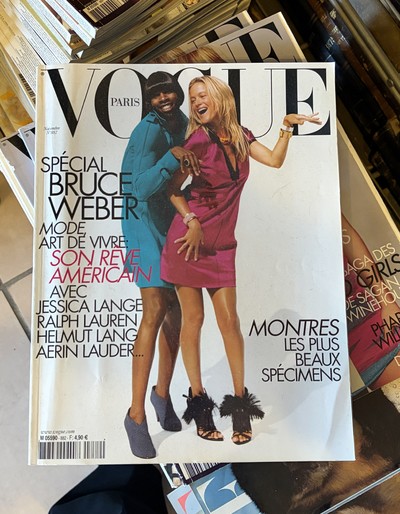
The most requested titles are the institutional ones: the various editions of Vogue, above everything else. I’d struggle to name a clear second name, though.
However, no one has come to look at an issue of Vogue from two months ago. The most sought-after, consulted, and purchased title is unquestionably Vogue, and primarily the 1980s, 1990s, and early 2000s.
Who is the primary audience coming here today?
Design and communications departments, and at the beginning I was very surprised about this. We have a penetration of virtually 100%, and I say this with genuine astonishment, among the great houses. There is not a single major Italian, French, American, Swiss, or Spanish brand that does not have a consistent presence here. When they visit, we then handle the logistics as well, because as you can see we’re in the middle of nowhere: design offices arrive from Paris, we put them up at the agriturismo next door because they don’t even go into Milan, and they spend three days building the moodboard that will inspire the next collection. Within the companies, 70% are design departments and 30% marketing and communications, yet they come for the same purpose: the visual research to create collections or campaigns.
And students? Very few?
Very few. The students think Google will solve the problem.
How does the quality of attention change when looking at a printed magazine compared to its digital version? And why do people from design departments prefer analogue research?
It’s not a question of format. I don’t believe people actually prefer leafing through a printed magazine over viewing its digital edition online. The truth is far simpler. I estimate that 40% of what we have here cannot be found online. That’s all it is. They come here and discover magazines that had 20 years of extraordinary success and whose very existence they were unaware of. And even if they had happened to know of them, there is often nothing online, because if a title died before Google was born, no one ever bothered to upload it.
Where do you see the future of this archive? With the development of the digital, how does one preserve the physical?
I believe the two will exist in parallel. The appeal of the physical archive is entirely different from that of a digital one. Looking ahead, the evolution is to engage the professional world through digital, and to function also as a place where things happen, physically.
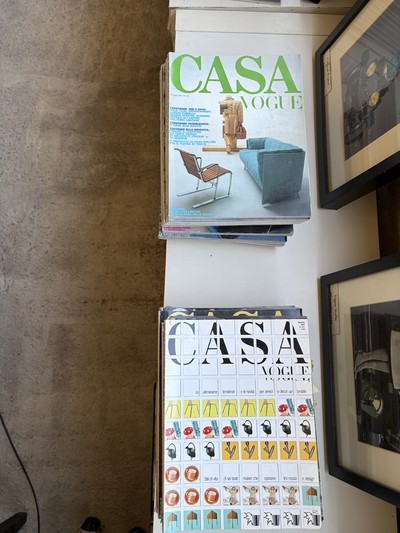
Because in the end, when a tendency reaches an extreme, the counter-tendency immediately emerges. Digital is fundamental now, as an extension of our core business. Someone in Sydney cannot come here every day, and since we do things that person in Sydney cares about, I need to communicate with them, and I can only do so digitally. That is one dimension.
But have you ever seen as many advertising campaigns shot in bookshops as you do right now? These are genuinely intriguing signals. I have never seen so many advertising campaigns set inside disordered archives, or a twenty-year-old influencer photographed in the act of reading a book.
That calls back to the analogue, to the beginning.
Absolutely. So what I see in the future of this project is, of course, an enormous digital development targeting the professional market to extend our reach, and also significant development of the physical site, because here we’re running out of space. We will certainly be moving to a much larger space, which will become a venue for events because brands want to be present here with their product placement too.
Another very clear direction of development is that our social media channels will soon become editorial platforms. Why wouldn’t you place advertising on our Instagram profile, where we’re growing organically and where brands can find a very targeted audience?
That is the advantage of having genuinely good content: you’re not selling a story.
Exactly. Finding content is never a struggle for us.
Having seen the future of this place, what is the future of print?
The future of print will increasingly be either the role of lifestyle object containing excellence, or it will continue as the kind of thing you find at the hairdresser’s, at a lower price and wider circulation.
So today, in your view, are magazines more of a mirror of contemporary culture, or producers of it? Do they reflect it, or do they create it?
They reflect it. They reflect it, and they must be able to become comfortable containers for certain categories of brands, positioning them in appropriate environments, in front of appropriate audiences, and performing that function. They cannot exercise a strictly critical role anymore.
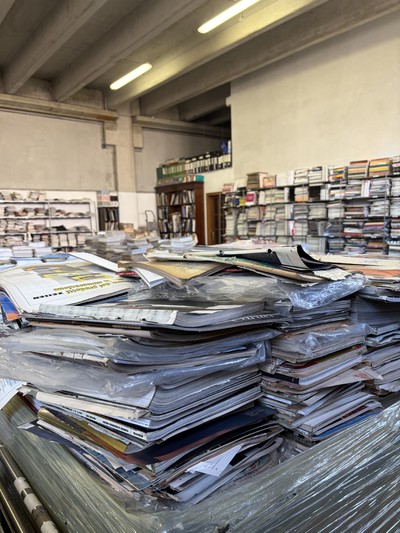
So what should we expect in the near future?
The thing we’re envisioning now for the future is a fashion publishing fair. The world has some beautiful fairs dedicated to independent publishing, but there is nothing strictly on fashion, where the exhibitors can be the publishers themselves.
There will be publishers, specialist bookshops, our competitors from around the world, but also private collectors. The material exhibited won’t be limited to magazines or books: if you’re a Comme des Garçons collector and instead of the clothes you have every Comme des Garçons publication, perhaps you’d enjoy exhibiting them.
There will be a pure sales component with small exhibitor stands. But inside there will also be photography exhibitions, workshops on where communication in publishing is heading: an experiential element, partly glamour and partly education.
In Milan? In Italy?
In Italy, certainly. There are two competing theories at the moment, but we can talk about that another time.