The London-based make-up artist on the creative process behind the looks he created for over 80 images shot by Johnny Dufort and styled by Suzanne Koller.
By Houssem El Ghoul
The London-based make-up artist on the creative process behind the looks he created for over 80 images shot by Johnny Dufort and styled by Suzanne Koller.
Can you share more about the process of working with Suzanne Koller and Johnny Dufort? What kind of conversations were you having about the vision for the story before and during the shoot?
Thom Walker: We actually didn’t have too much dialogue before the shoot – shock horror. I’d just come off a pretty intense six-day job, so there wasn’t much time to organise things beforehand. But I’ve worked with Johnny quite a lot over the years, so I already understand his visual language and the way he likes to work.
Things can shift very quickly with Johnny, even though there’s structure underneath it all. You just have to be prepared for the image to suddenly move in a completely different direction from what you originally expected.
I’d only worked with Suzanne a handful of times before, but I really love the way she works. She’s incredibly organised and meticulous, especially on a shoot at this level. You really see the inner workings of everything.
Johnny and I exchanged a few references before the shoot – old British television clips from the 1990s, images, little visual ideas – but most of the conversations really happened on set. Suzanne would brief us every morning, and then things evolved naturally throughout the day.
So it was more day-by-day rather than something fully fixed in advance?
Exactly. I think editorial works best when there’s still room to adapt and react while you’re making it.
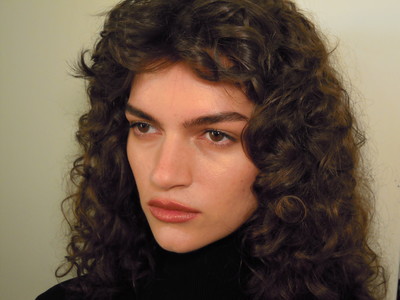
Even when the images feel very controlled, they still feel instinctive.
Exactly. I think that’s why they feel alive.
Was there a look where the make-up changed the direction of the story more than expected?
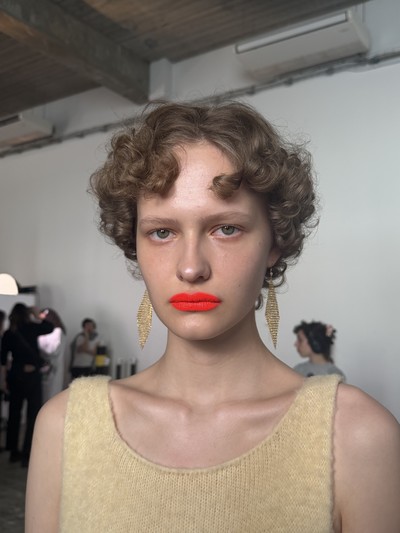
Definitely the neon lip. I had this reference image from the 1970s – basically just two fluorescent lips from an old billboard advertisement – and I became obsessed with recreating it.
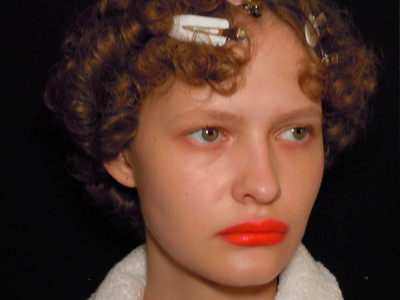
At first, I thought we’d need UV lighting to make it work, so I messaged Johnny asking if he had one. Then I realised we probably didn’t need it at all. His lighting already had enough intensity to create that effect naturally.
We ended up doing the look on two girls, and suddenly the whole mood of the shoot shifted. It became bolder and slightly more experimental, while still keeping that coolness and modernity Suzanne brings to an image.
I feel like it becomes much stronger when you focus on one thing rather than building an entire constructed face around it.
Exactly. I always feel like one thing is enough. A lip can be enough. A lash can be enough. A cheek can be enough. If everything is loud, nothing really lands emotionally.
Did your approach evolve over the three days?
Completely. Day one was really about understanding the rhythm of the shoot – understanding how Johnny was shooting, how Suzanne wanted things to move, how quickly everything needed to happen.
Once we got through that first day, everything loosened up creatively. Suddenly, we could push things further because everybody understood the language of the shoot already. You’re constantly thinking ahead on something like this. You’re shooting look one, but mentally you’re already on look three, or thinking about day three. It becomes very reactive.
It sounds exhausting, but creatively exciting at the same time.
That’s exactly what it is. After day one, everything suddenly clicked.
What’s one detail people might not notice, but that really matters on camera?
Ears and hands, honestly. People focus so much on facial make-up, but ears and hands can completely break an image if they’re not considered. Especially with very tall models, circulation changes constantly, so the ears become red, and the hands become pink. We’d massage the hands, add a little foundation onto the ears, then finish them with shine or body cream so everything stayed coherent under the flash. Those details matter massively in photography.
How did you prep the face before applying the make-up?
Prep is everything. Beautiful make-up actually starts long before any make-up is applied.
The team I had on this shoot have worked with me for years, so there’s already a shared rhythm between us. As soon as the models arrived, we’d immediately begin prepping skin – eye patches, massage, hydration – because the skin needs to stay alive throughout the day. Honestly, assistants are essential to jobs like this. I think they rarely get enough recognition. I learn from them constantly.
Especially on a production this intense, it really feels collective.
Completely. Nobody makes images like this alone.
Are there any particular techniques or tricks you used during the shoot that might be interesting to readers?
A lot of it was really about reacting to light rather than overworking the make-up itself. Johnny’s lighting changes the way the product behaves on camera, so instead of layering too much, we focused more on texture and placement.
Shimmer under Johnny’s flash suddenly becomes incredibly dimensional. The same product under different lighting could look completely flat.The neon lip is probably the best example of that. In the end, we didn’t even need UV lighting – Johnny’s lighting created the effect naturally.
Especially with the flash, the skin feels very alive.
Exactly. That’s what’s so special about his lighting.
Is there one look from the shoot you particularly loved? Can you talk us through how you created it?
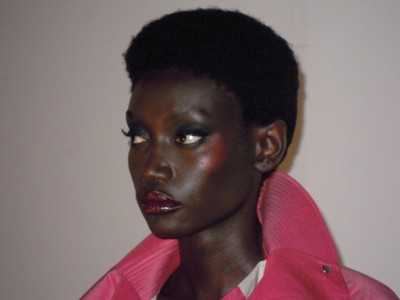
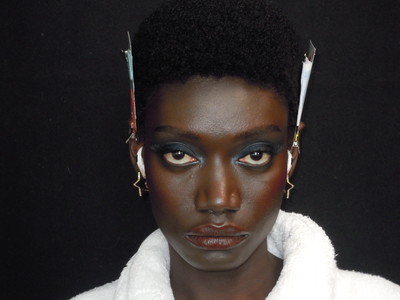
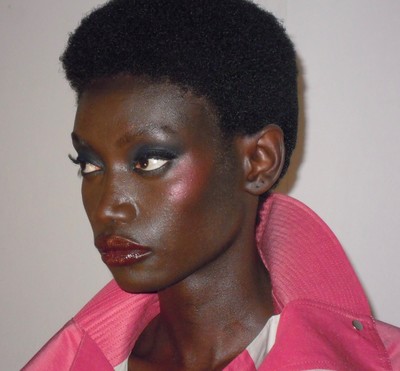
There were a few, actually, but I really loved the look we did on Fatou [Kebbeh], the deep blue eye with the berry lip and the red cheek.It referenced late-1980s and early-1990s Yves Saint Laurent beauty, but we didn’t want it to feel nostalgic in an obvious way. It still needed to feel contemporary.
What I loved was seeing Fatou transformed into a completely different character. I’d mostly seen her very natural before, so suddenly creating this much stronger woman around her completely changed the image.
I also loved Caitlin [Soetendal]’s look with the tiny corner lash and the white highlight. That came from this old 1950s reference image I’d found.
She really looked like an actress in those images.
Exactly. I looked at her and immediately thought, ‘we have to do this look’.
With so many faces, how do you balance individuality with a consistent direction?
That’s probably the most important part of a shoot like this. You never want every girl to feel identical. There has to be a thread connecting everything emotionally, but each girl still needs to feel like herself. Otherwise, the images become too controlled. The consistency here came more through texture, lighting and attitude than through repeating the exact same beauty look over and over again.
Were there moments where everything suddenly worked?
Definitely after day one. The first day was intense because everyone was still understanding the rhythm of the shoot. But once we got through that, there was suddenly this collective confidence where everybody started bouncing off each other creatively. That’s really when things started becoming exciting. You stop overthinking slightly and begin trusting your instinct more
Do certain features or expressions shift the way you approach a face?
Always. I think beauty becomes interesting when you work with someone rather than trying to impose the same idea onto every face. Some girls immediately suggest a reference to me. Sometimes it’s a film, sometimes an old runway image, sometimes just a feeling. Certain faces can hold much stronger make-up, while others become far more powerful when everything is stripped back.
What was the biggest challenge of working on looks for more than 80 images? Have you ever worked on a project like this before?
It was huge, honestly. What’s difficult is the endurance aspect. A runway show lasts maybe 15 minutes. This was 10 hours a day over three days, constantly moving and constantly thinking ahead.
Suzanne had everything mapped out, almost like a show schedule – timings, references, every girl printed out beforehand. Of course, things drift slightly off schedule because that’s just the nature of image-making, but the structure allowed everybody to move incredibly quickly.
You’re shooting look one, but mentally you’re already thinking about look three, or even day three. It becomes very reactive, but that’s also when things start becoming exciting creatively.
Looking at the story as a whole, what ties all the looks together for you?
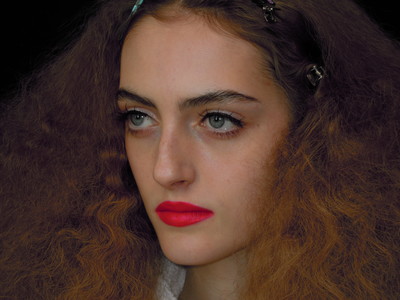
Texture, probably. Fresh skin, flashes of shine, matte against shimmer, neon against bare faces – everything came back to texture and surface.
But honestly, a huge part of that cohesion comes from Johnny. He really understands beauty, texture and lighting. Some photographers flatten make-up completely, whereas Johnny somehow amplifies it without overpowering it. That’s why the images still feel connected even when the beauty shifts so much from girl to girl.