By Marta Represa
Photographs by Jack Day
Styling by Elodie David-Touboul
Alexandre Mattiussi on the city that made AMI.
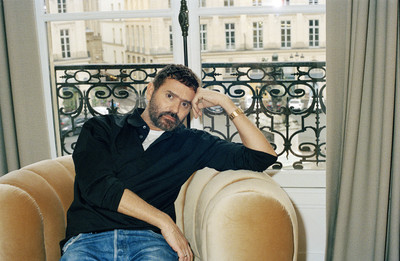
Alexandre Mattiussi in his office overlooking the Place des Victoires.
Alexandre Mattiussi opens the door to his Parisian office, Dyson vacuum in hand. ‘We were just selecting fabrics; you can’t imagine the mess that makes,’ he explains. The room is a luminous, lived-in space overlooking the Place des Victoires. In it, there are racks of clothes, stacks of books and vases with fresh flowers sent by Mona Tougaard and other models right after his Ami Paris Autumn/Winter 2026-2027 show. A large, egg-shaped sculpture balances precariously at the edge of a chair. ‘It’s an allegory of what our business used to be like,’ he says. ‘Now it’s more like that other piece,’ pointing to a vase teetering over a large metal spring next to his desk.
Over the past 15 years, the Ami Paris founder has seen his company grow from an up-and-coming independent label to an international powerhouse. While the company was officially launched in 2010, the trademark for the name goes back to 2002. ‘You could say the brand has existed, in a way, since my childhood. Ami, meaning ‘friend’ in French, is simply a contraction of the first, middle and last letters of my name, and it’s how I’ve always signed my name – and I knew I’d do something with it one day.’
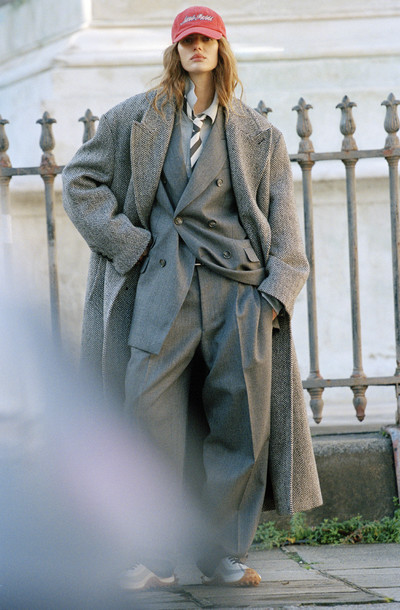
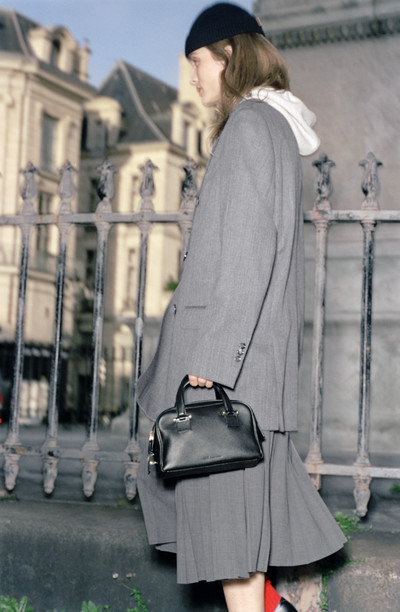
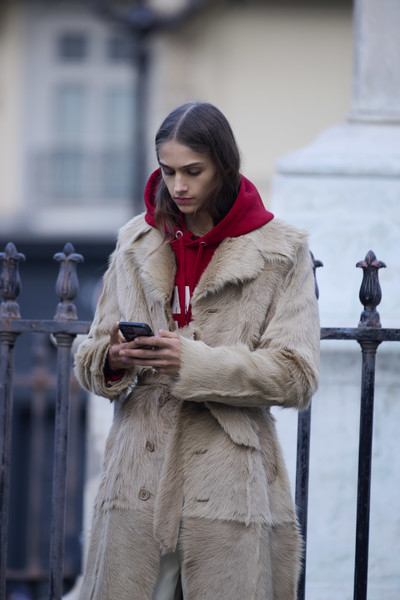
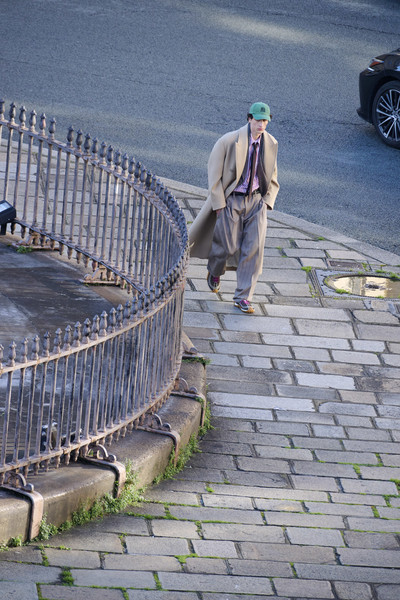
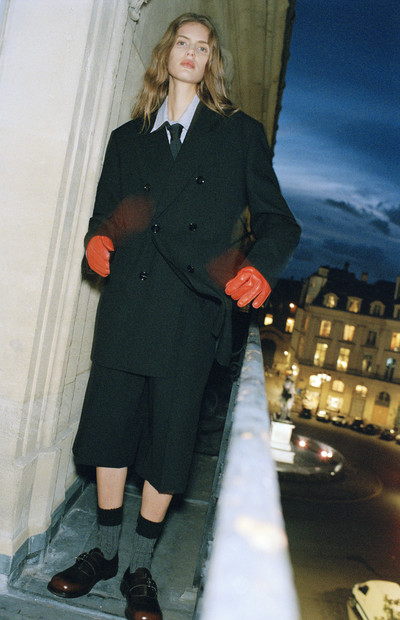
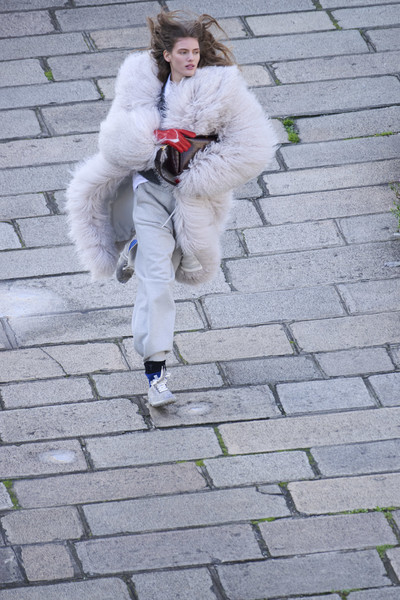
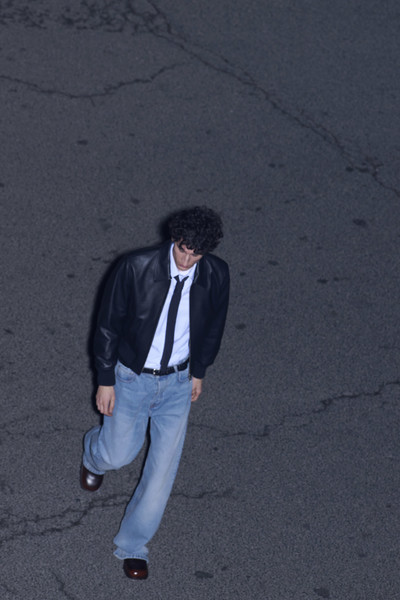
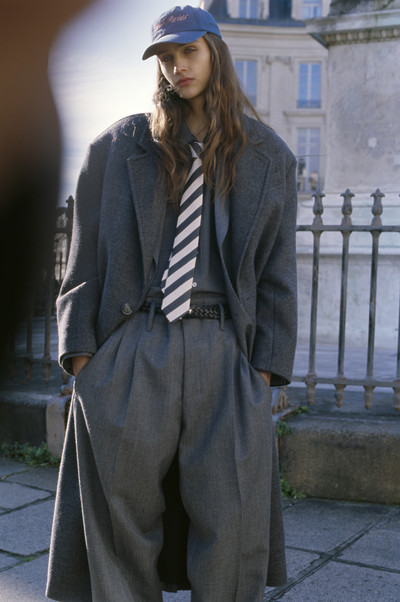
The latest collection is a perfect encapsulation of Ami’s ethos, featuring an ensemble of wide-proportioned suits worn with generous coats and comfortable sneakers, Canadian tuxedoes with argyle cardigans and embroidered caps, and sweatpants audaciously mixed with crisp cotton poplin shirts and Mongolian-hair coats. The French designer is well aware of his place in an industry often consumed by trends, speed and the meme-ification of clothes. ‘I’m not here to ‘kill it’,’ he says. ‘I’m here to offer something that feels soft, warm and welcoming.’ In the following conversation, Mattiussi sits down with System to discuss the inextricable bond between Ami and Paris, and between Paris and Ami.
Marta Represa: What was your creative vision when you first started Ami Paris?
Alexandre Mattiussi: The brand was born in October 2010, with the first collection released in January 2011. Back then, I had just finished a 10-year stint working for Dior, Givenchy and Marc Jacobs. All of them luxury houses, creating wonderful things, but living in a reality very different to my own. So my vision was a very simple one: I wanted to make the kind of clothes I would wear. I mean, I love clothes, who doesn’t? I love thrifting, I love vintage, I love wearing something simple like a fleece with jeans and sneakers. Most of all, I love the intimacy that develops in one’s relationships with one’s clothes. That’s what I wanted to make: something real and pragmatic.
How did that vision evolve over time?
It pretty much changed as my personal experiences changed, the kind of life stuff that nurtures creativity. At times I have been more disconnected from that initial vision, inspired by the industry, the fashion system and commerciality, to get out of my comfort zone. I’ve been tempted by a more couture-like approach, for instance. I’ve done embroidery and transparent [designs]. Would I do it again? Probably not, but it was cool to try. I don’t regret any of it. At the end of the day, I always find myself going back to my roots, especially over the last three years. Even when, like today, I choose fabrics from a big box of samples, I tend to go for the ones I’ve chosen before. I work with them differently, finding new ways of draping, cutting and styling them. That’s why this season’s show invite was a Rubik’s Cube, to symbolise the many possible combinations.
Is it a matter of longevity versus trends?
Well, I received an Instagram comment the other day about our last show, which said: ‘Nothing new under the sun, this already exists.’ And yes, this already exists, and that’s OK! Ami is about style rather than fashion, and I’m perfectly content with that. Because we all know how fashion works nowadays: it’s too fast, we have no time to adapt, to understand and to savour a particular trend before a new one takes over. As a designer, the more you are of the moment, the faster the moment passes you by. We have seen the most extraordinary talents being sidelined after a while, as if their aesthetic is no longer the dernier cri and so they had nothing of value to offer, no interesting stories to tell. I’d rather stay clear of all that and do my own thing.
You launched womenswear in 2018. How did it find its way into the heart of the brand?
I always worked as a menswear designer and launched Ami as a menswear brand, but we realised women were shopping the collections too. Not that that’s groundbreaking, because women have always worn men’s clothing. But an emotional bond was forming, which is why we created l’homme pour la femme: men’s clothes that were lightly altered in terms of detail, proportions and sizing. Caroline de Maigret was the first woman to wear Ami on the catwalk, back in 2014, and since the concept worked we decided to launch womenswear. So it all happened organically.
Let’s talk about Paris.
What can I say? Ami is inspired by and designed in Paris. I have been a Parisian for the last 28 years. My God, my interns are younger than that!
Parisian style has changed quite a lot since 2010. Do you remember how things were back then?
I remember Ami was born at the height of the hipster years. For most men, that was their fashion awakening. Not that there weren’t interesting propositions that were inherently Parisian: there was that very rock and roll look that Hedi Slimane had created for Dior Homme; there was Riccardo [Tisci] at Givenchy. But most menswear felt very classic and the landscape was nowhere near what it is today. But that whole hipster vibe, with the tartan shirts, the beanies, the artisanal coffee shops… We saw there was an opportunity to explore that, giving it a uniquely French spin.
‘That whole hipster vibe, tartan shirts, beanies, artisanal coffee shops… There was an opportunity to explore that, giving it a uniquely French spin.’
In what ways has Parisian style changed since then?
It’s more relaxed. Remember what heels used to be like? Now, I don’t see women wearing over eight centimetres. In many ways, though, there’s been a sense of continuity. This season, one of our show looks consisted of a marinière jumper with a camel coat and light trousers, worn by a long-haired model. The minute I glanced at the photo on the moodboard, I realised I had seen that before. Guess what: a Google search revealed that our very first look in our very first 2011 show consisted of a marinière jumper, a camel coat and light trousers, worn by a long-haired model! The changes have happened in terms of proportions, fabric feel and comfort more than the look itself. In French, we say c’est dans les vieux pots qu’on fait la meilleure confiture: ‘old jars contain the best jam’.
Do you feel like Ami is a reflection of the ways in which Parisian style is evolving, or is it more of an anticipation?
That’s not for me to say! What I can say is that when I was about to launch the brand in 2010, I made a booklet; a sort of manifesto for what I wanted Ami to be. There were photos of Daniel Buren’s columns at Palais Royal, of Saint-Germain-des-Prés. In it, I wrote that I wished to one day dress Louis Garrel, Vincent Cassel, Romain Duris, Étienne Daho… And they have all become clients! Whether that’s anticipation or reflection I don’t know.
How do you reconcile the Parisianness you sell to Parisians with the the Parisianness you sell to, say, Asian markets?
Honestly, I think sometimes I overplay my hand. I can exaggerate. But Paris makes such an extraordinary postcard! It’s cinematic, it’s historical, and – above all – it’s dreamy. You wake up in the morning and think quand même! Every day I come here to the Place des Victoires and realise how lucky I am. I’m inspired by everything: the Louis XIV statue, the roofs. After all, Paris is an amusement park, just like Disneyland. You go to Montmartre, it’s an attraction. The Eiffel Tower – which, by the way, I only visited for the first time two years ago – an attraction. The 20th arrondissement, where I’m moving to shortly, it’s le vieux Paris; you feel like Edith Piaf could make an appearance at any point. It’s what we call in French un joyeux bordel [joyful mess]. It’s cosmopolitan, bourgeois, rich. And at the same time it’s lively and popular, with its markets, the Metro…
Does that ‘Disneyfication’ of Paris ever worry you? The Emily in Paris aspect of it all?
I have absolutely no problem with Emily in Paris. Actually, we were in Emily in Paris, and it was great! It’s true that my friends were telling me I was going over the top. Well, so what? We live in a complex, polarised, unnuanced world – fashion should be fun and lighthearted. Which of course doesn’t mean we shouldn’t take our craft seriously, but we should take ourselves less seriously.
Paris is also the inspiration behind all of your runway shows.
It is! We have held a show in the Metro, at the Palais de Tokyo, the Grand Palais – with Chanel’s permission, of course. It’s very Ami in Paris. Last season we were here, at the Place des Victoires, blasting Ravel’s ‘Boléro’. Very dramatic. In contrast, this season I wanted something that felt very pure, very conceptual. So we went to 22 Avenue des Champs-Élysées, to this bare space that we filled with white benches. People were sitting very close to the models, so that they could appreciate every detail of the collection. But even that was inspired by Paris, because the idea was to mimic the sensations one has while doing the most Parisian of activities: sitting on a café terrace. Is there a better fashion show than the one you see every day in the streets of Paris? You’re having coffee peacefully, watching people go by: an old lady wearing a coat she’s owned for the past 50 years, a boy on his bike, a band of teenage kids, a guy fresh out of the gym… I’m always inspired by that. If I put a girl in blue tights on the runway, it’s because the evening before I saw a girl in blue tights in the street.
‘Parisian style is more relaxed these days. Remember what heels used to be like? Now, I don’t see women wearing over eight centimetres.’
What’s your first memory of Paris?
I have very early memories of the city. My parents met here. My dad had grown up here, the son of Italian immigrants. My mum had just arrived from her provincial town. They decided to bring my brother and me up in Normandy. But we came back here very often, so I grew up knowing a reality other than the cows and pastures I saw from my bedroom window. Back then, I was a dancer. In the summer, I would come to the city for courses at the Salle Pleyel. I think my most vivid memory is of the Opéra Garnier. Just stepping into the hall and seeing those chandeliers was so incredible. It made me think of [dancers] Patrick Dupond and [Mikhail] Baryshnikov… Of course I have other memories, like living in a nine square metre chambre de bonne in Montmartre. In my years here, I’ve seen everything.
Do you remember where you first fell in love?
Of course! It was at the Duperré school near République, where I was studying, that I fell in love for the first time – with Thomas, who remains one of my dearest friends to this day. There are other memories too: countless hours spent at the Buttes-Chaumont park with my friends; the Marais, the neighborhood where I explored my queerness and found a sense of community. Paris has given me so much.
What film best encapsulates Paris?
Oh, I bet you don’t know this one. Claude Lelouch made his very first short film, C’était un rendez-vous, in 1976. It has no special effects of any kind and is shot from the point of view of a guy getting in his car early in the morning at the Place de L’Étoile, and driving all over Paris without stopping one single time: he goes through the Arc de Triomphe, Concorde, the Quais, the Tuileries, across the 9th arrondissement up to Montmartre and through Place du Tertre, finally arriving to the Sacré-Cœur, where a girl is waiting for him. Then you realise it was all for a date. It gives me chills every time. When we did the show at the Basilica, I wanted to do a teaser inspired by the film, but try crossing Paris nowadays in eight minutes with all the one-way streets. It was a different world.
The company experienced exponential growth right after the Covid pandemic.
To this day, we don’t understand why, but we went from a €30 million turnover to a €300 million turnover between 2021 and 2025. It was crazy! I don’t think we will experience hypergrowth like that again any time soon.
Does it ever scare you?
No, because our different markets – Europe, America and Asia – are very balanced, which gives us stability. From here, we can grow at a steady rate. This season, we had to add one more commercial showroom day to cater to all our 800 clients. By the way, I just learned this morning what the most in-demand piece was: a camel cashmere and wool trucker jumper. To me, that’s reassuring, knowing it’s a piece like that instead of a plain white Ami de Coeur T-shirt… Which is in second position, anyway.
What’s the season’s silhouette?
Relaxed! Everything is supple, light, easy! As we were preparing the show, I remember I had a long conversation with our stylist, Elodie David-Touboul, while we were ‘playing doll’. I mean, our job is pretty much an intellectualised version of playing doll, isn’t it? We both came to the conclusion that we wanted to keep it real, you know, with the accessories, the wired headphones… We even told our models to walk just like they would in the street, and we styled the pieces in as realistic a way as possible. At one point, we asked ourselves, ‘Is there such a thing as keeping it too real?’ We looked at each other and we knew: maybe there is, but that’s exactly what makes the collection so covetable.
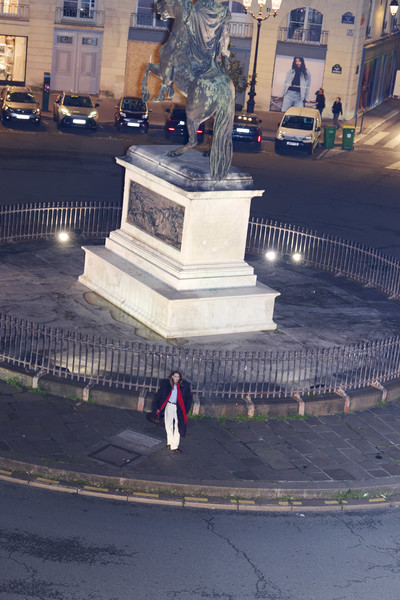
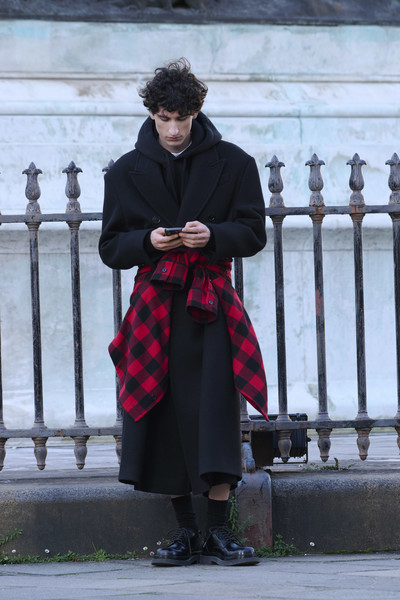
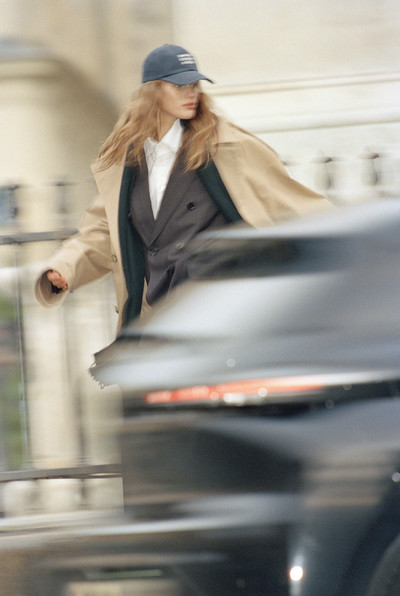
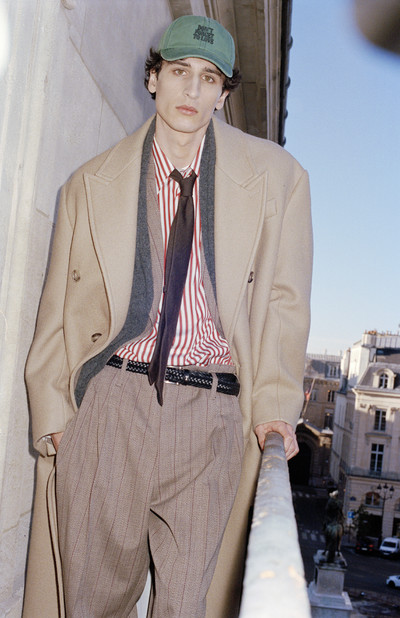
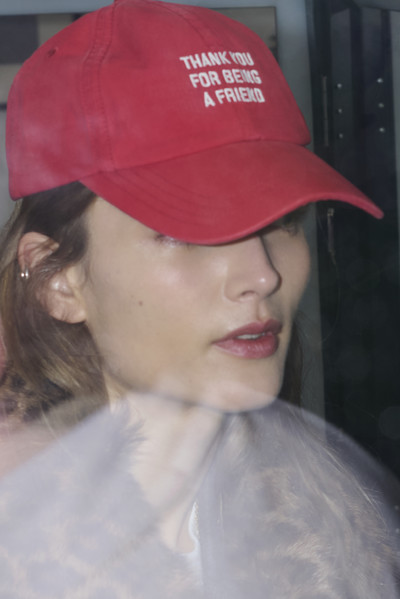
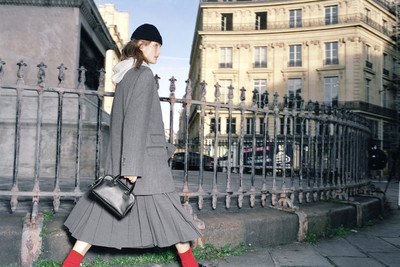
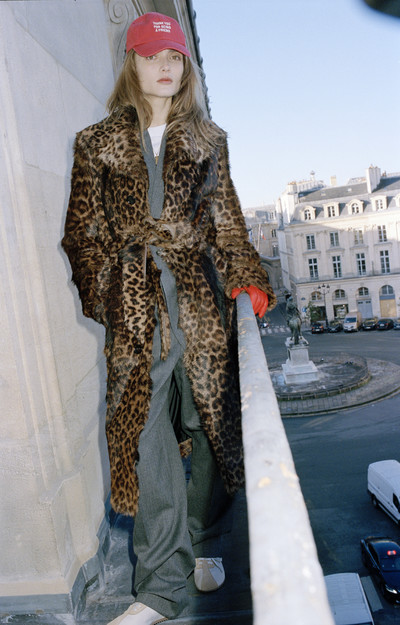
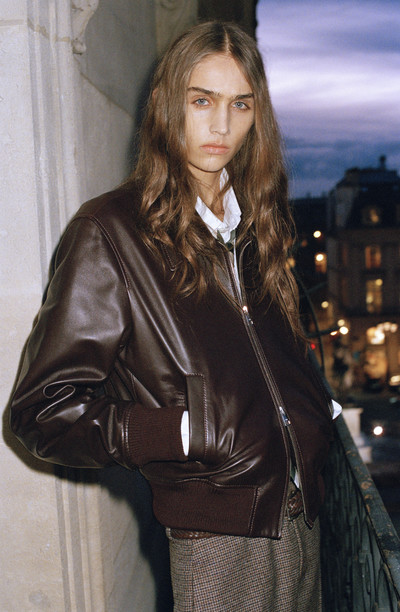
Models: Gertrud Rose at Noah MGMT, Rosalieke Fuchs at Elite, Raf Pincus at Viva, Lucien Le Nevé at Premium
Casting director: Piergiorgio Del Moro – DM Casting
Hair: Benjamin Muller at MA Talent
Make-up: Adrien Pinault at Bryant Artists
Manicurist: Alexandra Janowski at Bryant Artists
Production: AP Studio
Executive producer: Marie Godeau
Production manager: Nora Moutawahid
Production coordinator: Marine Becker
Photography assistants: Joseph Reddy, Quentin Farriol
Digital operators: Adrien Brianchon, Yann Gauthier
Styling assistants: Pauline Charriere, Mathias Tichadou
Hair assistant: Mills Mouchopeda
Make-up assistant: Fay Bio-Toura
Manicurist assistant: Cecilia Hameir
Production assistants: Alphonse Emery, Foucauld De Kergorlay, Paul Gourragne