By Jonathan Wingfield
Portrait by David Sims
W magazine editor-in-chief Sara Moonves is delivering her best performance.
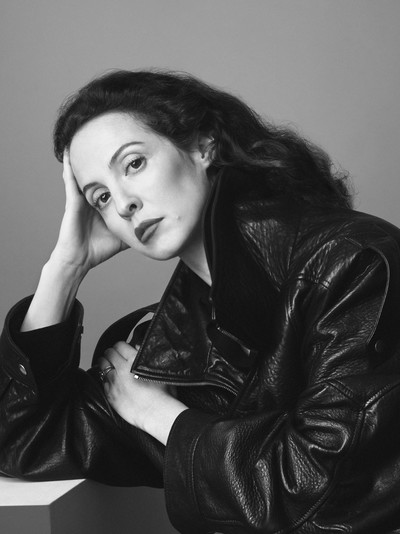
Have you seen W magazine recently? The New York title oozes a heady mix of confidence, character, and creative zeal. It’s the place where high fashion wraps itself around popular culture, and where the industry’s most creative creatives often deliver their strongest work. Crucially, Hollywood’s A-list all show up for a W cover shoot, a bit of playfully irreverent social content, and its hottest-ticket-in-town parties.
While previously considered Vogue’s younger, artier sibling, today’s W has a spunky independence about it and no longer resides in the shadows of Condé Nast’s leading lady. The publishing behemoth had owned W for 20 years but sold it for a song in 2019 as part of its restructuring effort to pare down (or was that tear down?) its portfolio. Unstable times ensued – until, deep in Covid lockdown, freshly promoted editor-in-chief Sara Moonves drummed up investment from the likes of Karlie Kloss, Kaia Gerber, and Lewis Hamilton, and saved W from the brink.
Since then, she has ushered in a ‘print-digital-events’ strategy with an annual calendar of highly marketable themed issues that reflect fashion and entertainment’s ever-deepening love affair. There’s the ‘Best Performances’ issue, a Hollywood-vehicle co-assembled with Tinseltown veteran journalist Lynn Hirschberg, to coincide with awards season; then ‘Directors’ (featuring contributions from heavyweights such as Spielberg and Tarantino); ‘Fashion’, which straddles the international runway show weeks; and ‘Art’, which lands on the eve of Art Basel Miami.
Much of this resurgence has been down to Moonves’ own brand of deft, behind-the-scenes manoeuvring – juggling luxury fashion brands, digital media experts, the aforementioned Hollywood talent, and marquee contributors such as Steven Meisel, David Sims, Juergen Teller, and, most recently, Tyrone Lebon, whom she successfully coaxed out of a decade-long abstinence from shooting editorial.
Born into the upper echelons of the entertainment industry, Moonves grew up in Los Angeles surrounded by Hollywood executives, Oscar nominees in the making, and a bedroom wallpapered with fashion magazine spreads. As a teenager, she snagged bi-coastal internships at Vogue (with Lisa Love, Sally Singer, and Phyllis Posnick) before establishing herself as one of a new wave of New York fashion editors. And when W hit the skids mid-pandemic, it was her verve, vision, contacts, and Herculean work ethic that came to the rescue.
System recently sat down with Sara Moonves in New York to discuss her journey: from a charmed LA childhood to the editor’s office on the 37th floor of One World Trade Center, W’s eerily serene headquarters. It makes for an upbeat ride, because she’s so affable, exuberant, and well-connected: 48 hours previously she’d been partying with Charli XCX at Bar Marmont, and at one point during our conversation, she excused herself to take a call from ‘PTA’ – the multi-award-winning movie director, not the local Parent Teacher Association.
‘The families of the kids I was friends with worked in the entertainment industry. Everyone had their hand in the Hollywood pot. It’s just what was normal.’
Jonathan Wingfield: Tell me about growing up in Los Angeles, immersed in the upper echelons of the entertainment industry. The only reference point I can conjure up is… Beverly Hills 90210?
Sara Moonves: It actually wasn’t too different from that. I went to Harvard-Westlake school, which had a big grassy lawn, in that clichéd LA high school kind of way. And the families of most of the kids that I was friends with worked in the entertainment industry. Everyone had their hand in the Hollywood pot: which could mean running a studio or working as an actor or being a film editor or doing voiceover work. It was just what was normal. And as a kid I loved movies and TV obsessively. I watched everything.
What was your go-to show?
Sex and the City, which I was very much not allowed to watch because I was too young, but I’d sneak in to watch it anyway. I loved being immersed in those TV worlds, and I also loved knowing the people involved in making them. I also had friends who were becoming actors as we were growing up, which was really fun to watch.
Did any of them hit the big time?
My best friend growing up was Jonah Hill. I remember when he started working, he had a teeny part in I Heart Huckabees by David O. Russell. That was his first foot in the door. Then he did Superbad, which ended up being massive, and all of sudden my friend was really famous. Later, as he got into directing – when he did Moneyball, which got nominated for an Oscar – I was just like, ‘Holy shit!’ These days, it’s great to watch other childhood friends achieve the things they set out to do, like the film producer Eli Bush, who actually produced Jonah’s film Mid90s. He’s been working with the Safdie brothers and now he’s nominated for an Oscar for Josh Safdie’s Marty Supreme.
You mentioned in your CFDA speech that as a young child you’d appeared in four episodes of Full House alongside the Olsens twins. Were you keen to pursue acting as a career yourself?
I never wanted to be an actor, and never wanted to work in television. I remember going on TV sets and saying, ‘This is amazing,’ but as crazy as it sounds, it felt boring to me because you’re playing the same character for six months, or you’re working on the same film for an entire year. What I dreamed of was a job where it was different every single day.
Enter the role of the magazine editor…
Well, I’d been reading fashion magazines as far back as I can remember, becoming obsessed with Vogue and Italian Vogue and this whole world of fashion. But fashion in LA is not nearly as present as it is in New York or Paris or London. So, fashion magazines were an escape, which is ironic when you consider that movies and TV offer escapism for most people. As I said, Beverly Hills 90210 wasn’t an escape for me, it wasn’t so different from real life. Whereas when I’d look at Italian Vogue and see these fantasy stories that Steven Meisel was shooting, I was like, ‘I want to be a part of this.’
How old were you at this stage?
Fourteen. My friends all thought it was odd how obsessed I was with magazines. No one else was buying them, whereas my entire bedroom was covered in magazine pages, like crazy wallpaper.
Did you have a favourite supermodel?
I was never so obsessed with the supermodels. Don’t get me wrong, I was following all of them as well, but I preferred clothes on celebrities more than, say, Gisele or Kate Moss.
So who was your favourite celebrity? Drew Barrymore?
All my friends were obsessed with her, but I wanted to be Cate Blanchett. I remember her wearing this gold Balenciaga dress to the Met Ball, and then Nicole Kidman wearing Balenciaga to her wedding. I loved John Galliano, too. I was obsessed with that whole Dior moment. And when Boogie Nights came out, I became obsessed with Julianne Moore, and the way that the movie and the fashion were all connected.
Who was your favourite designer at the time?
Nicolas Ghesquière at Balenciaga. Anytime anything was written about him or there were photographs of him, it would be on my bedroom wall. I remember this particular image of Nicolas, with Marie-Amélie [Sauvé] and Charlotte Gainsbourg, shot by Annie Leibovitz. That was probably the first time I saw what he looked like. You know, ‘Oh my God, he’s a real person!’
‘Fashion magazines were an escape for me in the way movies offer escapism for most people. Beverly Hills 90210 wasn’t so different from real life.’
What about W?
W came a little later. I remember the Brad and Angelina story, and then the David Sims shoots. It was pushing boundaries and offering commentary on culture. If you look at that Brad and Angelina story now, it’s unbelievable, just the fact that it was so close to the bone in terms of art imitating life… Anyway, then I had the opportunity to intern at Vogue in LA, and my life changed forever.
That was in the Vogue office in LA?
Yes, which doesn’t exist anymore. There was a Condé Nast floor in a very office-looking building around West Hollywood. It wasn’t glamorous. It almost looked like a bank.
What a comedown.
I was Lisa Love’s intern every summer of high school. She was the West Coast editor. She had this corner office and one assistant, and that was basically Vogue LA. Down the hall was Vanity Fair and down a little further was GQ. I remember walking to her office and having this feeling that my life was going to change. We connected really quickly, me and Lisa, she’s still family to me now. The job at the time was walking to Whole Foods to pick up her lunch, writing names on seating cards, that kind of thing. But I studied every last detail, so when Lisa was having a dinner I’d be figuring out who each guest was. When I wasn’t doing that I’d be sitting and reading all the old Vogues she had in her office, because there was no other access to the archive.
Given that Vogue was so centralised in New York, what was Lisa Love’s role?
She was the centre of LA fashion in a lot of ways. So, if Anna [Wintour] was coming to LA, she took care of that. If a designer was coming to LA, she’d throw a dinner for them. And at that time, it was the start of a fashion movement in LA that hadn’t existed before: Rodarte was beginning, Scott Sternberg was doing Band of Outsiders, there was a big denim scene happening, Rick Owens was still in LA, and Michèle Lamy was doing Les Deux Cafés, which is where me and my friends would hang out. Lisa was really the person pushing all that along. We’re talking really early 2000s.
Peak Juicy Couture era.
Oh my God! Juicy Couture was everything, such a big deal. But LA was far from everything, so when anyone was coming into town or a shoot was taking place, it was a big deal. Clothes would get sent to the office, so Tonne Goodman or Phyllis Posnick or Grace [Coddington] could come and prep their stories. I’d steam all the clothes before they’d do a fitting with a celebrity in this little closet we had, and then I’d take a Polaroid. It was such an education to watch these incredibly talented women, but the most influential relationship that I built while I was there was with Sally Singer, who would come to LA for two weeks every summer. At the time, she was the fashion news and features director at American Vogue, and it was my job to organise her schedule. So she’d meet all the LA designers, all the denim designers… I would make her dinner reservations, find a babysitter for her kids. By this point, I had read every word Sally had ever written in Vogue. She was the one who made me think, ‘Oh, that’s what I want to do.’ I wanted to be Sally.
Why? Because she was writing rather than styling?
Yes. That was a pivot for me, where I was like, ‘Oh, I want to write about fashion.’ So I begged her: ‘I’m going to New York next year to study at NYU. I’m going to email you at some point to be your intern.’ And she said, ‘I’ve never had an intern, but OK.’
So then you left LA for New York.
I went to Gallatin, which is a School of Individualized Study at NYU. So, you got to make your own major. I combined journalism and photography, and took a class called ‘How to Make a Magazine’. I became obsessed with captions, heds and deks – things that I’d never heard of before. I understood how powerful Sally’s words were; I’d seen that her writing could change the course of a designer’s career. There was a story that I got to write as an intern about Scott Sternberg, when Band of Outsiders started doing women’s, it was my first Vogue byline. That was a big moment, for him and for me. I remember Scott telling me how important that was for his business, and I couldn’t believe it.
Tell me about New York.
As a kid, I’d sometimes come with my family, and so I’d make a map of all the fashion stores I wanted to go to.
‘Anything written about Nicolas Ghesquière I’d stick on my bedroom wall. When I first saw a photo of him, it was like, ‘Oh my God, he’s a real person!’’
How did you even know about them?
At the back of Vogue there was a directory of all the clothes and bags and everything that had been shot for the issue, and it would say where you could buy them. Like, ‘Page 19, Balenciaga bag, Barneys New York.’
We’re talking SoHo, right?
Oh my God, going to SoHo was the dream. LA had Barneys, which was mega, and obviously Rodeo Drive, but I wanted to go to those New York stores so badly. Prince Street, the downtown Prada store, Balenciaga over on 22nd Street, which was a big one for me – it looked like outer space.
By the time you were studying at NYU, you were interning for Sally Singer. Was the plan to wrangle a job with her?
During my senior year at NYU, Sally told me, ‘I can’t hire you. I don’t have a job for you.’ I desperately didn’t want to leave Vogue, but I needed a real job; I couldn’t be an intern anymore. However, there was a position open working for Phyllis Posnick, so I became Phyllis’s assistant two weeks after I graduated.
Assisting a fashion editor was something else entirely to interning in LA.
Would you go on shoots?
My first time ever being on a real set as an assistant was with Irving Penn. Which is insane. It was in his studio on Fifth Avenue. I can’t remember exactly what the first picture we did with him was, I just remember all the stages it took to make it.
Was it a fashion image or still life?
It was fashion. So, we would go to his studio and have a whole day of meeting and looking at pictures. Next would be a day of casting, where Gisele, Kate Moss and Caroline Trentini would come in to see Mr. Penn. He loved Caroline Trentini at the time, so we were mostly working with her. Then there was a hair and make-up test day with Julien d’Ys and Stéphane Marais. And then it was the shoot day. The whole process was so different to how shoots are now. But watching the masters at work was life changing. Phyllis taught me so much about making a picture: the clothes made the picture; it was never about, ‘Ooh, I love this dress!’ It was always, ‘How will this dress make an image that Irving Penn is going to shoot, which could one day end up in a museum?’ I’d studied his photography in college, so I knew the importance of what that meant. Part of my job was to keep Mr Penn occupied while they were doing hair and make-up, which took forever, so we’d sit and talk about one of his favourite things – television.
What TV did he like?
He loved all those half-hour sitcoms, so we’d just sit and talk about them. He loved baseball, too. The other thing I noticed about him was that he always wore these amazing high-waisted jeans.
And what were you wearing at the time?
Balenciaga motorcycle boots by Nicolas Ghesquière. Mr Penn hated how loud they were. I mean, he thought they looked amazing, and he understood Nicolas was an incredible designer, but those boots were far too loud and clunky for his studio, which was always so quiet and peaceful. Looking back, I’m so lucky and grateful that we had that year working with Mr Penn. He was 90 years old at the time, and it was the last year he shot pictures. It was so special. He loved Mary’s Fish Camp, so I’d pick up lobster rolls for everyone on set.
Were you there when he was shooting Nicolas Ghesquière’s Balenciaga?
Yes, we did a Balenciaga story because I remember Phyllis had this amazing lace jacket, from Nicolas’ iconic lace collection [Spring/Summer 2006]. But there was a rip in it after the shoot, so Balenciaga let us keep it, and Phyllis gave it to me. I got it fixed, and I still have it. And in a full circle moment, Nicolas later designed my wedding dress based on that lace collection.
What about Paris? Had you already spent time there?
We’d gone to Paris on holiday as a family, in that very touristy way. But when I discovered there was an option at NYU to go study abroad I said yes to Paris right away. So, my junior year was spent studying in Paris.
Because NYU had an outpost there?
Exactly. I have such vivid memories: the NYU school in Paris was in the 16th, this cute little building where we had our classes. We had incredible French teachers, drinking wine during class, and I had a Eurail pass so I’d head off to a different city each weekend. My other memory is of going into the school computer lab and desperately trying to log on to style.com to look at the shows, but it would be like de, de, de, de, de [mimicking the Internet dial-up sound], the images would slowly appear, and I’d just be mesmerised. I’d figure out where the show venues were during fashion week and just sit outside waiting to see the people walking in. I was a total fan. Just being in the same city as Balenciaga and all those other fashion houses was so inspiring. Then, because of Lisa and Sally, I was able to start an internship at American Vogue in Paris.
‘Part of my job was to keep Irving Penn occupied while they were doing hair and make-up. We’d sit and talk about one of his favourite things – television.’
In the Condé Nast office, next to Rick Owens’ place?
Exactly. I worked with Fiona [DaRin], who’s still the European editor and, you know, did all the intern-y jobs. As the sort of goodbye present when I was leaving, they got me a ticket to a Karl Lagerfeld Chanel couture show. I was in row 92 or wherever, and I remember calling my mom in LA despite the time difference and saying, ‘I’m at a Karl Lagerfeld Chanel show!’ I was sat there thinking, ‘I can’t believe that people do this for their jobs.’ And still today, whenever I’m exhausted at the end of Paris Fashion Week, I remember, ‘I get to go to fashion shows as part of my job. Suck it up, you’ll get through it.’
What did that year in Paris teach you about fashion?
I realised that Paris was the epicentre of fashion, and that showing there meant a lot. I quickly understood the big picture: LA is Hollywood, Paris is fashion, and New York is kind of all of it. So I came back to New York to graduate, and then it all happened from there. I was living in the dorms on Washington Square Park – literally, the best real estate in the city! – and downtown was the centre of the world. Narciso Rodriguez was totally major, you had the Helmut Lang store on Greene Street, and The Strokes were at their peak. They used to hang out at this bar called Black & White on 10th Street between Third and Fourth, so we’d sit there waiting for Julian Casablancas to walk in and just be like, ‘Ahh… what a dream!’
Besides bumping into The Strokes, did you have a clear ambition once you’d moved back to New York?
I really wanted to be the editor-in-chief of a magazine.
Was Anna Wintour your lodestar?
Yes, obviously, Anna. But also Franca [Sozzani], Sally, Grace Coddington, Edward Enninful. But Anna was always my North Star. She was always it for me because I think she changed what American Vogue meant and also changed what it meant to be a celebrity in a magazine.
I’d argue that she went further than that: she changed the perception of what fashion meant to the world.
Exactly. I remember watching The Devil Wears Prada with my mom right before I started at Vogue, and her being like, ‘Are you absolutely sure you want to do this?’ But I never had an ounce of fear. I was just like, ‘I don’t care about any torture. If it gets me to get where I want to get, I will happily do it.’
Did you bond with the other interns and assistants from that era?
Yes, I was in a good class of assistants. It was me, Chloe Malle, Mark Guiducci,
Rickie De Sole, Selby Drummond. We were all super ambitious, all wanted to do different things in the same space, and were all really supportive of each other. We still are. They were my fashion family in so many ways, and so watching everyone grow up is surreal. It’s so exciting to see Chloe at Vogue. It’s amazing seeing the people who’ve worked really hard: one of the best examples of that is Mary-Kate and Ashley [Olsen], who I’ve known since we were kids in LA. I mean, The Row was a T-shirt and a lookbook, that’s literally how they started the brand. And to watch their success, based on talent, not fame, has been unbelievable. They deserve every ounce of it because they are the hardest working people I know.
Post-Vogue, tell me about going freelance and trying to define a sense of authorship on your work as a stylist.
After I left Vogue, I thought I’d be totally on my own doing stories, but then Marie-Amélie [Sauvé] called and asked if I would be her assistant in New York. Whenever she came here, I would work on jobs with her, which was such an opportunity, and I never saw it as slowing down my own freelance career.
It must have been a trip to work with Marie-Amélie, who you’d had postered on your bedroom wall as a kid?
It was amazing. We were doing shoots here [in New York], and in LA. She was working for American Vogue, Italian Vogue, Balenciaga, Narciso… And then the reason I actually left Marie-Amélie was because [in 2010] Sally got the job as editor-in-chief at T magazine. She called me to ask if I wanted to be a fashion editor. She wanted to work with a new wave of people: Cass Bird, Alasdair McLellan, Jamie Hawkesworth, Colin Dodgson, Angelo Pennetta…
‘I remember watching The Devil Wears Prada with my mom right before I started at Vogue, and her saying, ‘Are you absolutely sure you want to do this?’’
Let’s skip to the W years. You arrived there in 2017, when it was still owned by Condé Nast.
I started out as style director. Edward had just left to go to British Vogue, and me and Katie Grand both got hired. The first cover I did was with Daniel Day-Lewis and shot by Tim Walker, for Phantom Thread, which I’m still so proud of. I’d prepared a studio full of clothes, but he ended up wearing a sweater that he’d brought with him; he’d picked it up in Scotland and it was based on one of his grandfather’s sweaters. He put it on, and I was like, ‘That is it!’ I was really figuring out who I was at W. I had been at American Vogue for a long time, and they’re different things.
How would you describe the difference between Vogue and W?
Vogue was so big, and has so many people. It’s this incredible institution. But W felt exciting because it was smaller and therefore could be quicker, and you could push the envelope more.
Would you say that a degree of risk-taking is written into W’s DNA?
Absolutely. That was its appeal for me. I was like, look at this history – all those incredible issues with Dennis Freedman as creative director. How can I add to it? The ‘Best Performances’ issue, which had become ‘a thing’, was a huge part of the draw for me here. I was ready to take my work in a different direction, and I thought W was a great home for it.
Let’s talk about that whole period between 2019 and 2020. Condé Nast sold off W, you became the new editor-in-chief, the magazine hit the skids during the pandemic, and then you lined up investors and successfully bid to acquire W back, for a new start-up company called W Media. It’s exhausting just thinking about it.
Crazy year! I became editor-in-chief six months before the pandemic. Initially, it was incredible. Everything I’d dreamed of. And I was super proud of the work we were putting out: the Frank Ocean cover, my first ‘Best Performances’ issue, shot by Juergen.
The one with Brad Pitt standing by the big black SUV?
Yes! I’ve got a good story about that shoot, but we’ll get to it later. So, we were on a roll, and it was working. And then the pandemic hit. I was absolutely in fight-or-flight mode because I loved this title, not just for myself, but because it’s an important title, and I was going to do everything I could to make it work. I was thinking about the archive, the history and, above all, the team here that I absolutely love. To let all that go was going to break my heart. I felt like I was the only person that could really fight for this thing. I can joke about it now, but during the pandemic I basically did online business school to figure out how to sell W [to a group of investors].
Looking back at those initial Zoom calls to assemble your investor group, what was the primary sales pitch that you used to convince people like Karlie Kloss, Jason Blum and Lewis Hamilton that W was a viable asset?
For anyone to give me money, I had to explain what it meant to me. This wasn’t a tech startup in AI, it was a magazine; our investors weren’t putting money in to make a billion on return. But the deck that I built with the help of many others was about the history of this brand. I felt that people needed to be reminded of all the incredible things that W had done over the years.
Not to shower you with praise, but its selling point was not only its history – you’d quickly transformed W into a title that had a real creative energy.
I think it was a combo of, ‘Look at this rich history, look what I’ve done in six months, and look at what we can do moving forward.’ It wasn’t ambitious to a point of being unrealistic.
What about regaining the trust and support of the industry and all your contributors?
When I first got offered the editor-in-chief role, I had the invaluable support of some key people. The first person I told was Tim Walker, who immediately said, ‘I’m with you’. There was a lot of support from some of my favourite industry creatives like Katie Grand and Juergen. And I had Lynn Hirschberg, who was the most important person to stay. Lynn doesn’t have email, she’s old school that way, so I said to everybody before I got announced as editor-in-chief, ‘I have to call Lynn. It’s very important that I know she’s on board.’ So, I called her from the corner of the conference room as we were about to announce it. I just said, ‘Are you staying? I need you.’ She said ‘Yes, of course.’
‘I was in a good class of Vogue assistants. It was me, Chloe Malle, Mark Guiducci, Rickie De Sole, Selby Drummond. We were all super ambitious.’
What about all the brands, all the advertisers?
It took time, and a lot of meetings. I think people were asking themselves the question, ‘What exactly can they do with W now that it’s out of Condé Nast?’ Like, what is this company, W Media? No one knew me, I was a fashion editor. I’d never been in these [brand advertising] meetings before. But if you look at the ad pages from my first issue compared to now, it’s a very different magazine. I think that I’m very lucky that in the past year, so many people from my generation – people that I know and love and respect – have become the creative directors at the big houses.
So, it’s a generational shift as well.
Definitely. Just take Jonathan Anderson’s appointment at Dior. He and I have been friends for 20 years. I was at his first ever JW Anderson show. Jonathan used to stay in my apartment when he’d come to New York, before he could stay in a hotel. I actually have a coat from his very first collection which he gave me as ‘rent’ for staying with me. When Dior announced him becoming the new creative director, I knew in that moment that everything was going to change.
A reshuffling of the cards.
And Jack [McCollough] and Lazaro [Hernandez] going to Loewe, and obviously Matthieu [Blazy] going to Chanel. I was like, ‘This is crazy, these are my people, my generation.’ I’m 41 years old, Jonathan’s 41 years old, this is going to change the industry in profound ways.
Another generational shift at W is your hiring of Charles Levai and Kevin Tekinel as the magazine’s ‘creative directors at large’.
Charles and Kevin are a huge part of W. They bring such a high calibre of taste and a European sensibility to the magazine. They were on our call with Paul Thomas Anderson just now, and I can’t think of a better compliment than them laying out text on his imagery and him saying, ‘Great, no changes.’
Your investors included Karlie Kloss, Kaia Gerber and Lewis Hamilton – some glam in the boardroom.
Karlie was the first person to say yes. She and I met when she was probably about 15 or 16 on a Vogue shoot. I called her to tell her what was happening, and she said yes right away. She understands the value of legacy media. It was how her career started. Not only did she say yes, but she said, ‘I’m going to help you’. Lewis Hamilton and Mellody Hobson are people I met through Karlie. I wanted people who understood what we were doing. I didn’t want someone who was going to be calling every day, asking why we weren’t a billion-dollar business yet, because that’s not what our goal was.
What do the metrics of success look like for that kind of cap table?
Well, we’re profitable now, so on a financial level it’s exciting. But I think the reason why you’re here interviewing me is because of some of what we’ve achieved. We’ve made a dent in culture, we are able to move the needle. I think that success to our investors looks like our Grammys party last night. Not only was it financially successful but it was an amazing night. People are talking about it. It’s fun. And, you know, the recent ‘Best Performances’ issue clogged everyone’s feeds for 48 hours. It’s also the ability to work with the biggest film directors in the world, to get them to say yes, and to collaborate with them to create great work. We set out to be a relevant magazine in a bigger world than just fashion, and I think we did that.
But in this past year, things has gone up a level, no?
Things have happened that I’d been dreaming about for a really long time. Whether that was my friends becoming creative directors of these houses, or me winning the CFDA Award – which, I should add, I thought was a prank call when they told me – or getting Tyrone Lebon to shoot our latest ‘Best Performances’ issue. I’d been working on that since my first day as editor.
That’s a real coup. How do you persuade the photographer who has steadfastly refused to shoot editorial to shoot your entire issue?
Tyrone and I have been good friends for a long time. My first editorial when I was at T was with him. We’ve always stayed in touch, and talked about him doing things for W; we’ve gotten very close, but it just never worked out. Then he had this brilliant idea for ‘Best Performances’.
‘Success is the ability to work with the biggest film directors in the world, to get them to say yes, and to collaborate with them to create great work for W.’
What was the elevator pitch? Did that come from you, or from Tyrone?
All from him. It was more than an elevator pitch, he put together the most detailed PDF. It was an homage to Hollywood and to movie making. So we made a movie trailer, which is as important as the photos are. In fact, the photos are really the behind-the-scenes and the making-of for the trailer. It was important for Tyrone to have his brother Frank there as his co-director. It was important that we could have fun with it but also make images that we thought would stand the test of time. The layout, the casting videos, how things were printed – everything had so much time and care go into it.
How far in advance do you start thinking about and planning the ‘Best Performances’ issue?
We’re already thinking about next year. But ‘Best Performances’ really is Lynn Hirschberg’s baby. It is something that she lives, eats, breathes, and we’re so lucky to have her brain. I mean, if you look at who she cast in this year’s issue, and who the Oscar nominees are. But beyond that, it’s the relevancy of the people she puts in there. It’s unbelievable. She just knows. She’s a brilliant editor that way. And the process begins during Cannes, when we start hearing about the new movies.
Do you go to Cannes?
I don’t, but I’m paying close attention. Lynn will either go or she’ll start seeing the movies. So once a movie has been at Cannes, they’ll usually screen it for us, around June. I remember that Brad Pitt year [2019], Lynn was at Cannes for that. She called me after the Once Upon a Time in Hollywood premiere and was like, ‘Brad Pitt, that’s it! Brad Pitt cover! It’s happening!’ I think Lynn saw Once Upon a Time in Hollywood 20 times. For this year, I think it might have been Bugonia, which I think was at Cannes, that put things in motion, and Frankenstein too. We didn’t see One Battle After Another until September. But yes, the conception starts in June.
Tell me more about Lynn Hirschberg.
The amazing thing about Lynn is that she knows everybody by now, so she knows their personalities. Having that advantage is amazing because she can say ‘So-and-so is up for all of it,’ and then she’ll say, ‘This person’s quite serious, they’re going to want to be in simple clothes and don’t go crazy with them.’ Having that insight is invaluable. More than actors though, I think she’s taught me the most about directors. We both have a deep love for film directors, and I’ve read everything Lynn’s ever written about them all. I think the directors also know what she is able to bring out of their actors – there’s a deep respect for her. I’ve seen the way Quentin Tarantino, Paul Thomas Anderson, Steven Spielberg or Pedro Almodóvar interact with Lynn. It’s total trust.
Let’s talk about the rapport between fashion and entertainment. W embodies that relationship, as do you. And even though she wouldn’t necessarily say it, someone like [powerhouse publicist] Amanda Silverman now plays such a central, albeit behind-the-scenes, role in the industry.
I said to Amanda at the Grammys party on Sunday that she was the most famous person in the room, and I absolutely stand by that. The world of film is paying so much more attention to fashion, and vice versa.
Can you think of any specific landmark moments in, say, the past decade, which you felt shifted things?
Just look at the way the collaborations between talent and brands have become so much bigger: Emma Stone with Vuitton, Jennifer Lawrence with Dior… It’s about being in the advertising campaign, being at the show. It’s about really
working together, not just about red carpet dressing.
Well, the red carpet seems to be more intense than ever.
It’s always been a big thing, but it’s on another level now, especially if you’re a newer talent; it’s how you’re going to be perceived by the world. When you think about someone like Amanda [Silverman], she puts so much thought into the way that she works with her talent: what imagery they do, what interviews they do, what they’re wearing, who they’re working with. It’s a whole machine that is not just a one-off. It reflects the way the industry is going. Think about someone like Margot Robbie on the current Wuthering Heights promo tour: the involvement of designers dressing talent is on a bigger scale than it ever was before.
‘My favourite question to ask a designer I’m co-hosting a party with is, ‘Who’s your dream guest? Who can I bring along that you really want to meet?’’
The heightened intensity comes from both sides. Talent, brands and designers all want more.
This touches upon the conversation that I recorded with Jen Lawrence and Jonathan [Anderson] for this issue of System. You’ve now got the creative director at Dior doing costume for films; not simply dressing talent, but as the movie’s actual costume designer. Things are so intertwined now, that’s fundamentally changed things, and it’s having a ripple effect.
Fashion has an ability to wrap itself around anything: movies and music and art, and now sport, which is the latest opportunity everyone’s going after right now. Where do you see all that heading?
There’s no way it’s going to slow down. The way that celebrity and fashion work together is only going to get bigger and bigger. At Jonathan’s debut couture show last week, which was one of the most beautiful fashion shows I’ve attended, I’m sitting there and watching it and dreaming about it, but I’m also thinking, ‘This is going to look so amazing on so-and-so on the red carpet.’ Our brains just think that way now. In the same way that designers now choose their brand ambassadors, and the way they work with talent – it defines who they are as a brand. I’m so excited for Jack and Lazaro’s new brand ambassadors at Loewe. Those decisions are going to help define their time at the brand. Similarly, what new talent is Matthieu going to bring back into the Chanel world? The fact that he already brought Nicole Kidman back was amazing. Ironically, it makes me think about the Chanel No 5 commercials she did with Baz Luhrmann. At the time, big film directors shooting fashion commercials still felt a little bit behind-the-scenes, whereas now everything’s so much more of an event.
Let’s discuss the Grammys party that you did this weekend that was co-hosted and underwritten by Saint Laurent. What do you think they as a brand are getting out of that? Is it eyeballs? Is it cultural relevance?
I think it’s all those things. It’s about bringing other people into the mix who are not necessarily part of that brand’s core world. For us, nothing is more exciting than getting to introduce someone to a creative director of a brand that they maybe hadn’t met before. I love being able to bring unexpected people into a brand who maybe weren’t there before. My favourite question to ask someone I’m co-hosting a party with is, ‘Who’s your dream guest? Who could I bring here that you really want to meet? That maybe you haven’t before?’ Making that happen is exciting.
Was Charli XCX being at the party just a natural evolution of the fact that she was in town for the Grammys?
She was our co-host. It was Anthony [Vaccarello], Charli and me. But it was actually Charli’s idea to do the party with us. I mean, no one better to throw a party with than Charli XCX, right?
It’s interesting what you said about introducing someone new and unexpected to a brand’s creative director. Does it work the other way, too?
That Brad Pitt cover that Juergen shot, he was wearing Hedi Slimane’s first men’s collection for Celine in that picture. I remember Brad asked me on set, ‘What’s Celine?’ Which was incredible. But if you think about it, Celine had only been womenswear. Phoebe didn’t do menswear. It was Hedi who introduced it. We introduced it to Brad Pitt, and that image blew up.
Wait, didn’t you say you had a story about that shoot?
So, Brad really wanted to wear the Celine pant, but the sample we had was quite small. I suddenly got bad anxiety, thinking, ‘Oh God, I don’t want to insult Brad Pitt,’ because he may not fit into it. But he really wanted to wear that pant, so, I was like, ‘Hey, let me tailor it for you. It’ll only take a minute.’ And he was like, ‘Nah, I’ll just try it on, it’ll be fine.’ So he pulls it on, and it rips in the back. And I’m just mortified. But he obviously didn’t care. He was so cool, so hot, so easy. Anyway, the pant was totally fine in the front, so he was just like, ‘It’s all good. You’re only shooting it for the front, right? I’ll wear it anyway.’ So as we were walking back on set, I said to him, ‘Do you want a robe or something?’ and he was just, ‘No, it’s fine!’ He knows exactly what he’s doing, as he walks through the entire set, past all the fashion assistants, past all the jewellery guards, with his ass hanging out. And obviously everyone was like, ‘This is the best day of my life!’ So the next time you happen to see that picture…
…perfect in the front, ripped in the back.
But you’re right, it’s amazing to make those connections between talent and brands where it’s possible. And I always try to do the same thing when I meet a designer. I’ll just ask them, ‘Who would you love to dress?’ Because, you know, I don’t want to put someone in clothes that, A: they don’t feel comfortable in, and B: the designer isn’t so interested in. Those personal connections really are everything. A designer will say, ‘Oh, I’m obsessed with X, Y or Z person…’ And so then I do all I can to make it happen.
Lastly, you received the Media Award at the CFDAs in November 2025. Tell me about that evening.
My mom was sobbing hysterically, losing her mind. I was wearing The Row and sat with Mary-Kate and Ashley, who’ve known my mom since we were growing up; and then of course my husband, and Jen Lawrence and her husband, who I know so well. The whole evening was just surreal because I couldn’t believe the industry that I love so much was recognising me. Looking out into the room and getting to thank Anna and Phyllis and Sally and Lisa in my speech, was pretty awesome. It was the full, full circle.