By Tish Weinstock
Why exactly is Substack having a fashion moment?
By the end of 2023, I was cooked. I’d spent the last 15 years working for magazines in both full-time and freelance capacities. I’d done the whole digital desk thing, where you are basically a slave to traffic nazis, SEO bots and the clinically depressed affiliates team, where your only job is write about Hailey Bieber’s arse crack or manipulate readers into buying a handbag that absolutely will not change their lives, despite you writing the contrary.
I’d also done my time in print and dealt with an array of cuckolded editors who refused to wean themselves from their advertisers’ teats. I was done with having to sanitise my work for the sake of sucking up to brands. I’d also just written a book, which, for someone with the unique combination of an attention span that rivals a goldfish’s and a particularly acute obsession with deadlines, almost killed me.
So, what now? Maybe it was time to sell my soul and finally go full-on influencer. Leave my journalistic credentials and Oxford degree at the door and embrace my inner basic bitch? Gone were the days of the workhorse; herein, the life of a show pony. Or so I thought.
After a year of attending absolutely everything and learning how to craft vaguely engaging, potentially quite edgy pictures of my face, feet and ‘fits, I’d reached peak Instagram fatigue. Engorged on images of perfection to the point where I’d lost touch with my own sense of self, opinions and taste; exhausted by the relentless spon con and performance of it all; and braindead from the deluge of AI slop that had been clogging up my feed (not to mention a slave to the hamster wheel of engagement), I realised the life of a show pony wasn’t so sweet. While Instagram had freed me from the corporate monotony of working at a magazine, it was dragging me into a different kind of hell, one that didn’t make me hate my job but, rather, hate myself.
I needed a new fix, something less curated. A platform where I didn’t have to pretend my life was perfect, and that I wasn’t totally dependent on SSRIs. Too old for TikTok (I tried, and it was embarrassing) and too prudish for OnlyFans (maybe I’ll come back to it?), I needed something buzzy and new, that wouldn’t rot my brain or deplete my self esteem. Enter: Substack.
Substack was founded in 2017 by two tech guys, Chris Best and Jairaj Sethi, and a journalist, Hamish McKenzie. It started out as a newsletter platform that gave writers the option to put some, if not all, content behind a paywall, the minimum being $5 a month. It has since evolved into an app where your newsletter will show up as a ‘Post’ (whatever is paywalled on the newsletter is paywalled on the app), and there’s a free Twitter-coded discussion thread called ‘Notes’, which acts as a kind of neverending home feed. Additionally, there’s a group messaging channel called ‘Chat’ which gives writers a direct line to their audience that is mainly but not always for those with paid subscriptions. On top of all this, you can now host live or recorded video podcasts.
‘You own your audience, your work, and have direct relationships with your subscribers. It’s very freeing. It’s what the Internet was supposed to be.’
Disillusioned with the bloated state of Big Media and the increasing fragility of the attention economy, the idea was to create a world in which writers were paid by their readers, thereby incentivising the writer to create content of substance and rigour (worthy of being paid for) that wasn’t dependent on ads or clicks. This wasn’t just another rage-bait circle jerk that relied on virality or the obligatory advertiser titwank, rather it was going to be a platform that allowed writers to create authentic content they couldn’t publish anywhere else and, ultimately, build long-term, intimate relationships with their readers, something that’s made even more prescient given the impending onslaught of AI.
I first came across the newsletter platform towards the end of 2024 while planning the American leg of my book tour. I‘d been lucky enough to get press in most major publications, but I wanted to do something that felt a little more countercultural. This was a book about goths, after all. This is when I came across newsletters like ‘Perfectly Imperfect’ and the ‘Love/Hate’ lists by Dream Baby Press, who invite guests to curate a list of their recommendations, and things that they actually(!) love and hate. Recalling the DIY zines of the 1980s, which were not yet tied to the umbilical cord of brands or traffic targets and were based around people’s genuine tastes and interests, something about them felt fresh, rebellious – even punk. It was after doing a ‘Love/Hate’ list that its founder Matt Starr, who incidentally worked on the Substack events team, suggested I start an account of my own. And with that: ‘I’m Sick, coughs’ was born.
Despite being categorised as a fashion and beauty newsletter, my Substack has become a space where I whinge about my aching back, leaky gut, dodgy parenting skills, and questionable mental health, with the odd vintage purchase, fashion week disaster, and beauty tweakment thrown into the mix. While Instagram is about how great my life is, ‘I’m Sick, coughs’ is about how much it sucks. It’s almost like a diary in which I am free to be authentically, scarily myself, without an editor there to prune or pilfer it. Which is exactly how Starr sold it to me; an editorial Elysium where creative freedom can finally be yours.
Over a year on, I asked Starr if that’s still what he thinks about Substack.
How would you describe Substack’s ethos?
Matt Starr: You can basically do and say anything you want. You own your audience, your work, and have direct relationships with your subscribers. It’s very freeing. It’s what the Internet was supposed to be.
How does it compare to Instagram?
To put it bluntly, Instagram makes me feel bad and crazy. Substack does not. And that’s not just because I work here. People on Substack really engage with the work.
Why is Substack having such a moment?
I think people are suffering on the other apps and platforms, and realising it’s not making their lives any better or fun and looking for an antidote.
‘Substack isn’t a video network, or a writing network, or an audio network,’ stacked McKenzie back in March 2025. ‘It’s a network of people who care about culture. When I subscribe to your Substack, I’m not subscribing to content. I am subscribing to you.’ Around the same time, Substack announced that there are now more than five million paid subscriptions to writers and creators on Substack, double what it was in 2023, and in June more than 50 people were making $1 million a year. In particular, fashion and beauty content is drawing in big numbers. Since 2022, this category has more than doubled year-on-year, with fashion and beauty publishers collectively earning over $10 million annually in paid subscriptions.
From the outset, fashion and Substack seem like unlikely bedfellows. Fashion is a visual medium (which is why it lends itself so well to Instagram) and is propped up by (if not wholly dependent on) brands. Substack, however, prioritises the written word (with its 2004 Blogspot-era font, page configuration and slightly janky automated visuals, I wouldn’t exactly call aesthetics its strong point) and is marketed as an escape from the shackles of the corporate world. But it’s precisely this tension that makes the fashion and Substack union so exciting.
‘It’s a network of people who care about culture. When I subscribe to your Substack, I’m not subscribing to content. I am subscribing to you.’
That’s how Farrah Storr, head of international at Substack and former editor-in-chief of ELLE UK sees it. ‘As someone who used to edit fashion magazines in my life before Substack, I saw firsthand the burnout experienced by fashion creators who were constantly performing for platforms where algorithms were mercurial and inconsistent, and everything felt filtered through ad deals or beholden to brand guidelines. What’s more, long-form fashion storytelling has more or less vanished from traditional outlets, meaning fashion writers and thinkers, as well as consumers, are left craving a space to indulge in thoughtful fashion storytelling.’
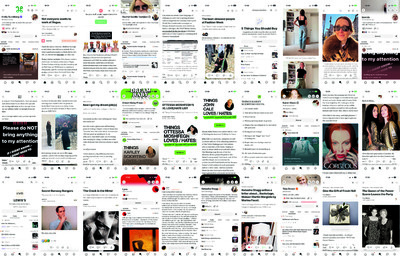
There’s the anonymous fashion vigilante and free-speech absolutist Lewis’s Mag, who uses Substack to actually critique(!) a collection, something you don’t really see anywhere else – at least not so blatantly. And in her newsletter, influencer Brenda Hashtag interrogates the very framework she is a part of, debunking various myths about how to make it as an influencer (PR lunches don’t work, apparently; instead, she says, you should just focus on nurturing your audience). Likewise, the stylist Gabriella Karefa-Johnson uses her Substack to dismantle the aspects of fashion she sees as contributing to a broken system. In one post, she critiques the notion of full-look styling and the fact that American Vogue dedicated an entire cover story to massaging its relationship with its golden goose, Louis Vuitton.
What brought you to Substack?
Gabriella Karefa-Johnson: I started ‘Brain Matter’ nine months ago. It was my second or so season back on the fashion week circuit, unattached to a magazine formally. I wanted to create my own place to parse out my ideas.
How does it differ from fashion content elsewhere?
Well, let’s be clear, my Substack is a blog. It’s one long op-ed comprising all of my chaotic and meandering thoughts. There is no pitching for approval; there isn’t always a peg in the mainstream or zeitgeist. I aim for criticality, but sometimes I’m also shitposting.
What can Substack bring to fashion?
More rigorous criticism of the harmful systems that fashion upholds. I want tougher conversations about the social and political mechanics of this industry. I want to know where people stand.
Indeed, it is this lifting the lid on the cogs of our industry, exposing its machinations, and calling out that which is broken, in a much more thought-out and contextualised way than the ragebait we’re seeing on Instagram or X, which I find so intriguing about the kind of fashion content that I’m seeing on Substack. Raging against the machine feels fresh and rebellious. Especially after the more sanitised content we’ve been force-fed for so long via legacy media.
That said, some fashion people aren’t writing about fashion on there at all. Instead, they’re using Substack as a dumping ground for thoughts, feelings and emotions. When emailing the other day, Natasha Stagg – who started her brilliant ‘Selling Out’ newsletter back in 2020, after deleting both X and Instagram in protest – said something I can’t get out of my mind. ‘Doesn’t it feel, now, as though most of our time is spent trying to see through something, that nothing is totally honest and easy anymore?’
Like Stagg, I’m at a point in my life where I’m increasingly allergic to the artifice that we’re constantly seeing being pedalled online (which I obviously, hypocritically participate in). Unlike Stagg, however, I’d rather eat wasps than delete my Instagram. But for me, the two cancel each other out, with Substack functioning as a kind of antidote to the performative perfection we see (and I enforce) on Instagram. It gives readers insight into people that they might not find anywhere else. For example, the other day I read an intimate stream of consciousness from fashion disruptor Lyas, in which he questioned whether the guy he was seeing was into him. ‘It allowed me to be vulnerable,’ admits Lyas. ‘I believe there’s a spontaneous thing to sharing your writing on Substack… it doesn’t have to be perfect; it’s just gotta be true.’
This quest for truth is what brought the model Karen Elson to Substack, where she has written about everything from being on the brink of a miscarriage to the personal politics of ageing in a society that fetishises youth.
‘Rachel Tashjian ever so slightly burst my bubble by pointing out that Substack has been actively courting fashion people, trying to get them to join.’
What was it about Instagram’s current that brought you to Substack?
Karen Elson: Like many on Instagram, I started to feel like the magic was waning. The thing that made those platforms special, the authenticity or sharing the weird things we were into, morphed into ‘content’. For me, ‘content’ is a terrible word; it’s devoid of anything unique and interesting.
What do you get from writing on Substack?
Some days I wonder if I share too much. It’s a balance: people know my face, or a curated version of me via an interview where I’m usually peddling something. On Substack, I can be myself.
What are you looking to read on Substack that you can’t find anywhere else?
Unfiltered realness, the quirks, the mistakes. The beauty of Substack is that a lot of us hit send on our posts when an editor may have told us to change something. There is something a little unhinged about Substack that I appreciate.
Leaning into the diaristic aspect of the platform, veteran journalist Tina Brown joined Substack in 2024. Fusing the personal and the political in ‘Fresh Hell’, Brown is just as likely to interview an exiled leader of the opposition in Venezuela as she is to share intimate details about her 30-something-year-old son. After nearly 50 years of filing perfectly formulated copy, she finds the notebookish informality that lends itself so well to Substack a much-needed relief.
What is it about Substack that appeals to you, as you enter your – as you described it – ‘third trimester’ of life?
Tina Brown: I’m able to have the freedom to be myself, say what I think, without anybody questioning why I will be saying it, or for what reason. For me, it’s a perfect time to be liberated… It felt like a more intimate process and a hassle-free one. I certainly don’t want anybody telling me to be careful. And in this world of terror and timidity about, sort of, Trump and lawyers and all the rest of it, I don’t want to be told that something is ‘appropriate’ or not.
Has it changed your style of writing?
It’s allowed me to be my private writing self. When you’re writing for a publication, you are always sort of slightly dressing for dinner, whereas I think that it allows me to just simply write as I write, like in my diary or to friends. It gives you the sense that you are writing for yourself. Of course, that’s a myth, because you’re actually writing for the world. But it does promote more of a feeling of colloquial release.
Do you find that you’re sharing more about yourself in your writing?
Yes, in the sense that I can express some of the process of it at the same time. In my last column, I wrote, ‘I have no idea how that person got into the news flow and I don’t care’. I might not have done that for a piece that was for a magazine. It’s a way of being able to be true to the thought as it falls to the page. Sometimes I write about my family, so in terms of the topic, there’s no constraint; I write what I feel like writing.
That’s not to say that Substack is this totally worthy, altruistic space where people come and share their feelings and fight the good fight against corruption. People are also there to make money in a landscape where jobs in traditional media are drying up and commissioning budgets are being slashed.
My Substack is free, which is partly due to my raging imposter syndrome and the fear that nobody would pay for any of my dribble, and partly because I feel weird crowdsourcing money from strangers. For me, the reward isn’t financial, it’s reputational. It’s gratifying to have people come up to me and compliment me on my Substack. No one’s ever complimented me on my Instagram, and it would be kind of weird if they did – it’s basically just spon con and pictures of my kids. As a friend of mine with a successful (free!) Substack said, ‘I do it more to remind people I’m funny and important.’
Last year, i-D editor-in-chief Thom Bettridge launched a personal Substack in which he dissects the mechanics of ‘content’, unpacking what works and what doesn’t – basically giving us the secret sauce to his editorial wizardry. He has 6,500 subscribers, and puts all his content behind a paywall. £60 a year gets you access to his newsletters, reports, expert interviews and ‘Attention Economics’ series, whereas £375 per year gets you an hour-long one-to-one per year with the man himself.
‘The reward isn’t financial, it’s reputational. It’s gratifying to have people compliment me on my Substack. No one compliments me on my Instagram.’
A lot of those subscribers will be students to whom Bettridge generously gives free subscriptions, and some people will be there for the free intros, before the paywall kicks in. But let’s pretend for a minute that all 6,500 subscribers are paying customers, that would mean Bettridge was making just under £500k per year, which is 10 times more than a senior editorial salary at most UK-based titles. ‘I have horrendous executive function skills, so I knew that I would need to pay someone to help me produce CONTENT if I were going to actually do it consistently,’ he says. ‘So having paid subscribers offsets that cost. I offer paid subscriber status gratis to students and people who are new to the industry. If you’re a marketing fat cat, you have to fork up.’
Writer Liana Satenstein, who has over 15,000 subscribers, only paywalls some of her content. For £55 a year, she gives readers access to a monthly deep dive exploring some kind of archival fashion treasure. For Satenstein, what started as a fun experiment has since evolved into a more considered editorial pursuit.
Why put some posts behind a paywall?
Liana Satenstein: I started to charge for the posts that I heavily research. For those sorts of pieces, I talk to primary sources. Then I transcribe. Then I hire an editor whom I trust. They are enjoyable, but it can be a lot of work. I started to charge for posts that include vintage picks, too. I just did this with a post about Long Lady Wallets. This isn’t, like, a diluted market post though… I go in!
How does the kind of content you create on Substack differ from what you were doing at American Vogue?
I quit my job at Vogue after working there for over eight years. There were things I wanted to write about, but just didn’t… Like breaking down Madonna’s ‘Bad Girl’ music video, which was my first post. I can write when I want. I don’t have to wait for editors or publications to get back to me.
Why are fashion people moving to Substack?
I think people want autonomy, both financially and creatively, and you don’t necessarily get that at a legacy publication anymore. Everything you write or do will always go to build the publication, and not the individual. There is also a direct connection with the audience that I think is important.
And there’s so much potential. Forget writing as an individual; with a bit of elbow grease and vision, you can create your own alternative media company. Just look at what Emily Sundberg has done with ‘Feed Me’, in which she manages to make dry financial news funny(!) and hot(!) and cool(!). Since launching her Substack in 2022, while she was still working in marketing at Meta (a job she was later made redundant from during a series of layoffs), she has turned her humble newsletter into a lucrative media empire.
‘I think people want autonomy, both financially and creatively, and you don’t necessarily get that at a legacy publication anymore.’
Sundberg has her own employees, hosts her own events and even makes her own sell-out merch. Where other business titles might prioritise traffic and revenue over things like quality and integrity, by focusing on nurturing her relationship with her 150,000-plus readers, all of whom have come to demand a certain level of honesty in her work, ‘Feed Me’ feels like a return to some original intention. Imagine a magazine creating content based on what its editors and their readers were actually into, and getting paid for it too, without having to go cap in hand to a brand for some money to do a random advertorial on something nobody cares about. Isn’t that what fashion is crying out for?
Before I started writing this article, I had this really romantic idea about fashion’s migration to Substack, that it was the result of some zeitgeisty pursuit of truth; a revolt against the tyranny of Instagram and legacy media. But then I spoke to senior style reporter at CNN, Rachel Tashjian, and she ever so slightly burst my bubble by pointing out that Substack has been actively courting fashion people, trying to get them to join (I mean, wasn’t I also technically groomed?) and that, conversely, fashion people are also starting to invest in the company, with Jens Grede, co-founder and CEO of Skims, investing an undisclosed amount in the company’s $100 million Series C fundraising round. In short: fashion’s move to Substack has been carefully orchestrated.
But even so, at least for now (there is talk of implementing native ads, but in such a way that it maintains the platform’s founding ethos), Substack only makes money (a 10% commission on every paid post) if the creators do, and creators only make money if their readers are into whatever it is they’re writing, which means a certain quality and integrity must be adhered to. If your content suddenly devolves into clickbait and spon con, people are just going to unsubscribe. Just like they would if we all started putting our Instagram behind a paywall. Imagine!
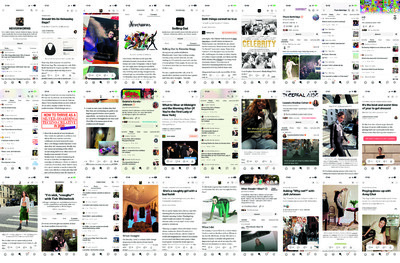
Then there’s the whole gift guide and marketplace of it all, which, on the surface, just feels like Instagram and legacy media 2.0. ‘A lot of people who are moving into the space for fashion are people who are prioritising shopping and affiliate revenue, and that’s where they’re making their money,’ says Tashjian. ‘Fashion on Substack really started with Becky Malinsky and Leandra [Medine] Cohen. And the two of them were very much writing about shopping, and that hasn’t changed much to this day. Now, when you go on Substack and you look at fashion content, it primarily looks like what the market pages of magazines did 20 years ago.’ This, however, doesn’t really bother me, because there’s something about it being on Substack, this (for the moment) alternative media engine, that feels elevated.
I’d rather read a piece on skiwear essentials that Becky Malinsky has researched and written in her signature conversational, humorous style than scroll through a carousel of pictures of her wearing whatever fits she’s cobbled together on her morning coffee run. Even though they’re basically doing the same thing, the former feels more intentional and rigorous, and less of the blatant blend of commerce and self-promotion that is so intrinsic to Instagram. And at least I know that my money is going straight to Malinsky as opposed to whatever title she was previously working under. That’s got to count for something, right? Also, crucially, if I don’t want to see it, I don’t need to subscribe.
Another potential cause for concern for the Substack heads is the fact that brands and traditional media publications are starting to move in, with the idea being that they’re crowding out independent thinkers and tainting this editorial arcadia with the threat of institutionalised commerce. In the last year, we’ve seen the arrival of Balenciaga, The Real Real, Tory Burch, The New Yorker, The Paris Review and i-D. For them, it’s a no-brainer. ‘So many brands crave deeper storytelling beyond campaigns and product drops,’ says Substack’s Farrah Storr. ‘They also want to foster meaningful relationships with a self-selecting, deeply engaged audience. The brands succeeding here treat their Substack as a long-term relationship-building tool, not just another content channel.’ This is something Tory Burch has been able to nail with their Substack, ‘What Should I Wear?’ (a nod to American designer Claire McCardell’s seminal book of the same name). Nestled in between the more obvious gift guides and shoppable trend pieces are engaging features that aim to spread a message of female empowerment, like an interview with All The Cool Girls Get Fired authors Laura Brown and Kristina O’Neill.
How has Substack allowed you to engage with your audience differently?
Tory Burch: Substack is where we go deeper on storytelling, engage directly with readers around the world, and highlight women who inspire us – other designers, editors and entrepreneurs.
What is it about Substack that appealed to you in comparison to other platforms?
We started ‘What Should I Wear?’ in 2023 as the next-gen iteration of ‘Tory Daily’, the blog we launched in 2009. Storytelling has always been incredibly important to me, and the way people consume this content has changed. We were drawn to Substack for its creativity and strong sense of community.
What is the ethos behind it?
‘What Should I Wear?’ is purely editorial and retains the lo-fi spirit of our original blog. It is run by our creative team, which includes former magazine editors and art directors.
I don’t know about you, but I’d rather be bought a drink before someone tries to get their leg over me, and that’s what’s happening here with these brands on Substack. Instead of ramming their products down their audience’s throats, they’re attempting to woo them first with charm, intellect and wit, creating culturally relevant content in the process. It reminds me of the early days of SSENSE, which was about community and culture first, shopping second.
It’s the same with publications. I love what i-D is doing on Substack. The other day, they staged a livestreamed pitching meeting, in which they peeled back the curtain on their editorial operations, which felt fresh and new.
Why was it important for i-D to be on Substack?
Thom Bettridge: Substack is the nucleus of DIY publishing today, and i-D is an institution that is rooted in DIY publishing. It is a platform that very much feeds off parasocial behaviour, so we wanted to make content for it that’s unfiltered and directly from our editors, so that you feel like you really know us.
‘Jens Grede, co-founder and CEO of Skims, has invested an undisclosed amount in Substack’s $100 million Series C fundraising round.’
Why are we seeing such a migration of fashion people to Substack?
It’s funny because a lot of the OG Substackers who are dominant on the platform now – at least the ones I know personally – were people who quit their legacy media jobs and went their own way. Not only did they find that they could get paid a shitload more, but they also found that the unfiltered, down-the-rabbit-hole version of what they were into, that no editor would let fly at a real magazine, was actually what people really wanted. That vibe is contagious and I think any smart brand or media player trying to enter that space needs to get on that wavelength, or they will fail miserably.
How does fashion coverage differ there?
I actually think a lot of the fashion coverage on Substack is pretty mid. A lot of it is sharing affiliate links and making gift guides, or sharing a tired mood image of Hermès by Martin Margiela that someone found on Pinterest. That’s why it’s been nice to see veteran editors like Rachel Tashjian and Gabriella Karefa-Johnson come on board. I think that shift will bring more critique and ideas into the mix, versus fan behaviour.
How will Substack evolve?
A lot of people on Substack worry out loud that the platform is going to get gentrified by newcomers and brands. But I actually think it has a lot of room to grow without changing. The reality is that the pie of people who care about fashion is growing constantly, so fashion on Substack is primed to grow with that.
Indeed, as long as you’re creating authentic, boundary-pushing content that you can’t find anywhere else, it shouldn’t matter which brands or publications are moving to Substack. It’s not a threat, it’s a challenge to do better. With the promise of creative freedom and financial autonomy, unsullied (at least for now) by traffic targets and advertisers’ demands, and an invitation to be as raw and unhinged as you like, we are living in a golden era of Substack. Because of the unique financial model, the quality and integrity of content will always come first, ensuring writers, brands, and publications uphold certain editorial standards, which in turn, I truly believe, will contribute positively to the culture. Yes, things might change. And they probably will. But if you’re not into it, you can just unsubscribe, or better yet, call it out on your own Substack. Isn’t that what it’s there for?