That time when 1990s cult magazine Dutch shot an 82-page fashion story, with no fashion.
By Thomas Lenthal
Photographs by Mikael Jansson
That time when 1990s cult magazine Dutch shot an 82-page fashion story, with no fashion.
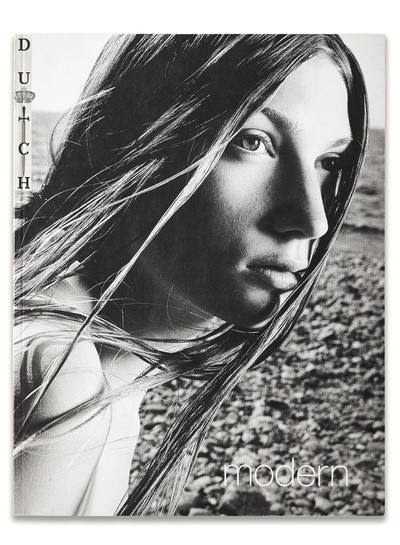
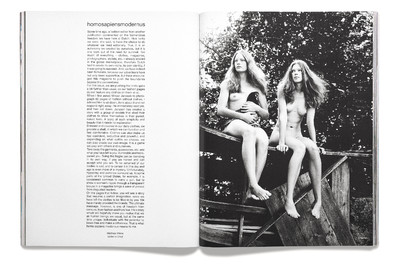
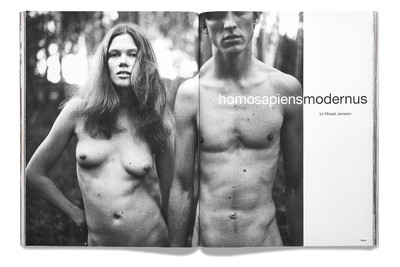
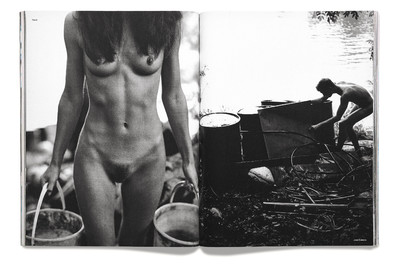
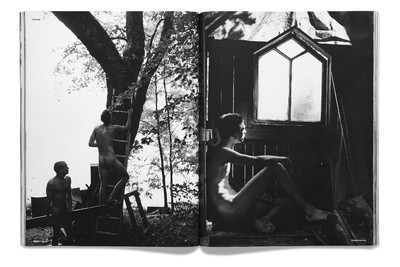
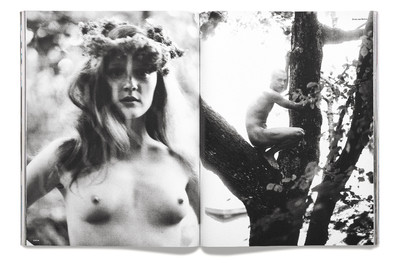
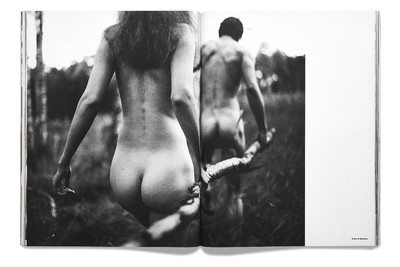
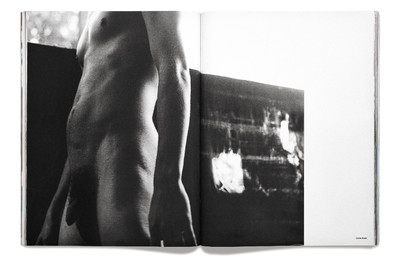
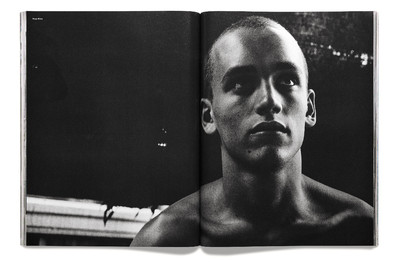
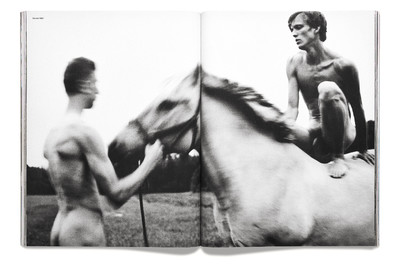
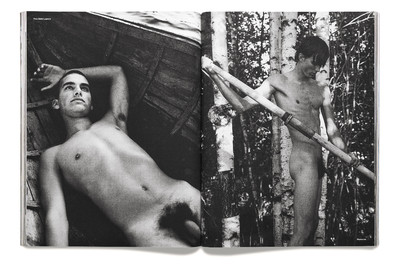
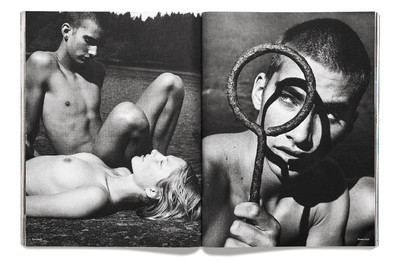
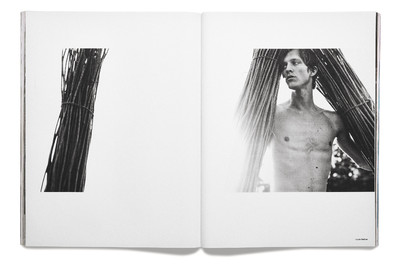
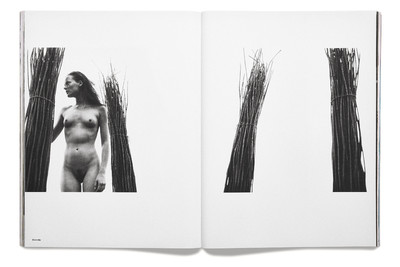
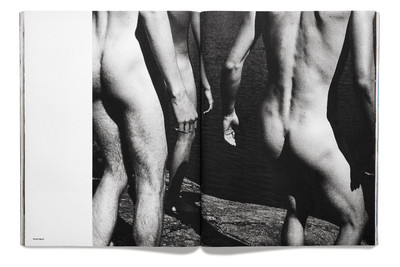
In 1998, Dutch magazine published an issue that has since acquired the status of fashion world legend, shorthand for a particular kind of editorial audacity that feels harder to locate today. Instigated by the Dutch (and Dutch) editor and creative director Matthias Vriens, and titled simply ‘Modern’, the issue contained 82 pages of black-and-white photographs by Mikael Jansson: nude men and women photographed across the Stockholm archipelago. What made the portfolio so disruptive and indeed memorable, however, was not nudity alone, but the deadpan conceptual gesture attached to it. In the corner of every image sat a single fashion credit – Prada, Gucci, Helmut Lang, Chloé, Louis Vuitton… – despite the conspicuous absence of clothes.
The story behind the issue is, by now, well-rehearsed. Four years into Dutch’s run, Vriens found himself facing a familiar problem for independent magazines operating on the margins of the late-1990s fashion system (that has seen little change today): limited access to collections to shoot and budget. Rather than compromise, he removed the clothes altogether. What emerged was not an anti-fashion statement so much as a reframing of fashion’s conditions – a recognition that image, desire and brand symbolism circulate even when garments do not. As the legendary curator and writer Vince Aletti later observed, the joke was subtle but insistent: even liberation, it seemed to suggest, required sponsorship.
Seen in hindsight, the issue also reads as a precursor. Its matter-of-fact approach to nudity arrived many years before Mario Testino’s Spring/Summer 2003 Gucci by Tom Ford campaign featuring a model with her pubic hair shaved into an angular Gucci ‘G’. Yet unlike much of what followed, Dutch’s ‘Modern’ issue resisted spectacle. Nearly 30 years on, the issue continues to circulate as a reference point. To understand why it still resonates, System spoke with both Vriens and Jansson about the context and conditions that made it possible, the reactions it provoked at the time, and what it represented – and perhaps still represents – as a moment when fashion editorial briefly allowed itself a different relationship to freedom, humour and risk.
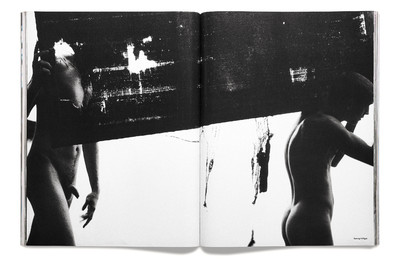
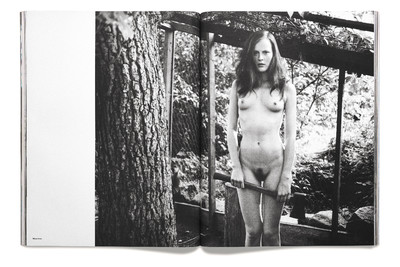
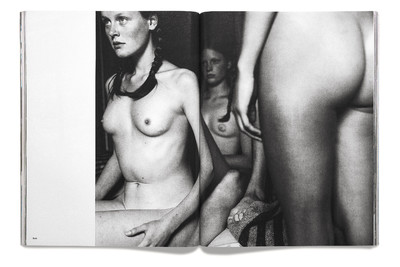
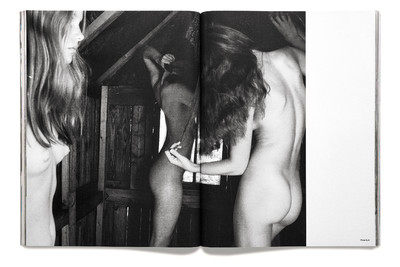
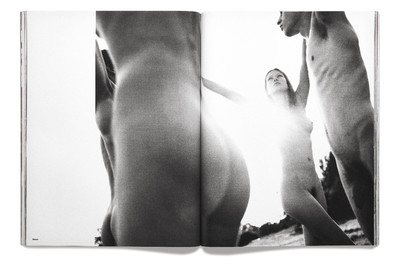
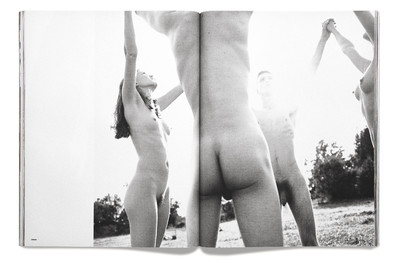
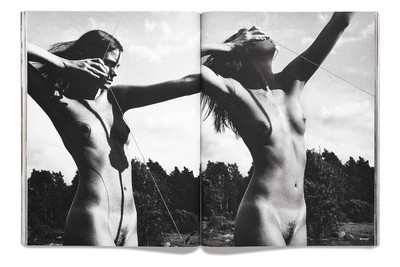
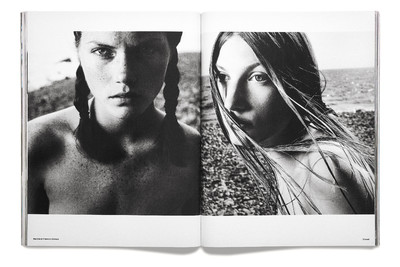
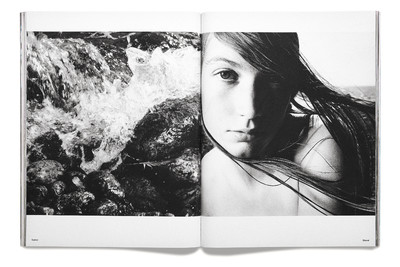
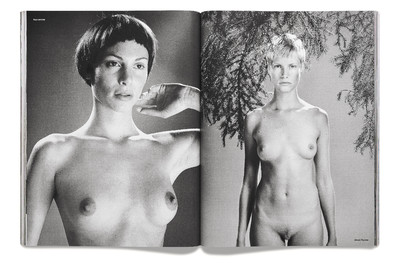
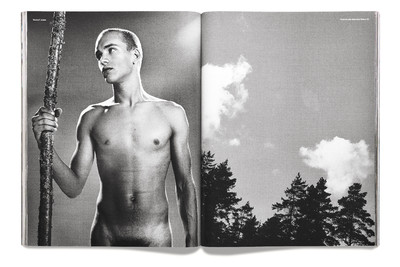
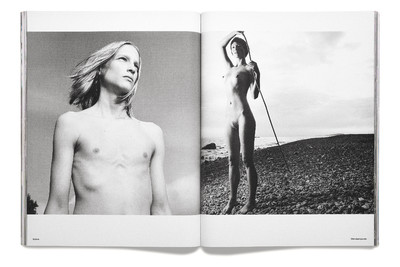
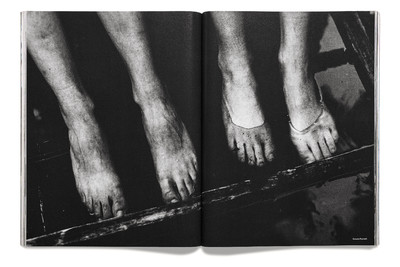
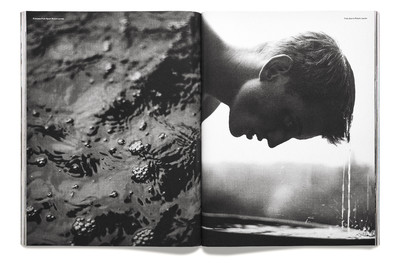
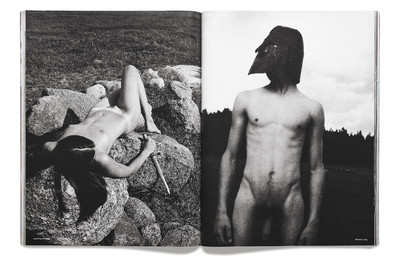
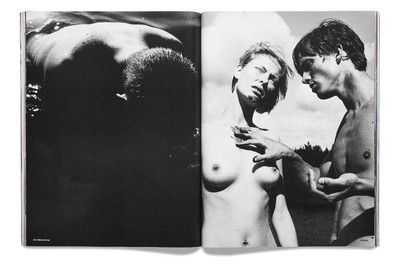
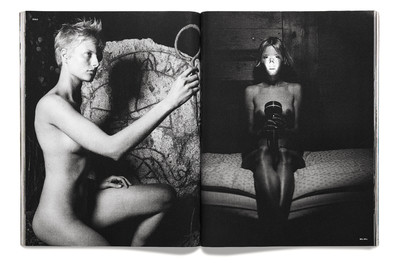
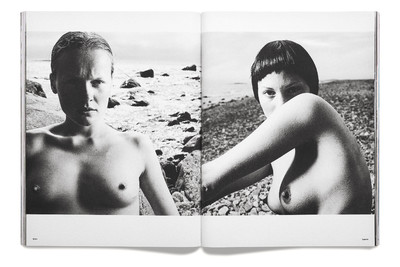
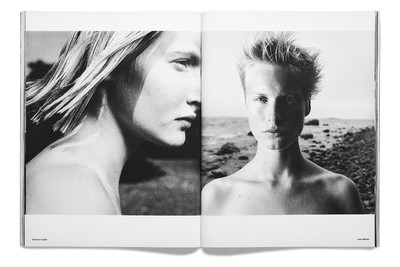
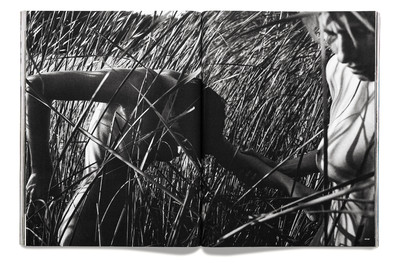
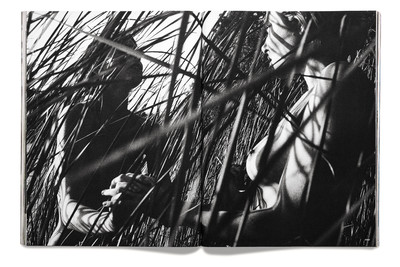
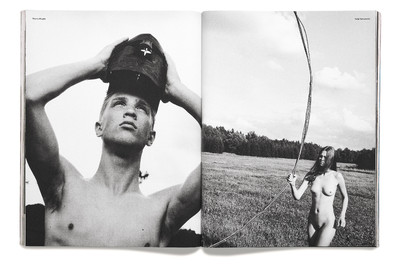
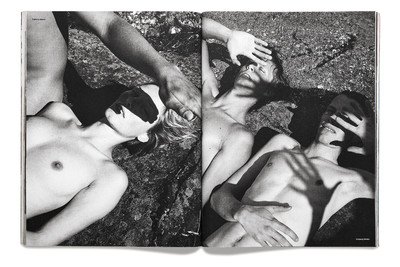
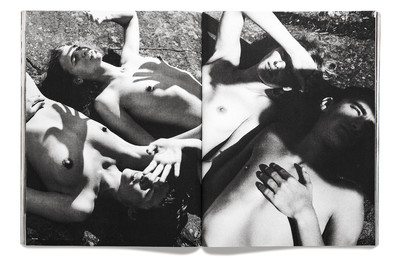
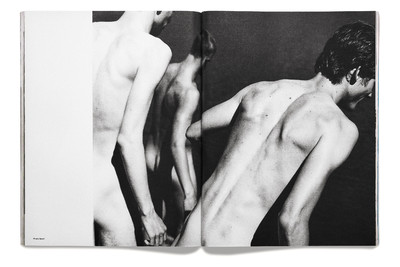
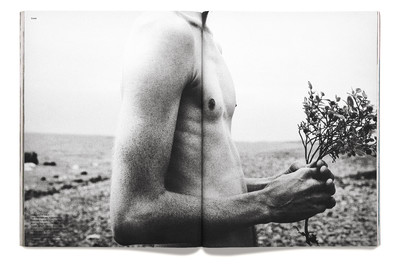
Thomas Lenthal: Let’s go right back to the beginning. How did Dutch’s nude issue come about?
Matthias Vriens: The theme of the magazine was ‘modern’, so I started talking with the team about what is modern and what is not. We started making contradictions, for example having Barbara Cartland give a quote about modernism, which seemed really quite farfetched, and then run that opposite an artist like Tracey Emin, who wrote an amazing email about modernism. When it came to the fashion story, I had something quite different in mind, looking at the clothes of, for example, Helmut Lang. However, even though Dutch was pretty popular we didn’t have the dominance of Harper’s Bazaar or Vogue Paris or American Vogue. I recall being in the Michèle Montagne [PR agency] showroom, and there being hardly anything available to shoot. Everything was at Vogue Paris, who’d hold on to it for three months, or American Vogue who’d keep it for six months. So, for me, there were some scraps left. Then it came to budget, availability, and so on. It became pretty stressful and impossible to actually get five or six shoots together, which, as you know, takes time and organisation. Our budget was also upside down. I had a couple of sleepless nights and then, again, pondered upon the question: ‘What is modern?’ I came up with the idea to scrap all the fashion and shoot nudes with credits. The ideal person that immediately came to mind was Mikael Jansson.
What did you tell Mikael exactly? How did you pitch it to him?
Matthias: I remember I had a very specific idea in mind, that he would shoot the entire fashion content. That already opened up a few doors because what photographer doesn’t like that idea? I knew at the time Mikael was working with a stylist that I quite liked as well, Kari Hirvonen, and that he created magical work with him. So, I said, ‘I want you and Kari to create something that goes beyond fashion. Because, as a matter of fact, there will be no fashion.’
I had a call with Mikael, and he wasn’t quite sure. Then I went to Stockholm, and I explained it in person much better than I did over the phone. He was very enthusiastic and said yes. Then we started contemplating. Because you can say: ‘We solved the problem, we have a bunch of nude kids, and there we go.’ And even though I love to provoke – maybe that’s a very Dutch thing – provocation for provocation’s sake is too easy. Having a reason to provoke in an elegant way is much smarter.
Mikael Jansson: I thought it was very inspiring, I didn’t recall it as being a provocation! I thought it was just a really fun idea.
Matthias: It was provocative because there’s male and female nudity. When it comes to female nudity, it’s not that shocking. But when it comes to male nudity, I think that still, even today, it’s very much a taboo, because we are used to seeing nudes of girls. Mikael played around with these kids for a couple of weeks on the archipelago islands, and I had seen some Polaroids, but then the prints arrived. Keep in mind that he is a fantastic photographer, and Mikael’s also from the school of Richard Avedon, he used to be his assistant. So I’d sit in my office, and these gigantic boxes would come wrapped in plastic, foil and tissue paper, and you would get these huge, beautiful prints. It was an absolute joy. It was better than my birthday and Christmas at the same time, like a visual orgasm. Working with Mikael is one of the best things that I’ve done as an art director, as an editor. The result was groundbreaking, tremendous beauty.
What Mikael managed to achieve is a feeling that it really doesn’t matter if there is a naked girl or boy in front of you. I think the essence of beauty and poetry within the structure of these pictures is so full and so radiant that I think we really managed to bring something extraordinary. That said, I felt a little sketchy about bringing this magazine around to some people. One in particular was Karl Lagerfeld, because around the time there’d been a couple of lawsuits for misuse of the Chanel logo. Karl saw the issue, sent me back a couple of signed prints and books and said it was the best issue he’d seen in a long, long time. And we became pretty thick friends after that.
Mikael, what was the working dynamic like on set? How did you or Kari interact with the models?
Mikael: Kari was very involved. He came up with all these funny props, and we had all this junk; almost like they were building something. We had this little treehouse, and they were climbing up the treehouse, up the ladder. That was his thing, that the models had things to do and to carry.
‘With hardly any clothes available to shoot – everything was at Vogue – I came up with the idea to scrap all the fashion and shoot nudes with credits.’
When it comes to the tactfulness of Mikael’s approach, do you think that comes from Scandinavian culture and its rapport with the bare body? Let’s put it this way: you wouldn’t have got that from an Italian photographer. It would have been quite different.
Matthias: Yes, it would have been different. If you look at the 1960s, the way Nordic countries had an openness towards sexuality, and even pornography – it was pretty significant. I remember my father’s drawers full of Scandinavian porn. I think there is this Scandinavian beauty within the structure of the pictures, this being one with nature that really spreads out through the story.
Mikael: Growing up, nudity was a natural thing. When you were at summer camp or on public beaches, it was not a big deal to be nude. In films by Bergman or others coming out in the 1950s and 1960s, they had that same thing.
Out of interest, was there anybody other than Mikael that you had in mind? Mario [Testino], for instance.
Matthias: I’m a big fan of Mario’s photography, but he would not have worked because it would have been almost Italian in the sense that it would have been far more erotic. Even though I am a big fan of anything erotic, I thought that would have been too easy. What Mikael created was this ethereal beauty that went beyond nudity. I think in that way we won big time. If I look at the story now, 27, 28 years later, it’s still very modern, it’s still valid.
Mikael, had you shot nudes before?
Mikael: Definitely. This was 1998 and I started on my own in 1987. I shot a lot of nudes when I started, and it was a completely natural thing to do.
Did you have any references or was it a natural continuation of those nudes?
Mikael: When I started to think about how to do it, I wanted to work with people that I knew would be comfortable. I worked quite closely with a modelling agency at the time, so I was transparent; even if the times were very different from now, it was still important for me that they felt comfortable. Many of the models that I photographed I had met before. I thought [being in] nature was important as well. I shot everything around my summer house in the archipelago. The whole thing felt very personal, how I was setting it up.
Like inviting a bunch of people to your house to spend a couple of days.
Mikael: Yes. We were around my house. The chickens [in the pictures] were my chickens, but then we were also in the surrounding neighbourhood and on a friend’s island where she had a house. We didn’t know how many pictures we’d shoot, Matthias didn’t give me a page count or anything. We ended up with 82 pages and he published all of them.
How many models were there on set?
Mikael: About 15 altogether, I think.
‘I love to provoke – maybe that’s a Dutch thing – but provocation for provocation’s sake is too easy. Having a reason to provoke in an elegant way is smarter.’
I remember seeing it for the first time. Beyond the fact that I thought it was just so clever and beautiful, it had an extra layer of intelligence because every picture carried the perfect credit. You’d be like, ‘Yes, of course, this is very Ralph Lauren, this one is obviously Calvin Klein, and this is Chanel.’
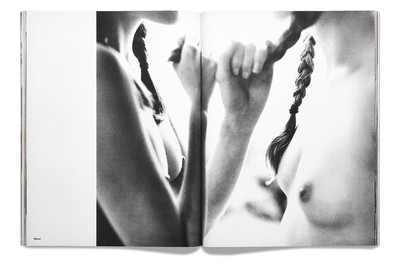
Matthias: Exactly. I really played with them for a couple of days. Two girls braiding each other’s hair – so it looked like knitwear, and that was Missoni. A girl with a hairy pussy carrying two buckets was Fendi. The guy splashing his face with water was Polo Ralph Lauren, and so on. I’m glad it came across. It was a bit like a puzzle, you know?
That’s where it became as much a Matthias story as a Mikael story.
Matthias: That’s kind of you to say. I think it’s 100% Mikael Jansson. But had he not gotten the opportunity to shoot this, I don’t think he would have shot that for any other magazine because, again, the freedom that we created within editorial is what we thrived on. That became the one reason we could still exist and get money from advertisers. The DNA of the magazine was freedom. If we would have done what Numéro or any other magazine was doing, we would have been a B choice and we would not have done a good job. Just like today, the market was very saturated. So that was our survival mode.
Was the issue commercially successful?
Matthias: Very. I don’t think I ever made such a flattering editorial with all the advertisers in there, you know? Every advertiser that we were working with, or were hoping to tempt into working with us, was in there. That’s a bit of a contradiction because there was literally nothing available. But I think everybody that had a credit in the magazine was incredibly happy, and everybody that didn’t was pissed off, believe me.
Mikael: I didn’t really think it was going to be a big thing. I thought about this afterwards, if the fashion houses or the brands would be offended by it, but I didn’t think about it at the time.
Did you get a lot of people calling you saying: ‘This is really great’?
Mikael: Even today, people always still refer to that shoot. Every time I meet Marie-Amélie [Sauvé], for example, she’s like, ‘Oh, that story you did!’ It was positive, but it’s been growing over time.
Matthias, did this issue trigger an interest for your work beyond the roster of people you were already working with?
Matthias: I’m a strange one. I like what I do, but I don’t necessarily hunt down results or connections through that. I’m a very private person, even though that seems like quite a bit of a contradiction, because my own work as a photographer is very outgoing – talking about sexuality and nudity most of the time, and very strongly so. But like Karl, he would work on something, do it and then drop it. And as you very well know yourself, you work so hard on an issue and then it’s out. For me it’s always a bit of an anticlimax. You move on and then you’re already in the production of the next issue. I never really had this moment of, like: ‘Let’s sit down and enjoy this one.’ I did enjoy it, but I don’t know if this issue opened up doors that weren’t already open.
‘Every advertiser that had a credit in the magazine was incredibly happy with what we did, and everybody that didn’t was pissed off.’
What do you remember about the fashion magazine landscape in the mid-to-late 1990s? How did Dutch sit within or stand apart from that environment?
Matthias: It was part of that great lot: i-D, The Face, Self Service, and Purple. Dutch fit in there nicely and was an equal even though it was different. I think Dutch was perceived as one of the leading alternative magazines because we were really alternative. We didn’t have a dime. I’m proud that we managed to make something that was equal to those other magazines.
Do you think there’s a legacy to the ‘Modern’ issue within fashion and image-making today? Being the first of its kind, opening certain doors or making certain things more acceptable? This was six years before the Gucci
pubic hair campaign.
Matthias: I’m sure that you’ve experienced it in your life as well, where you have an idea for your magazine, and then you see somebody else did it before you. And then everybody else seems to do it. I always see that within the stretch of collections, all of a sudden everybody has a red glove or fur or whatever. I think it was a moment in time that collectively was on this platform and co-existed within that stretch. I don’t think I invented anything. Did it change anything? I think we have not progressed. We have regressed. I don’t want to sound like a Debbie Downer and be too negative, but there isn’t a single fashion campaign today that I’m really blown away by. It’s all very, very, very safe. We’ve gone backwards, and I don’t think the ‘Modern’ issue would really be possible today.
Good point, probably not.
Matthias: I think it’s actually the perfect time to do it again. I once made an artwork with my ex-boyfriend Francesco Vezzoli. We did a remake of a trailer for Caligula. I worked with a bunch of really incredible people, including Gore Vidal. He said something along the lines of: ‘People say there are horrible times right now. The world has always been a horrible time.’ And that is indeed the case. Right now there are horrible times for sure, and we’re also aware of it immediately. That is the big difference. It’s an absolute moment of anarchy. And I don’t mean anarchy in the sense of me running around the rue du Cherche-Midi naked with a black flag burning. No, it’s a moment of extreme artistry and saying what is important and beautiful. Maybe in my case that is to a very niche audience. But that was also the case with Dutch. It wasn’t for everybody. I remember that Tom Ford had said Dutch was his favourite magazine, and he would give a couple of issues to André Leon Talley, who in turn would sneak them into Anna [Wintour]’s office, and then Anna would later complain to Hamish [Bowles]: ‘I don’t know why he’s giving me this gay magazine.’ Dutch was not a gay magazine. It had male nudity. It portrayed men in different ways than you would see in GQ or Esquire. That was already groundbreaking then.
Did you see the current Versace campaign made up of nudes?
Matthias: Yes. If anybody has a vocabulary within the stretch of the brand of sexuality, it is Versace. It’s Italian and it’s colourful and it’s about sex and seduction and luxury and all of it.
You started working with Armani right after Dutch. Why did you stop Dutch, or did Dutch itself stop?
Matthias: I left at the very height of it. To be honest, I wasn’t making any money. Through Robert Triefus I was offered the title of worldwide creative director of Armani. It was kind of like a hallucination. It was the first time I was offered a really great salary. So, I jumped. The reason that I jumped is that I really didn’t see much of a future for Dutch, unfortunately. The founder [Sandor Lubbe] had sold the majority of shares to a Dutch publishing company [Audax]. We already had a very small budget, and it became smaller and smaller. So, I was like, ‘OK, it feels a bit like the Titanic.’
I started looking for other stuff. I even spoke to Gardner Bellanger at one point, when she was still head of Condé Nast in France. She was interested and said something that upset me at the time, but in retrospect, I really understand. She said, ‘Matthias we’re very interested in buying Dutch, but we can’t buy Dutch because we can’t buy you. And you are the magazine.’ After I left, little by little the advertisers left. It’s not that it was a bad magazine. There were some really great issues, but it became more of a regular fashion magazine. Issues like the ‘Nude’ issue or the ‘Fur’ issue or even a ‘Sports’ issue, those weren’t happening anymore. As we’ve already mentioned, the market for magazines is and has always been very, very saturated. If you don’t have a couple of million dollars behind you, you are an alternative magazine, and you’ve got to really turn things around a couple of times before you manage to keep your head above the water.