ARCHIVISM, a ‘creative agency based on things from the past’, is setting the tone for China’s burgeoning vintage market.
By Gemma A. Williams
Portrait by Kin Chan Coedel
ARCHIVISM, a ‘creative agency based on things from the past’, is setting the tone for China’s burgeoning vintage market.
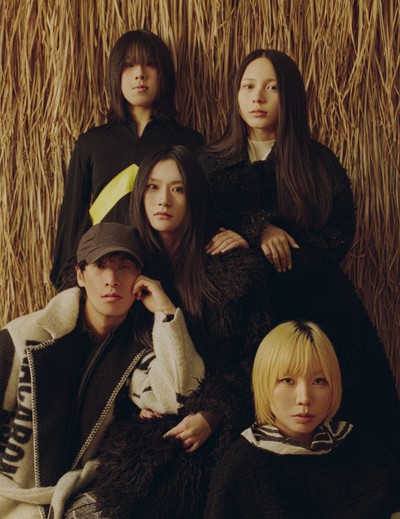
Brain La is a rising name in Chinese fashion. He’s not a designer, or a stylist, or even a photographer, but a collector of vintage fashion – something of a rarity in China until relatively recently. In 2023 he founded ARCHIVISM, a ‘creative agency based on things from the past’, the focal point of which is his collection. Built up over a decade, it clocks in at an eye-watering 8,000 pieces, many of which would make even the most established museum curators envious.
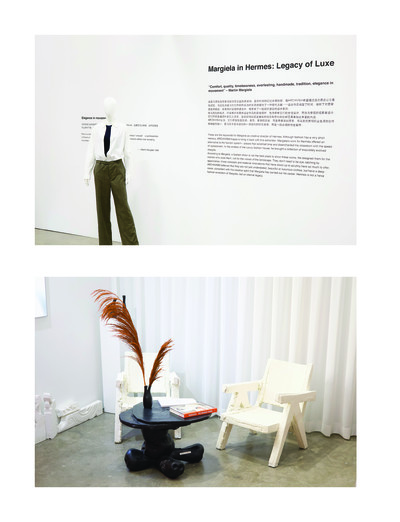
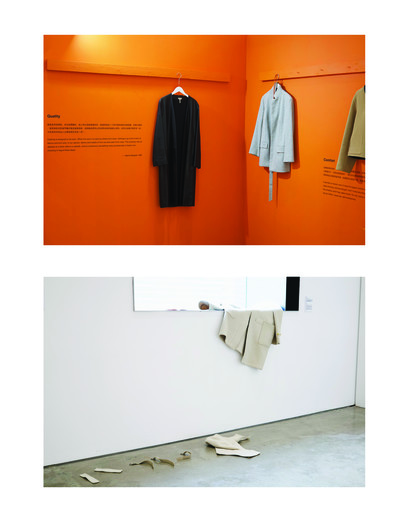
Since 2024, Shanghai-based La has been showing off select parts of this archive at highly curated pop-up events, the first of which was an exhibition of Martin Margiela’s ultra-revered collections for Hermès (1997-2003) which opened at the now-defunct concept store XC273. Prices ranged from €400 for a skirt or vest, to €12,000 for key, collectible pieces such as a long, black draped lambsleather coat – part of an ensemble that made up Look 14 of the Hermès Autumn/Winter 1999 collection. This curatorial project, which La calls ‘The Collector’s Room (TCR)’, presents meticulously researched and assembled exhibitions of if-you-know-you-know fashion history, but with a major twist: it’s entirely shoppable.
The ARCHIVISM collection features significant pieces from the most pivotal periods in the careers of numerous seminal designers. There’s an Alexander McQueen coat depicting the 1845 daguerreotype Drei Mädchen (‘Three Little Girls’) by Carl Gustav Oehme from the designer’s Autumn/Winter 1998 collection ‘Joan’; a Martin Margiela trompe l’oeil Tattoo Torso Ensemble from the designer’s Spring/Summer 1989 debut runway show; and a grey check dress from Comme des Garçons’ Spring/Summer 1997 collection, ‘Body Meets Dress, Dress Meets Body’, more commonly referred to as the ‘Lumps and Bumps’ collection, one of the holy grails for 1990s fashion collectors.
Throughout his decade of collecting, Brain La has zoned in on particular areas of interest: Hedi Slimane’s Dior Homme; Nicolas Ghesquière’s Balenciaga; Tom Ford for Gucci (the subject of the next TCR event opening in November); and Helmut Lang from 1989-2005. These brands and eras are not dissimilar from the interests of Western vintage collectors, but what sets this archive apart is its business model. Rather than hide it behind closed doors, ARCHIVISM has developed a retail experience that breaks the conventions of Chinese secondhand luxury shopping.
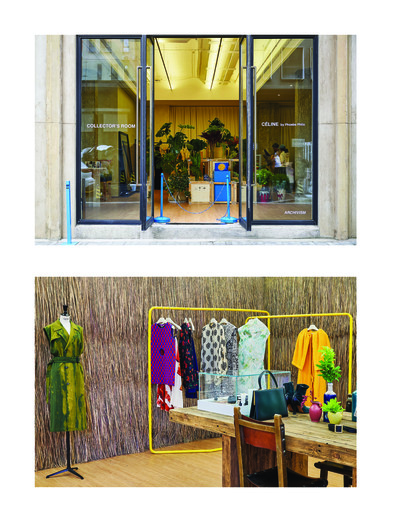
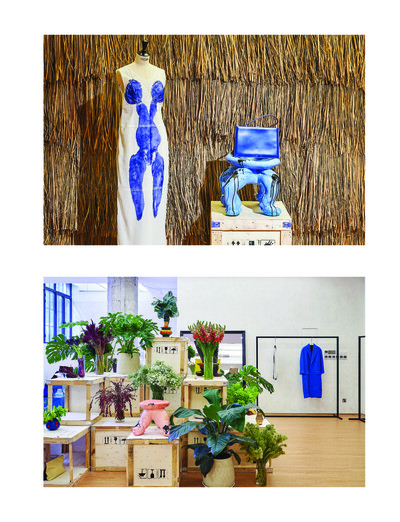
The most recent shoppable pop-up exhibition was a survey of Phoebe Philo-era Céline that ran from November 2025 to February 2026 at the art and design centre Suhe Haus in Shanghai’s vibrant Jing’an District. Featuring 800 archival pieces from the designer’s tenure at the label between 2010 and 2018, it included covetable classics such as the Yves Klein ‘Anthropometries’ dress from Spring/Summer 2017, and the woven checkered laundry bag ensemble from Autumn/Winter 2013, both priced at €12,000. The exhibition’s physical display also paid homage to spatial elements from Philo’s Céline world: the straw wall developed for the 2016 Pre-Fall campaign and store window displays; the floral installations seen in the Céline Paris headquarters circa 2015. Equally impressive is the depth of research that goes into assembling ARCHIVISM’s shoppable events. Instead of price tags, each piece is labelled museum-style with an image of the runway look, as well as information on the collection, look, and materials, which are deliciously paratextual.
‘Big storehouses in Shenzhen ask customers to don white gloves as they enter their premises to look through pre-owned Dior and Chanel handbags.’
Displayed alongside the clothing is a constellation of books, art and other ephemera that, taken together, paints a picture of Philo’s revered world: a comprehensive set of official Céline catalogues; VIP-exclusive printed campaign portfolios photographed by Juergen Teller, rarely seen publicly; and a collection of magazines featuring interviews with the designer. Out-of-print books by the artists and photographers central to Philo’s work also feature, such as Yves Klein, Brassaï, Dan Graham and Sarah Lucas. Clearly, Brain La is, as his name suggests, a brain. An obsessive and passionate one at that.
Typical of contemporary China’s new breed of fashion founders, he’s friends with all the right people: fashion PR Bohan Qiu; Zhang Yaning, design director of Chinese group JNBY’s label Less; and media veteran Tim Lim are all in his circle. La looks the part, too (he’s wearing full black Comme des Garçons when we talk). Just 30 years of age, he grew up in Xi’an in Shaanxi, an island province in North China, and studied biology in Canada’s University of Alberta. Alongside this, he had a deep appreciation for fashion, often posting little videos and reselling items here and there.
Like many before him, his entry point into collecting fashion was a love for sneakers, but it was a jacket from the Spring/Summer 2005 ‘Beautiful But’ collection from Undercover by Jun Takahashi that really changed his life. It was 2014 when he saw photographs of the collection on his friend’s WeChat. He’d never seen anything like it before and, like any self-respecting fashion obsessive, promptly got to work buying up all the pieces he could. ‘I wanted to soak up all the information I could find about Undercover,’ he explains, ‘and I wanted to understand what I bought.’
Aside from the role of discerning collector, La can add archivist, curator, stylist and tastemaker to his CV. He researches and lectures in fashion history at East China Normal University, but also engages a more general public – during our conversation, he mentions he’s just returned from Hangzhou where he hosted a series of talks to support the recently opened exhibition Martin Margiela 1989 – 2009: The Women’s Collections organised with the Palais Galliera. All of this experience feeds into his work for ARCHIVISM, but he still enjoys being on the shop floor. ‘I’m the best at sales,’ he says, half-jokingly, but something tells me it’s true.
‘Most Chinese people entered the world of fashion relatively late,’ La explains, ‘yet the industry here has developed with incredible speed and sophistication over the past decade, and customers have accumulated their fashion expertise through the act of consumption.’ Like La himself, this consumption includes, more recently than perhaps in Europe and the US, fashion’s own material history. Socially and culturally, Chinese shoppers have traditionally been highly resistant to the idea of purchasing and wearing secondhand clothing.
Japan, of course, has long made a name for itself selling covetable preloved pieces – both American vintage that was hard to come by even in the US, as well as from its most revered homegrown designers. The Western market, too, has spurred on the rise of what is known to younger consumers as ‘archive’ fashion – largely 1980s to 2000s avant-garde and luxury designer wear. Today, internationally, the popularity of secondhand clothing is rising exponentially. In consulting firm Bain’s Luxury Study for 2025, it was revealed that secondhand luxury goods sales had grown to an estimated €50 billion, outpacing sales of new luxury goods. Chinese consumers had eschewed the idea of buying pre-owned clothes due to long-held negative superstitions, but in the 12 years since I have been travelling there, the rise of interest in the resale market has evolved from an aversion to an explosion, exemplified by ARCHIVISM’s success.
Data from the marketing agency Daxue Consulting shows this to be true. The overall secondhand market in China was valued at RMB 1.68 trillion ($225 billion) in 2024, while the luxury resale market in China is currently estimated to be at $28 billion according to consulting firm McKinsey & Company’s ‘State of Fashion 2026’ report. Over 60 per cent of consumers in China have shopped more from resale platforms today compared with two to three years ago; and over 70 per cent report plans to shop resale in 2026.
This shift in attitude has been assisted by two major factors. The first is China’s economic downturn. Due to low consumer confidence, real estate pressures and rising youth unemployment, people are generally spending less. Put simply, shoppers want more bang for their buck. The second is the tech platforms with built-in tools for listing secondhand clothing, such as the AI interface on Xianyu, Zhuan Zhuan and Dewu (similar to eBay’s AI listing tools) and the popularity of flexing shopping hauls on Xiaohongshu (RedNote). These factors, and a new demand for secondhand luxury in particular, has led to new, physical spaces selling vintage in Tier 1 and 2 cities – something unheard of less than a decade ago. Big storehouses in places like Shenzhen ask customers to don white gloves as they enter their premises to look through pre-owned handbags from Gucci, Dior and Chanel.
Brain La’s collection, though, is different. It’s for those with, perhaps, more niche fashion interests than your average Chinese secondhand consumer. ARCHIVISM’s clients are usually older than the 18-to-25 age bracket shopping secondhand on Xiaohongshu. ARCHIVISM’s paying customers by contrast are much older, in the 40s-to-50s age bracket which La says is ‘the generation more interested in luxury experiences and slow retail.’ They are, he says, more educated about the history of fashion and, La admits, ‘easier to sell to.’
While ARCHIVISM is building up a reputable name as a key destination for niche vintage fashion, he and his contemporaries still face several issues in China’s resale market. For one, there are complex import taxes that must be taken into account. Plus, competition is high and an influx of luxury goods sellers might bring down the price of certain garments, ultimately lowering the margins for all traders. La said prices in Paris and London are, from his experience, currently higher than in China despite the added tax. While this may be true in some cases, prices can vary widely. Internationally, the Philo-era Yves Klein dress La has priced at €12,000 can be priced from around €2,300 on international sales platform 1stdibs, to €12,000 on Vestiaire Collective.
While it’s still early days, La is redefining what it means to shop for luxury vintage in China. So, what’s next – the ARCHIVISM Fashion Museum? ‘It’s not easy to build such a thing and it would require a lot of work and government support,’ La explains. For now, he’s consulting for a number of luxury brands and doubling down on the retail side of things. This Spring, ARCHIVISM opens its first permanent store (ARCHIVISM Gallery Store, AGS) in Shanghai’s Suhe Haus, and, in June, will bring the shoppable ‘Collector’s Room vol. 01: CÉLINE by Phoebe Philo’ exhibition to Paris. While the venue is still under wraps, Philophiles should still their beating hearts and start queuing up now. A fashion museum might not yet be on the cards, but La is certainly building the foundations for China’s first vintage fashion empire.