By Gabriella Karefa-Johnson
Photographs by Nick Sethi
Once forbidding, the fashion industry has been attracting new designer talent at an unprecedented rate. Applications to the LVMH Prize alone have risen from around 1,000 in 2016 to more than 2,400 in 2026.
The democratisation of access, however, has created a double-edged sword: a fairer chance, yet fiercer competition in an industry accused of eating its young. To emerge independently, then, may now be a bigger risk than ever – one worth celebrating, supporting and questioning.
For a new series, System has paired three industry ‘mentors’ with their chosen up-and-coming designers to discuss the joys and challenges of, well, coming up.
Spanning London, New York and Hong Kong, these inaugural conversations feature writer and editor Olivia Singer, Chinese retailer Labelhood’s founder Tasha Liu, and stylist Gabriella Karefa-Johnson in conversation with Traiceline Pratt, Kinyan Lam and Miss Claire Sullivan, respectively. Together, they begin an evolving survey of who is emerging, where, and why.
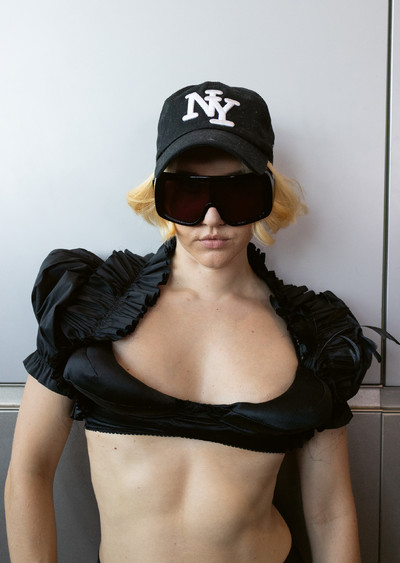
We have a saying here in New York. It’s become even more prevalent since Mamdani won the mayorship and the Knicks won the ’26 chip: “New York is the Greatest Country in the World.” Of course, this is because of its colossal and chaotic energy – its plurality and contradictions. But, most of all, it’s because of our outsized contribution to world culture. When I think about the city, I think about possibility. New York is expansive in a way that is only possible because the place itself beckons those from all corners of the globe who long to make, to create, to become.
Suffice to say, there is no shortage of fashion folk making their way through this wild city and even wackier fashion industry, but I can’t think of a designer more tapped into the perennial practice of becoming than Miss Claire Sullivan. It’s why every moment we encounter from her collection – whether on the red carpet, world stage or streets of the Lower East Side – feels like a happening.
She invents and reinvents. She writes the code. In many ways, she is the blueprint. And I reckon her legions of IYKYK stans, faithful (and growing!) client base, and endlessly inspiring and inspired community might agree with me. So, we got talking.
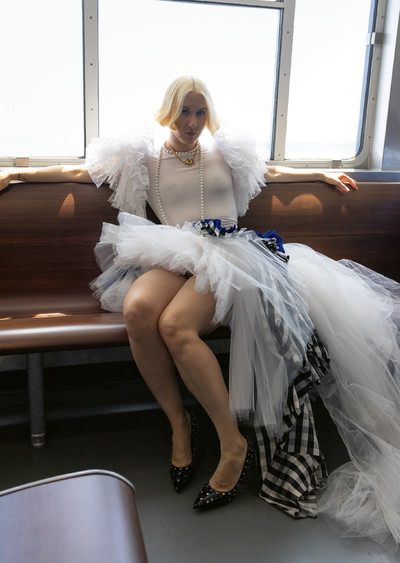
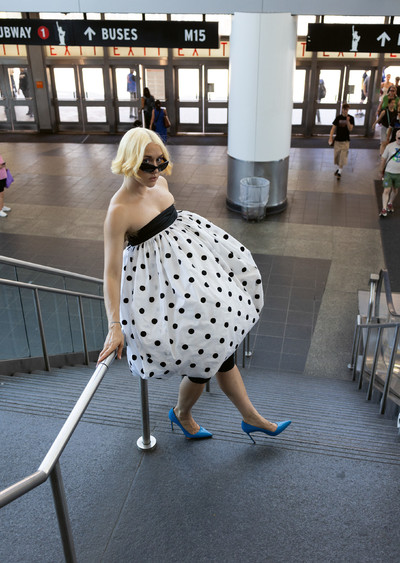
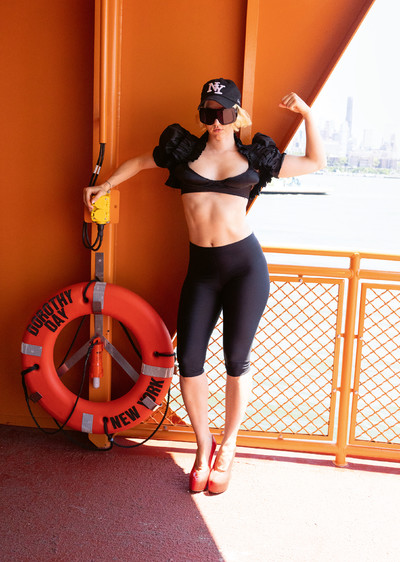
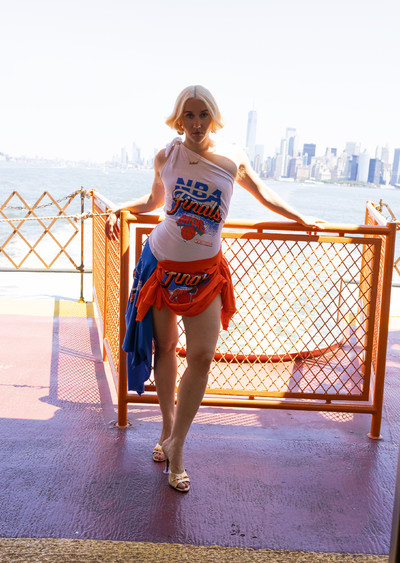
Gabriella Karefa-Johnson: When I got asked to participate in this project – choose an ‘emerging’ New York designer to platform and interview – no one could really define exactly what ‘emerging’ means for fashion designers. But I thought it was an interesting idea, especially in New York, a city that for so long was where talent broke and set the stage for global fashion. What are your goals operating here as an ‘emerging’ designer?
Miss Claire Sullivan: As someone who’s in a deep-rooted community in New York – of nightlife and musicians and artists and designers – there’s so much richness here, and so much richness in the history. People don’t often think of New Yorkers as couturiers, or even as part of that history. It’s all Paris, but one of my favourite designers is Charles James [who was based in New York from 1939]. I definitely consider myself as emerging. The work I’m doing right now is new, and people are excited by it. A lot of people are leaving New York, but that creates a vacuum for even more creativity.
The community you’ve built is anchored in nightlife and art, outside the fashion industry. Perhaps there’s a through-line with Charles James, because at the end of the day, the couture and party dresses he made were for women to socialise in.
Exactly.
They’re exquisite and ceremonial, but that’s just how socialising happened back then. So where does nightlife come into what you’re doing?
The pieces I design aren’t exactly made to get super sweaty in the club, but I’m the kind of designer who designs clothes to be worn. I’ve spent the majority of my time in New York seeking out dance floors, and it makes perfect sense that so many performers are wearing my pieces, because there’s an element to it that considers movement, dance, joy, storytelling. I also think the dance floor is a space where I am able to let all the thoughts go out of my mind and just be in my body and with music and in community. And that’s a really important element of inspiration, this emptying of your brain.
‘I had the dress-up trunk and the princess dresses. I was always fascinated by clothing, beauty and art. I was in fifth grade Googling ‘fashion college’.’
That makes me curious about what you were like as a kid. What were some of your first encounters with fashion, and what got you here?
I definitely had the dress-up trunk and the princess dresses. I was always drawing and I was fascinated by clothing and beauty and art. I was in fifth grade Googling ‘fashion college’, so that was in the back of my head from day one. I have two very influential men in my life; one of them was my dad’s best friend. When my dad passed away, he really stepped in, and I call him and his husband my gay dads. They introduced me to taste and art and fashion.
Fashion was always fantasy and escape for me, and it’s getting harder to tap into that with all the existential dread right now. How do you negotiate where we are socially with these joyful, beautiful artworks you put out?
It’s something I think about quite often. I’ve come to the conclusion that creating work that adds joy to the world is really important. I’ve struggled with this before. Sometimes I feel like, what am I doing making dresses? People are dying. There’s a genocide. I have this negative self-talk in my head that’s like, ‘How dare you think it’s OK to do this?’ But when someone tells me that the work I do puts a smile on their face or makes them light up, I’m like, ‘OK, that’s also important.’ I don’t believe we can just turn our eyes away and live in a fairytale land, but there is a balance, and both are important.
Am I right in thinking your business is a made-to-order business?
Yes, absolutely.
That obviously comes with the constraints of scalability. So what is the next step for Miss Claire Sullivan? How might you preserve the magic of that process and your hands on everything and the spontaneity and the chance, and then also grow?
This is a question I’ve been asking myself recently. I was convinced that growing a custom business had a ceiling, but now I’m not actually sure that it does. My mission is to always maintain that sense of wonder and spontaneity and excitement in the brand, and doing custom work and creating these experiences individually for each client will always be the core. But we have started to develop styles that, even though they’re still made to order, are from a collection that you can pick from. We’re also working on launching a couple of products in September that will be available to purchase as ready-to-wear: jewellery, necklaces and one little top. It’s about doing it slowly and intentionally rather than just investing in inventory.
At that kind of pace, there can be a real fear of burnout, especially as an emerging designer. So how do you renew? How do you keep your head about you?
I have a really regimented morning routine that I try not to compromise. But the dance floor is so much a space for me to unwind. Also, I’m really big on gratitude. I try every day to write out all the things that are going well, because it’s so easy in this hamster wheel to get jaded. I had a studio visit with the chief executive of the CFDA [Steven Kolb] and Thom Browne last week, and afterwards it was like, ‘OK, on to the next meeting.’ But then I was like, ‘Hold on! Just pause, there are things happening that are a big deal, soak that in, celebrate it.’
You’re currently nominated for the CFDA/ Vogue Fashion Fund. What are your thoughts on prizes as an emerging designer? There’s the platforming and exposure, but also the ‘prize curse’: you win a boatload of money, then realise it’s one runway show, and the demand just gets you further into debt.
Raul Lopez actually came and talked to the CFDA class of 2026 about how so many people go through the prize and they’re so focused on winning the money that you don’t even realise what’s happening around you. So my approach has been to take a breath: just to be nominated for this is huge. There are thousands of people who apply and now I am part of this community. That’s never going to go away, prize or no prize. Having the resources, meeting the judges, coming face to face with Thom Browne and asking him questions about his business and about my price points – that as a resource is incredible. And while $300,000 would also be incredible, I’m trying to look at this as an opportunity to grow. I don’t want to sound arrogant, but I know that Miss Claire Sullivan is going to be alright with or without a prize. For me, it’s about the journey.
‘People don’t think of New Yorkers as couturiers, or even as part of that history. It’s all Paris. But one of my favourite designers is Charles James.’
Because this is System, and I’m sure there will be young designers reading this profile, what would you say to a young designer who wants to pursue this passion of theirs professionally?
Do you love it? That would be my first question. And are you willing to do it in a way that’s going to be painful? Because it’s not easy. I’ll never forget when I was working for another designer, and she just looked at me and was like, ‘Never start your own brand.’ I was an intern at the time. But what she meant was that it’s hard, and if you don’t love it, it is not worthwhile. But if you do love it 100%, it is so worth it.
If you think about ten years ago, I wonder if you had imagined that this is where you were going to be.
Oh my God, no! Ten years ago I was an intern for Vaquera.
How do you look back now at that whole time in the city?
It was so much fun. We had a ball. It was a time where we were just being artists making clothes, and it was also chaotic as fuck. It was formative in this way that you have to be young and chaotic at a certain point in your life. But I also learned so much. I learned so much from doing things right, doing things wrong. Making mistakes and fixing them, or not fixing them. Having fun, breaking the rules.
You guys were young and chaotic, and it was so exciting to witness. It makes me want a new moment like that from you, especially a runway show. A lot of young designers say it’s not worth the money, a $300,000 prize out the window. What are your thoughts? Is it something we’ll see going forward?
I would be completely lying if I said it wasn’t a dream to do a runway show. I think it would be fantastic and I would love it, but it is something that I’m not in a rush to do because of how much it costs. And there are so many ways to show work that don’t necessarily mean putting on this big production. It also comes with a lot of pressure. Once you start doing it, people expect you to do it again, and the way I make work is like a musician’s: you make an album when you feel inspired.
There was one other thing I wanted to ask about. Who would be your dream person to create work for? And is there somebody who, if they came to you in the busiest period of your life, you’d be like: drop it all, we’re getting down and dirty for this?
It’s funny because more than a dream person, my dream project would be to work for a ballet company. I really want to do costumes for a ballet or opera.