I was asked to dare.’
By Cathy Horyn
Photographs by Juergen Teller
Creative partner Dovile Drizyte
No one was in any doubt about the scale of the task, not least Demna. When it was announced last March that he was stepping away from a red-hot decade at Balenciaga for the top job at Gucci, there was fanfare, and there was trepidation. The Wall Street Journal called the hire a “high-stakes gamble on a controversial designer”; Kering’s share price fell 12% in a day.
Demna came, in his own words, to “a traumatised brand”, its revenues down from €10.5 billion in 2022 – the height of Alessandro Michele’s gender-fluid maximalism – to €5.9 billion last year, though it still delivers half of Kering’s operating profit.
A year lived at full volume ensued. There was La Famiglia, unveiled via a celebrity-packed Spike Jonze and Halina Reijn film; ‘Primavera’, February’s mile-long runway debut; ‘GucciCore’ in Times Square, at a reported cost north of $10 million; and, from 2027, Gucci Racing in Formula 1. All of it body-con to the max, in an age of pharmaceutical thinness and total celebrity, more fixated on flesh and flashbulbs than at any time since Tom Ford made Gucci a byword for porno chic.
The response has been divisive. “Precise, considered, unmistakably Gucci”, wrote Vogue of ‘Primavera’; “3 out of 10”, curtly concluded boringnotcom. Polarisation is, of course, the defining condition of our times, and no designer feeds it better than Demna. He was never asked to save Gucci, he points out. He was asked to dare. By July, the numbers had moved in the right direction: Gucci’s decline narrowed to 2% from 8%; Kering’s shares jumped more than 10% in a day.
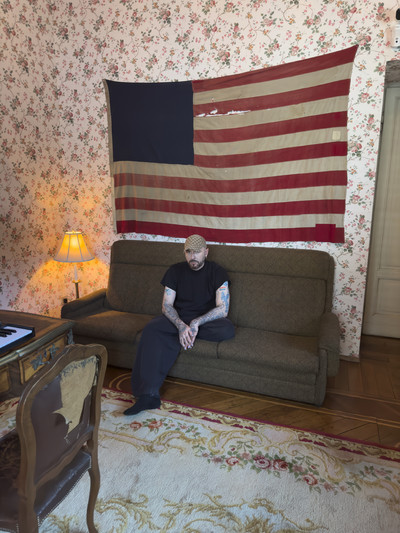
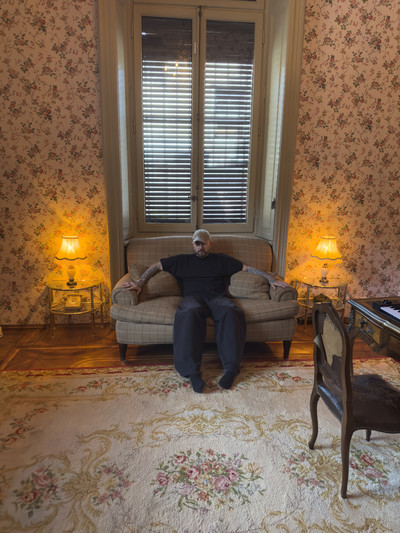
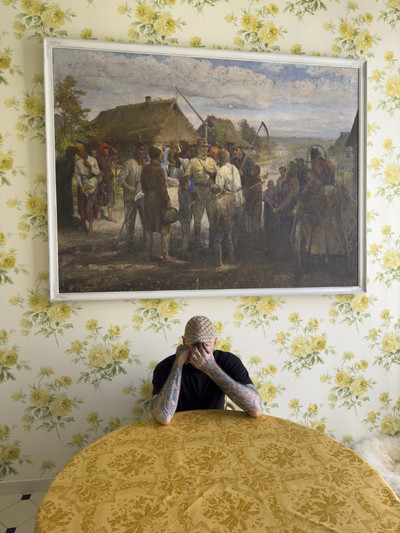
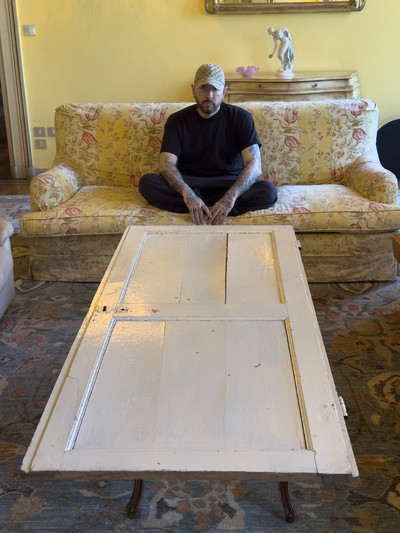
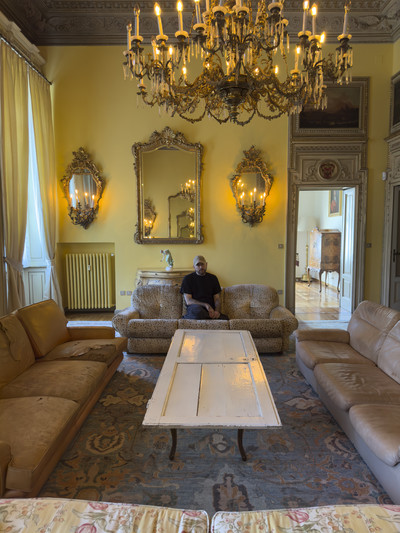
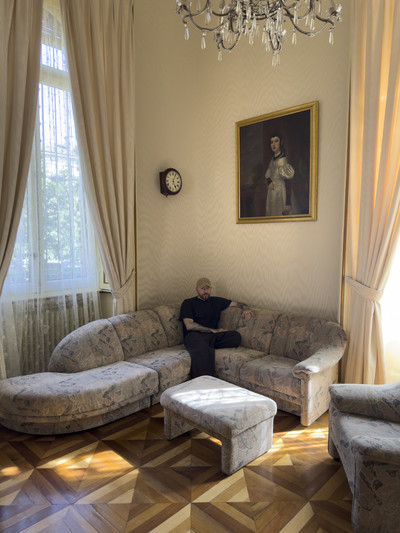
System has been documenting Demna’s first-year Gucci saga up close. Cathy Horyn’s blow-by-blow account sees her interview the designer in Milan, New York and Los Angeles; Juergen Teller captured him in his singular Milanese domestic bliss; Larissa Hofmann shot Amber Valletta and Frankie Rayder, much-loved faces of Tom Ford’s Gucci, in the Hollywood Hills; while in London, Nigel Shafran photographed the menswear on Steve Lacy, the Grammy-winning musician behind ‘Bad Habit’, who then returned to his hometown of LA to chat with Demna’s husband Loki, Gucci’s music director.
In Horyn’s story – which follows Demna from the certainty of his first weeks to the self-doubt that came after February – he calls this first year a “prologue”. Of Gucci’s Spring/Summer 2027 show, long since debated by the time you read this: “all or nothing”.
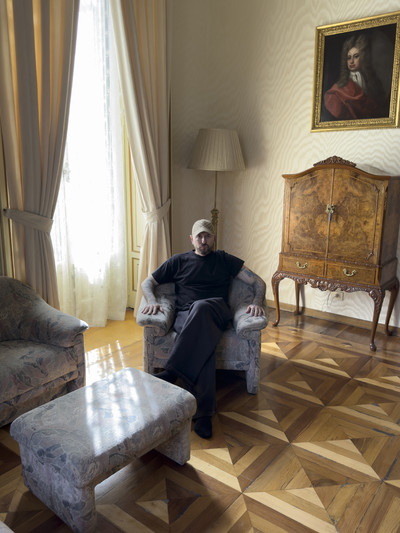
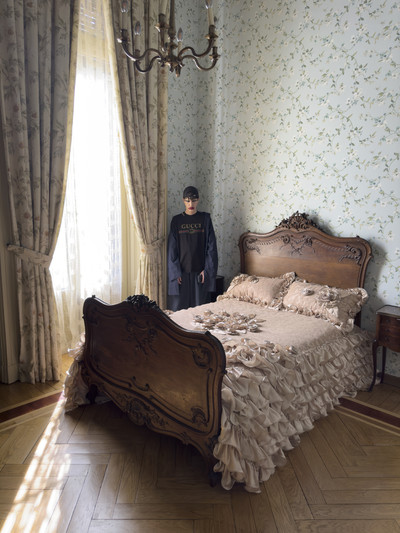
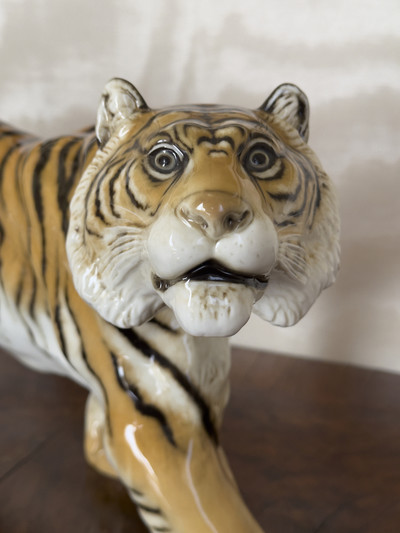
Demna thinks he first visited Los Angeles in 2010, on a research trip for Maison Margiela. “Then I came every year,” he says. “And at one point I thought: this is where I should live if I feel so good here.”
It was a Tuesday afternoon in early August, and Demna was eating lunch at the almost empty Tower Bar, a well-known glamour spot in West Hollywood. When he had come in – a faded black hoodie zipped halfway over a white T-shirt, loose-fitting pants and a baseball cap – the hostess showed him no deference, and Demna seemed to expect none. In a way, despite being one of the most important fashion designers in the world – now at Gucci – he was an interloper in these tony hills. We had originally hoped to meet at his new home, on a crest not far from Laurel Canyon, the mythic area whose residents have included Joni Mitchell, Frank Zappa and the designer Rudi Gernreich. But renovation delays had pushed the move-in till December. Demna and his husband Loïck Gomez, a musician known as BFRND (now Loki), had bought the house, a modest Hollywood Regency-style mansion, two and a half years ago, when Demna was still the creative director of Balenciaga and living part of the time near Zurich. The house has had only one previous owner, a couple with ties to the movie business, and Demna and Gomez bought it from the widow, who decamped to Palm Beach.
“They used it for photo shoots and stuff,” Demna said, scrolling through images of a creamy and golden interior gone to seed, including a bar fit for Hollywood kings. “The bar is the biggest thing in the house. I mean, it’s really beautiful.” Tapping on images of a spacious living room and a blue, curving swimming pool, he said, “Nothing really has been touched since the 1980s. We’re adding my library, which is why it has been taking so long – we needed permits for that. And a closet, because there was not enough space for us. I think the house will be around 450 square metres in all. For this kind of house in LA, it’s kind of small.”
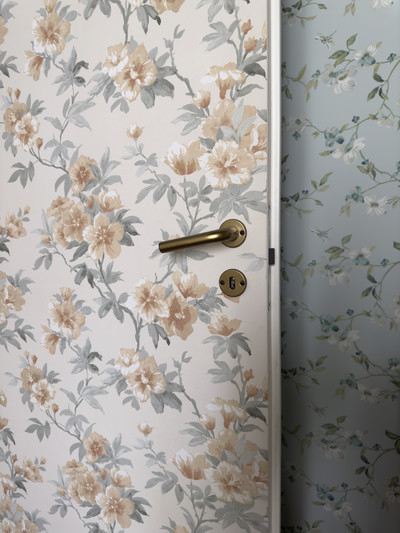
And just as he had done at Balenciaga, when he recreated the couture salons at 10 Avenue George V from Cristóbal Balenciaga’s days – down to the watermarked draperies – Demna is reproducing the home’s original interiors. “We scanned the wallpaper. We even reproduced the sun bleaching on the carpeting. It’s basically a new version of the house.” He seemed astonished to discover that his new home – once marked for demolition – had real character. “I see it as a very eccentric woman. It’s feminine,” he said, adding, “They would do parties, apparently. Ronald Reagan was there once.”
‘I got real FOMO. [Laughs] I would have been so jealous if someone else had wanted to do Gucci. But that’s good, because it means I believe in it.’
Demna laughed. “I love this type of nostalgia. There’s something very melancholic about it. She literally had, when you opened the closets, the same wallpaper on the inside that she had on the room’s walls.” He was in an unusually good mood; lighter, somehow. I first met Demna in 2014, in the gritty Paris offices of Vetements, the brand he founded with the stylist Lotta Volkova and his brother, Guram, among others, and I remember telling him I thought there were similarities to Margiela’s work. Demna took my criticism with grace but also didn’t agree with me – perhaps because he saw things in his developing vision that were not yet clear to others. We’ve been talking ever since.
In 2021, we spoke for a System cover story, which coincided with his remarkable couture debut at Balenciaga, when his bold architectural shapes and outsider sensibility seemed in uncanny harmony with that of Cristóbal’s, and with his hilarious ‘red carpet’ show that fall and the genius of his collaboration with the creators of The Simpsons for a film. He had already done a show that evoked, with masterful irony, the banality of bureaucrats and power dressing – the Spring/Summer 2020 collection, staged in a chamber that evoked the European Parliament – and still had to do the show (Autumn/Winter 2022-2023) that saw models trudging through a blizzard, their stuff in leather sacks that resembled trash bags, an image drawn from Demna’s own ordeal as a boy during a civil war in his native Georgia. No one else in the fashion industry had the intelligence and ambition to disrupt the era.
Now we were talking about Gucci, and not only about the challenges he inherited when he became artistic director in March 2025, but also the changes in his own thinking. Our conversations began in Milan at the time of his first runway show, in late February; continued in New York in May, when he presented ‘GucciCore’, a collection of wardrobe staples, amid the digital billboards and crowds in Times Square, and concluded in Los Angeles. Out the windows of the bar, the city shimmered in the heat haze.
“I’m happy to be here, to be honest,” Demna said. He ordered a beet salad. “We got here a week ago. You know, I love working in Milan but Milan is a village. It’s really a village. To me, Paris was also a village, in a way. LA is a good balance with Milan. I have more questions about Milan than answers, after a year of living and working there. Are you a big city or a small city? Are you cool or are you not cool? Culturally speaking, there is not much going on. Even going to the cinema, Loïck and I struggle to find something that isn’t Italian. It’s very Gucci.” He let out a laugh. “I feel like I’m method acting when I’m in Milan. I feel like I’m having my Gucci lifestyle. Which I love. But I need new input. I need to see people who excite me. We went to this music festival here this weekend. It’s called HARD Summer. It’s a new type of techno. There were 100,000 people there, apparently. I’ve never seen so many cool people in one place, and also everyone positive. I liked what people wore.” He was intrigued, for example, by the number of people wearing hydration packs. “I really felt in the right place.”
In Milan, his life revolves around work, he says. “I do spend a lot of time with my team. I mean, the reason I’m in Milan is Gucci, so I might as well give them 200% of my time.” The only two people in that city he knows well are Donatella Versace and Raf Simons; and while he and Simons have talked about getting together, he says, they so far haven’t managed. “My social life there is literally zero,” he said, as if surprised. “Here in LA going out is so much easier. It’s non-fashion people.” He laughed again. “I would love to have a fashion designer friend, so I could call and say, ‘Oh, my God, those fucking merchandisers!’ I would love that, but I don’t have that. Otherwise, I would love to talk to people who work in IT – something I don’t know anything about.”
Demna says he plans to spend the long holidays in LA, plus a month or so after the runway seasons. Gucci has opened a local studio, equipped with a 3D holographic screen that allows him to do life-size fittings, with a similar device in Milan. Despite the geographical distance, he says the arrangement works. “For me to perform for Gucci, I need to feel healthy psychologically – be happy with my life as a human being.”
‘Francesca [Bellettini] didn’t even let me finish my sentence. She said, ‘Demna, go for it. 200%.’ I’d never dreamt of hearing that from a CEO.’
But, for sure, this has been an extremely tough year for Demna. At times during our conversations I thought I detected a crack in his characteristic optimism, if not his confidence. He spoke with exceptional candour, I felt, about his efforts to get ‘inside’ Gucci, to deal with forms of expression that were essentially new to him, like sexuality and overt glamour, and to create something not merely novel but meaningful. The criticism of his February show, ‘Primavera’, which featured body-conscious clothes, along with smart, all-season tailoring, and a diverse cast that included familiar runway hoofers like Kate Moss but also obscure athletes and underground musicians, was brutal. Online opinion wasn’t so much divided as painfully lopsided. “Pieces looked cheap.” “Incredibly boring.” “Bring back Alessandro” (a reference to the former Gucci designer Alessandro Michele, who sent revenues soaring from €3.9 billion in 2015 to €10.5 billion in 2022, the year he left). Philippe Pourhashemi, a Paris writer and stylist with a tart Instagram account, called the debut “a complete disaster and pretty much everything we don’t want to see in fashion today.” He added, “No meaning or sincerity.”
Meanwhile, in a long year of debuts, other creative directors were capturing attention, above all Matthieu Blazy of Chanel and Dario Vitale for his singular collection for Versace in September 2025. What Blazy and Vitale had in common was that their approach was personal. The results were wildly appealing. But where was ‘Demna’ – the most nakedly personal of designers – in Gucci? It was, in fact, a question he began to ask himself soon after the February show.
Most great designers since Gabrielle Chanel have been willing to put themselves on the line by opposing something they hate – bourgeois smugness and chauvinism in Chanel’s case. Demna used his clothes to comment on politics, religion, consumerism, bigotry and dark media powers – and he did so with both humour and a desire to deliver a look that would wipe out what you understood was new or good. I remember coming out of the ‘red carpet’ show, in October 2021, and running into another designer, who remarked that in Demna’s clothes a woman of any age looked cool. (Isabelle Huppert, for one.) But where is the potential edge in Gucci, a brand whose fantasies – sex, pleasure, money – are all accessible? By what miracle in our absurd age could we “laugh at all things”, in Byron’s famous words? And has Demna himself mellowed?
His first two runway shows don’t tell us everything, anyway. “I came to a traumatised brand,” Demna said at lunch. He had to evaluate the scale of Gucci’s design teams. “You know, I have a very different structure at Gucci than at Balenciaga. I never had teams of designers before. Before, it was like a kibbutz. Now it’s really structured. At Gucci, we can’t work otherwise.” He created an atelier for prototypes at its sprawling Milan offices, known as the Hub. To his surprise, the studio had been sending flat drawings to the factory and a pattern-maker would interpret them. “That’s not going to work for me,” Demna said during our meeting in February, at the Hub. “When you have this industrial way of working, on flat ground, the garment almost excludes the anatomy.” He says he really learned about perfection, getting a shape absolutely right, doing couture. He created a new way of sizing garments that better reflects real body types. “It’s a bit nerdy but the consumer will understand the difference.” And he has spent a great deal of time at Gucci’s research and production facilities located in Tuscany and Piedmont.
“The thing is Gucci is big and what I love is its industrial base,” Demna says in LA. “None of it is very practical, though. You have to travel two and a half hours to Florence. For example, when I go back in September, the first thing I’ll do is go to ArtLab, because I need to see the sneaker they’re working on. It’s in Scandicci.” He adds, “I’m also talking to the artisans, to excite them about my vision. Italians are very hard working. If they like that shoe, they’re going to give it their all. I can see it in the product. That requires a lot of investment that isn’t creative.”
Today, more than ever, the industry, along with the media, dwells on performance numbers. Of course, growth matters. Gucci’s revenues have declined since 2022, to €5.9 billion in 2025, and though the rate has slowed, Demna is aware of the commercial pressures to deliver. This April, at a meeting in Florence of Kering investors – with all the group’s creative directors in attendance – Demna was asked what the hardest part of his job was. He replied, “The hardest thing is the time ticking. The counter is on.”
‘I’d love to have a fashion designer friend here in LA, so I could call and say, ‘Oh, my God, those fucking merchandisers!’ I’d love that, but I don’t have it.’
But Demna’s commitment to his craft and his efforts to find his voice in a new context tell a different story, about the actual struggle to make meaningful work. Our series of conversations catches a great designer being initially confident and then vulnerable and highly self-critical, all in real time.
At lunch, I asked Demna if he thinks people expected to see a dramatic change from him right away, at the February show.
“It’s an interesting thing you said,” he answered. “It’s the first time in my career that I chose to do it differently, and not that I had any other choice. I actually think it’s pretty dramatic what we accomplished this year – and what people don’t know about and will never know about. I think with all the changes in this industry in the past few years, I really got a very hard exercise to deal with. Probably the hardest one. But in my opinion that’s why I got it, because they knew it was the hardest one. What is Gucci, to start with? For people who have nothing to do with fashion? Or who are in fashion? What does it mean today? Because I also didn’t know in the beginning what Gucci is, to be honest.”
26 February 2026: Demna and I are in his spacious, minimalist office at Gucci Hub. On a table where we are seated he has put out replicas of Gucci sketchbooks from the past that the archive has made for him, as a gift. His mood is buoyant as he explains the details of his show, set for the next day in a huge venue featuring reproductions of Renaissance sculpture. He made this cultural leap when he and Gomez visited the Uffizi in Florence and then came out into the Piazza della Signoria and saw Palazzo Gucci. He says he felt the brand could forge a stronger link to culture generally, and to that end he was creating a cast that included the rappers Fakemink and Nettspend, Vivian Wilson, the trans daughter of Elon Musk, the singer Gabbriette and Karlie Kloss.
Cathy Horyn: Tell me about the show?
Demna: This show is very fashion-oriented. Gucci has its heritage but absolutely needs fashion. How do I envision that? It’s not intellectual, purposefully so. I don’t feel a need for that anymore. I think I spent ten years trying to impress everybody but especially myself. And realising that liberates me somehow. Gucci is the perfect place not to do that. Because it’s all about emotion, drama, love of life, love of yourself. All those things that are very Gucci…
The way I feel today – I feel good about myself. I like myself when I look in the mirror. I want to wear clothes that are more body-conscious, in my understanding of that. I’ve been in therapy for a decade now. It was difficult for me to connect to that emotional being that we all have, and to use this emotion as a tool, and not just be afraid of it. It’s in my creative approach now, because it’s so much more fun to do it this way.
I recall in our earlier System article that you said, ‘Have you ever seen a sexy Demna?’ Sex certainly wasn’t part of Balenciaga.
Did I say that? Well, you will see tomorrow, I promise you. I mean, I hope you find it sexy! It’s a very different approach to creativity that I’m now discovering. You either love it or hate it but it’s immediate. And I want it to be desirable. But on top of that, I want Gucci to be cultural. You mentioned The Simpsons and those other shows at Balenciaga. What I did at Balenciaga was always part of contemporary culture, and also it was kind of reflecting what was bothering me. This is something I intend to do at Gucci, because it’s really in its DNA to do that.
True, if you think of Alessandro’s collections and Tom Ford’s. But the brand can go further.
For sure. Cultural relevance never comes from what’s already out there, we know that. It comes from the underground, from alternative cultures. At the moment, this culture looks like it’s in crisis but it’s not. It’s just less visible because mainstream culture is so overwhelmingly present – from fashion to politics to social media. It’s a reality show. But the underground is there. I’m into music and a lot of my cultural references come from there. I listen to musicians on my Spotify, and maybe they have, like, 5,000 listeners. A lot is digital. Like Loïck, many of the musicians work on their laptops, with the same programs. They do stuff with friends. There are five tracks for the show tomorrow, and really none of them are famous… I felt that Gucci could be a platform to promote this kind of culture.
‘What is my Gucci silhouette? I’ve spent a lot of time thinking and talking about that. I’m so excited about it. But also not knowing what it’s going to be.’
Tell me about your first meeting with Francesca Bellettini, who was then deputy CEO of Kering, when she asked you to do Gucci.
It was in Paris at the end of 2024. Francesca invited me to dinner. I knew her but not well. I thought she wanted to talk to me about my future at Balenciaga, because my contract was about to expire. Five minutes into the dinner she said, ‘I need to talk to you about Gucci.’ And at that moment I knew she was going to tell me about this potential opportunity. At first, I was kind of surprised but I knew how she saw my work. And then it kind of made sense to me, Gucci. I just felt there was such a beautiful story here. I went to LA and I did my research there, because I needed to be sure I had a vision for Gucci, and then I sent Francesca a moodboard. I had FOMO. [Laughs] Like, I would have been really jealous if someone else wanted to do Gucci. So it means it’s good, I believe in it.
1 March 2026: Demna and I are in his office for a quick recap of the show, which I liked for its extremes of polished tailoring, weightless shearlings and tough, unfiltered sex appeal, with the guys getting the more interesting looks, I thought. Demna says he felt good about the collection, and that it showed a clear understanding of the breadth of Gucci and its customers, but that he had been worried about creating enough energy. “I was always a bit scared that I would block myself from going where I have to go,” he says. “Not enough energy is worse than too much for Gucci.” He adds, “It was very me. Like, I put myself out there. I was so empty the next day, I felt horrible. I felt I had nothing left to give. All creatives feel like that afterwards, but it really took a lot out of me. My parents came by and I couldn’t even talk to them.”
Have you read or heard about the online comments?
No. Obviously there are reviews that I read later, maybe five, when I want that feedback. But this time was different. I know that I did what I had to do. So it doesn’t matter somehow about the comments. I think this kind of show has to be a bit polarising. It cannot be just OK.
Are you concerned that you will feel hemmed in by Gucci’s overt sex and glamour? Not have enough to say?
I mean, I thought about it before signing my contract. [Laughs] I knew that could potentially be an issue. At Gucci, I can explore a lot of things about my creativity that I wouldn’t do somewhere else or if I had my own brand. But of course there are parts of me as a designer and a fashion person that maybe will not have enough. I still like destroyed bomber jackets. It’s an important part of me – you know, this kind of fucked-up idea of fashion.
Do you feel pressure – from Kering, investors – to ‘save’ Gucci?
You know, I was never asked to ‘save’ anything. I was asked to dare, to dare to build a vision. Of course I was aware of the size of Gucci and the responsibility, and sometimes I really don’t get it. It’s impressive and I think, ‘Oh, I have to make the right decisions on the handles of a bag…’ But, on the other hand, if I think about that all the time, I won’t make the right decisions. I’m always going to try to do my best.
Whoever is the designer, there is always a moment when you cannot push your vision further. We just have to accept that. I mean, I stretched my gig at Balenciaga twice as long – I just have to be honest. But they were good with me, and you go, ‘OK, one more year, one more year’. But as creatives it’s not easy. We humans don’t have those superpowers. We only have a certain amount of time to build something that is memorable and diverse, and then it goes with inertia. It just kind of fades.
15 May 2026: Demna and I meet at a bland event space in New York’s Midtown, one of several locations that Gucci has occupied in order to stage its mega show in Times Square, which, along with a party in the mock
‘Gucci Mansion’, will cost north of $10 million. Indicating a long rail of clothing stretching behind us, Demna said, “90% of the show looks are made out of this and then there’s 10% for more seasonal crazy stuff.” Tom Brady, Paris Hilton and Cindy Crawford are set to walk. “This show is very ‘dressed’,
I would say. There’s layering. It’s kind of the opposite of ‘Primavera’. But this is how you see people in New York. Sometimes I went too much towards Coney Island and Brighton Beach in my styling, but I love that.”
Who was it that came up with the name ‘GucciCore’?
Moi.
It’s stupidly good.
I love it. It’s a bit Charlie Chaplin. Loïck said, ‘Is it about hardcore?’ And I said, ‘No, no, it’s the core of Gucci.’ And, actually, without this, it’s very hard for me – I need this platform so I can focus on novelty. Once I have a Gucci pea coat, for example, the fabric can change but I want those pieces to have the aesthetic. Like, you see it and you know it’s Gucci. We have a customer for this. Gucci staples could be on the side, but I felt it was important to put focus on it. The thing is, when I was in Florence [for Kering’s investors meeting], a lot of analysts and shareholders came up to talk to me.
‘I still like destroyed bomber jackets. That’s still an important part of who I am – you know, this kind of fucked-up idea of fashion.’
What did they ask you?
Oh, my God, what didn’t they ask me! They asked questions that not a lot of fashion people ask. A guy who apparently is an important analyst, wearing a grey suit and glasses [Luca Solca of Bernstein], said, ‘Tell me, are you going to create your own Demna Gucci silhouette, and if so, when?’ I actually hadn’t thought of that. I was thinking of characters, personas. He said, ‘It’s very important, because we need to have a clear thing that is you at Gucci. You did that at Balenciaga, so what is it here?’ I mean, he really put me on the spot. I was, like, ‘I don’t know right now. I’m going to try to figure it out, thank you.’ But I went back to the hotel and began writing things down. The same guy also asked me, ‘Novelty or heritage? What is more important for your vision of Gucci?’ I said, ‘Novelty. Heritage is important but without novelty this brand cannot go forward.’ He seemed relieved when I told him that.
I kind of had an ‘aha!’ moment when I got back to Milan. All of these things, like silhouette, that for me are kind of obvious – well, I had not tapped into them. We will for sure now. In answer to the question, what is my Gucci silhouette? I’ve spent a lot of time thinking and talking about that. And I’m so excited about that. But also not knowing what it’s going to be.
How do you feel now about the February show?
Well, I wanted to do some things I had never done before. But I also think I restrained myself from other things
I would have done, because I was afraid of being too obvious. This is something I’ve realised. I should never, ever – like, overthinking is my big problem. And I think that was happening to me.
You were self-censoring?
I was self-sabotaging. I was trying to have a very singular mindset with that show, instead of being multi-faceted like I actually am. I didn’t want anything that was not body-conscious. Why? I gave myself a frame that was
too tight, and I stayed in that frame.
Good self-criticism.
Well, I spent quite a few sessions with my shrink on that. But the thing I also realised is what you said earlier – if the vision is not completely personal to you, then it’s not going to work.
June 2026: The question of how much of himself belonged in Gucci was not confined to an analyst’s grilling. It had already been put to him, rather more bluntly, by an analyst of a different kind.
Shortly after that exchange in Florence, Demna went to a person he trusts: Gucci CEO Francesca Bellettini. Recalling their conversation, he said, “I’m really at a crossroads now of where I have to build my vision and how much I put of me in the collection, and how much do you guys want of me.”
You ‘guys’ being Luca de Meo and François-Henri Pinault, the chief executive and chairman, respectively,
of Kering. “And Francesca didn’t even let me finish the sentence. She said, ‘Demna, go for it. 200%.’ I was almost emotional. I’d never dreamt of hearing that from a CEO.”
A former investment banker, Bellettini has a reputation for supporting creative talent and making a brand tick. She worked successively with Hedi Slimane and Anthony Vaccarello at Saint Laurent, and then was named deputy CEO of Kering, in charge of brand development before becoming chief executive of Gucci in September 2025. Bellettini said Demna was a big part of why she said yes to her new role.
“What I loved about the first meetings was how courageous he is,” she will tell me later. “He’s not afraid at all to change the rules or challenge the status quo. He has ideas, but he’s also very open and builds on other ideas. If it’s something that he likes, it’s ‘yes.’ And, equally, he’s not afraid to come to me and say, ‘Let’s do that differently. What do you think?’ Demna understands that what we are doing is also a business. When he met the investors, they were asking him questions, and he was like, ‘This is super exciting.’”
August 2026: During my final encounter with Demna at the Tower Bar, we spoke about his plans for the September show, what fashion audiences respond to today, and the significance of Gucci sponsoring a Formula 1 team. I mention that Prada is one brand that can be whatever it wants to be each season, that an objective of Miuccia Prada and Simons is to do the unexpected.
‘I recently watched a documentary on Formula 1, and I really got into it, but more as anthropology. It’s such a rich, straight guy culture.’
Can Gucci do that as well?
Yes, but I think with Gucci the novelty and the surprise needs to be different. It needs to be within this consistent aesthetic of what the new Gucci is. I really see this year as a prologue for my Gucci. Now the prologue is done, and this is the first chapter, in September.
I had to analyse the past. What was the Gucci family period, the pre-Tom Ford, pre-fashion Gucci? I tried to define each era in one sentence. The first era I see as a kind of snob, aristocratic, quite opulent, someone who’s not afraid to show off, not afraid to be proud of who they are. Still blue blood. I needed to define that, and then say: who am I at Gucci?
What excites you most about the upcoming show?
My favourite part is this kind of preppy, blue blood but reckless. I was trying to describe it to Loïck, and I used the word renegade. You come from this old-money family but you’re a bit twisted. So you wear that tartan skirt or jacket but the shapes you choose show a rebellion towards that normcore idea of bourgeois. It’s a bit snobbish. It’s based on an image of Diana Vreeland on a tartan sofa in her apartment, which was the first image on my mood board. But then how to make it punk in a modern way.
In New York, you were very keen on showing a Demna silhouette, possibly a sharp one.
It is a sharp silhouette but it’s not only that. There needs to be a variety. I don’t think the Gucci consumer today – or the consumer we want to have – is that one particular thing.
Recently a mutual friend of ours sent me a letter in response to an essay I’d written about what creates desire. In the past, he said, it was a feeling of pleasure and fun, then it became about ideas – the long era of Margiela and Helmut Lang and your Balenciaga. Now it’s about an emotion, like joy.
I think people want to be obsessed with something. You need to trigger their obsession. It’s much harder to give pleasure. That’s why I always say it’s harder now to be a designer. With all due respect, when I see how much designers of the past had to do and what became iconic – you could do ten of those ideas today and nobody would even look at you. Something needs to relate to the person.
For me it’s less about joy. It would be difficult for me to express joy in the world right now. But I would say it’s more about liking yourself. My fall campaign is about that. It’s based on Chris Isaak’s ‘Wicked Game’. I love that song. It’s a music video with Kate Moss singing in his voice, in a hotel lobby. The moment she starts singing, the bored people in the lobby realise they’re falling in love. I love that idea of falling in love. So I think that idea of feeling attractive, wanting to be out there – that’s what I feel now. If you manage to convey that, that’s what people want.
What did you say when Francesca told you about the F1 deal with Alpine and the creation of Gucci Racing?
I loved it right away. That connection to sports is very Gucci to me. And it’s a world I know nothing about. I watched a documentary on Formula 1, and I really got into it, but more as anthropology. It’s such a rich, straight guy culture.
It doesn’t seem, well, cheesy?
I mean, why should Coca-Cola do it and not Gucci? I think there’s a good argument for Gucci to be involved from a marketing perspective. Like I said, we need to create a connection to different types of consumers. Formula 1 is one of the biggest billboards you can have.
So why be uppity about it…
Oh, yeah. That’s what’s good about Gucci. We can do shameless things like that! It’s Gucci. We don’t need to be uptight about rules. Gucci is anything but that.
Demna had been talking for more than two hours. As we walked out of the restaurant together – I headed towards a bookstore on Sunset Boulevard, Demna to the house he is renting in the hills – I sensed again quite how much he is shouldering. He wants to tell us something new with fashion, as he has done so often and so emphatically in the past, and yet he is still finding his voice in a new house. Though he felt that the show on 25 September would be pivotal, “all or nothing”, as he put it, shortly before we said goodbye. And of course he has not yet settled into his new home in the Hollywood Hills. He is shouldering a lot, then, as a creative person and, what’s more, he is allowing us to see that.