Interviews by Anano Shalamberidze, Noé Garcia and Marta Represa
How ten leading creatives are reimagining Off-White, category by category.
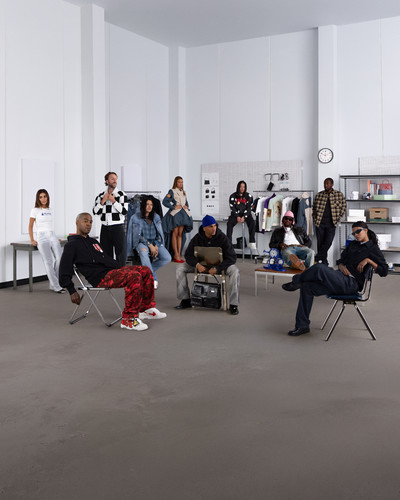
From left to right: Ava Nirui , Scott Mescudi, Stéphane Ashpool, Guillermo Andrade, Veneda Carter, Raul Lopez, Yuta Hosokawa, A$AP Nast, Bafic, Renell Medrano.
Photograph by Noah Dillon.
“I have a Robin Hood strain within my work,” Virgil Abloh told System in 2017. “I want to take the knowledge and give it back to the people.” That same year, we chose to put him on our cover, four years into Off-White and several months before Louis Vuitton came calling.
Almost a decade on, rather than immediately replace Ib Kamara, who took the creative reins after Abloh and left this year, Off-White has handed ten of its key product categories to ten creatives – several of them old friends of Abloh’s, all marked by what he left when he died in November 2021: an absence, certainly, but a legacy that has outgrown it. The project is called 10 × 10, a title that inevitably echoes ‘The Ten’, his 2017 reworking of ten Nike sneakers – arguably still the clearest expression of his method: don’t invent the object, look at it again.
A T-shirt, a hoodie, a pair of jeans, a sneaker: the industry still files these under ‘basics’, a word that measures very little. Yet no category is worn by more people, or asked to carry more meaning. Ava Nirui takes the T-shirt back to the MySpace era. Scott Mescudi, briefed to create an OOO sneaker, went to Milan and designed ten. Guillermo Andrade reads Abloh’s personal wardrobe as a denim archive. Yuta Hosokawa reinterprets the ever-present hoodie. A$AP Nast has made a clock.
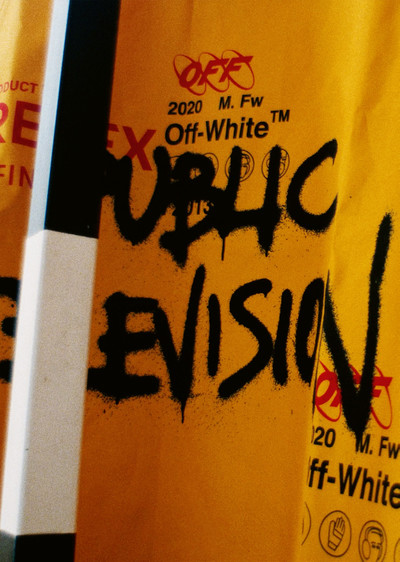
For the IKEA supplement that ran with our 2017 issue, Abloh opted to document the work on his own iPhone. “The process is the promo,” as the designer, often labelled a disruptor, put it. Then, it felt typically provocative; now, it is simply how experiences are shared. The pictures across these pages come from the ten themselves, in the same spirit.
None of the following conversations follow a script; the further in, the less alike they become. Stéphane Ashpool’s contribution, a varsity jacket, carries one word on its back, repeated inside the lining in the quotation marks Abloh made his signature: “BACK”. “I think Virgil would have loved the idea of ten designers collaborating with Off-White,” he says. “Of all of us having his back.”
Ava Nirui
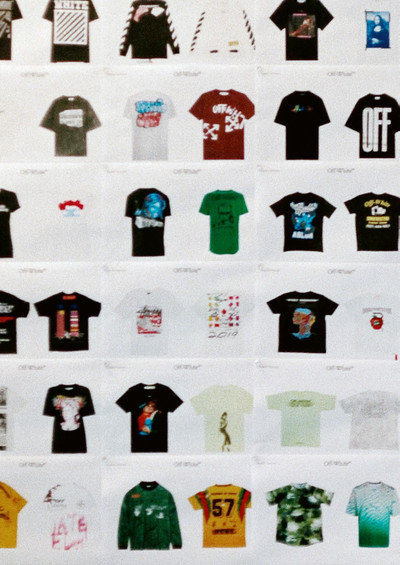
‘A good bootleg isn’t trying to deceive anyone; it’s recontextualising the familiar to create a new conversation.’
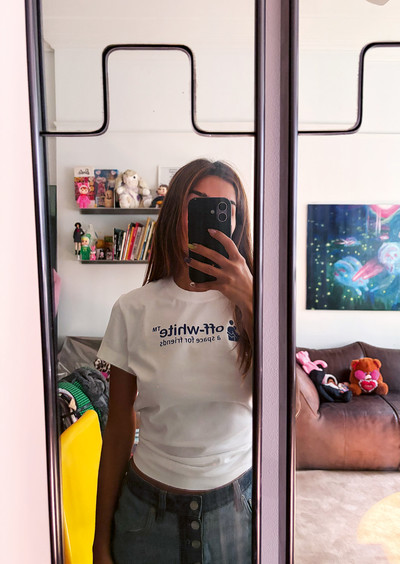
Ava Nirui built her name on subversion. Her bootleg designs made waves on social feeds in the mid-2010s, one Marc Jacobs riff nearly landing her in legal trouble – until the house hired her instead. A designer, stylist, photographer and writer, she has since led creative direction for Heaven by Marc Jacobs, recontextualising 1990s youth culture for a Gen Z audience. For 10x10, she’s designed a T-shirt, a format she sees less as a fashion product than as “another surface people use to communicate something about themselves.”
Anano Shalamberidze: Virgil was often described as a Renaissance man, moving fluidly between disciplines. Your own practice spans multiple mediums. Why have you decided to work in this way?
Ava Nirui: I don’t see myself as a traditional ‘designer’. My practice has always been fluid. Rather than starting with a medium, I start by thinking about what I’m trying to say. For this collaboration, the reference point was the 2000s MySpace era and that moment when the internet started becoming part of everyday life for young people. I’m interested in how people built identities online before everything got so saturated. A T-shirt felt like a natural place for that idea because it’s another surface that people use to express themselves. I wasn’t approaching it as designing a fashion product as much as using a garment as the right context to talk about that specific moment in internet culture.
Why did you choose to reference this moment, the early internet era?
It was a really formative time for me. I was a curious scene kid growing up in Australia and the internet was where I learned to be creative. Through
MySpace, I was teaching myself basic coding, discovering imagery, music and references. It was also the first time I felt connected to people outside my immediate surroundings. Suddenly, I had access to communities and ideas from all over the world, which gave me a new perspective. A lot of people are nostalgic for that era because the internet felt much more open and expressive. It was less about ‘engagement’ and more about experimentation and creative freedom.
A T-shirt is perhaps the most ubiquitous garment in fashion, yet it’s also become one of its most loaded cultural objects. What does it represent to you?
I’ve always loved T-shirts because they’re accessible. They were one of the first things I bought with my own money, and I think that’s why they still feel so special to me. They’re democratic because they’re relatively affordable and they’re something everyone wears. What I find interesting is how much they can communicate despite being such a simple object. The same T-shirt can take on a completely different meaning depending on who’s wearing it, how it’s styled or what context it’s in.
The words ‘Off-White – a space for friends’ are printed on the T-shirt. Is the brand a symbol of community to you?
That’s very much how I see it: Off-White represents a community that Virgil built around curiosity and the exchange of ideas. That spirit is a big part of the brand’s legacy. It was so much about bringing people together and making room for those perspectives. That’s what ‘a space for friends’ means to me.
You’ve previously said the bootleg band T-shirts you and your friends used to buy in Australia functioned almost like friendship bracelets. Do you think clothes have an inherent ability to build community?
Absolutely. Clothes can be an immediate point of recognition between people. You don’t have to dress the same, but you can connect through shared interests expressed in what you wear. I remember making friends outside Utopia Records in Sydney in 2006 because we were all wearing the same Underoath T-shirt.
Collaborations are something you’ve mastered over the years. What do you think makes a collaboration successful?
The best collaborations have a genuine reason to exist. Both collaborators need something meaningful to say together, whether it’s a shared history or a common point of view. Mutual respect, friendship and trust are just as important!
Your bootleg Marc Jacobs T-shirt almost got you sued, until Marc Jacobs himself decided to hire you instead. A decade on, do you think it’s become harder to break the rules in fashion?
People have a harder time distinguishing between parody and copying. A good bootleg isn’t trying to deceive anyone; it’s recontextualising something familiar to create a new conversation. Social media moves so fast that references are often taken at face value. When I was making bootlegs, there weren’t accounts calling out every similarity. They give designers who’ve been copied an important voice, but they’ve also made people more cautious. There’s less willingness to experiment when every decision can be picked apart online.
Scott Mescudi
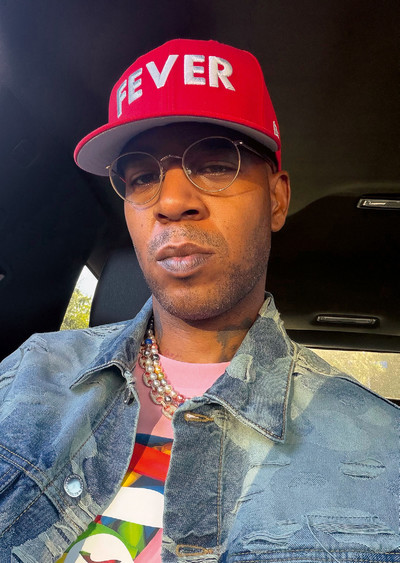
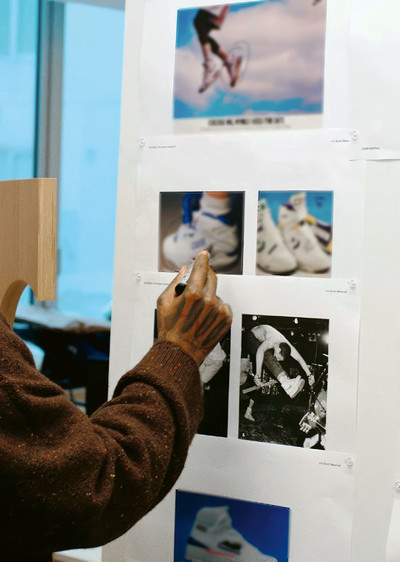
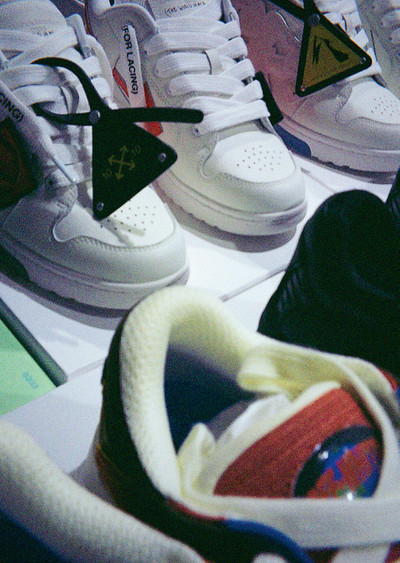
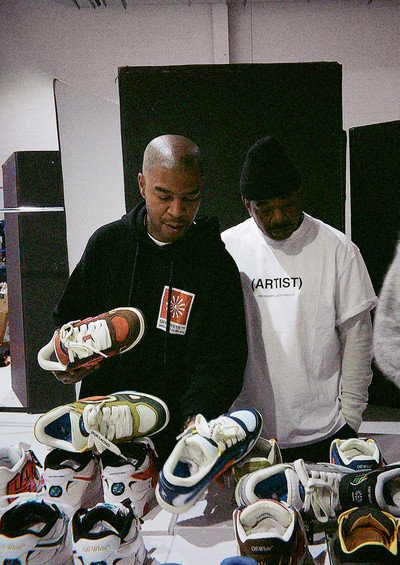
‘I want to be known as somebody who’s pushing the sneaker space forward. I want to challenge the culture and the consumer.’
Scott Mescudi, better known as Kid Cudi, is a bright soul standing at the intersection of music, fashion design and cinema. Since breaking through with his 2008 single ‘Day ‘n’ Nite’, he has continued to release critically acclaimed music. Friends and long-time collaborators, Virgil Abloh and Kid Cudi worked together on projects ranging from the merch for the 2018 LP Kids See Ghosts to the animated film Entergalactic. For the 10x10 series, he looked to continue his friend’s legacy by redesigning Off-White’s iconic OOO sneaker.
Noé Garcia: For this project, you’ve reimagined one of Off-White’s most recognisable silhouettes. Why did you choose the OOO sneaker?
Scott Mescudi: Sneakers have been a passion of mine since I was a kid, and I’ve always loved Off-White sneakers. I love what they’ve done over the years – they’ve always been my favourite expression of the brand. I was only supposed to design one shoe, but I went to Milan and ended up coming up with ten different ones. It wasn’t supposed to happen like that, but I was in the mood, and being in the office, surrounded by the team and that energy, I felt so inspired. Simply knowing Off-White cares about Scott Mescudi blows my mind.
Tell us about the creative process of working on these Off-White sneakers.
The level of freedom I’ve had working with them has been unprecedented. Off-White allows me to do whatever the fuck I want. There was never any conversation about, ‘Oh no, we can’t do that.’ I was just trusted, and I think what really touched me was that the team at Off-White believed in me. They told me it was the most excitement they’d had in the office since Virgil. We came up with guaranteed bangers in two days. You know, I apply that same sense of freedom to everything I do creatively. I feel like that’s the only way you can really push yourself into uncharted territory.
Sneaker culture was central to Off-White’s universe. To what extent did Virgil change the sneaker scene?
I think he brought back fly shit in a way that made people nostalgic for the 1990s. His perspective on sneakers really shaped what we’re seeing today – the whole sneaker scene, from collaborations to the way people design and produce shoes, really pushing design forward. There’s a lot of shit going on, and people are doing collabs all the time, but I always come back to the Off-White x Nike Air Jordan 1. They’re the illest fucking sneakers ever designed.
Virgil used to say that he wanted to make ‘meaningful sneakers’. What is the meaning behind the three sneakers you’ve released for the 10x10 series?
Like Virgil, I do it for the younger version of Scott who grew up on sneakers. It’s about getting back to that feeling of fly shit you remember from when you were a kid. Virgil brought back that sense of pride in wearing something, something with culture. So with these sneakers, I really wanted to show up. I wanted to make Virgil proud up there, and I wanted to make the whole team at Off-White proud. I want to be someone who continues his legacy, keeping his name out in the world and reminding people that Virgil is still alive, even though he’s no longer here. His spirit lives on through this brand, through the culture, through every album cover he ever created. His spirit is here, and he continues to inspire so many people. That’s really what life is about, man. You come here, you inspire people, and then you’re gone. That’s the goal, man.
By designing these shoes, wearing them on your tour, and by declaring Virgil and Los Angeles-based fashion brand Cactus Plant Flea Market (CPFM) as inspirations, what role do you want to play in the current culture?
I want to be known as somebody who’s pushing the sneaker space forward. I want to start new conversations. I want to challenge the culture and the consumer. People don’t know what they want until they get it, so I’m just trying to give people what they don’t know they want. Ultimately, I wanted to make something where nobody’s going to be like, ‘Oh, I’ll just get this one pair’ – they’re going to feel like they need all three!
It’s a decade since System put Virgil on our cover in 2017. Looking back, what was Virgil Abloh to you? What do you think his lasting legacy is?
Virgil represented, like he said, the young person in you – someone who just wants to make cool shit and change the world. I think his real legacy is the idea that you can change things by thinking a little differently. That’s what Virgil did: he came in, saw what everybody was doing, and just thought differently, with a perspective no one else had. We talked about freedom – the ultimate freedom is to create with childlike wonder, to chase your dreams and never give up on them.
Stéphane Ashpool
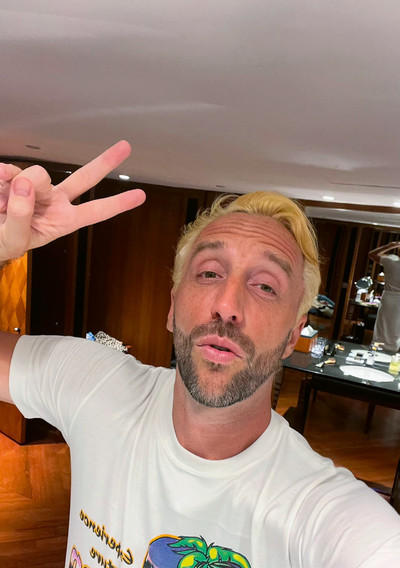
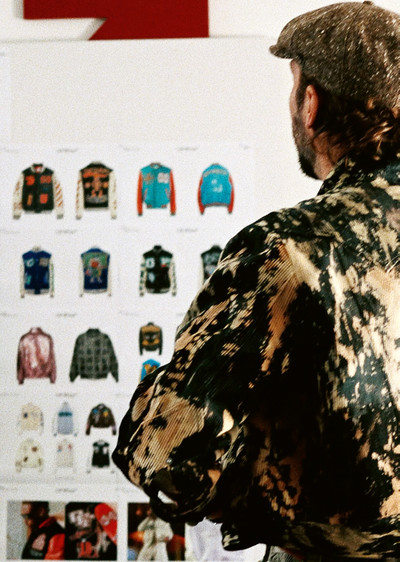
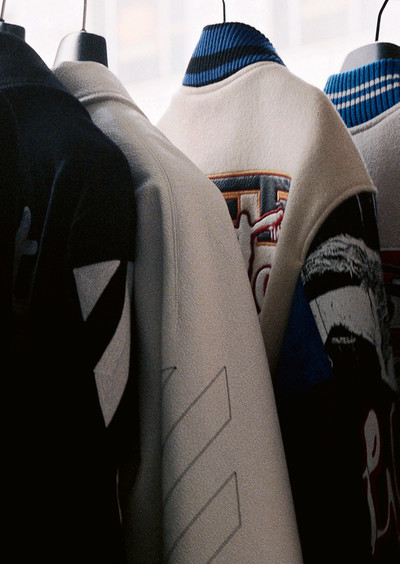
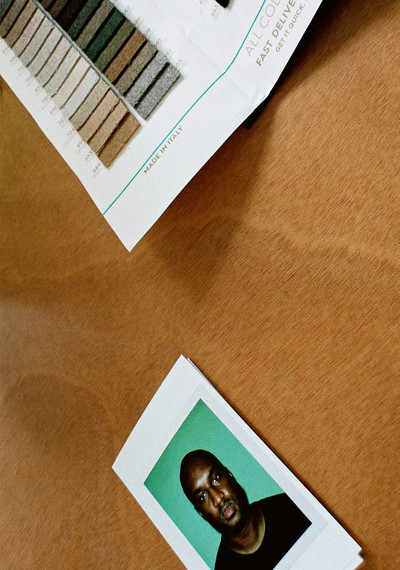
‘Virgil would have loved the idea of ten designers collaborating with Off-White, of all of us having his back.’
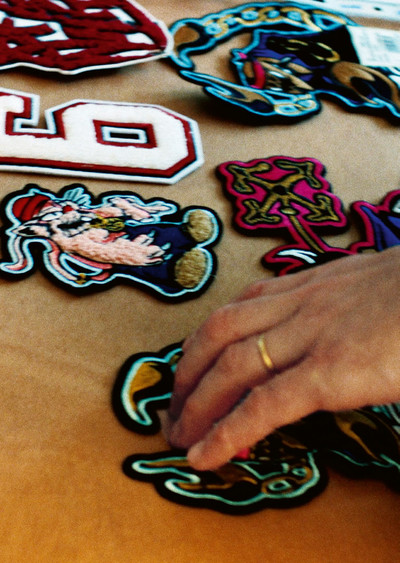
Stéphane Ashpool built Pigalle out of his own corner of Paris. Opened as a store in 2008 and named after his home neighbourhood, it grew into a label, a basketball court and a community. This led to him winning the 2015 ANDAM Grand Prize and, in 2024, the job of dressing France’s Olympic athletes. A long-time friend of Virgil Abloh, he shared the late designer’s conviction that both sportswear and couture can belong in one wardrobe. For 10x10, he has reworked the varsity jacket in mirrored colourways – mint green lined in check, and the reverse – patched and embroidered inside and out.
Marta Represa: This collaboration with Off-White invites ten creatives to ‘question everything’. Was questioning part of why you started Pigalle?
Stéphane Ashpool: Pigalle is most of all the result of a personal experience: that of me growing up in a Paris neighbourhood where there wasn’t a place to play basketball, buy clothes or party. Which is why, at 20, I started organising those things which led me to open Pigalle. So it’s a manifestation more than a questioning, although I would say those two things are related.
What does it mean to build your own brand in an industry where it can often feel easier or more financially secure to work in-house for a big brand?
I like my freedom way too much to work in-house. I don’t only love fashion, I love doing all sorts of different things: putting people on stage, making music, travelling… Having my own brand was essential to keep living like I want to.
You’ve designed a varsity jacket for the 10x10 series. What’s your rapport with this particular garment?
It’s a garment that shows what team or tribe you belong to through patches and symbols, just like a punk battle jacket. It’s at the intersection of sports and fashion, which is at the very core of Pigalle. My life was about sport before it was about fashion. My first job ever, back when I was 17, was coaching Pigalle’s basketball team, and both disciplines came together in Pigalle [the brand] in a very organic, non-commercial way. I just wanted to see what would happen if I mixed them. I opened Pigalle’s basketball court in 2009, and little by little it all meshed together, coming to define the brand’s identity.
Did the way Virgil and Off-White recontextualised the varsity jacket as a modern wardrobe staple influence your own approach to it?
Absolutely. My work began in Off-White’s archives: looking through past shows, studying the way they approached the varsity jacket. The idea was not to reproduce an existing Off-White jacket, but to find common ground. I think Virgil, being from Chicago, had a deep-rooted sporting spirit, while also being adventurous enough to experiment with different materials in his varsity jackets. That inspired me to create the kind of piece that can be worn from day to night and wouldn’t look out of place on an evening out.
The varsity jacket is now a classic wardrobe piece for many brands, including luxury houses. Why has it become a signature, and what does it mean today?
Its sartorial basis is a very simple kind of volume that flatters any body shape and works as spring, autumn and winter outerwear. So it’s exceptionally wearable, which explains its success and ubiquity. It can be as minimal or as baroque as you want, and carry a message. It’s an authentic piece of clothing, with a function. Brands and designers love to co-opt those kinds of garments.
Can you tell us about the patches and motifs you chose to place in the jacket?
The patches were existing Off-White motifs that I turned around, playing with their colours to make them look brighter and more intriguing. The word ‘BACK’ embroidered on the back was a play on the expression ‘I’ve got your back’. Because I think Virgil would have loved the idea of ten designers collaborating with Off-White, and of all of us having his back.
Paris, and the Pigalle neighbourhood, are central to your brand; they represent a community that is far removed from the stereotypical image of Paris. Do you see any parallels with Off-White and Virgil Abloh there?
I have always lived between two worlds: the Opéra neighbourhood, with its grandeur, and Barbès, with its cosmopolitan energy. That has informed who I am. I think Virgil also came from that kind of duality. You could see it in his work: he had no trouble mixing a varsity jacket with a crinoline and a corset!
Lastly, could you share a memory connected to Virgil or Off-White that has stayed with you?
The morning after a party I threw during the Fête de la Musique in 2020, Virgil thanked me publicly on Instagram, referring to me as ‘the Mayor of Paris’. It was such a sweet, touching thing to say, and, to this day, people still call me ‘Mister Mayor’.
Guillermo Andrade

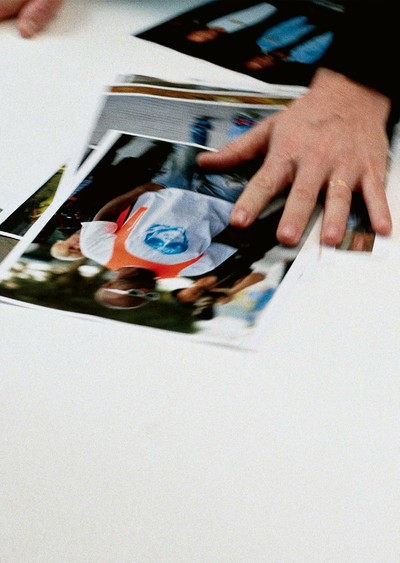
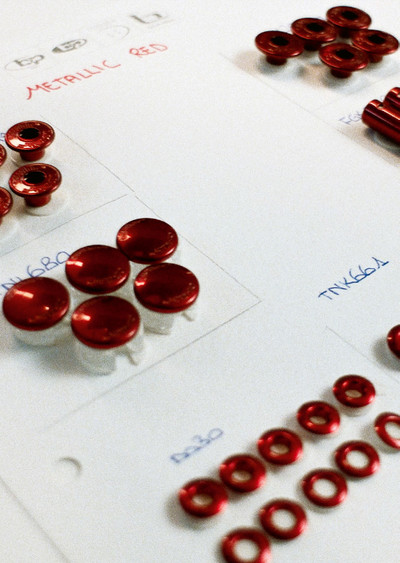
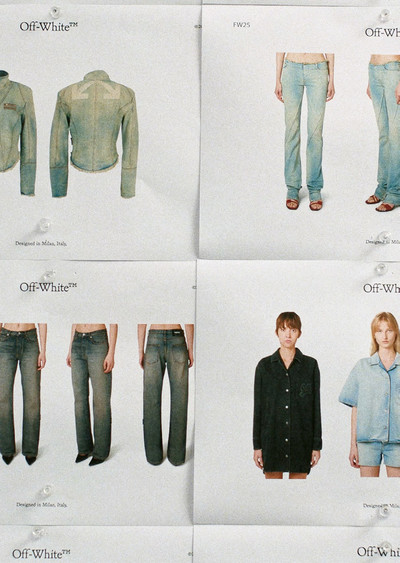
‘Virgil pushed me more than anyone just by being great. I didn’t need a personal invitation – him existing was the invitation.’
Guillermo Andrade, founder and creative director of 424, is one of the foremost figures in Los Angeles streetwear. The Fairfax store he opened in 2010, which revolutionised luxury streetwear, became a label proper in 2015. He now shows in Paris, a city he first arrived in over a decade ago alongside his friend Virgil Abloh. Created for the 10x10 series, his ‘V as Muse’ collection pays homage to his mentor through an Off-White staple, denim, treating Virgil’s own wardrobe – the cropped jacket, the carpenter pants, the constant layering – as an archive to be decoded.
Noé Garcia: According to Off-White, the 10x10 project is echoing provocation – it’s here to question everything. What are you questioning with your ‘V as Muse’ collection?
Guillermo Andrade: I don’t think people really understood how influential Virgil’s personal style was. If he wore your brand – whether that was a streetwear brand or Loro Piana or Arc’teryx – it was immediately noted. Virgil wasn’t an influencer, but he was a person of influence, and a master communicator. So I focused on Virgil’s personal style and highlighted what to me were his iconic looks. It’s not so much about questioning, it’s about bringing that conversation to light.
Denim is the focal point of the collection. What does great denim need to have for you beyond the obvious?
You need good water, good rocks and a person who’s not afraid to try some different formulas. The hardest part is actually finding a team who’s willing to really ‘exhaust’ the project, because it can be almost like a science project trying to get the exact wash [of the denim] that you want. The product makers – the people doing the whiskers [faded crease lines], the ageing and the rips – need to have a very close relationship with what they’re making. If they don’t care about it, it will never be good.
Which detail in the collection do you think people will overlook first but appreciate most over time?
I think it’s easy to overlook denim in general, because there’s such an abundance of it. But denim is so special – it’s always changing. Denim ages with you; it takes on a life of its own. Over time the piece becomes even more your own because it tells a story. These pieces I’ve designed tell the story of Off-White, and they tell the story of Virgil. I truly look forward to seeing people incorporate them into their lives.
It’s almost a decade since System put Virgil on its cover in 2017. Looking back, what was Virgil Abloh to you?
We’re lucky, bro. That guy was so fucking high level, a high-level human. Until the moment he passed, I think V was just the sum of all parts. He was all of us, and I think that’s what made him so special. Virgil won, and we were winning. I think that was really powerful. It made it easy to root for him. He just wanted everybody to win.
Could you share a memory, anecdote or moment connected either to Virgil or to Off-White that has stayed with you and shaped the way you think about your own work?
I think it was the first Off-White show. I went to the show to support my friend and I just couldn’t believe that someone I knew personally was doing shit like that, here [in Paris]. I got to watch and take it all in and it was such a fucking trip, there were hundreds of people doing stuff and he was just the conductor of the show, at the centre of it all. Then because I had an Off-White outfit on, he said, ‘Go!’ and I joined in with the models for the last walk. He just pushed me out, you know? I’m just lost in the middle of all these models; I’m walking with [A$AP] Nast, and I’m like, ‘How could I not love this guy?’ He gave me a taste of what’s possible. From that moment on – and this might sound really cheesy – I’ve just wanted to make Virgil proud.
In a recent interview you said, ‘Playing a role in somebody else’s story, I think that’s the most rewarding.’ Are you fulfilled by the work you’ve now produced for Off-White?
I think Off-White, coming at this time, and my collection, coming at this time, feels like a new beginning. Somehow, the show I just had felt like I had only just arrived. I think having that line up with V is serendipitous. I couldn’t have timed it better myself. I’m going to do the best work I can and pay homage to my friend, who was so great and so loved. It’s a new beginning for Off-White, for me, and maybe even for the market. Now is the time.
Veneda Carter
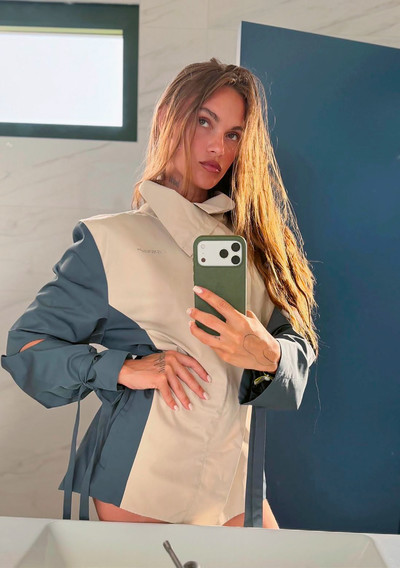
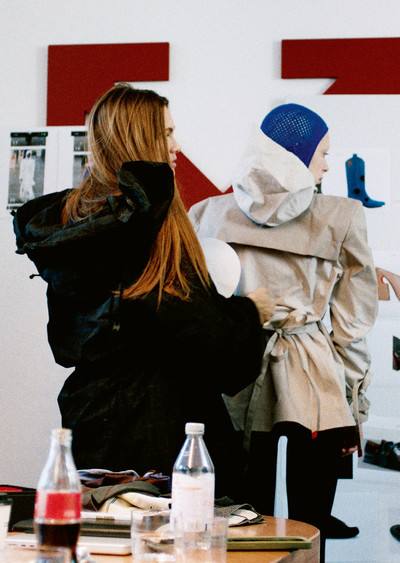
‘I always want people to actually wear the clothes and integrate them into their closet – not just admire them.’
Veneda Carter, the Copenhagen-born, LA-based stylist and designer, cut her teeth in the Yeezy universe after Kanye West discovered her work in 2016. The self-proclaimed sneakerhead known for her streetwear-savvy eye eventually became Kim Kardashian’s go-to dresser, deemed by her “the coolest girl in the world.” Her namesake label, launched in 2022, has grown from jewellery into ready-to-wear, accessories and coveted Timberland collaborations. Now she’s shaping the 10x10 project’s womens-
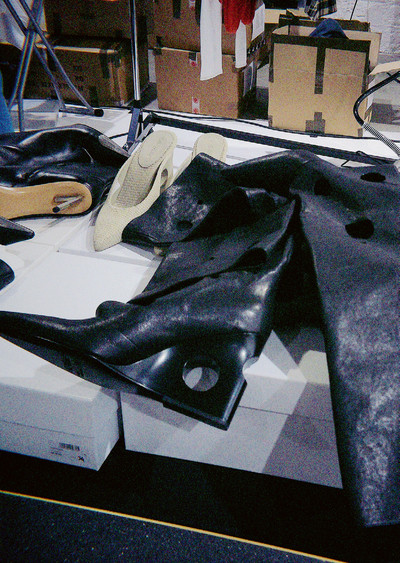
wear line, entitled ‘Meteor’ after the term Virgil gave one of his neatest design tricks: a perfect circle cut clean from a garment, allowing absence to do the talking.
Anano Shalamberidze: When designing the womenswear for this collaboration, what aspects of Virgil’s design philosophy felt most important to preserve, and where did you feel there was room to push things forward?
Veneda Carter: I’ve always loved the way Virgil mixed high fashion with something more approachable. That balance was really important to keep. I wanted the pieces to feel elevated but still easy to wear. Where I wanted to push things was through the silhouettes by keeping the sporty, technical feeling but making it a bit more refined and feminine.
Which womenswear categories does the collection span?
It focuses on footwear and outerwear. Footwear felt really natural because it’s something I’ve designed before. It feels modern and technical in a way that’s true to Off-White, but it’s still something people can actually incorporate into their wardrobe. Outerwear was new for me, which made it exciting, and it’s one of my favourite things to wear and style, so it felt like the right category to explore next.
You mentioned that you started exploring your feminine side after your pregnancy. Tell me about how you brought some of this energy into the design.
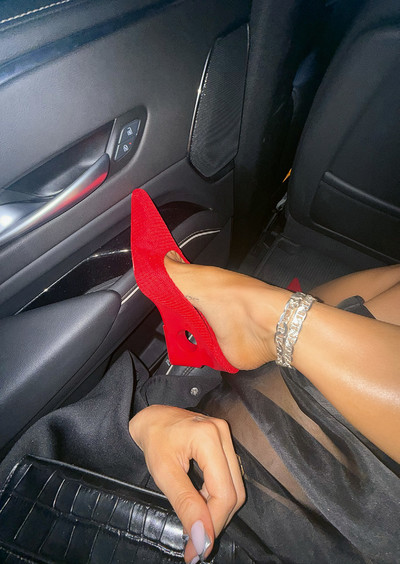
I’m a notorious sneakerhead but over the last few years I’ve naturally started wearing more heels and flats. Designing a heel was really fun because it reflects where I am personally. The same goes for the skirt: we made something I genuinely want to wear. A few years ago I probably wouldn’t have reached for a skirt, but now it’s become a big part of how I dress.
Why do you think the Meteor’s simple sartorial intervention – a circular cut-out – has become such a symbol, and what does it disrupt in a garment?
I think negative space is naturally disruptive, especially in footwear. A cut-out changes something that’s usually designed for function and makes it feel unexpected. It’s a simple detail but it changes the way you look at the shoe.
Off-White has always been a brand built around ideas and concepts as much as garments. What idea did you find yourself returning to throughout this collection?
I kept coming back to this mix of sport, luxury and wearability. I wanted the pieces to feel different, but not so different that they become intimidating. I always want people to actually wear the clothes and integrate them into their closet, not just admire them.
You started your career at Yeezy, alongside people like Kanye West, Lotta Volkova and, of course, Virgil. What did you learn there that you couldn’t have learned anywhere else?
Honestly, I learned everything there. Design, creative direction, branding, marketing, how to build a company, how to work hard and trust your ideas. It really shaped the way I think creatively.
What did Virgil represent to you, and what do you think his lasting legacy is?
Virgil completely changed the way people think about fashion. He brought together luxury and streetwear in a way that felt really natural, and that’s something I’ve always connected with. I think he showed that fashion can be aspirational without feeling exclusive. That idea absolutely influences the way I design. Virgil’s legacy is felt everywhere, and that is something that resonates so deeply with me and why I was drawn to this project.
Could you share a memory connected to Virgil that has stayed with you and perhaps shaped the way you think about your own work today?
A few months before Virgil passed away, he asked me to style and model the Off-White x MLB [Major League Baseball] collaboration which included the Meteor cut-out detail. It all happened really naturally, and it was something I’d always hoped would happen because working with him was a dream of mine. It was also one of the first times I got to style and model in the same campaign, so the whole experience felt really special. It was also my first professional project after having my daughter Bobbi and I’ll always be grateful that we got to work together during that particularly special time.
Raul Lopez
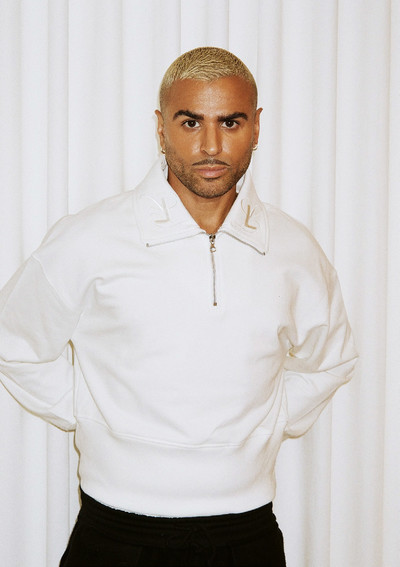
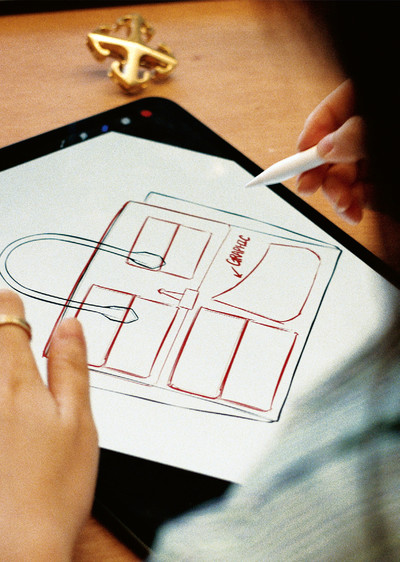
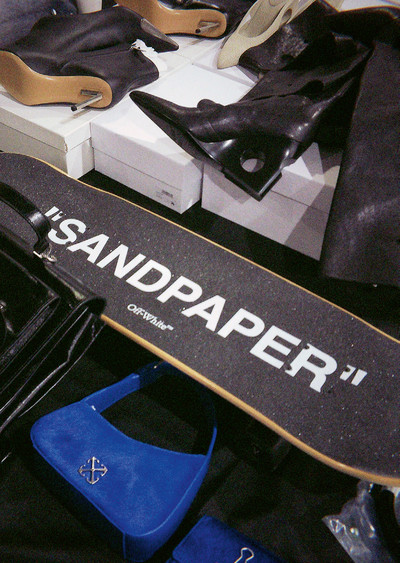
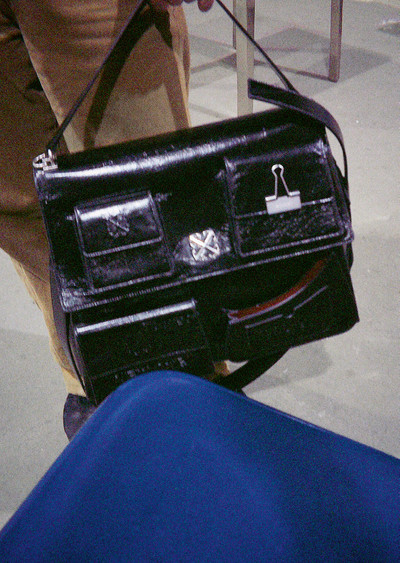
‘Virgil told me, ‘If there’s anything you have, it’s community and culture; no one can ever take that from you.’’
Raul Lopez, who founded LUAR in 2017, is a designer that epitomises a certain New York spirit. In the mid-2000s, the Brooklynite co-founded Hood By Air, the cult label that helped lay the groundwork for streetwear’s eventual integration into luxury fashion – a shift that would later find its most visible expression in Virgil Abloh and Off-White. Lopez’s long-standing friendship with Abloh, and his knack for designing bags that actually sell, made him a fitting candidate to rework the house’s Jitney for 10x10, multiplying it into the ‘One-to-Many’: four bags in one.
Anano Shalamberidze: This collaboration with Off-White invites ten creatives to ‘question everything’. Was questioning, in any sense of the word, part of why you started LUAR?
Raul Lopez: It was about questioning what was happening in our communities, in society, in culture, and within fashion itself. I wanted to create a world where people could feel comfortable enough to be confident in themselves, where people could coexist and become a family. Since I was a kid, I was always the connector between different groups of people.
I’ve been to one of your shows in New York, and it was the first time I saw actual cheering on the runway. I had never seen it before.
Me neither! Oh my God, they love a cheer. I used to be like, ‘Why can’t y’all bitches just sit down and watch a show like normal?’ But I love it, of course. The way I immerse people creates that emotion and that’s the beauty of it.
That palpable energy feels similar to what Virgil used to create too.
Virgil said, ‘If there’s anything you have, it’s community and culture, and no one can take that from you.’ We kind of grew up together, we went through the whole Hood By Air bootcamp. It was an amazing moment in time. We saw things in a similar way because there weren’t that many of us in the scene, especially in downtown New York, so we developed a similar perspective.
You’ve said before that you want people to dissect your shows. That could feel risky, because it gives others the power to misinterpret your work.
It’s a lost art. Everything is so hyperfocused on social media now, but I’m here for the people who want to ask questions. I’ve always wanted people to look beyond the clothes. That’s why I often turn all the lights off and focus on the models. I want to immerse you in the experience. When you read a book, no one can create the same world you’re creating while reading it. You’re imagining the characters, how they look, how they act. I feel like these are sentences in my own book, and you can reinterpret them however you want.
How do you think people are interpreting Off-White today?
There’s still a strong connection to Off-White because Virgil left such a legacy. People still connect to his DNA, and
I think it’s great that they haven’t compromised the integrity of the brand. It’s hard to move forward when the face isn’t there anymore, but bringing in a lot of his old friends and reigniting Virgil in that way is a really nice nod to him.
The Ana bag, named after your mother, is a LUAR staple. Luxury handbags have become such status symbols that functionality and design can sometimes feel secondary. What does it mean to create a bag today, both as an independent designer and through this collaboration with Off-White?
I wanted to make something that felt like a symbol and an heirloom – something that could be handed down. I wanted to make a beautiful, high-quality bag that anyone could wear. It was also a nod to my mom and to the women in my family, who were role models and immigrants, and who worked in the Garment District. With Off-White, I didn’t want to do anything kooky or crazy. I wanted to make a functional bag. I also wanted to respect Virgil. I didn’t want to come in and impose something just for the sake of it. The Jitney bag incorporates elements of his bags – almost like all his bags in one – but it doesn’t look overdone. For me, it was about respecting him and his brand.
It’s been almost a decade since System put Virgil on our cover in 2017. Looking back, what was Virgil Abloh to you?
Ours was a sibling connection. Even when he was already at his height – doing Vuitton and Off-White, having so much going on – he would still make time. He would send me these beautiful messages, saying things like, ‘You’re a cultural icon.’ In a weird way, it felt like he was telling me he was leaving. I remember around 2017 or 2018, when I did the CFDA/Vogue Fashion Fund, he was right there standing next to me. He brought everyone around my whole setup, and the other designers were looking around like, ‘What is going on?’ I didn’t win, but he was like, ‘You’re the one.’ Those are the things that stood out, because he didn’t have to come.
Yuta Hosokawa
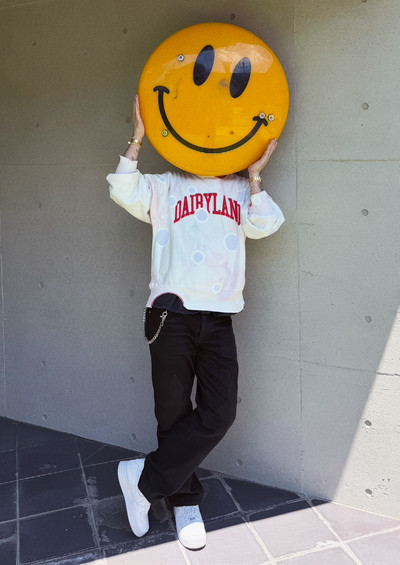
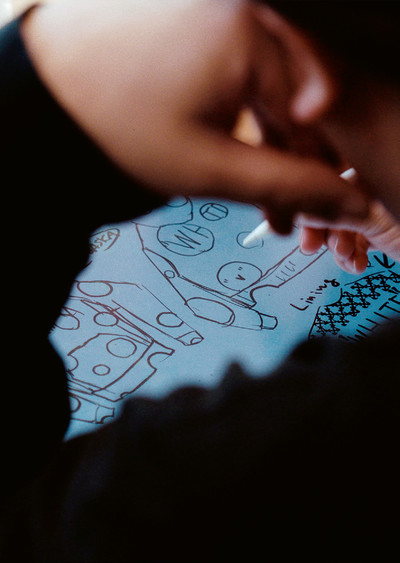
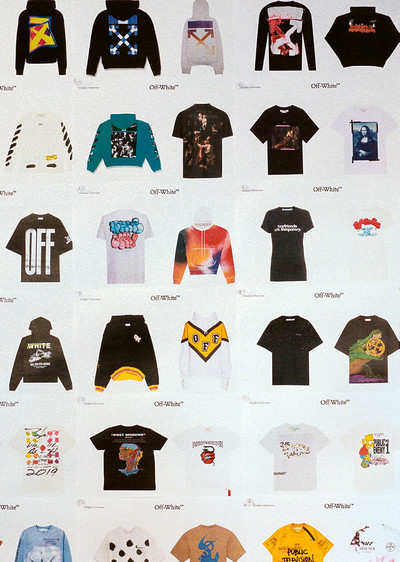
‘Selecting, provoking, shifting meaning through context, and intentionally not creating from scratch…’
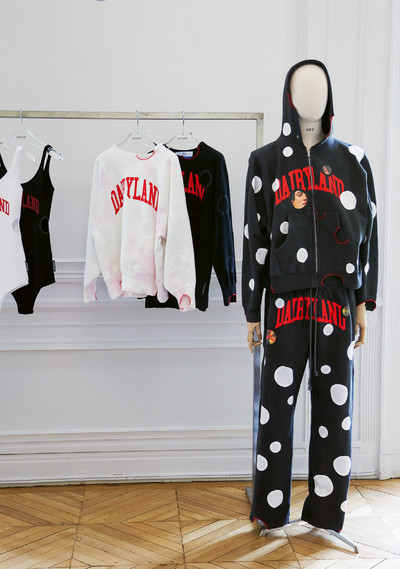
Yuta Hosokawa, the Osaka-born designer, built his brand READYMADE on Marcel Duchamp’s philosophy of the same name – selecting, reframing and shifting meaning through context. His upcycled military bags and garments caught Virgil Abloh’s attention early on, and the two collaborated over a decade ago, when both designers were still in the earliest days of their respective brands. In 2020, Hosokawa launched Saint Mxxxxxx with LA-based artist Cali DeWitt, a label that has since drawn collaborations with brands like Denim Tears, BAPE and NEIGHBORHOOD. For the 10x10 series, he’s designed the hoodie – a garment he calls ‘the ultimate equaliser’ – extending the design into sweatpants and a body.
Anano Shalamberidze: When do you remember first understanding what streetwear represented and how has where you come from shaped your approach to it?
Yuta Hosokawa: It was back in 1996 when I was in junior high. Japan’s fashion magazine culture was exploding, and that’s what hooked me. I was just wearing streetwear naturally. For me, streetwear was never about the product itself. It’s always been about the context, the community and the connection with the person wearing it.
Is there an equivalent entry point for younger generations today, or has that sense of discovery been lost?
With social media today, there are far more entry points to street culture than before. My generation eagerly awaited monthly magazines and dug deep into limited information, which made the thrill of discovery immense. While the format has changed, that sense of discovery hasn’t been lost. For those seeking inspiration, looking through 1990s magazines is a great starting point, but holding onto genuine curiosity is key.
A hoodie is arguably the defining symbol of streetwear, but its meaning has shifted as it’s been appropriated by luxury. What do you think the garment represents today?
It’s the ultimate equaliser. Anyone can wear it, and it blends into any environment. Right now, it acts as the perfect entry point into fashion and what a brand stands for.
Can you tell us about the hoodies you’ve created for the 10x10 project?
The design was inspired by Virgil’s furniture pieces I saw at the Off-White office in Milan, specifically incorporating their signature circular cut-outs into the hoodies. Working with the Off-White team was extremely smooth, and we were able to bring the ideas to life with great speed and momentum.
You first worked with Virgil Abloh over a decade ago, when READYMADE and Off-White were still emerging labels. How does returning to the brand today feel different?
I miss Virgil deeply, but fundamentally nothing has changed. READYMADE’s whole concept and inspiration came from Marcel Duchamp’s Readymades, as he called them. Since that core philosophy hasn’t budged, our dialogue remains exactly the same.
Virgil Abloh believed familiar objects didn’t need reinventing, just enough intervention to make people see them differently. Does that idea resonate with you, particularly when you’re designing a hoodie?
I’ve been making things under that exact same theme for a long time: selecting, provoking, shifting meaning through context, and intentionally not creating from scratch.
Why do you think Duchamp’s thinking continues to resonate so strongly with designers like you in the 21st century?
People in the past could create things from scratch, but today, nothing is truly new. That’s why the question isn’t about inventing something, but about how you reframe what’s already there.
Upcycling requires surrendering some control – you work with what exists rather than exactly what you have in mind. Has an idea ever failed to survive that process?
Balancing commercial viability with what I find cool is never easy. There have been times when an idea couldn’t be realised as envisioned and had to be abandoned at the sampling stage. Through that trial and error, I’ve learned how challenging and vital it is to translate a vision into reality.
What did Virgil represent to you?
Working with him opened so many doors for me. It triggered so many turning points. During Art Basel in 2016, we spent time together applying our brushes to a single bag, co-creating a piece in the moment. That memory of a shared creative space remains vividly etched in my mind, and it still shapes how I approach my work today. We naturally complemented each other: leveraging our respective strengths and filling in each other’s gaps intuitively.
A$AP Nast
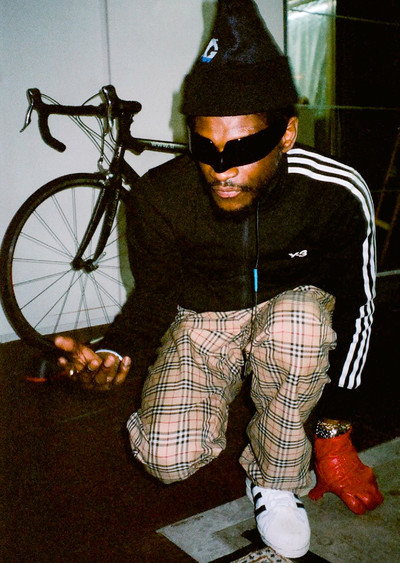
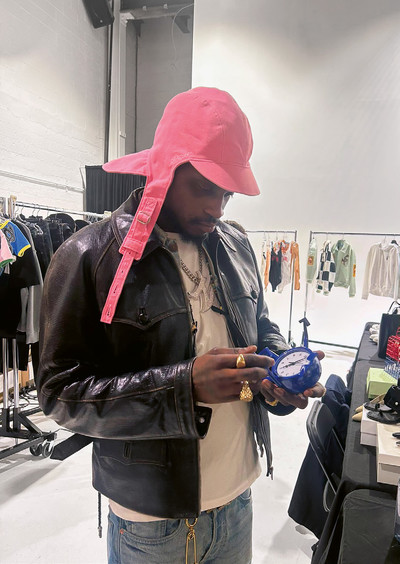
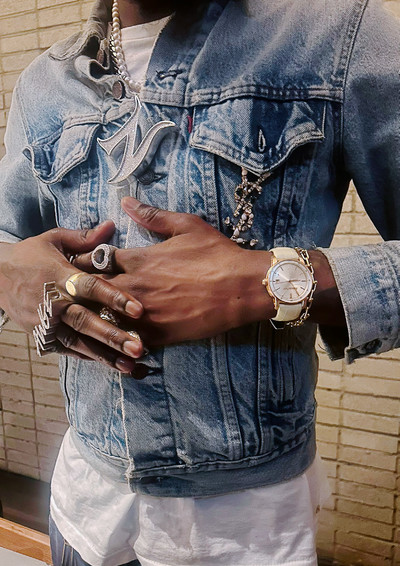
‘Clothes dress a person and objects dress a room; both are about taste, feeling, the world you want to live in.’
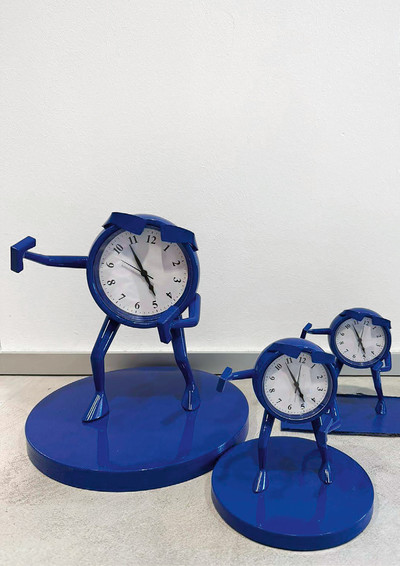
A$AP Nast, the Harlem-born rapper and founding member of A$AP Mob, has long been one of music’s most fashion-fluent voices. Alongside his cousin A$AP Rocky, he has been instrumental in shaping the Mob’s image, one that has helped elevate streetwear to its current perch in luxury menswear. A friend and devotee of the late Virgil Abloh, Nast has lent his eye to collaborations with brands including Comme des Garçons Shirt and Stüssy; now he’s bringing his discerning eye to Off-White, designing the ‘objects’ category for the 10x10 series. His object of choice: a clock.
Anano Shalamberidze: What drew you to designing an object for this collaboration instead of a fashion piece?
A$AP Nast: I don’t really separate objects, furniture, clothes or music. To me, it all goes hand in hand. Clothes dress a person and objects dress a room; both are about taste, feeling and the world you want to live in. So making a clock didn’t feel like stepping away from fashion. The object is just fashion living in a different space.
What were you most focused on when designing the clock itself?
The first thing was the size and the presence of it. It’s not something you just glance at and keep moving. It takes up space in the room. That was the point. I wanted it to feel like an object, not just a clock. Something you live with. The proportions matter, the form matters. It has a playful side, but it’s not a joke.
Was there a particular object from your own life that influenced your proposal?
The starting point was the wider conversation around time and the way Virgil repeatedly played with time and clock imagery in his work. His clock chain had this playful, cartoon-like quality to it. We took those references and built a new object around what time can mean: memory, legacy, the present and the future. I liked the idea of time becoming something that lives in a space with you, almost like furniture or sculpture. It has a presence, but it’s still functional. That is where the object became interesting to me.
In what ways did you embed the spirit of Off-White and of Virgil Abloh into the process of designing and developing the clock?
Off-White always made people look at normal things differently. That’s one of the biggest lessons I took from Virgil. It’s not always about making something completely new. It’s about taking something familiar and shifting how people see it. That’s how I looked at the clock. Everybody knows what a clock is, but once you change the scale, the feeling, the way it sits in a room, it becomes something else.
Virgil had a remarkable ability to build communities around ideas, and A$AP Mob was built on a similar sense of collective creativity. Did that create a natural connection and understanding between the two of you?
Definitely. A$AP was built from real friendship, brotherhood and a shared vision. Nobody manufactured us or told us to become a collective. Virgil understood that same power of bringing people together around an idea and giving everybody room to contribute. That community mentality was something we both understood naturally.
When did you first realise you were all contributing to a bigger cultural shift? Particularly the relationship between menswear and music.
Probably only now, looking back. When you’re inside it, you’re not stopping to call it a cultural shift. We were young, living our lives, making music, getting dressed and doing what felt right to us. We were our own competition; we were not waiting for permission. In hindsight, you can see the influence everywhere and understand how much changed, but at the time it was just real life.
Virgil often talked about sampling and recontextualising existing ideas. How do you distinguish between building on a reference and simply copying it? What separates inspiration from imitation?
References are part of culture. The difference is what you put back into them. When you understand a reference, live with it and pass it through your own experience, it becomes something new. When somebody only copies the surface because they saw it work for someone else, people can feel that. Authenticity is not something you can calculate. A$AP is the blueprint. The proof is everywhere.
What did Virgil represent to you, and what do you think is his lasting legacy?
To me, Virgil represents truth and inspiration. He showed a generation that anything is possible and that the spaces we were told were not for us could be changed. What he achieved in the time he had was incredible, but the most important part is the future he built for younger people. He gave knowledge, access and confidence, and he made people believe their ideas belonged on the biggest stages in the world.
Bafic

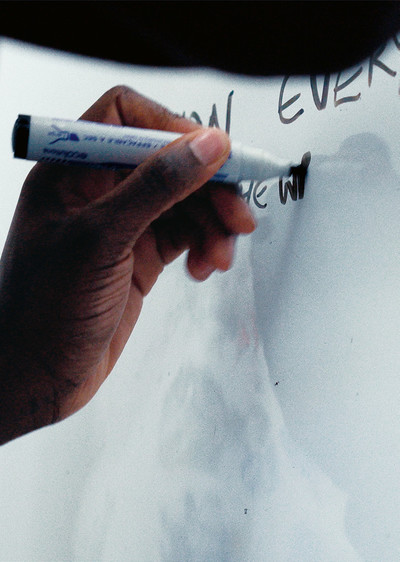
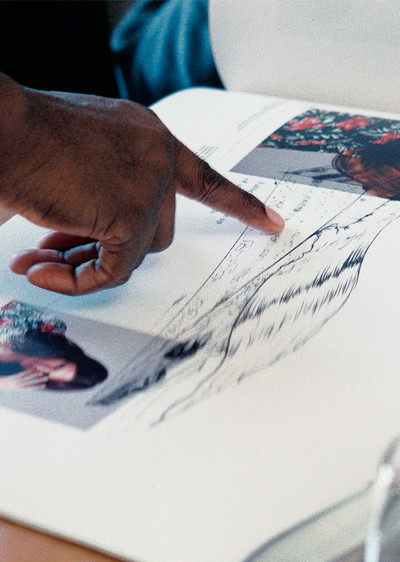
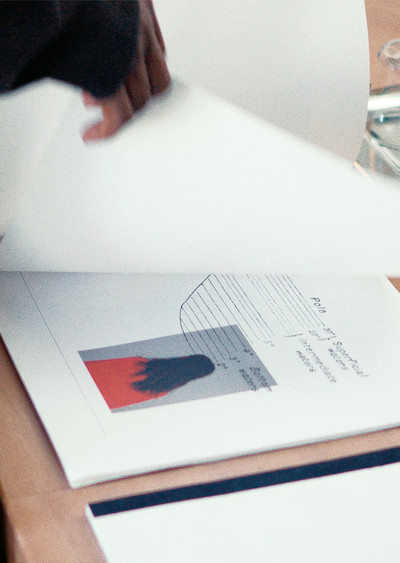
‘I’m interested in intimacy and nuance at scale. If you ask one question to several people, the differences you get are fascinating.’
Bafic belongs to a new vanguard of artists who move with ease between disciplines. A photographer and director with a background in graphic design, the London-based multihyphenate collaborated closely with the late Virgil Abloh – most notably on 2ème Étage, a documentary chronicling Abloh’s debut Louis Vuitton menswear collection, and Sub Eleven Seconds, a Sundance-premiered short about track and field sprinter and Olympic champion Sha’Carri Richardson. For 10x10, he’s read the ‘Fine Print’ as an invitation rather than a format by hiding a single question inside an object and leaving the answers up to us.
Anano Shalamberidze: You framed this collaboration with Off-White around the question: ‘When we’re looking out externally, what does that do to us internally?’ Does that inform your work more broadly?
Bafic: Inherently, I think it does. Everything we go through as we change, as the world changes – we’re processing external things and how they affect us and how they shape how we move through the world.
Photography and directing have been your primary creative language. What interested you about translating your perspective into design for this collaboration?
I’ve always been interested in design. I came from a graphic design background, so that was just the gateway to a lot of stuff I got in to. I don’t necessarily think of mediums. I sort of think of the thing I’m trying to say, and then figure out the best way to say it.
Was that the process with what you’ve created for Off-White?
Yes, it started out through some conversations and this idea came to mind. The category I’m doing is ‘Fine Print’, therefore publishing. In typical me fashion, I’ve made this object which has little anecdotes on it, printed on paper – so in a way, it is publishing. As we were working on it, it transformed, and I started noticing things that I was interested in coming out of it. I go into stuff having this feeling, and as time goes on it crystallises into something distinct.
Tell us more about the object itself, and how it fits into the 10x10 project.
It’s a small sculptural piece – a puddle of water, a hand emerging from it, and in the hand is a stone-like object. Inside is a sheet of paper you pull out with a question I’ve been asking people: ‘What would you say to your younger self?’ I’m really interested in intimacy and nuance at scale. If you ask one question to several people, the differences you get are fascinating. With 10x10, there is a common thread of a community – the people you’ve met in passing and the people you’re close with. Maybe it gives you an idea of where the mood is right now, in the world, or in a certain community.
What would you say to your younger self?
Continue leaning into yourself.
What for you was the most inspiring thing about the way Virgil worked?
He asked us to document his first Louis Vuitton collection, so we lived in Paris for three months. I watched him sketch, come up with ideas, talk to different departments, and present to the Arnault family. After the show I asked him, ‘How have you done something at this scale?’ And he said, ‘Any time there’s anything I’m remotely afraid of, I have to go towards it.’ You always have to go towards the fire, because you get this moment when you go through it and you’re like, ‘Oh wow, it didn’t kill me. I’m still here, and I’ve learned stuff.’
In that documentary, he talks about his confidence coming from constant prototyping, trying out ideas. What’s your own relationship with iteration?
You get to a stage when you’re making stuff where ideas are sort of easy. You’ve exercised and stretched the ability to imagine. Then I think, OK, what’s the essence of this idea? My relationship with that has changed over time and for me at this current stage, it’s been about being a better editor of
ideas, refining and simplifying.
Do you think what you’ve designed could be understood as an artwork rather than a design object?
The naming of something as ‘art’ can get in the way of how someone experiences it. There’s great work that exists outside of art frameworks. That said, I view everything I make as art. The more I notice how I march towards a project without thinking, the more I realise how much of me exists in the thing.
The question ‘What would you say to your younger self?’ could yield such artful responses that it could become an artwork in itself.
Yes, exactly. The object is just a vessel. The canvas and the painting – those are vessels. I’m always thinking about the spirit and the soul.
Renell Medrano
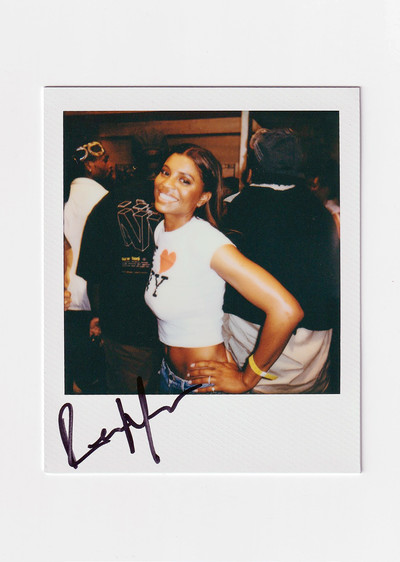

‘They’re not something you put on just to finish a look; they are the look.’
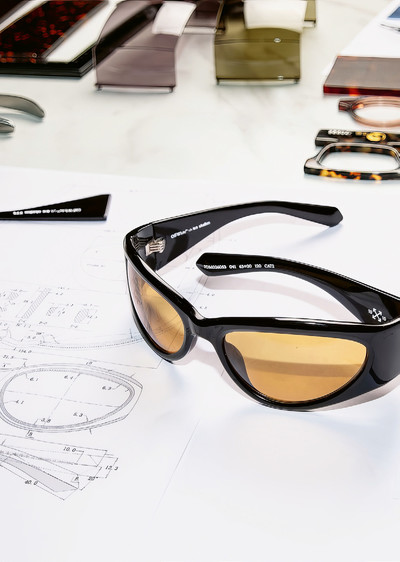
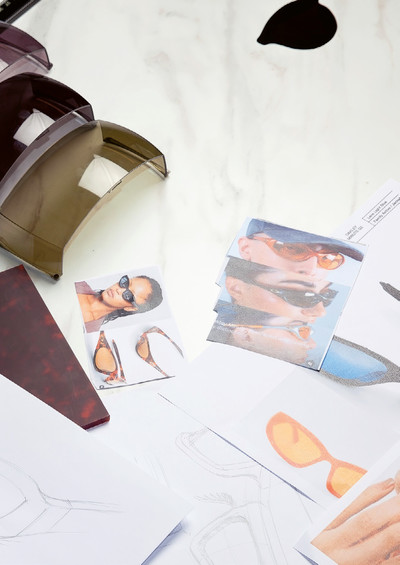
Renell Medrano, the Dominican-American photographer and director, has developed a distinct visual language shaped by the people and communities around her. Her candid, intimate images have made her a collaborator of choice for artists such as Kendrick Lamar and Solange Knowles, cementing her status as one of the most sought-after creatives working across fashion, music and culture. Bringing together her vision and personal style, Renell has designed eyewear for Off-White’s 10x10, extending a long-standing part of her own uniform.
Anano Shalamberidze: When System put Virgil on the cover in 2017, we called him ‘the serial collaborator’. Collaboration is such an integral part of photography and directing. What makes it creatively satisfying for you?
Renell Medrano: The way I collaborate with others is really about alignment. If me and that person see eye to eye, it just feels natural. It has to be organic. The best collaborations happen when there’s a mutual understanding, where you can bounce ideas off each other and really trust each other’s perspective. I don’t want anything to feel too forced or overly considered.
Does that differ from how you approach collaboration on your own projects, as opposed to with the team at Off-White?
It’s a little different when you’re working with a brand like Off-White; there are so many people and perspectives involved. You’re bringing my vision together with the identity of the brand, and there’s a conversation happening between the two, which I really enjoy. It becomes about finding the balance.
What interested you about translating your perspective as an artist into design?
I chose eyewear because I’m big on sunglasses. That’s what’s authentic to me. It’s a statement piece in my everyday life – eyewear is what makes the outfit. It’s definitely a uniform for me. I’ve always felt like sunglasses can completely change the way you look and how you feel. I’ve done eyewear with my own brand before, so I already knew that was a language I can speak. I thought that was the best thing to do with Off-White, because it felt like a genuine extension of who I am.
What makes the sunglasses you’ve made for Off-White distinctly Renell?
The boldness. I like when you can put on a pair of glasses and it immediately changes the whole feeling of an outfit. I wanted them to have that presence. They’re not something you put on just to finish a look; they are the look.
You’ve said before that, with your work, you want your audience to feel what you feel while taking a picture or directing a video. What would you want the wearers of your sunglasses to feel?
What I want them to feel is exactly how I feel when I’m wearing my glasses – I want them to feel confident. I’m very much a relaxed, tomboy, streetwear type of girl, and the glasses I like to wear are what elevate the look. For me, the best pieces are the ones that become part of your identity. You put them on and suddenly you feel a little more like yourself, maybe even a little bolder. I could just be going to the deli in regular street clothes, and the minute I throw on the glasses, I feel like I could walk into a party if I wanted to. If someone puts these on and feels that, then I think we’ve done what we wanted to do.
Who would be your dream person to wear them?
As long as my people are wearing, I’m blessed.
Both you and Virgil have drawn deeply from the communities that shaped you. As your work reaches a global audience, how do you stay connected to the community and perspective that first shaped your eye?
I just stay true to my work and what I stand for, and the rest speaks for itself.
What do you remember most about working with Virgil?
What’s cool about collaborating with friends is there’s this unspoken thing, especially with the people I work with. I just know they get it. I already trusted Virgil in the sense that he let me do me, and he did his part with the clothes. He’s the GOAT. What he did for everyone is what lives on. He taught us and gave us so much, not just creatively but in the way he encouraged people to believe in their own ideas and take up space. His legacy will always live on through all of us, especially through the people he inspired and gave opportunities to. I feel really lucky to have been able to work with him and to carry a little bit of that with me.