Now 60 years into her career, New York legend Norma Kamali is still designing for women who move. DJ Honey Dijon sat down, and barely drew breath, for a life-spanning chat with her.
Interview by Honey Dijon
Portrait by Grace Ahlbom
Now 60 years into her career, New York legend Norma Kamali is still designing for women who move. DJ Honey Dijon sat down, and barely drew breath, for a life-spanning chat with her.
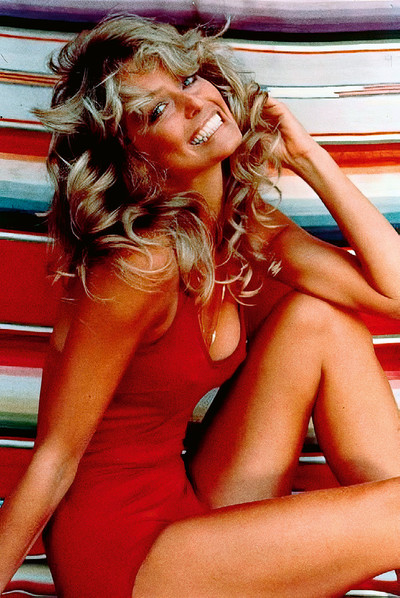
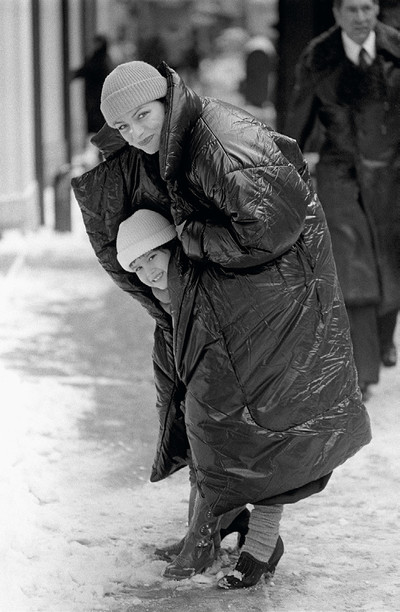
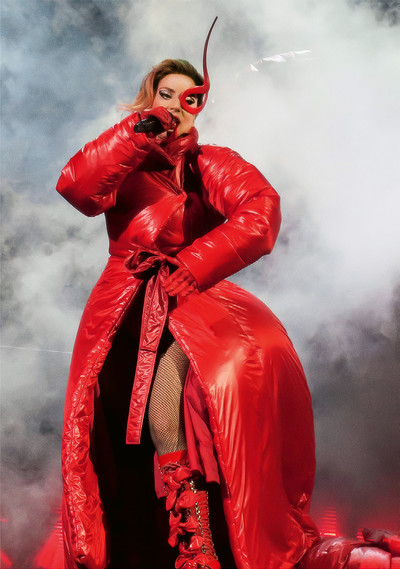
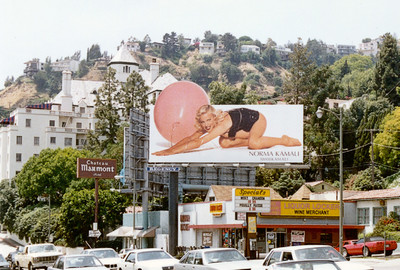
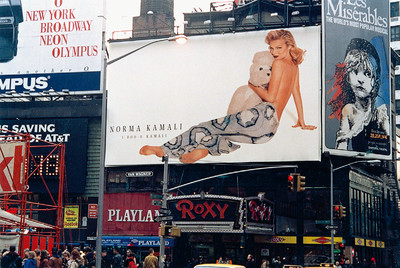
Norma Kamali has always had her gaze fixed on the future. As a result, ideas that began as ingenious, avant-garde proposals in the 1970s and 1980s have now become part of fashion’s contemporary lexicon. The sleeping bag coat designed in 1973, for example; or the parachute collection released in 1974; not to mention sculptural, body-conscious swimwear (a red one famously worn by Farrah Fawcett in Bruce McBroom’s 1976 pin-up poster); and, perhaps her most enduring influence, ushering sweatshirt jersey out of the gym and into the fashion boutique in 1980.
But Kamali’s influence reaches beyond any one garment design. It is the energy at the heart of her work, and her instinct for how women want to live, dress and move through the world, that continues to resonate with fashion’s current pulse. She was born and raised in Manhattan, and New York has remained the cultural and geographical nucleus of her work, its nightlife, glamour and appetite for reinvention still finding their way into the collections she designs today.
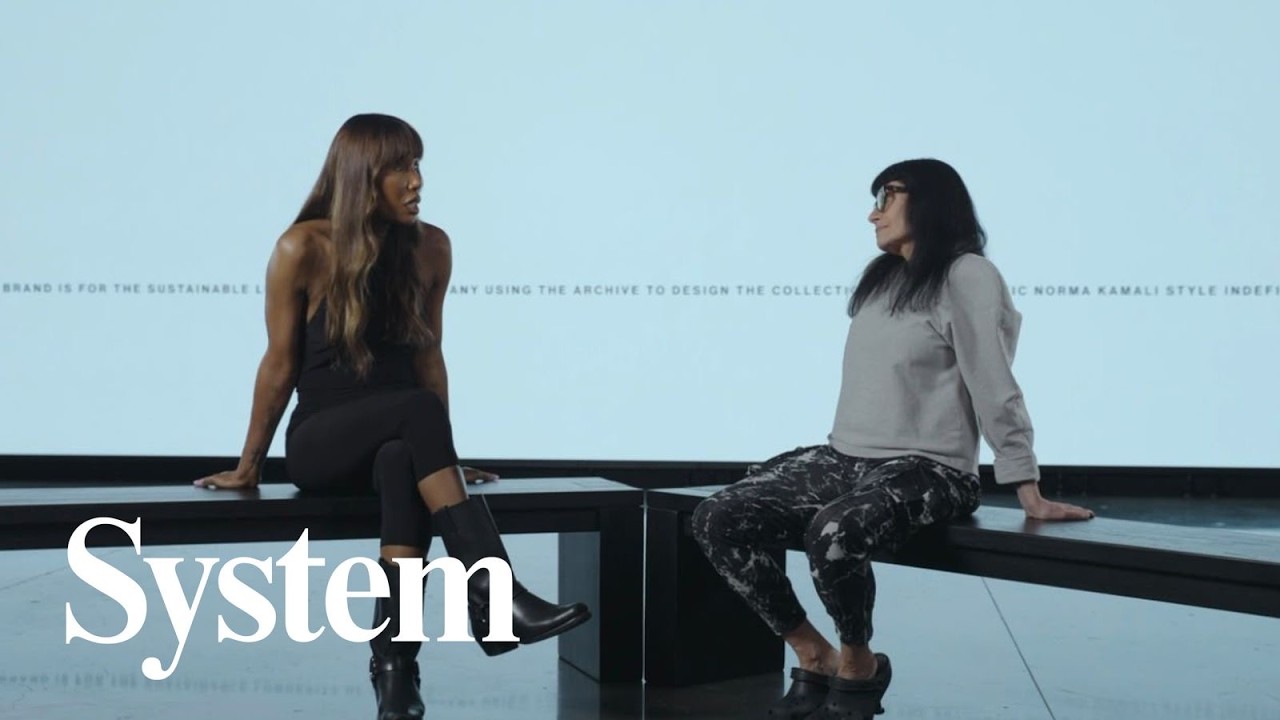
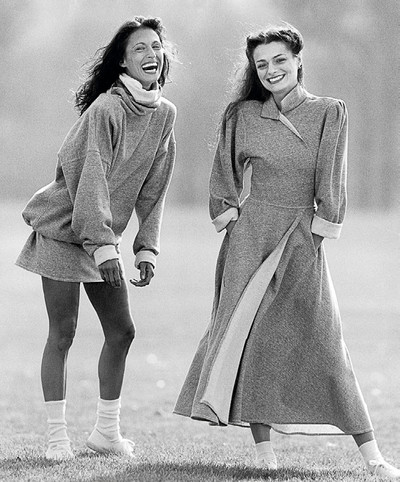
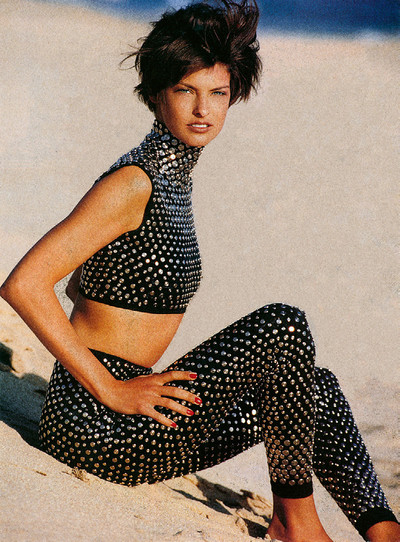
For System, stylist Spencer Singer assembled signature pieces spanning five decades of Norma Kamali’s work for an archive editorial shot by Theo Sion, sourced from Kamali herself, as well as New York’s secondhand boutiques, private collectors and American reselling behemoth, The RealReal. Alongside this, Norma spoke to Honey Dijon – the Chicago-born, New York-dancefloor-raised, and London-based DJ and producer – about fashion, dancing, wellness and the possibilities of AI. Norma, an extremely youthful 81, and Honey share an instinct for looking ahead, continually questioning convention and imagining new ways of living. And 60 years into her career, it’s clear that Kamali is still not looking back.
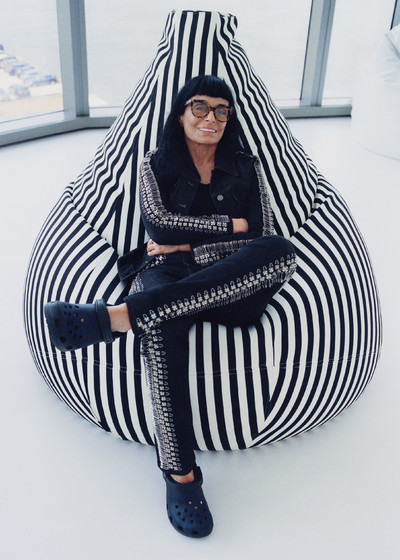
Norma Kamali and Honey Dijon may be separated by a few decades, but their careers have followed remarkably similar trajectories. Both came of age on dancefloors – Kamali in 1960s and 1970s New York, Honey Dijon in 1990s Chicago and New York – and from those formative years each has built a practice that moves with ease between nightlife, music and fashion.
Beyond their careers, however, the parallels run deeper. Both are pioneers whose influence extends well beyond their primary disciplines. Alongside TS Madison, Honey Dijon became the first Black trans woman to land a Billboard Top 40 hit as co-writer and producer on Beyoncé’s 2022 track ‘Cozy’. As for Kamali, her contribution to today’s fashion is difficult to overstate: from the now-iconic sleeping bag coat in 1973, to elevating cotton jersey into luxury fashion, pioneering the use of lightweight parachute nylon, and launching the early e-commerce platform for her budget-friendly line 1-800-8-KAMALI in the late 1990s, long before online shopping was the norm.
Neither woman has built a career by following convention or dwelling on the past. Instead, both have consistently anticipated what comes next. Recorded during a rare moment when they both found themselves in New York at the same time (Honey now lives in London), this conversation contains little nostalgia for their considerable achievements. Instead, Norma and Honey – both unmistakably future-facing – turn their attention to the ideas, technologies and cultural shifts that continue to shape the worlds they inhabit.
Honey Dijon: So, Norma, we’ve been planning this conversation for a very long time, and finally we’re in the same city. But where to begin? I’ve been a fan of your work for so long, you’re a pioneer of so many things; not only in design, but also wellness and longevity. Plus you’ve written a book. You were one of the first artists to do a music video before anyone else did. God, I could just go on and on and on. Sweatshirts, swimsuits, ‘parachute’ clothing, movies… Let’s just start from the beginning. You started designing when?
‘Aged 16, I would sew myself into my pants because I didn’t know how to put a zipper in. And I’d dance and dance and dance at the Peppermint Lounge.’
Norma Kamali: I started designing in the 1960s. I went to FIT, but I wanted to be a painter. In the 1960s, Jackie Kennedy had a very strong influence on fashion – it was the hat and the gloves; everything matching. I did not fit into that. Even before vintage was anything, I was wearing clothes that I could find from the 1930s and 1940s because I was obsessed with the films. So was my mother. Eventually, though, I ended up going to London.
Honey: I read that you worked for an airline?
Norma: Northwest Orient Airlines. I had graduated from FIT and I had a horrible interview [for a job in fashion]. It was so humiliating and objectifying I left crying. I thought: I don’t want to work in this industry. I wanted to travel. I wanted to see what’s going on. And I did. London was just coming alive. I found myself going to London every weekend for a $29 round trip. And it was the very, very, very beginning of the youthquake revolution in London. That’s when I fell in love with fashion. I thought, this is me. Every time I went there, the hairs on my arms would stand up, I would get a chill. I knew something really powerful was happening, and I was a perfect fit for what was going on. That was the beginning.
Honey: That was the Swinging Sixties with Mary Quant and the miniskirt, and Barbara Hulanicki with Biba. So, after that you started making your own clothes. You were one of the first people to do hotpants in New York.
Norma: I thought that after the mini-skirt you could have minishorts, because I wanted to go shorter. Of course, if the skirt’s too short you can’t bend over, so I thought: shorts, that’s what I’ll do. I had a business, but I couldn’t afford fabric, so I used all the scraps from whatever I had cut. I saved them and I made patchwork shorts – hotpants – and I did them in velvet and all these different colours. I did some designs like palm trees on them. And they brought people to me that would never have found me otherwise. So, the hotpants really introduced me to an underground of curious shoppers.
Honey: I mean, not much has changed. All the kids are so into vintage, and now using leftover scraps is called ‘upcycling’. So, in 1967 you opened your first store in a basement with your husband at the time, Eddie. And it was on 57th?
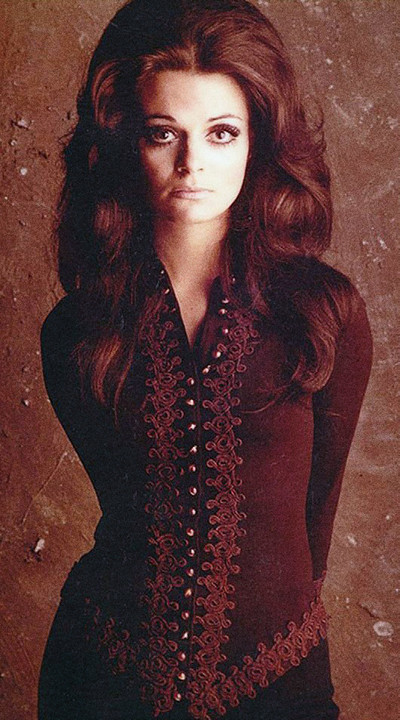
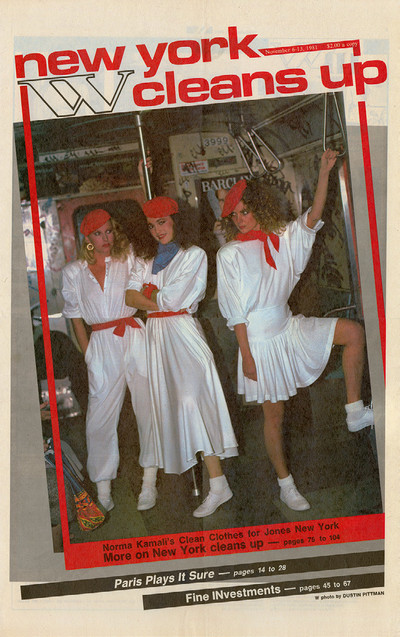
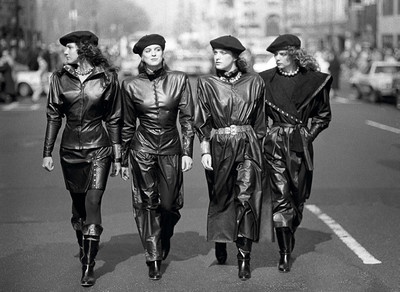
Norma: It was 53rd Street. And Eddie Kamali – well, Mohammad Hossein Kamali – was an Iranian student. There was a lot going on in Iranian culture at the time. I learned a lot about the Iranian people. He was studying economics, and he was a big fan. He put prices on my clothes, and I said, ‘Nobody will pay that, are you crazy?’ And then he would sell it. He was gorgeous and charming.
Honey: Which is all you need at a certain point. And you guys were together for…?
Norma: For ten years. We got married when we were 19. You know, we really cared about each other. But we were young, and we had a lot of growing and learning to do. I’ve had this realisation that the older you are, the better it is for you to find the right person.
Honey: You got remarried at 75, right?
Norma: I got married a couple of years ago – not quite that young…
Honey: Well, youth is relative.
Norma: I have to honestly say it’s one of the really beautiful things about reaching a certain age where you feel like, ‘Oh wow, this person really is in sync with where I’m at.’
Honey: What does age even mean today? Concepts of age, especially with women and wellness, are so wrapped up with capitalism, procreation and the patriarchy. I really think that we need to redefine what ageing means. We have so much more knowledge about wellness and stress management and longevity and peptides and infrared saunas and cold plunges and food. Even though life is going so much faster with technology, there’s this movement against it. I’m totally into wellness.
Norma: It’s true. Fitness, health, beauty, sleep, diet, exercise – those are so important. These days, Claude is my wellness guide.
Honey: Is that your other lover?
Norma: Claude is my wellness agent. I ask Claude everything. Claude is so smart that he will remember every doctor I mentioned and every visit that I’ve had. He will say, ‘Well, remember when you saw…’ It’s so good if you want to know if you’re mixing supplements properly or that kind of thing. Because a lot of what we’re doing is experimental, you know.
Honey: Well, it’s at the forefront. We’re at the precipice when it comes to a lot of this information.
Norma: The information is definitely getting better and better. There are so many preventative things too. I think we’re in this great age where the speed at which things are being developed and invented is at a perfect pace. That’s because we get a chance to try them. I think more and more people need to know about it, though. The education part of this is really the hardest because it seems so overwhelming. I’m curious, how do you decide which doctors you trust?
‘So Ian Schrager says to me, ‘I want to meet you. I’d like you to make Grace Jones’s New Year’s Eve outfit for Studio 54.’ That was the gold lamé situation.’
Honey: Word of mouth, pretty much. I’m very fortunate that I have people in the industry like my trainer and my Pilates coach. I also do a lot of research on my own because I just love it. Like, I am obsessed with fitness. Not necessarily because of aesthetics, of course. Because of stress. But who doesn’t want to look good? I’ve always loved David Barton’s thing: ‘Look better naked’. I just live by that shit. But the reason that I got more into wellness was because as a DJ and a producer, music has such a strong vibrational connection to people in the universe, and I want to show up at my highest vibration. When I’m DJing or performing, it’s literally my whole physical self. So, I have to be in the best condition that I can be, so I train just as hard as I create. Also, I don’t eat for pleasure; I eat for health. I don’t give a shit about the foam or this sort of concoction. I’m not a foodie. Every time that I’ve gone to a foodie restaurant, I’ve left with indigestion. Did they use organic oil? How long has the oil been sitting there? I never know.
Norma: I’m just starting to eat meat again.
Honey: Were you vegan?
Norma: For a while I was into fish, and now I’ve introduced chicken. And I’ve also discovered pumpkin seeds have so much protein. I’m so thrilled that I have made these discoveries. What’s the go-to for you? You’re travelling, you can’t get all the things that you love. What would it be?
Honey: Pasta!
Norma: Are you serious?
Honey: I am serious. Every time I go somewhere, I really think about my microbiome and my stomach. Different places have different bacteria. I’ve never gotten sick from eating carbs. I’ve never, ever gotten sick from pasta.
Norma: Do you bring food with you?
Honey: I do. I used to make things to take with me on the plane. But I also have stopped – since I’ve done intermittent fasting, it’s a lot easier for me to go long stretches of time without eating. I don’t like eating on airplanes because of the air compressor. When I travel, I have a whole routine. I have compression socks, I bring my electrolyte drinks, I have my electrolyte capsules, I have my Weleda Skin Food, I have all the things.
Norma: There’s a great brand that has those big sardines. They’re delicious. They’re in olive oil, and they also do…
Honey: …oh yes, I know how much you love olive oil.

Norma: I’m obsessed. These jars of tuna and sardines. Sardines are amazing. Here’s the trick. Drain out the olive oil. Put in olive oil, tons of lemon. I add olives, I add pumpkin seeds, I add chickpeas and make a delicious mix. Don’t put any leaves or anything. Especially if you’re travelling. And this is a protein boost. So good. It travels and it doesn’t go bad because it’s in a jar.
Honey: But what about when you open the jar on the plane?
Norma: You can’t open it on the plane. You can’t open it with other human beings.
Honey: You can’t do that on the plane, unless you’re flying private!
Norma: No, you can’t – you have to do it when you land. Even here at lunch, I think: oh, my God, if I could only have my sardines! But everyone will just, like, throw up. But the nutrition in sardines is extraordinary.
Honey: I’m sitting across from someone who is chronologically 81, but have you ever had your biomarkers tested?
Norma: I have. The last time I had it done, it was 53.
Honey: Wow.
Norma: I think I might have aged since then. It’s been very stressful.
Honey: Do you think we’re different ages on different days?
Norma: I think so.
Honey: I’m sitting across from someone who just embraces change. You’re not afraid of it. A lot of people would be afraid of AI, but you’ve been a pioneer. So, the way I see you embracing AI is the way you’ve embraced so much throughout your career. When I think about the sleeping bag coat, the sweatshirt dressing – and you made a music video at the beginning of the 1980s with your own song called ‘Shoulder Pads For My Man to Cry On’. You are still one of the most–
Norma: I can’t believe you know that!
Honey: I know everything about you. The gym shoe, which I’m still obsessed with, parachute dressing. What I love about what you do is that I can put your clothes in a suitcase, and they’re still going to look good. From a fishtail gown to a sweatshirt dress to a jumpsuit, I’m still going to look pulled together. One of the things that I’m really struggling with today in fashion is the cosplay element. I know a lot of people who are like, ‘Oh, the fantasy of this and that,’ but that’s not reality. I think there’s something beautiful about having style but also living in those clothes.
‘People say to me, ‘Norma, I’ve never done this before.’ Yeah, exactly, that’s the whole point! Why would you want to do what you’ve done before?’
Norma: You’re so right. I think the fashion industry is in the biggest crisis I’ve ever seen. Either the change will take you down, or you will figure out how to adapt. Change is so frightening for many people, including me. But the idea of change can also be very exciting. That is the adventure of life. When you talk about AI – I love it. I get the same feeling, the hair rising on my arms, as when I went to London. It doesn’t mean that there aren’t things to fear. It doesn’t mean there isn’t a mystery of what Claude is going to do. But even if we make a mistake, what happens in that transformation is key to discovering where we should go.
Honey: I don’t think there is such a thing as a mistake. I think those can be portals to knowledge. Maybe a mistake is just looking at something through a different lens. It’s comparative, right? There is no such thing as a right way or a wrong way. I just hope that the humanness that you describe isn’t erased by AI. That’s the only frightening thing about it. Because you’re a critical thinker, right? And so, you’ve lived long enough to be able to have that. I think about younger generations today where AI might replace critical thought. As much as it is profound, it can have profound effects and also be used for a lot of negative things. People don’t really trust anymore. They don’t know what’s real and what’s not. Even in fashion, with all the AI used in photography or advertising – like, is that model real? AI, it’s just another arsenal in life. I use it for songwriting, I use it for ideas. But then I will take that and then I will work with a live musician.
Norma: I actually did a course at MIT on AI. I was humbled and enlightened by this experience at the same time. It opened my mind and eyes to the possibilities of AI and inspired me to see the world in new ways and to gain insights into where the fashion industry is going. I had the idea to archive my collection in a protected AI programme to guarantee longevity to my brand. I wanted to know as much as I could about it so I could understand it, so I kept interrogating it, saying, ‘Can you originate an idea?’ But I wasn’t getting straight answers. I was digging deep with these very intense prompts, but I couldn’t get AI to respond to this notion of an original idea, an original design. So finally, the response was, ‘If you give me an original idea, I can give you many ideas after that.’ It cannot come up with an idea, or a feeling. Feelings are human. And there is no way to be creative without feeling. So that’s an area that AI cannot really dominate. Creative and design work starts with humans.
Honey: And love. AI can’t love.
Norma: It can’t do any of that. So, I think one of the lessons, one of the adventures people can have with AI, is ask all those questions about feelings. Ask it some trick questions and you will see once you get the right prompts, it forces the response to be: I need a human to help me do what I do.
Honey: I also wanted to talk to you a bit about New York. For me, you lived through one of the most important times in New York history; that’s 1969 to 1985. A lot of people don’t know that you were the partner of Ian Schrager, who was partners with Steve Rubell of Studio 54. I always thought that you made the sleeping bag coat for Steve on the door! You also designed the Studio 54 jeans, which I have a pair of. I found them on eBay.
Norma: No way! Crazy!
Honey: And I have the poster of the guy putting on the jeans, but I’m looking for the girl poster, so if anyone is listening and has the girl poster of the Studio 54 jeans, I need a matching set. So what do you think about the New York of today compared to what I see as its golden era? How do you, as a New Yorker that still lives and works here, feel about the New York of today? I don’t take you for a nostalgic person, but I just got the tail end of that energy. I never went to the infamous Studio 54 or Danceteria.
Norma: It’s so hard for me to believe that you didn’t go to them.
Honey: I didn’t go to any of those places! I missed the Peppermint Lounge, I missed GG’s Barnum Room. I missed them all.
‘I think people figure it’s too late for me to consider retirement. I still have so many new ideas that on Mondays I can see the terror on everybody’s face.’
Norma: So, I’m just going to say one little quick thing before I answer your question, it’s that three very key planets right now are exactly in the same place they were in 1978 and 1979. Think about that. In any case, I was born and raised in New York. I love everything about the city. I loved dancing my butt off. I was at the Peppermint Lounge when I was 16. Fortunately, my best girlfriend’s father was somehow involved in the Jewish mafia that ran the place. So, we were able to get in. They would have a live band, and then in between they would have music and the Peppermint Lounge dancers and then the in-between dancers. So, we turned out to be the in-between dancers, and I had my hair teased up so stiff that it wouldn’t move no matter how much I was sweating. I would sew myself into my pants because I didn’t know how to put a zipper in. And I would dance and dance and dance. It was amazing. It was the beginning of this kind of world. It was very special. I still have friends from that era.
Honey: I’ve met some of my best friends dancing together on the dancefloor.
Norma: I don’t know why, but in my life I’ve been able to be in the right place at the right time. So, this was because my best friend’s father was in the Jewish mafia. I didn’t even know what the Jewish mafia was, I didn’t care. I’m getting into this place – all good. And I don’t need to show ID.
Honey: Well, you didn’t need to at that time, you just needed to be cute and fierce.
Norma: Cute and sexy and dance. There was a club that started – it was the first one in New York where they played records. It was a smaller club and the guy who was the DJ, he was in a glass box with records. I was like, ‘What are you doing?’ And he said, ‘Oh, there’s a dance contest here. You need to enter it – you can win $500. I know you’ll win.’ He said, ‘I know a guy that you could dance with. For sure you’ll win.’ And it was Eddie Kamali.
Honey: So, that’s how you met your first husband.
Norma: We entered the dance contest. Boom! $500. Next night we entered the dance contest. Boom! $500. Now, every week we go, and we’re putting outfits together, and we’re getting that $500. Then the next thing is Studio 54.
Honey: How long were you with Ian?
Norma: So, I met Ian before… Ian was reaching out to Eddie Kamali, who was at Studio 54 every night. I didn’t go.
Honey: You were busy working.
Norma: I was sewing. I was sewing up a storm. Anyway, he gives this great offer to Eddie that he wants us to do a fashion show at Studio 54, and the budget is $250,000. So, Eddie says we have to do this. And I said, ‘No, I don’t think we should do it.’ And he’s like, ‘Are you kidding?’ I was like – and we were already kind of separated at the time – I said, ‘No, I don’t feel it. Let people wear the clothes.’ So then Ian comes up with another thing. He says, ‘I want to meet you, let’s have a cup of coffee. I’d like you to do Grace Jones’s New Year’s Eve outfit.’
Honey: And so that was the gold lamé situation.
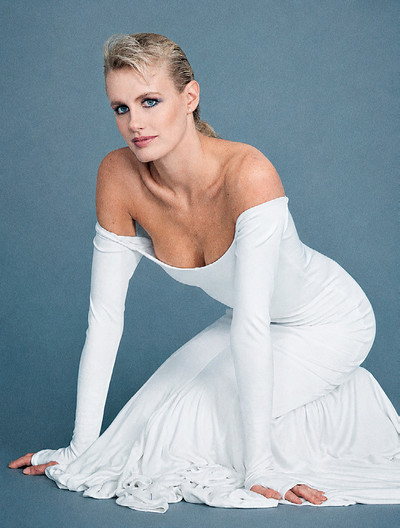
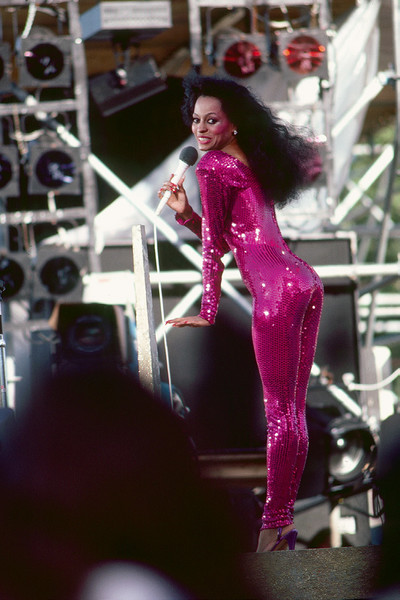
Norma: With her dancers, the whole thing. So, of course, Grace Jones. Love Grace Jones. I did those costumes, and I was much happier with that solution than the fashion show. Then we started dating. That was the beginning. We were together. He goes to jail. We go through that whole scenario. We never really broke up and we are still just the closest of friends. We love each other. We admire each other. We have total utmost respect. And he also introduced me to my husband.
Honey: Wow.
Norma: So, there you go. New York has an ebb and flow. I love New York because this is my hometown and I want to say, as crazy as the world is right now, I think it’s also the most exciting time, the most opportune. In the 1970s, New York was bankrupt. People can’t afford this and that. But there was an energy where people would do anything to achieve their dream.
Honey: New York is certainly not for those who are not dreaming. It’s so funny because I left New York in 2017. I moved to Berlin for six years and now I’m in London and I travel all over the world. The more I travel, the more I realise I’m a fucking New Yorker. There’s a sensibility here. It’s actually given me my work ethic. This is not a place for you to rest on your laurels, as you know. Now I’m thinking about coming back because with the new mayor, the city is on fire. The energy is on fire right now.
Norma: I agree.
Honey: Young people are doing so many crazy things. I just did three shows in 24 hours. Bone tired, right? But as soon as I walked in those spaces – the energy and the community. You can’t get this, it can’t be replicated anywhere else in the world. And I’ve been around the world.
Norma: You’re a Gemini. Travel is so much a part of the survival of a Gemini.
Honey: Because we’re an air sign.
Norma: When you’re travelling – and I ask my husband this all the time because he travels like crazy – when you travel and you’re going somewhere, I suspect, even if you’re tired, there’s a certain excitement about it, a certain energy.
‘I actually did a course on AI at MIT. I had the idea to archive my collection in a protected AI programme to guarantee longevity for my brand.’
Honey: I am not a person that likes stagnation. If I’m anywhere for too long, I get very restless. Which is leading me to my next question. People ask me all the time, ‘When do you plan to retire from all of this crazy travelling?’ I can’t think of anything worse than doing nothing. The idea of gardening makes me want to throw myself out of a window. The idea of sitting on a beach watching the sunset makes me want to slit my throat. That word to me is cancer: retirement. Do you get asked that asinine question?
Norma: You know what? I really don’t. I mean, I think people figure for me it’s too late to even think about retirement. I have so many new ideas that on Mondays here I can see the terror on everybody’s face. ‘What the hell are we going to hear now that we have to do right away?’ The thing that always confuses me is people saying to me, ‘Norma, you know, I’ve never done this before.’ Yeah, exactly, that’s the point! Why would you want to do what you’ve done before? Unless you do it in a new way, or you come up with something that’s an adventure. I don’t know what people get from retirement, except maybe it’s something they’ve thought about their entire lives, the idea of retiring. There are people who do, and that’s fine.
Honey: I think there’s a very big difference between having a job and having a career. No disrespect to people that have traditional paths. Everyone has a different journey. But I think when you’re a creative person, that is your life, right? There is no separation. I don’t know about you, but I don’t have days off. I have days when I’m not working.
Norma: But your mind is still going.
Honey: Always. I’m always researching. I’m always thinking.
Norma: First of all, you created you, your job, your world. You created it. Nobody said this is what you’re going to do. I created this for me too. But that is just one part of it. The heartbeat of it is that you can have time off, you can sit on a beach, but your mind is still going.
Honey: I’d rather sit in an art gallery than a beach or a jazz club. You have such an incredible body of work. Would you ever do a book or consider a retrospective? Just to share all of the innovative things that you’ve done.
Norma: I think the interesting thing is, I’ve seen a lot of versions of what I’ve done out there in the universe. I think that’s great, and that’s probably the best I’m going to do – inspiring or influencing. I think that’s enough. I don’t want to see everything I’ve done. I feel like it’s looking at something that doesn’t exist anymore. The same person that invented the sleeping bag coat or did those things is not around anymore. But I’ve also sold and let go of all of my original samples years ago.
Honey: You didn’t keep anything?
Norma: No, no.
Honey: You didn’t even think about giving it to the Met?
Norma: I gave some things. I had some shoe collections and things like that. Things that had value, especially because so many very dear friends of mine died at a tragic time in New York. I donated a lot of that. But it’s the things that I want to do next that make my hairs stand up, that get me excited. You know, I’ve met a lot of people in my life, and you are so extraordinary, so smart. I think somebody like you has the power to influence a lot of people. I want to catch what you have. Like, I just want a little bit of a zap.
Honey: Well, thank you. You know, I was terribly bullied as a kid. I wasn’t seeing the world reflected back at me, couldn’t find a place for myself. I had to create that. When you’re looking for who you are, you’re entering all these different worlds. Do I fit here? Do I like this? Changing genders. Like, what does this mean? Marc Jacobs told me this once. He who wins the war writes the book, right? And so, when we see in the media depictions of people, whose narrative are we seeing? And what is informing that narrative? Is there hatred towards people of colour? Is there hatred towards women? Is there ageism? They don’t want to see a successful Black person. They have to bring them down. I have, as a person of colour, as a trans person, as an artist that navigates a lot of worlds that don’t reflect who I am, I always ask: who’s telling the story and whose agenda is it? Who wins the war, writes the book…
Norma: Well, I actually followed this thought process with AI… I asked it, ‘I’d like you to deliver the news to me every day, but it must be neutral, unbiased.’ After hours – literally hours – it finally concluded that there is no way to present the news in an unbiased, neutral way. Even when they think they don’t have a bias, they have a bias. It is really up to us and being open-minded enough to listen to all sides and make an assessment of what the truth is. It’s a hard job because sometimes we don’t want to hear certain stuff.
Honey: I always think everything in life is a proposition. Take what you need and leave the rest. I edit, and I take what I need, and I leave the fucking rest.
Norma: Yes.
Honey: On that note, that is Honey Dijon and Norma Kamali for System.
Norma: Thank you. You’re the best. You’re unbelievable.