The luxury resale market has never been bigger. So System sent a critic and a stylist shopping on The RealReal.
By Robin Givhan
Photographs by Krisztián Éder
Styling by Malina Joseph Gilchrist
The luxury resale market has never been bigger. So System sent a critic and a stylist shopping on The RealReal.
Long gone are the days when ‘secondhand’ fashion meant the thrift bins, or the wild west of early eBay. The resale market has spent a decade glowing up: dust covers, flagship stores, authentication desks staffed by gemmologists, horologists and luxury fashion specialists who can date a jacket by its label and lining, condition graded and disclosed down to the last mark. The selection is vast, the platforms present themselves with the polish of the luxury houses they resell, the customer as much collector as bargain-hunter. And the numbers have gone vertical: the global secondhand apparel market is forecast to reach $393 billion by 2030 – roughly a tenth of everything the world spends on clothes – growing at about twice the rate of the wider fashion industry, according to GlobalData research for ThredUp.
Buyers of every age are in on it, though it’s Gen Z and millennials who will generate over 70% of that projected growth. Vintage comes with its own syllabus – clued-up new-gen shoppers know their Ghesquière Balenciaga from their Phoebe Céline – and, in an age of relentless self-projection, it is where style must still be assembled rather than simply bought.
The RealReal, launched in San Francisco in 2011, has emerged as the largest of the dedicated luxury resale marketplaces, and the only one of its size on the public markets: $2.13 billion in gross merchandise value in 2025, 40 million-plus members, 50 million-plus items sold.
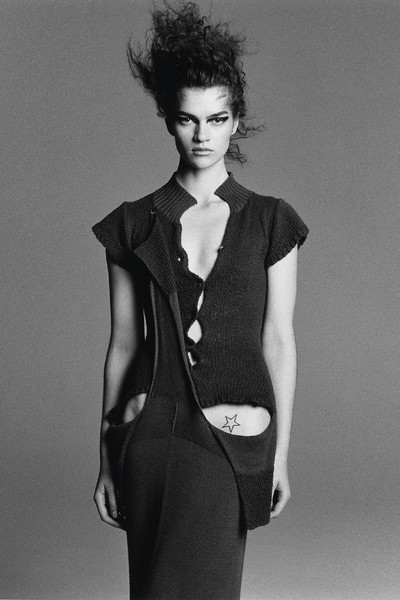
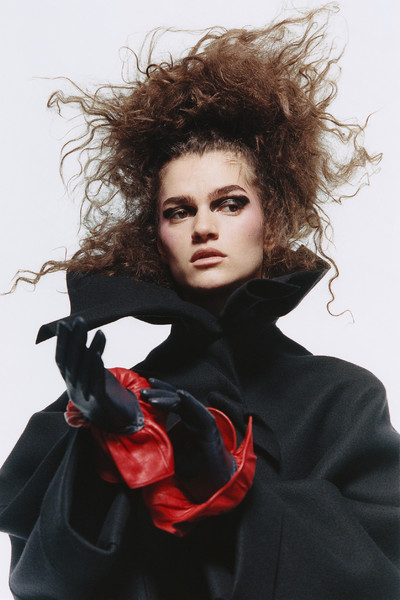
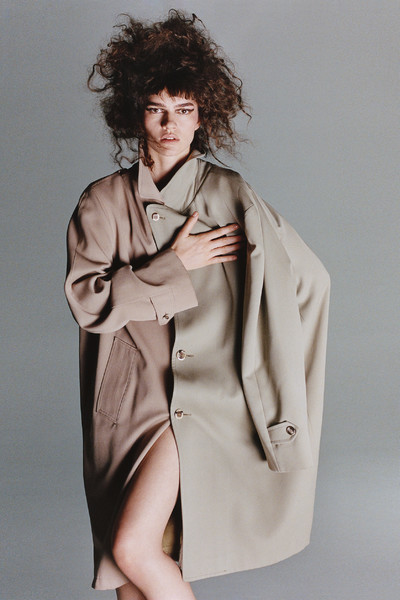
Rather than take the company’s word for it, System invited two industry figures to be let loose on The RealReal platform. Pulitzer Prize-winning critic Robin Givhan went hunting for the perfectly imperfect vintage Gucci Bamboo 1947 bag, and put the company’s story to its CEO, Rati Levesque. Stylist Malina Joseph Gilchrist raided it for the portfolio that follows, photographed by Krisztián Éder, featuring a Comme des Garçons Spring/Summer 1997 ‘Lumps and Bumps’ dress, Stephen Sprouse letter-print leggings from 1985, rare Gaultier, Yohji, Margiela…
Between them they make the case, astutely, that the most interesting clothes and accessories on offer aren’t necessarily the new ones.
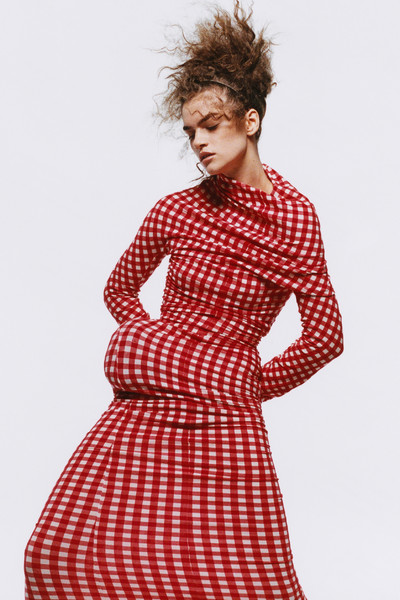
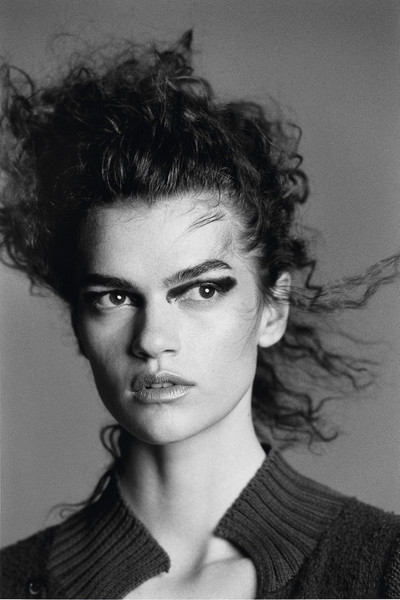
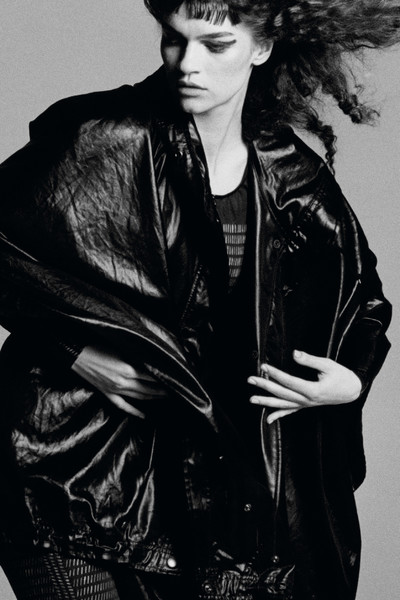
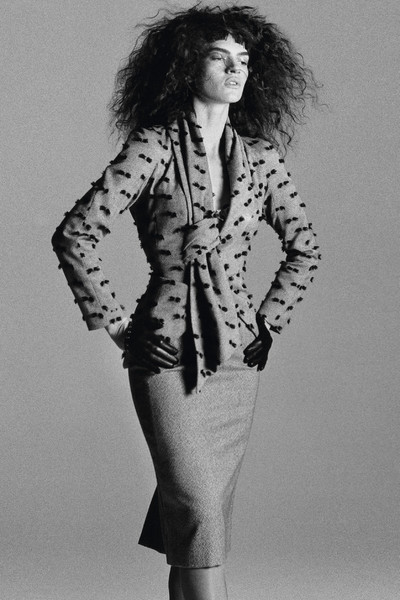
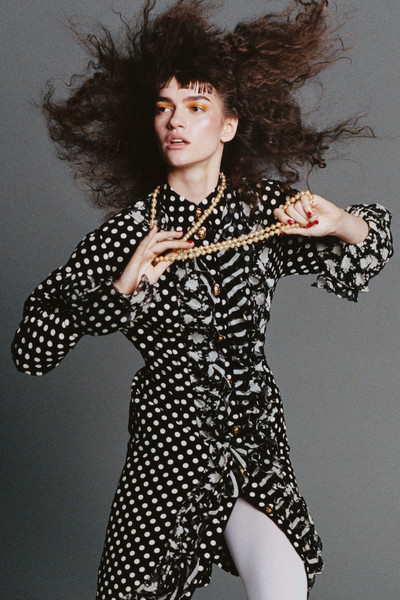
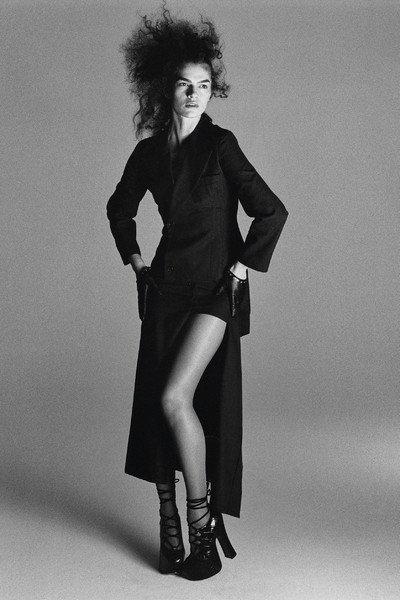
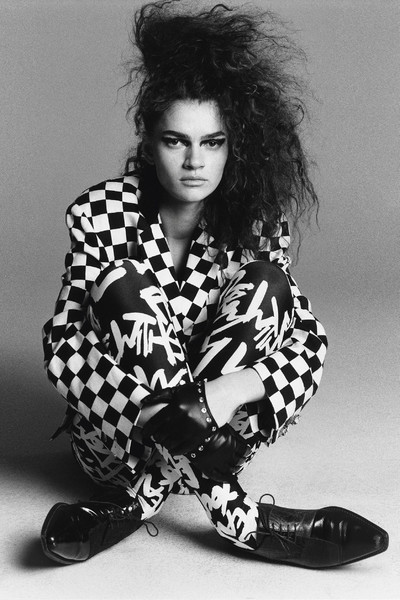
‘I shop retail, God bless me.’
Pulitzer-winning fashion critic Robin Givhan on her quest for a perfectly imperfect Gucci Bamboo 1947 bag.
Aside from a brief dabbling in college, when I slouched around campus in a men’s black cashmere overcoat I found in a New York City secondhand shop, I have always been easily bored by thrifting. I find no joy in sifting through racks of strangers’ offloaded detritus in search of a gem. I lack the discerning eye that can envision what an ill-fitting jacket might look like after it’s been sent to the dry cleaner and refurbished by a skilled tailor. (I left that college-era topcoat oversized and a tad unwieldy.) I shop retail, God bless me. I believe in investing in the new, cherishing it for years and creating my own vintage pieces.
But several months ago, my handbag broke. And aesthetics, politics and technology conspired to change my thinking about thrifting.
My dearly departed bag wasn’t the pragmatic tote I used for work and it wasn’t one of the tiny clutches I pull out for fancy occasions. It was my in-between bag, the crossbody satchel I would grab as I was heading to dinner with friends and I wanted to carry more than an iPhone but less than the full contents of a desk drawer.
I won’t go into detail about its demise other than to say I quickly decided it wasn’t worth the cost or the effort to try to resuscitate it. I needed a new bag, which was an unusual position for me to be in – to say I actually needed a handbag, rather than I simply wanted one. How delightful! How liberating! I began my search without any of the guilt that can accompany unnecessary consumption.
I wanted a medium-size bag that wasn’t fancy but with enough élan to be as compatible with well-worn jeans as it was with a little daytime glitter. I didn’t want a bag weighed down with elaborate hardware or one covered in designer logos or look-at-me prints. I am a grown-up; I know what I like, and I am confident in my aesthetic choices. I didn’t need a designer brand to loudly vouch for me.
I was in search of a handbag that looked solidly made. One that came with traditions rather than the sheen of trendiness or an ostentatious association with high net worth. So many of the uber-wealthy have been exceptionally ill-behaved of late: Bezos, Musk, Trump. Now is not the time to cosplay the 1%.
‘Vintage shoppers are trying to buy the fizz and creativity that bubbled up in the late 1990s and early 2000s and transformed the fashion industry.’
I zeroed in on the Gucci Bamboo 1947.
The rigid, saddle-shaped, top-handle bag debuted in the aftermath of World War Two. Originally referred to by its production code, 0633, its distinguishing feature was its bamboo handle – heated by hand over gas flames and shaped into a gentle arc, then attached to the bag with golden hardware. The aesthetic gesture, likely overseen by Aldo Gucci, was born out of necessity, wrote Sara Forden in The House of Gucci. Italian industry faced material shortages. Bamboo was lightweight, malleable and readily available.
Over the years, as Gucci gathered fashion acclaim among the jet set, the bag became synonymous with the Italian brand as its reputation expanded around the globe. Model 0633 helped propel Gucci into popular culture thanks to its appearances in films such as Roberto Rossellini’s Viaggio in Italia, where it hung from the arm of Ingrid Bergman.
In the late 20th century, after the Gucci name lost its lustre amid over-expansion and family drama, model 0633 played a key role in the company’s rebirth, which began under the leadership of creative director Dawn Mello and designer Richard Lambertson. They enlarged the handbag, so it was a bit more practical, and added a detachable leather strap. Their modernised calfskin version sold for about $895.
This was also when I began reporting on the fashion industry. I recall how a relatively unknown Tom Ford looked to Gucci’s archives and transformed classic shapes into sexy, relevant, dynamic designs that made the broader fashion industry rethink its history and get excited about the future. Fashion was transforming into something far more global, lucrative and culturally influential than it ever had been. As a reporter, it was a seminal moment – one that shaped my understanding of the fashion business for years to come.
The bag hasn’t changed much since then – except the price. It’s now $5,850. Model 0633 has endured thanks to its Goldilocks size, its elegant lines and its reserve. Over the years, it’s become a blank canvas that Gucci’s designers have used to express their unique point of view and that guest artists have depicted in paintings, encased in a terrarium and bedazzled. Model 0633 isn’t quiet luxury. In its purest form, it’s classic luxury.
I was interested in the simplest version – no horsebits, Flora prints or initials. No faux ageing. I didn’t want a handbag that looked as though it was fresh from a Gucci boutique and suggested that I was new to its lineage. I preferred one that could have been pulled from the depths of my closet. The bag shouldn’t scream ‘Gucci!!!’ It should calmly announce that I’d had discerning taste for more than a decade, that my professional story and my personal one were interwoven. The bag recalled a tale of ingenuity and resilience in post-war Italy. It contained remnants of old cinematic glamour. It told the tale of fashion’s evolution from mom-and-pop entrepreneurs to big corporate IPOs. It symbolised the power (and delusion) of mythmaking.
If I was to find the Gucci Bamboo 1947 of my fevered imagination, I would have to shop vintage or, as my blunt grandmother would have unglamorously called it: secondhand.
I plummeted down the rabbit hole of eBay, Vestiaire Collective, What Goes Around Comes Around, Rebag and assorted other online vintage merchants. I joined the brigade of big-game hunters who, according to The RealReal, have been scouring their site in search of specific gems from the past. They want Tom Ford’s Gucci designs, but also, Sex and the City-era Fendi baguettes. They’ve put a bull’s-eye on Mugler maximalism, sculptural Schiaparelli and Jean Paul Gaultier frocks that were designed by the man himself.
It is as though shoppers are trying to buy a little bit of the bygone fizz and creativity that bubbled up in the late 1990s and early 2000s and transformed the fashion industry. Before then, fashion had been a closed-off world of family-owned businesses operating behind closed doors. Stern publicists, aloof vendeuses and high-society bouncers all served as sentinels controlling access. The 1990s, led by Gucci and abetted by others, is when fashion began its transformation into an industry of publicly traded companies, pop culture cosiness and widespread availability to the folks in the hinterland. Like me, the shoppers on The RealReal are digging for artefacts from that delicious moment just before fashion exploded. We are all searching for markers of time.
‘Brands have set up velvet ropes, unsmiling guards, boutiques so spacious they echo. Online thrifting is frugal, convenient and free of judgement.’
“I love art that was made in my lifetime because even if you don’t think it’s important, it represents a moment to me. I look at fashion very much the same way, even though I like a lot of stuff that predates me,” said Los Angeles-based film producer Angela Mancuso.
“There’s a New York bag brand called Bienen Davis and they were carried by all the swans of Fifth Avenue,” Mancuso told me. “It’s not a name like the big brands we still know today. But they were all really, really good leather and beautiful, sophisticated bags.”
“Somewhere or other, I read about this bag and started looking for them. A bunch of other people must have at the same time because they went from $25 to $250,” she said with a laugh. “No one may know what it is, but I know what it is and I feel good carrying it.”
“I’m obsessed with Tom Ford Gucci,” Mancuso said. “It represents a moment in history when something changed, and something was interesting and it’s also [easier] – or maybe not so easy now that so many people are obsessed with it – to put things together differently and to look different than everyone on the street.”
Mancuso has been on the prowl for a pair of Gucci 1953 loafers. “I didn’t know that 1953 was a significant year – the first year that the loafer with the horsebit came out,” Mancuso told me. “Now, I’m like you with the bag. I’m obsessed about finding a pair in good shape, in my size, that I would actually put my feet into.”
And unlike fashion collectors, who search for particular looks for their archives, Mancuso is a pure shopper. “I want to wear them.”
Shopping vintage to scratch a specific fashion itch is nothing new. When rhinestone brooches had the briefest of moments in the spotlight in 2004, eBay was a go-to source. But the surge of interest in recent seasons, and the hunt for such varied but specific fashion treasures, surprised me. According to Bain & Company, the secondhand luxury market grew to about €50 billion (or nearly $58 billion) in 2025, with sales rising by almost 6% over 2024 thanks to all that treasure hunting. Most of those sales (83%) were from watches and jewellery, but there were still a lot of ‘archival’ frocks in the mix. Shoppers’ bullishness, it seems, was helped along by the rise of AI-enabled authentication and digital identification markers embedded in products. Technology reassured shoppers that they weren’t being fleeced.
When you look at the entirety of the secondhand apparel market, sales are expected to shoot up by 185% by 2029. For comparison, fast fashion is expected to tick up by only 20% in the same period.
While I don’t see myself becoming a committed vintage customer, a certain amount of thrifting makes sense in this economy. Everything is frightfully expensive. Anyone lucky enough to have the disposable cash to put toward a designer handbag still experiences a certain amount of sticker shock, even if their bank account is impervious to inflation. Phoebe Philo small Gig bag, $3,900. Balenciaga small Rodeo bag, $3,650. Chanel small Classic Flap, $5,900.
I like all these bags. And I can’t say with certainty that I would never buy one new. Who knows what shopping madness might come over me on a trip to London or Paris? I’m old-fashioned enough that I still enjoy a brick-and-mortar experience, happy to avail myself of an offer of sparkling water, the soft tuffets and the gently encouraging murmurings of attentive salespeople.
But brands are making that experience ever harder to come by now. They’ve set up velvet ropes outside their shop doors. Unsmiling security guards refuse to let more than a handful of people into boutiques at a time; boutiques so spacious they practically echo at the drop of a pin. Fears of a smash-and-grab robbery of their heavily insured and extremely overpriced merchandise are no excuse for creating hurdles for hard-working aspirational customers who have neither the time nor the inclination to make an appointment. What if they suddenly have second thoughts about their splurge? Whereas online thrifting is frugal, convenient and free of both judgement and obligation.
After some experimentation, I decide The RealReal offers me the best chance of finding the 1947 that I want: one with just enough patina that it has a wonderfully lived-in look, but not so much age on it that, if it were a house, it would be a tear-down. The RealReal search function accurately narrows all the Gucci offerings to the correct handbag style and professional photography gives me well-lit images. There are plenty of vintage options and I’m reasonably sure the handbags are authentic.
‘We actually launched something [a new condition rating] called ‘as is’ because shoppers were more OK with the imperfections than we even realised.’
The RealReal was founded in 2011 on the promise that the merchandise on its site was, well, real. Sometimes that means having to break bad news to sellers unaware they’re hawking a fake. “Sometimes they don’t know and it’s a surprise. Sometimes they do. We get bad actors that send us fakes on purpose, sometimes many of them and we confiscate them. We work with global authorities and we turn it in,” said CEO Rati Levesque. “Not if it’s like a one-off because they got it from an ex-husband. We don’t do that. [And it] does happen, more than you know. But we do it when they’re sending in like 100 fake Chanel bouclé suits.”
“As we became more established and people realised we were confiscating and that we took this really seriously, they stopped sending us fakes,” Levesque said. “Early on, we got a lot more because they thought they were going to make a quick buck. But now that they realise that they have to come in and meet with a gemmologist or a watchmaker who knows their shit, they’re not going to mess with us.”
This is no small promise. In the mid-1990s when eBay was launched, the online resale environment could often feel like the land of snake oil salesmen all promising potions that sounded too good to be true. Back in 2007, I wrote about Portero, a luxury fashion resale website that promised authenticity and I interviewed one of the experts charged with sniffing out fakes – something that I learned is both an art and a science. Vestiaire Collective came along in 2009, initially sourcing from friends and family, and then building connections to design houses. Others soon followed. The mid-2000s birthed a rich online luxury resale ecosystem.
The RealReal was one of the earliest and grew to be one of the biggest players. The publicly traded company boasts more than 40 million members and, as of mid-August, has a market capitalisation of nearly $1.5 billion. The business has weathered, suffered and is still surviving many a storm: The RealReal is currently in the midst of a lawsuit with Chanel, which has questioned the commerce site’s authentication process, especially when it comes to handbags, arguing that only Chanel can truly authenticate a Chanel bag.
In 2022, founder and CEO Julie Wainwright stepped down as the company’s stock was plummeting and Levesque took the reins. The stock has since moved upwards, though the 2025 annual report acknowledged that the company continues operating at a loss. But consumer behaviour is arguably on their side and the financials are improving, Levesque said. The impressive figures bear her out: the annual loss narrowed from $134 million in 2024 to $42 million in 2025.
I’d worked with The RealReal before as a seller and the process had been easy and efficient. But I’d never purchased anything. I felt a bit like a lurker on the site, constantly browsing and favouriting but unable to commit. That’s when System made me an offer. Would I be interested in writing about the thrill of the vintage treasure hunt, the psychology of it all? The RealReal would provide a $3,000 credit to shop.
As much as I loved the idea of shopping without consequences, I wanted to be able to return whatever I purchased, and handbags are all final sale on the site. The RealReal agreed to a return. This would be a reporting exercise, not a shopping spree. I considered it a test run.
Levesque told me my desire for a patinated Gucci bag was not unusual. Shoppers have been searching the site for dinged-up versions of classic bags from Hermès, Balenciaga, Louis Vuitton and Chanel. They want beaten up Rimowa luggage plastered with travel stickers. They’re looking for bargains, sure. They’re trying to get their hands on bags that can be elusive on the primary market. But they’re also after pieces that don’t look too precious, that don’t look as though they’ve spent a lifetime on a spotlit shelf in some billionaire’s walk-in closet. We don’t mind looking wealthy; we just don’t want to look like an asshole.
“We actually launched something [a new condition rating] called ‘as is’ because shoppers were more OK with the imperfections than we even realised,” Levesque told me. “We thought everything had to be so pristine, but that younger generation especially, they’re OK with paying less and getting pieces with a few more imperfections.” We’re all looking for that “human connection,” she added. “Vintage is a way to do that in this world of AI.”
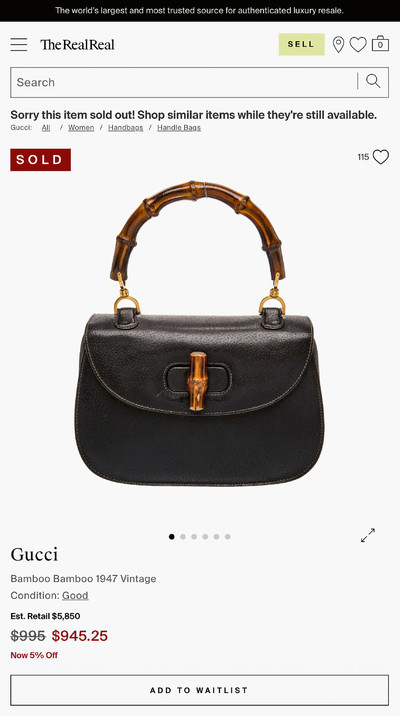
The bag that caught my eye wasn’t listed ‘as is’. It didn’t need any repairs. It was designated ‘good’. It had more nicks and dents than most of those I saw on comparable sites. My choices from other sellers were limited to as-close-to-perfect-as-possible. I viewed scars as a commentary on durability and confidence. I wanted a Gucci bag that proudly looked its age. The black bag in grained leather with a caramel-coloured bamboo handle – and missing its detachable shoulder strap – was listed at $945.25. This might be my bag, I thought.
‘People are seeking pieces that don’t look straight off a billionaire’s shelf. We don’t mind looking wealthy; we just don’t want to look like an asshole.’
Choosing it was my way of pushing back on our culture’s demand for perfection. Clothes, bags and shoes hold memories, but too often we believe that they should betray no evidence of how those memories were made.
Some of my favourite items in my closet belonged to my parents who passed away several years ago. I have their wedding bands, which I’ve had refashioned into rings that I can wear every day and that remind me of the love and care they had for each other. I have an old cashmere sweater that belonged to my father. It’s far too big for me, but its warmth comes from something other than its weight. And just recently, I had a pair of my mother’s shoes repaired. They’re metallic gold sandals and she wore them on date nights with my dad. I had to have rubber soles added to the heels. Maybe the old slippery soles gave her an excuse to grab onto my father’s arm for stability; maybe it was his excuse to reach out and hold her up.
Perhaps whoever owned that Gucci bag enjoyed it immensely and had it on their arm as they explored new restaurants with friends or toasted a loved one’s success. Or maybe it was a part of an estate sale. Maybe it recalled a heartache that had been healed or disappointment that had been overcome. I won’t ever know, but I liked the idea that the bag was part of a continuum of desire and aspiration. It could be an entire monologue in Love, Loss, and What I Wore.
When the bag arrived, I wasn’t sure what to expect. I felt a bit like my mother who told me she’d once ordered a shirt from the Home Shopping Network “to see what would happen.” I might have been blinded by so much sentimentality that what I’d actually purchased was a wreck of a bag. Maybe I wouldn’t like the weight of it or the feel of the bamboo in my hand. Before I opened the box, I pulled a bottle of sparkling water from the fridge. I settled on to my version of a tuffet.
I slipped model 0633 out of its dust cover and held it up to the light. I peeked at the lining. There are scratches in the leather by the bamboo closure. There’s a little schmutz on the outer flap.
Perfectly imperfect. I didn’t want to send it back. So, I pulled out my credit card. This was my bag.
Model: Alaina Rae at Supreme Management.
Casting: Michelle Lee.
Hair: Ryan Mitchell at Streeters.
Make-up: Hannah Murray at Streeters.
Manicure: Eri Handa at Home Agency.
Photographer assistants: Mitch Stafford, Ivory Serra, Conor Ralph. Stylist assistants: Szalay Miller, Max Han. Hair assistant: Sinaia Campora.
Make-up assistant: Kim Pham.
Production: Align.
Producer: Heather Robbins.
Production assistant: Donavan Powell.