Interview by Tish Weinstock
‘Fashion Week can feel like being privy to King Henry VIII’s court. It’s a moment in which you completely understand your place in that ecosystem.’
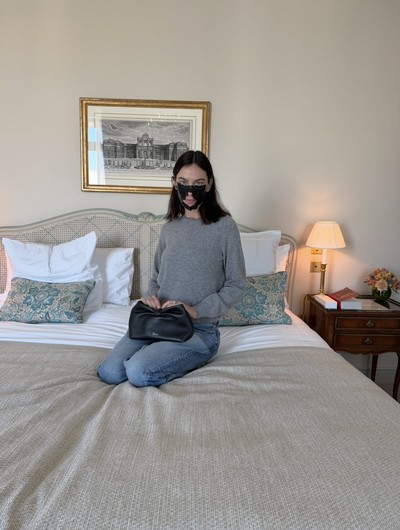
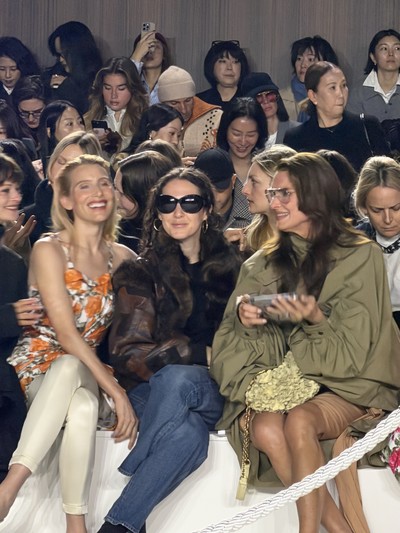
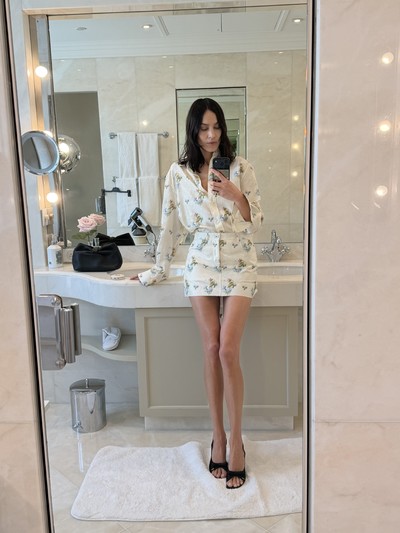
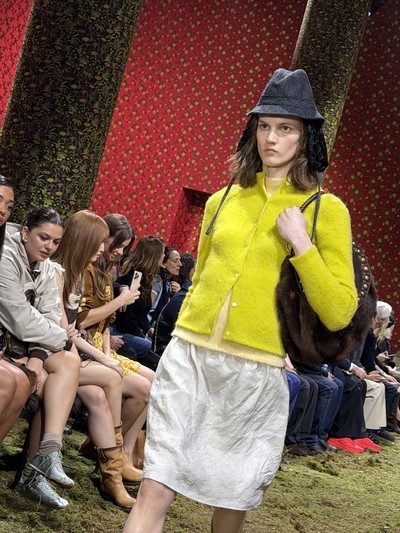
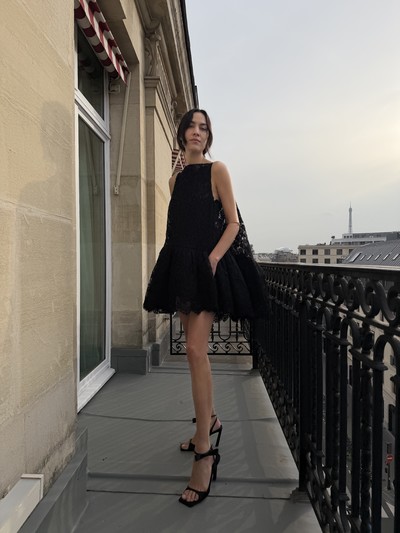
Alexa Chung has been many things over the years: model, TV presenter, author, designer, muse. It’s an arc that suggests constant reinvention in an industry that fetishises newness and change. And yet, her charm has nothing to do with transformation, but rather her consistency. Indeed, despite the It Girl label, Chung has managed to transcend the era that she emerged from – the mid-2000s days of Popworld, drainpipes, and indie sleaze – to encapsulate something much more enduring: a perennial sense of cool. British in essence but global in reach, she’s an It Girl who eclipses It culture.
Celebrated as much for her effortless style (never has a simple white tee and jeans looked so good) as she is for her acerbic wit (a quality that sets her apart from every other influencer), her allure lies in her ability to move seamlessly between worlds, whether she’s walking in a show or watching it: the whimsy and savoir faire of Jonathan Anderson’s Dior, the cool-girl bohemia of Chloé, the 1990s minimalism of Calvin Klein, and the playful, offbeat charm of Miu Miu. All of which she does without losing her distinct sense of self. Here she discusses navigating the circus of Fashion Month, the importance of bringing back snacks at shows, and being the ultimate Prada girl.
Tish Weinstock: I want to start a thousand years ago, when you went to your first show. Tell me about that experience. Do you remember what you were wearing?
Alexa Chung: I can remember exactly because they printed my picture in a paper afterwards and I was like, ‘Wow, that’s crazy.’ I was wearing a woollen hooded jumper with a zip up the front, white tights, Ferragamo paint-box heels, and some horrible smock dress. It was a Topshop show. I bumped into my friend [fashion producer] Sylvia Farago in Covent Garden and she said, ‘I’m going to this show if you want to come with me.’ I’d never been to a fashion show, so I went with her and stood at the back.
What era was this?
It was probably 2006. Popworld had just started.
Were you, like, ‘a thing’ or not?
I wasn’t really a thing. I had just started on the show and you had to do PR, so I was doing interviews, but I don’t think I was capturing it.
You weren’t in It Girl territory.
I was not in It Girl territory. No one had started uploading anything to Tumblr. It was pre that. But I would say that it was within those weeks the seed germinated, because this was one of the first images that someone bothered to print of me. That was a fun show to go to, but the first proper fashion show I went to was a Chanel one because I was interviewing Karl Lagerfeld for Fashion Rocks on Channel 4. I had to ask him about music, and I was talking to him about the Shirelles 2 and Michel Gaubert, and all of the mechanics of sound and how important it is for a runway show. At the time, he was really into Amy Winehouse as well. So I guess he was looking at those 1960s girl bands. We had a great conversation, and because of that he invited me to come and see another show. Everyone got a bit confused at that point because then it made it less ‘Topshop London person’ and more like, ‘Wait, who is this person? Why is she in Europe? What’s going on?’
‘At Dior Couture, no one was picking up their phone. I was like, ‘Oh, so chic not to desperately claw at every image and instead just let it unfold.’’
Obviously, things have changed. What do you make of the rampant content ecosystem that now exists around shows? As a viewer you’re kind of expected to participate in it: FROW pics, step-and-repeats, live posting, a post-show grid round-up, a GRWM [Get Ready With Me]…
I understand the economy, and I understand that it is necessary. I’m quite a diligent student. I’m just relieved that it’s something exciting that I post rather than just a picture of my feet on the bus or whatever. When I think of the first shows I was at, it did seem like more limited access and nobody was really telegraphing anything out of that space. Now every person in the room is broadcasting it on their own channels. And that footprint really matters. It’s interesting how that has meant that people who didn’t understand fashion – who before had been locked out – can now have access to it.
Do you think it takes away anything from the integrity of the clothes? I’m thinking about The Row, which has banned phones.
I really want to go to a Row show. The less they want me there, the more I want to be there. I don’t think it diminishes the integrity to have people broadcasting things. There’s like a tiramisu of reasons why people are there. You have influencers sitting in the front row whose job is to broadcast the thing to all of their followers and channels. And then you also have your Tim Blanks and Cathy Horyns – they’re all sat in a huddle properly reviewing it. I guess everyone’s serving a different purpose.
Is there a strategy for picking which shows you attend? Beyond just liking a brand or paid attendance.
It’s less strategic than that. It’s more led by instinct. It depends on who has actually invited me and then also if there’s a natural affinity there, because it’s important to me that if I’m going to spend time doing this thing, I’m actually going to enjoy it or be able to wear it. Otherwise, if it’s a lesser-known designer, then it’s like, who might I help by being there and amplifying their message?
What do you get out of the experience of attending a show?
I genuinely love clothes, and I genuinely love talking about them. I’m curious about what’s coming out next season. Good shows can be like great theatre or an amazing film. But it can also be really exhausting and silly as well.
That’s what I love about Paris Fashion Week. It’s a continual onslaught on the senses. I just love that everyone feels like they’re in the trenches.
It’s really like dorm life or something. Do you ever have a crisis during it? Because I feel like it can make you feel quite vulnerable. Those Fashion Week excursions can feel like being privy to King Henry VIII’s court or something. It’s a moment in which you completely understand your place in that ecosystem. There’s always a new favourite.
Nothing can give you a more accurate reflection of exactly where you are at that point in your career and what your value is within the entire industry. It’s outlined for you in terms of the clothes that are made available to you, where you’re sitting, and if you get invited to the dinner or not.
Yes, it can be brutal. But then I think the antidote to that type of feeling is just really trying to enjoy it more and being less rigid about the whole thing. It can’t always be your moment, you know? I’ve definitely had times when I’ve been bummed out by that type of thing. But then it’s understanding what’s real and what’s not real. Ultimately, it should be fun, and it should be nutritious. It’s a real privilege to get to go to these shows. And if they gave me a rag to wear, that’s fine, because I’m so genuinely excited to be there.
‘Chloé made me want thick, long hair. The Kate Bush of it all was fantastic. Brooke Shields was on the moodboard – she’s always on my moodboard.’
Let’s talk about some of the shows you went to this season. You started with Calvin Klein in New York. How was it?
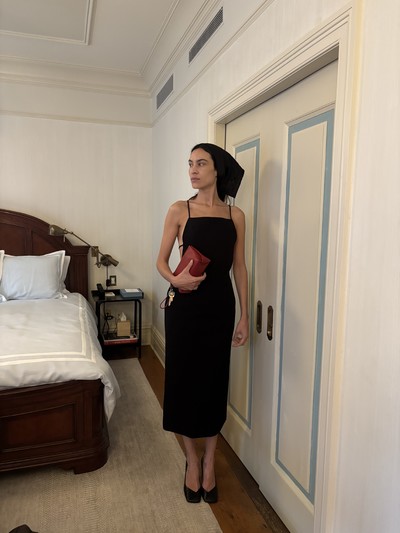
I really liked Calvin. I really liked what I wore. Even though it was absolutely freezing, I had a headscarf on and a backless dress, and it felt really fresh and modern. And then it was very buzzy at the show. It felt close to the 1990s. There was a holding pen of celebs having their portraits taken. Someone from Heated Rivalry was there.
People have been quite negative about Calvin. I think the criticism is that it’s a bit confused and overcomplicated. People are very precious about minimalism.
Well, I thought there were some really nice colours in there. I think that’s what kick-started my appreciation for burnt orange.
When you look at a show, what value system do you use to judge it?
I think it is a pretty selfish value system. I’m just like, ‘Oh yeah, I want that.’ I think it is just about dressing myself, basically. I don’t really have another lens through which to look at it.
I find that I am constantly watching the show through my phone, despite being in the room where it’s happening, which isn’t great. Do you find that true for yourself?
You’re not actually enjoying it, then. I presume a lot of thought goes into the staging, the lighting, the music – all of it, the entire production. And to just snapshot bits of it is to lose your attention. You’re not actually seeing the story unfold as it’s intended. So I think, increasingly, I try not to take pictures until the end. But that came originally from the Dior Couture show I went to. No one was picking up their phone. I was like, ‘Oh, so chic not to desperately claw at every image and just instead let it unfold and then capture it.’
Tory Burch has become something of a stalwart of the New York calendar. In recent years, she’s really managed to capture the zeitgeist; there’s a renewed sense of cultural relevance. Why do you think that is?
I think that’s because she sheltered a lot of people – some of the younger, more independent designers that were out there – and has taken them into her fold. She’s been really smart about who she’s hired within the design team, PR, the styling with Brian Molloy. So they totally get it and are on it. I loved that show. I loved all the fabrics. I loved all the colours. Also, I do think you gain respect and a new lease of life after a certain point of withstanding the storm. If you’ve just been around long enough, then suddenly it takes on its own thing. It’s like she’s a legacy act.
I want to be a legacy act.
You’re going to be a legacy act.
Do you think, as a Londoner, the London shows hit differently?
A lot of people skip it. This isn’t biased PR vibes… but I constantly try to convince friends in New York how important and amazing it is that they show up in London on their way to Milan, because I do think there are so many brilliant, talented designers here. We can’t just survive on an old idea that Saint Martins was churning out geniuses all this time. You have to acknowledge that loads of great designers have come from these shores – Grace Wales Bonner, Jonathan Anderson. So I think it is worth attending London Fashion Week. It’s also only like three days long or something.
I know, it’s literally just a weekend. London Fashion Week(end).
It’s not a big commitment. But there’s so much talent here.
Like our friend Simone Rocha. I’m sad I missed that show.
It was gorgeous.
I love that she’s never gone to a house, even though I’m sure she’s been asked a thousand times.
It’s so singular. And it’s so exactly her personality, and just seems like it comes from a really grounded and healthy and loving place.
I think we need to move on from the idea that London just produces irreverent punks like Westwood and McQueen. There are a lot of other kinds of thoughtful and brilliant designers too.
That’s to do with being in Britain. I have a big theory about the weather making geniuses…
Go on…
Well, because it’s so bad, you can’t go outside, so you have to imagine things. And then there’s also access to historical things, like all the museums. It’s just culturally rich, and everything is kind of stimulating.
The weather is obviously intrinsic to Burberry – it’s always Burberry weather. Are you a Burbs ambassador?
No. I just did that campaign last year. I love Burberry, I love classic things. So obviously, a trench is up there for me.
Do you think that it has evolved past this idea of just embodying Britishness or the weather?
For me, Burberry is still about Britishness and weather. My main interaction with it, aside from wearing their trenches every day, is the Heathrow Terminal 5 airport posters, which I love. I enjoy coming home to those and then seeing someone like Joanna Lumley or Matthew Macfadyen with an umbrella.
Presumably, you came home to yourself?
I sure did.
‘Gucci was amazing. I’m always up for trying a sexier, hot-babe look, but people are always like, ‘This is so you!’ and pass me dungarees.’
Thoughts on Milan? Prada and Gucci were the headlining acts. What did you think?
Gucci was amazing.
Is it you?
I could wear it, but people often don’t let me wear it – that’s the other issue. When we talk about where you are in a queue of being able to wear things or not, I’m always up for trying a sexier, hot-babe look, but they’re always like, ‘This is so you!’ and pass me dungarees. But I loved the Mossy dress. Amelia [Gray] looked amazing. I’d love to be a stereotypical hot girl that could stomp down that runway.
It was very LA. It was very ‘hot girl.’ People said it looked like Shein, but that’s what was so genius about it. It was a reflection of what women wear today – body-proud women who are partial to a spray tan and some lip filler. It ties in with the Skimsification of evening wear.
I read Cathy Horyn’s review about it – she was saying that sometimes Gucci does have those connotations of the street, where it’s sold in markets as rip-off merch vibes, and Demna has done a clever twist on that. I thought it was a really clever way to reclaim that narrative and sort of own it, rather than pretend that that’s not what is going on.
Do you remember when Burberry burnt all their checks because of the Danniella Westbrook thing? She was in full – potentially bootleg – Burberry check, including a Burberry pram. If Demna was at Burberry, he’d put Danniella on the runway.
Yes, I mean, you’ve got to lean in.
How did you find Prada? You’re definitely a Prada girl.
I love Prada, but also only because it feels exactly like water to me. It feels so natural. Whatever they’re cooking up in Raf’s brain and Mrs. P’s brain, it just seems like exactly the cultural diet that I’m also ingesting. Because I love classic clothes. I also love weird things and subverting things in subtle ways. I like a gag. I feel like there’s humour to it. It seems like it’s for women – not just one particular person – but you can be a grown-up and wear it. There’s something sick and twisted about it as well. And it’s weirdly not too fashion-y. It just seems, actually, a bit more studious. You could buy it and then have it for 10 years – it doesn’t seem too self-conscious about being very of the moment. And yet it always seems very, very fresh and new.
Gucci and Prada offered opposing ideas of female sexuality and femininity, in a very concept-heavy way, and yet both appealed to me on the same level.
There’s more obvious sex up front in the Gucci show, but I actually find Prada really sexy because I find intellect super appealing. And I think just because it’s not ‘tits and ass’ doesn’t mean it’s not alluring or sensual.
Moving on to Paris. You were quite back-to-back.
I did keep asking, ‘Am I going to too many things?’ But then I was having a nice time. And I’d never been to Givenchy before, and that was really fun, because there weren’t many people there and it felt really grown-up and proper, and all of the fabrics looked so expensive.
She’s rich, the Givenchy woman.
It was rich. It had gravitas. It wasn’t that zeitgeisty, or it didn’t seem insecure in any way, or that it had to pander to anyone else’s tastes. It was just like, boom – here are some well-cut clothes.
I liked that she’s moved away from the logos and sportswear of it all. She’s evolved the DNA, but without it just being McQueen elsewhere. It feels like she is creating an entirely new language. It feels like she is further in her journey than, say, Pierpaolo [Piccioli], who is still engaging with the more streetwear codes that came directly before him at Balenciaga. I do love watching a transition unfold when a designer engages with a new house.
I think that it’s interesting for him to meet the brand in that place, because he is someone that I associate with really gorgeous gowns in amazing fabrics and that kind of really elegant design. And so it’s interesting to see his twist on sportswear.
What else did we do? Chloé!
Gorge. It made me want really thick, long hair. I mean, the Kate Bush of it all was fantastic. Brooke Shields was on the moodboard – who’s always on my moodboard. It felt like it was definitely in my musical playbook, you know?
I thought it was really good. Not as good as our season, though… I want to talk about Dior. You’re a J-Dubs girl.
I’m a J-Dubs girl, cross my heart – that’s my man.
Do you think that because you’re Dior, you can’t really fraternise with Chanel?
I don’t know. I’d be thrilled to fraternise with Chanel. I just don’t. I’ve never met the guy [Matthieu Blazy]. I used to be a Chanel girl in the olden days. I feel excited about the accessories.
I really want the shoes that have animal print and a turquoise combo on them. I thought I’d get them at Heathrow, but they didn’t have them yet. But yes, I am a Jonathan girlie. I just love his brain. I love that it’s always something completely new. It takes a while for my eyes to adjust to it. He takes you on a journey, and you always feel like he’s smarter than you. I’m really pleased that someone like that exists.
I agree. He is definitely smarter than all of us. I think the world-building he does is phenomenal. It’s not just about the clothes.
And also, the JW of it all, this is actually something I was trying to do with Alexa Chung – the idea that it’s not just the clothes. If you’re going to sell the jellies, you also need the socks, and then why not the mug? I like the idea of merching it up. And that could be anything from a handmade chair that’s £5,000 to a reissue of a vintage badge that costs £2.50. I think it’s really interesting and smart to do retail in that way at this point in time. I like the focus on craftsmanship at his own brand and then Dior, obviously the scale of that show was just monumental. And it felt really thrilling to be there.
‘I actually find Prada really sexy because I find intellect super appealing – just because it’s not ‘tits and ass’ doesn’t mean it’s not alluring or sensual.’
There are some disgruntled VICs decrying new Chanel and Dior as not being true to the original brand DNA. What do you make of that kind of criticism?
I’m so open to change. Not in my own life. I’m very rigid and hate change. But what’s the point of having new creative directors unless they’re going to bring a new vision? I think there’s a way to honour the integrity of a house and to think about its origin story without being too chained to repetition. A classic becomes a classic because it’s practical and appropriate for every era. But that doesn’t mean you can’t wink at it and evolve that concept and come up with a new iteration of it.
One hundred per cent agree. More broadly, about Fashion Month – there’s a whole other side to it, the dinners and the parties and so on. What do you think they add to the ecosystem?
I went to the Givenchy dinner and it felt really nicely curated. I was sat opposite Imran Amed and next to Ethan James Green. It was an opportunity to talk to people that you wouldn’t necessarily know otherwise. Magical things come out of those connections. It’s also fun. Fashion is meant to be fun. It’s a visual language. It’s about being seen, it’s about enjoying aesthetics and beauty.
It also separates the wheat from the chaff. When you see all the content coming out of a dinner, it really consolidates this idea of a world you want to be a part of, as opposed to a show where it’s more about numbers, reach, and the masses.
That’s when you can see whether the culture that’s been arranged around that particular house is legitimate or a bit false.
You sometimes walk in shows. Do you enjoy that?
I do like walking shows, but I think one has to be careful that it doesn’t become your job by mistake. I think there’s a fine line. There’s doing a little cameo because it’s fun and you love the house, and then there’s getting worried because you haven’t been booked for the next season to do it again. I don’t want to get into that world. When I walked Miu Miu, Willem Dafoe was walking as well. I just found that endlessly entertaining.
I think the Miu Miu casting is some of the best casting out there. Gucci was fab too.
It’s incredible at Miu Miu. Gillian Anderson closing the show – beautiful.
Chloë Sevigny too. What are your thoughts on this new wave of casting, this embrace of ‘normal’ people – this cameo culture?
I really like it because I think it’s quite easy to make clothes look magnificent on models. But actually seeing them work well on – and that’s not to say that the people we’ve mentioned are anything other than beautiful – more realistically aged people, or whatever. It depends on what you’re into, whether you’re into fantasy and illusion. But personally, I’m actually there for the clothes. So I like to see how they look on humans.
‘You can’t hide on a runway. You can feel whether people are engaged, whether they’re zoned out or being paid to be there, or whether they’re excited.’
What makes a good show for you?
Great front row casting? No. I do think music can really alter the experience. So when it’s the perfect union of sound and collection, that’s always really great. And then being surprised – being taken on a journey. It’s about authenticity. You can’t hide in a runway environment. As soon as the clothes come out, you can feel whether people are engaged, whether they’re zoned out or being paid to be there, whether they’re genuinely excited.
I can love a collection in the room and then realise it actually wasn’t that good in the days after. I get bamboozled by the energy in the room.
I’m so easily led as well. Things that I find repulsive I often end up absolutely loving. That’s what I quite like about Jonathan’s designs. I don’t always get it at the beginning. I’ll be looking at it, going, ‘Wait, what’s going on here?’ And then I become obsessed with it.
You appreciate it in a different way. Sometimes I will question myself and my taste, and it teaches me this new way of seeing, removed from whether or not I’d wear a piece. What was the most relevant show that you either saw firsthand or saw online this season? What excited you most?
I don’t know. The last time I was jazzed was that August Barron show, and I was like, ‘Oh, that looks amazing.’ I just received a dress I bought from them, which I’ve wanted for ages. I just kept thinking about it every day, and I was like, ‘Just buy the damn dress.’ It just seemed like that brand came out of nowhere, had all the right people there, and were making really interesting, cool clothes. I know that Charli XCX wrote that essay about the death of cool, and I sort of concur. There’s been this culling of cool vibes for a bit, and I think August Barron seemed to go against that. I was like, ‘I want to be part of that world.’
They’ve got a great gang. It’s Lotta Volkova and Petra Collins. I want to be a part of that club too. What were some of the key trends and archetypes that you saw coming out of Fashion Month?
Clothes worn sideways and wearing your clothes in weird ways? And the return of boys who look like they’re in bands.
So, who’s the new woman?
I think she’s probably the same as the old woman! They’re always like, ‘Women – they’re so dynamic.’ I like it when designers are interviewed about the type of woman they designed for, and they’re like, ‘My woman is international, and she works hard and plays hard, and she’s multidimensional and multifaceted.’ It’s like, yes – so she’s just a woman.
What do you want to see more of at Fashion Month? And what do you want to see less of?
I don’t know. I want to see more navy blue jumpers.
I want to see more intricate world-building. I want more specific FROWs, even if that’s writing myself out of the equation. I thought the Celine lineup looked fab and fresh. It was like Tracee
Ellis Ross and Adwoa [Aboah]. Then they gave everyone bread after the show. It felt different – not the same tired old faces getting shipped out.
The things that felt really good were the ones that were very real and worldly – like the Givenchy show and party afterwards – and not the versions where it was more about capturing the content than it was about being in the room and being present. So I guess it’s in tune with what’s going on now. Maybe it’s about doing things like The Row – making super-luxurious and private things be super-luxurious and private.
They were handing out blackberries and chocolate after the show. Maybe I just want to see more food at shows.
We need more snacks. Do you remember at Topshop in the olden days? They’d have amazing snacks.
RIP. OK, so last question for you: what does success look like for a brand today?
I really think we need to be responsible about how much people expect to grow and what the end goal is. I think success, for me, if I were to witness that in a brand, would be someone who has a healthy relationship with reality. They’re producing the right amount for them. They’re not trying to trudge ahead and hit unrealistic goals, but instead have a grip on who their audience is, who they’re selling to, and how best to serve them – and not getting too waylaid in some other rat race of what’s popular or trending. And then just being an authentic voice and being singular. That’s why I keep banging on about Sarah Burton’s show for Givenchy – it just seemed like a really confident and singular offering that was not bothered about whatever else was going on around it.
I think it’s really refreshing when you see that.
So success for a brand, I guess, is world-building and not being greedy.