Interview by Tiffany Godoy
‘K-pop artists are often signed to very big houses as soon as they debut – without understanding
what they’re getting into.’
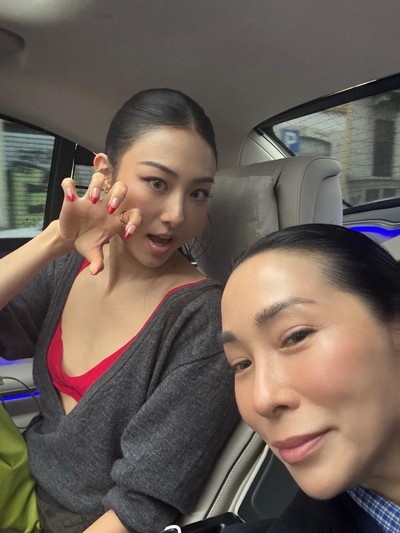
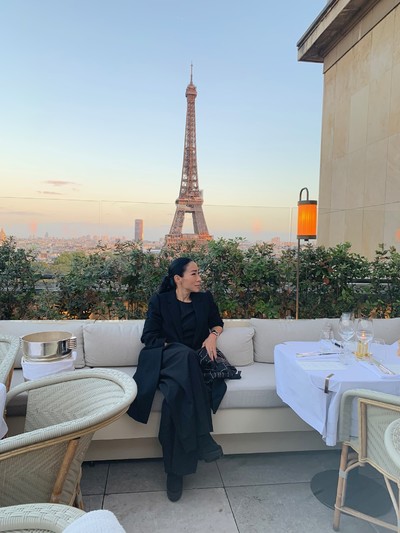
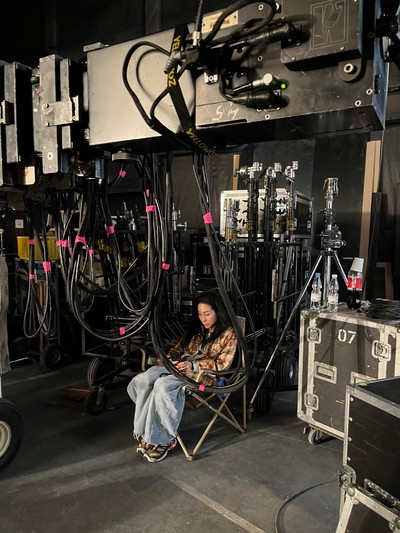
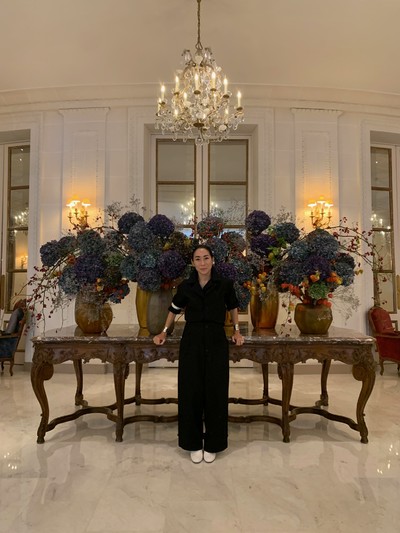
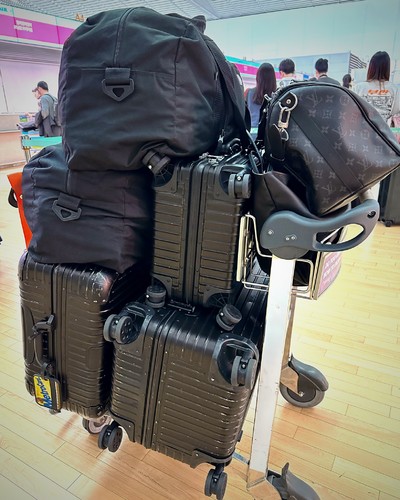
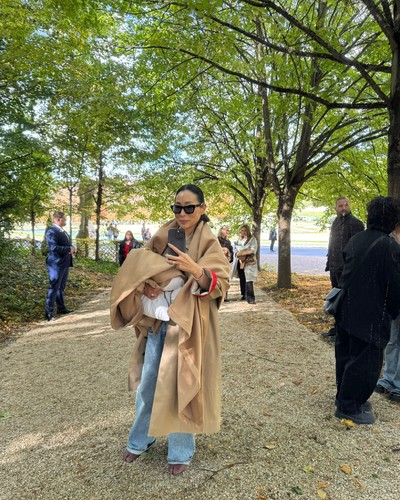
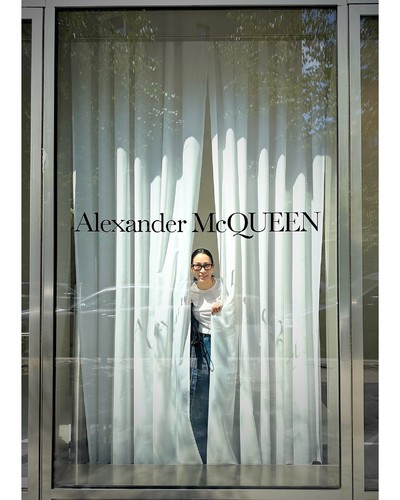
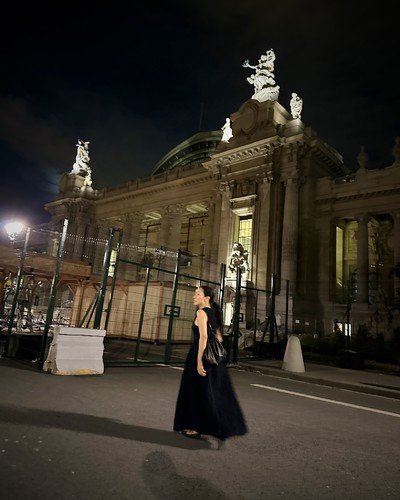
Cynthia Oh is known for seamlessly merging industries rather than switching between them. Her day begins at 8.30am at the Shinsegae headquarters in Seoul, where she oversees its in-house magazine and a womenswear label, shaping the retail vision of one of Korea’s most influential luxury department store groups. By 2pm, she transitions to THEBLACKLABEL, a management and music company in Hannam, directing the visual identity of some of K-pop’s most powerful players. In both of these roles, Cynthia has become a key figure in defining how fashion, fandom, and image interconnect on a broader scale.
Her career path reflects the hybrid nature of the culture she engages with. Initially trained as a classical violinist at Juilliard and Yale, Cynthia transitioned into the fashion industry through the Samsung-owned Shinsegae, where she began working on retail development and building departments from the ground up, later spending nearly 20 years as a merchandising force at BOONTHESHOP, Shinsegae’s concept store. During her stint, the store carried upwards of 500 brands, operating as both a retail environment and cultural barometer.
Her skill set, combined with a highly refined visual sensibility, now supports her parallel role in entertainment as a visual director, where she manages everything from album covers and music videos to brand partnerships, the strategic organisation of public appearances, and the phenomenon of celebrity ‘airport fashion’. As she describes it, a visual director is responsible for ‘whatever you see,’ managing the sheer volume of content now required for an industry that is switched on 24/7.
Cynthia entered K-pop at a pivotal post-Covid moment. After a brief period at Korean entertainment giant HYBE, personally recruited by chairman Bang Si-hyuk, she worked on BTS’s comeback and the development of new band Cortis, before receiving a call from THEBLACKLABEL’s elusive and legendary founder Teddy Park, known for his work with BLACKPINK, K-Pop Demon Hunters, and Rosé’s solo project. Her responsibilities as executive visual creative director at the label have since expanded into launching fifth-generation groups like MEOVV and AllDay Project (ADP for short), and translating music into visual narratives at a time when K-pop operates as a full-spectrum cultural system.
Increasingly, K-pop doesn’t function as a single output but as a continuous stream, and one that is potentially more powerful than any traditional media platform; a single act can generate the volume and cultural impact of an entire editorial ecosystem. Where Korean artists once angled for entry into Western fashion markets, Cynthia operates in a moment where they set their own terms, delay contracts, and collaborate with luxury brands as equals – making K-pop’s biggest names the new magazine cover stars in their own right. Her work sits at the centre of that shift, where personal brand platforms and imagery don’t just support culture – they propel it forward. System Collections caught up with Cynthia in Seoul just after the recent Fashion Month, to discuss her role in shaping K-pop’s ever-expanding rapport with fashion – and how that energy is now feeding directly back into the runway.
‘I read statistics that said in just one year Jisoo’s media impact value for Dior was over $100,000,000. So, you can see why it is so important.’
Tiffany Godoy: When you are looking at and analysing K-pop artists, is it from a fashion point of view or more of a branding perspective?
Cynthia Oh: It’s sort of both. As visual creative director it means whatever you see, you need to vet: the album cover, their music videos, what they wear for fan meetings or for airport fashion. This also involves connecting the artist to the right brands. So it’s 360 degrees.
You were at HYBE during a critical moment for K-pop, working on the return of BTS, the genre’s biggest act, after their multi-year military service. Yet you came into this music powerhouse from fashion, not music. What were you doing at HYBE, and then how did that feed into what you now do at THEBLACKLABEL?
At HYBE everything was divided by the label, I was overseeing three different groups there [BTS, Tomorrow X Together, and Cortis]. But at THEBLACKLABEL I have to oversee everything. So whenever a new song title comes out, Teddy will call me, he’ll play the song, or a few songs. He’ll ask me for my opinion, even though I have nothing to do with music, and he’ll ask me what the title song should be, just to know. Then he shares his notes on choreography, vision, et cetera. And I’ll explain the whole situation [to my team] and we come up with a moodboard which we share with Teddy. Now I oversee three divisions: Visual 1, Visual 2, and Production. Since I joined, we’ve debuted AllDay Project and MEOVV. We also have Somi and Taeyang (of BigBang), and Rosé when she’s working on solo stuff. We also work with actors as well: Park Bo-gum and Lee Jong-won.
As you watch the shows during Fashion Month, are you keeping in mind upcoming projects for all of the artists?
One hundred per cent. Even which haircut, hair colour, nails, make-up visions, and all that.
Let’s talk about AllDay Project (ADP) which launched about eight months ago. It’s quite unusual, especially as a co-ed group, because most K-pop artists debut in their mid or late teens, but each group member already has some experience. What you feel from them is something different to that cute, polished K-pop energy.
Unisex groups existed a long time ago but all the young people think it’s the first time ever, so it feels very fresh. They all have lived and have some experience in the industry. Bailey was a choreographer, Tarzzan was a model and a student, Woochan was a rapper, and Youngseo was a trainee at HYBE when she was young. So they’re not shy. They have that confidence.
How did you approach Fashion Week appearances with such a new group?
I actually shot ADP for a Vogue Korea cover before their debut. I said to Vogue, ‘Trust me, they’re going to be big.’
I brought in stylist Lisa Jarvis, and asked her to bring unusual pieces. I said, ‘Don’t bring samples already in Asia. I want unseen pieces, couture, vintage.’ So she brought about 15 suitcases, and the cover story was released on the same day they debuted. Teddy was like, ‘Oh my God! They’re on Vogue today?!’
Fashion Week happened a few months after we launched. The group had no idea what they were doing, so I sat them down and we went through all the major shows brand by brand, educating them about the house, the creative director’s name, and so on. We hit about 15 shows in one season. Nobody had heard of ADP at the time, but everybody wanted them because of the Vogue cover. We were getting offers for ambassadorships as soon as they debuted. But I said, for the first album we’re not going to sign anybody – we’re just going to see what’s out there for them.
‘Airport fashion is a very important moment. Artists are in hair and make-up at 2am for a 7am flight. Everything’s staged. The timing has to be perfect.’
Because usually an artist will go to Fashion Week invited by one single brand. But to do this, to self-fund or organise outside projects and be independent, that’s unheard of for a certain level of K-pop artist.
It meant that we were free to attend anything we wanted to. We started with Versace in Milan. In the van, they saw a bunch of fans and said, ‘Don’t worry, they’re not for us, nobody knows us.’ And then as soon as they got out of the car, they were like ‘ADP, ADP!’, and it was Tarzzan’s birthday and people were singing happy birthday to him. He was tearing up! We went to Paris, staying at a shitty hotel because I didn’t want to spend money, and nobody complained. Day by day, the fans lined up outside. I was a little bit embarrassed about the hotel! [Laughs]
When you’re at the shows, you’re often with artists, thinking about how the brands might fit with them. Can you explain how you actually look at the collections? What are you looking for?
Storytelling is key. I am collaborating with Enfants Riches Déprimés for Taeyang for Coachella, his upcoming album, and BigBang’s world tour this year. Their DNA matches really well and working together has been very inspiring. The only Enfants Riches Déprimés store outside of Paris is in Korea, so there’s already a connection there. Henri [Alexander, creative director of Enfants Riches Déprimés] came to Seoul to work on the project and Taeyang attended the show in Paris in March. For artists, showing the narrative of the vision is far more important than the actual product itself.
The way I see it, K-pop artists are almost the new magazine, because you have so much content and every single release has its own visual language, its own world. There’s a music video, then there’s a social campaign, and then there’s the artist’s own social media. When you’re managing something like that, how many looks does that entail?
It is endless. We’re fitting at 3am, 5am… We’ll just style the looks endlessly. I have to allocate budget for each event so stylists have to work within that. It’s hard to keep track of what’s been used and what has not…
And when you’re working with brands, how does this work? How do you match artists to the right brand for them?
Every time I sign an ambassadorship for our artists, I’ll make sure that they do not include the stage or any creative work so that they have freedom to wear whatever we want. Because if they are signed, what they wear for the stage doesn’t necessarily fit the house, and so I have to separate that, otherwise we lose the ability to create the visual for the artist. For MEOVV, we’ve actually had a lot of offers from different houses. I had to pick and choose, then sit them down individually to let them know what kind of offers they have. It is important for me to let them know what kind of clothes and narrative each house has, because that’s going to become part of their lives. It will become their everyday wardrobe. So they have to love it. They actually have the final say on what’s for them. For Anna [from MOEVV], Chloé felt like a perfect match. Chemena [Kamali] has a really strong presence and I love how she actually tells a story at Chloé. I want [Anna] to learn from her.
I’m hearing from various people, both in the K-pop industry and young people around me that artists don’t necessarily want to have a contract with a big brand.
Right, that’s very true. K-pop artists are often signed to very big houses as soon as they debut without understanding what they’re getting into. But I think it depends on each individual. For example Annie from ADP has had so many offers from different houses that she doesn’t want. She’s not interested because she wants to be able to wear anything she wants. She’s like, ‘Why do I need to be signed by somebody?’ She actually goes to the boutiques and tries on all the new collections, figuring out what she likes, and if it’s the right match. The brand narrative and artist DNA has to match. If it doesn’t really match, it can’t last long enough. It will only last as a short term deal. Which I’m not looking for.
I remember around 2012 or 2013, it was right after Hedi Slimane became creative director at Saint Laurent. I was at the showroom and the head of sales came up to me and said: ‘I don’t really understand, all the Korean stores are calling me to re-order these bags, Sac du Jour. They had enough inventory to last the whole season. Now they’re all out of it. What’s going on in Korea?’ I found out later that there was a really popular K-drama called My Love From the Star. In one episode, Gianna Jun is carrying that bag and it sold out in Korea in two days. Everything she wore sold out. There was one particular lip gloss shade by Saint Laurent and at a department store, they had like 2,500 units of it that sold out in one day. All the brands noticed and tried to place product endorsement on her. That was when we first really saw the impact of K-culture.
‘In the Korean market, they’re saying fashion is only complete with your face or physique. Beauty and plastic surgery are competitors to luxury fashion.’
How has this relationship evolved?
When G-Dragon was named ambassador for Chanel in 2016, the first Korean to hold this type of ambassadorship, it was a phenomenal thing. It was very symbolic, but only fashion people knew what was going on. Then later, the role expanded. I read statistics somewhere that in just one year Jisoo’s media impact value for Dior was over $100,000,000. So, you can see why it is so important.
How does all this feed into the work you do for Shinsegae?
THEBLACKLABEL artists tend to wear a lot of high-end clothing, but for Shinsegae I’m always looking for new brands. I am often making introductions to Shinsegae and helping labels open up and distribute in Korea. Day-to-day that means I’m visiting their showrooms. I used to hit like 20 showrooms per day during Fashion Week!
Do you think European luxury fashion brands are resonating with Korean customers?
I think nowadays they are, now that they are partnering with K-pop and K-culture artists. This is really for global market needs, not necessarily local markets. But the Korean market accounts for a significant share of global luxury goods sell-through, and its influence continues to grow. So they have to pay attention to our local market as well. I see, more and more, each house is increasingly sensitive to Asian markets, for example by creating an Asian fit for a lot of looks. Before they would always do something in this ugly red colour, like, ‘Oh, you love this, right? Brings you luck.’
Last season [for Spring/Summer 2026] everything was so hyped up with the new change of designers, but this time felt a lot quieter. I thought all the creative directors were playing it safe. You can see that they’re already conscious about sell-through, so I thought it was kind of flat in general. There were a lot of wearable items. But these days, I’m looking for more than that. For Shinsegae magazine, I’ve created one more editorial section for younger generations. We do one editorial with high fashion, and the other one with local market fashion and more up-and-coming fashion. We really want to find that new niche.
What truly resonates with the Korean market these days?
I don’t think fashion alone is very interesting anymore. It has to be tied to some kind of lifestyle aspect. To culture, community, authenticity. I know that we use this word so much, but it does have to resonate with the customer. Otherwise, there’s no meaning to it. We already have closets bursting at the seams. Nobody needs any piece of clothing anymore, so it has to give you a certain feeling, a certain sense of commitment or belonging. You want to represent something or make you feel like you belong to a group. Touching on that is very important.
Is this also because there’s a beauty obsession in Korea.
One thousand per cent. Everybody’s very conscious of that – you know how we are obsessed with our skin and plastic surgery!
My theory is that one of the biggest competitors for luxury is plastic surgery. Do you think you have seen changes in how people spend money on clothes versus their bodies?
In the Korean market, they’re saying fashion is only complete with your face or physique. So without that, it doesn’t really matter what kind of clothes you wear. Generally, Koreans visit their aesthetician or dermatologist on a regular basis. It doesn’t matter if you’re rich or poor. It’s routine. So yes, they are spending a lot of money on that versus spending on luxury products. Beauty, plastic surgery, they’re competitors to luxury fashion. Experiences like travelling and dining are both other competitors.
Let’s talk about the phenomenon of airport fashion at Incheon airport. It’s re-engineered private time into public performance that plays out on social media. How do you approach airport looks for your clients, particularly when they are travelling to Fashion Week?
The airport look is very, very interesting. Personally, I would only travel in comfortable clothes, so I can’t really imagine somebody wearing five-inch high heel boots and a lace skirt to the airport. But sometimes artists actually choose to wear that in front of the camera! Usually, though, we will receive suggested looks from the houses if they are signed. Because if they are signed, that’s a very important moment for the house. So we will need to fit them, talk about hair and make-up and so on… Sometimes artists come to our studio to get their hair and make-up done at 2am for a 7am flight. Everything is staged. We call different publications, we make sure they’re covered – the timing has to be perfect.
On the way back it’s casual though, masks and hoodies.
They’re tired! And I think the houses want the hype before the show. So after the show, it’s more relaxed.
You travel with the hair and make-up people, so you could do it.
You could do it, but they don’t want to.
It looks really unnatural to come off a plane wearing a look with hair and make-up all perfect, right?
That’s true. The thing is, though, they’re wearing the season before to the airport. Coming back, what are they going to do? The new collection was revealed, so it’s passé [laughs]. Going to Europe and then coming back, it’s then a whole new season!