Interview by Alice Cavanagh
‘What a designer ultimately brings is integrity; the belief that someone genuinely cares about what they’re making. That’s what Hermès has always understood. It’s ancient wisdom about luxury. The difference is that brands that never had to think about it before are now being forced to.’
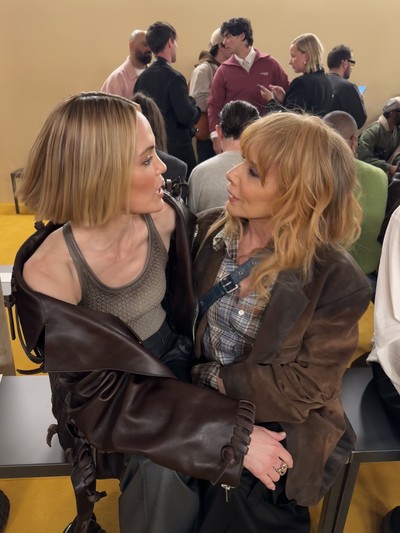
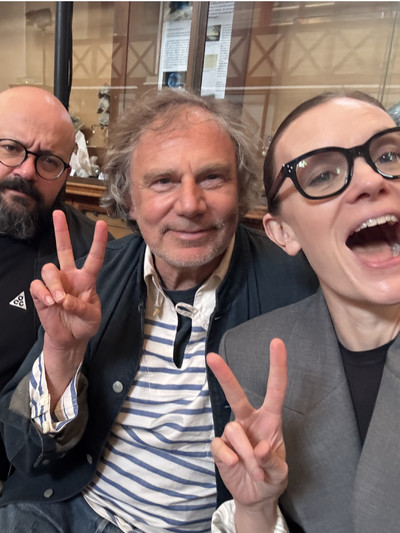
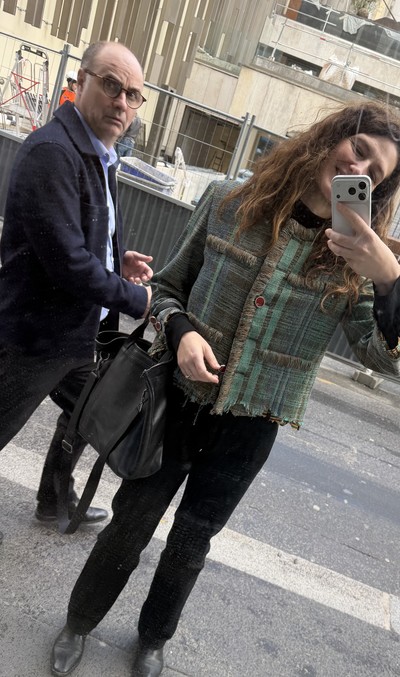
When it comes to fashion, everyone has an opinion. Meaningful, well-informed debate is harder to come by. If there are two voices genuinely shaping the conversation right now, they belong to Jo Ellison and Lauren Sherman. Jo is the British journalist steering HTSI [How To Spend It], the Financial Times’ glossy that has grown considerably fatter and more frequent since she took the helm in 2019, bringing the instincts of a seasoned critic and cultural commentator to the role of editor. Lauren is Puck Media’s fashion correspondent, previously the chief correspondent at The Business of Fashion, who brings a forensic eye to the business architecture beneath the runway spectacle.
Their perspectives can be at odds – the perennial British-American divide? – but their influence runs equally deep.
Jo shapes taste and, crucially, what the luxury client is coveting, or rather, should. Lauren’s reporting covers the industry’s ateliers and boardrooms, connecting the creative to the commercial with rare precision. Between them, they have a stake in the complete picture – the trends, the front row and the bottom line.
We connected post-Fashion Week to digest a season defined by consolidation: new appointments finding their footing in the stores, on the runway, and on the red carpet. Against a backdrop of uncertainty, who has what it takes to survive? And will they even be given the time to prove themselves? In the following conversation, Jo and Lauren don’t always agree. How refreshing.
Alice Cavanagh: If the Spring/Summer 2026 collections were about designer debuts, what were your main take-aways from this season?
Jo Ellison: Last season felt like a reset. There was a real sense of joy, with many new themes emerging. I felt less of that this time around. But what was genuinely interesting was the consolidation. In Paris in particular, most of the shows felt like they were taking shape and moving in the right direction, and I felt a real excitement around brands. Dior came out hard – the silhouette was strong; it hit the right notes commercially and creatively. Then it continued to build. Tom Ford was an excellent show. Pieter Mulier’s final Alaïa felt like a genuine moment, though I’m slightly terrified about what comes next there. Chloé was an improvement on the last couple of seasons, more cohesive. And Celine I really loved. You could see brands settling into a confident sophomore year, their vision becoming clearer, their edit more defined. That was very apparent at the LVMH brands, less so at Kering.
Lauren Sherman: I agree, and you could see it right down to how accessories were merchandised on the runway. LVMH’s long-term approach is really paying off – their ability to bring people into the system early and develop them over time. Michael [Rider] worked at Celine a decade ago, and they brought him back. Jonathan [Anderson] has been in that world for 15 years. You can see it working. The one exception for me is Givenchy – I know everyone loved the show, but there’s still a disconnect. She does good work; the red-carpet looks are strong, but I still don’t know what Givenchy is. Something I kept coming back to this season was brand identity. These houses all have brand books, or at least a version of one in their heads. But what do these brands actually stand for? That’s consistently where things fell apart.
‘The strangest paradox of the moment is that brands have never been more powerful, and yet we tend to follow the designers, not the houses.’
Could you give a specific example?
Lauren: Balenciaga is the clearest one. Not to pile on, but look at the history: Balenciaga has always been about silhouette. Then it became Demna’s brand. So now the question is, do you carry that forward and make it part of the story, or do you step back and ask what the brand fundamentals actually are?
Who is doing it well, then?
Lauren: Celine is a great example. Phoebe [Philo], Hedi [Slimane], and Michael – three completely different designers, but the through-line is bourgeois dressing. You could have the same customer across all three and yet each iteration feels distinct. Michael’s stores still have much of Hedi’s interiors, and it doesn’t feel jarring. Whereas you walk into Balenciaga and wonder why anyone invested so much in cement.
Jo: What is interesting is it’s often a savvy, consumer-focused aesthetic vision at a lot of these brands – and that’s often the product of a former head of studio, a right-hand, someone who just knows how it works. The difference between the big-name hires and the lesser-known designers coming in is becoming really palpable. You can tell who has the nuts and bolts organised.
‘Product’ really isn’t such a bad word anymore, is it?
Jo: I’m all about fucking product. Desirability isn’t a dirty word. You create something people want to buy. Like at Chanel, where things are selling out at a time when the world isn’t looking great. The queues outside these places are a testament to the power of consumerist escapism.
Lauren: Take Michael Rider, being a good stylist and good merchandiser on top of making nice clothes – that’s the job. I also loved Tom Ford. Very old-school, completely editorial. If this were 15 years ago, with the right budgets that collection would have been on every magazine cover.
Paris is now the pinnacle and the focus. What do you think about the balance between the different fashion weeks? Is London still part of the conversation?
Jo: London matters because of Burberry. It’s something of a bellwether for the health of the city. But beyond that, it’s not really a destination anymore. I feel for the designers who have stuck with it. I went to a dinner for Roksanda celebrating her 20th anniversary, and she didn’t even do a show. Erdem is still going, but almost everyone else has either folded, pivoted, or gone to work for a high street brand. The London love story is sadly not so happy these days.
It used to have such energy, a place where new names could emerge.
Jo: I feel about London the way I imagine New Yorkers feel about New York – slightly dismissive until you’re there, and then you get it. The New Yorkers are passionate about their brands, which can seem a bit OTT. But then I saw how much support Jack and Lazaro got at Loewe, and I thought, ‘OK, I understand.’
Lauren: London has been the feeder system for fashion for the last 30 years. So, it’s important – or it was. New York feels different. The shows there are essentially marketing tools. Beyond local editors, who in the trade actually goes? London, at least, still feels valuable for finding young talent. In New York, there’s a designer named Colleen Allen whom I really like. The real problem is that even if these young designers can scrape together the money to make a collection – which is harder than ever post-Brexit – there’s nowhere for them to sell. Some can barely produce a single sample set.
Jo: Colleen was in the LVMH Prize, right? That is a really good lens on who matters right now. There is a strong London contingent, though nothing like it used to be. Everyone seems to be showing at or being bought by Dover Street Market, which I assume means three pieces on a rack at some point. Every designer I spoke to was working with such tiny businesses, ‘If I win this prize, I get one more person in my studio, or I can finally pay my rent.’ The discrepancy between those corporate brands and the newcomers London has traditionally produced is gigantic now. I just don’t know how anyone makes the leap.
‘Living in LA for five years showed me how little people value fashion now compared to even a decade ago. They don’t need it the way they used to.’
What is the way forward, then, for young talent?
Lauren: Their best bet is to win the LVMH Prize and essentially become an LVMH employee. Which is an incredible feat in itself.
Jo: Or landing a sports deal – an Adidas collaboration or something similar. But it’s so hard to witness. I have friends whose daughters are at the London College of Fashion and Central Saint Martins now, and none of them intend to start their own brands, which would have been unthinkable 20 years ago. They all just want to go into houses.
Let’s move to Milan, then, and Meryll Rogge’s debut for Marni. Jo, what did you make of Milan?
Jo: I always find Milan a bit meh, if I’m honest. Very commercial. And whether or not Gucci is showing tends to colour the whole season. I was pleasantly surprised by Marni. I never really connected with the previous [Francesco Risso] era. But Merryl Rogge seems to understand the brand’s identity – it’s a difficult one. Simone [Bellotti] at Jil Sander was a big tick. As a buyer, I’d want to wear a lot of it. I’m ambivalent about Prada. Some of it I loved, other parts not so much. But the trick of it made me think about how we actually wear clothes; it prompted an intellectual exercise that I enjoy. The idea of 15 models in multiple looks stems from the way we really dress. Whether I liked the actual clothes is almost besides the point.
Perhaps we should talk about Gucci and Demna’s runway debut.
Jo: Everyone has an opinion. Mine is that I simply didn’t understand it. Is this how people want to dress? Maybe he has some insight I’m missing. But I couldn’t connect it to the moment. I wondered if it was a play for the American market – some LA night-into-day vision. I just felt old and confused.
Lauren: I liked it. I liked a lot of the clothes, particularly his ideas around the Tom Ford era. I’m not sure it’s going to work long term and I’m not sure he wants it to. My feeling is this was a last-minute decision on everyone’s part, which I think they’d all own up to. His whole instinct is to interrogate the system, and Gucci is a warm brand sitting right at the centre of it. That tension was interesting.
Jo: I’m not sure why that’s so provocative. Taking the most successful cultural moment and running with it…
Lauren: I think what he’s saying is: this is what luxury looks like now, this is who buys your bags at the airport, this is how they dress. Deal with it. That’s what he does with everything – Balenciaga, Vetements, all of it.
Jo: There was desirability in that approach when it felt new… I’m less sure it’s as intellectually interesting as everyone wants it to be.
Lauren: I think it is. I just think it makes people uncomfortable.
Jo: Do you think luxury consumers are inherently quite tacky? Is that the provocation? There’s a word in Italian – tamarro – for people from the suburbs who dress in a very particular way. Quite brassy, quite blingy. The British equivalent would be ‘chavvy’. That felt like a deliberate class demarcation, and specifically an Italian one.
Lauren: It makes people uncomfortable that he doesn’t do what they expect.
Jo: I had no expectations going in. I just didn’t understand it – specifically as a roadmap for the next however many years. If he’s just here for a season, fine. Lauren: I think you’re right that he’s not a brand architect.
Jo: He did good work at Balenciaga.
Lauren: The difference is that Balenciaga had deep design histories to draw from. Gucci’s heritage is different – Tom Ford is the defining reference, and he was ultimately a designer-merchandiser. Alessandro [Michele] built on that foundation, but the design culture was never as rich. So, whatever emerges may not feel as considered. Will the customer see the irony, or will it not even register? The key is whether it sells, and I don’t have that answer yet.
Jo: It was see-now buy-now, so we’ll find out quickly. Apparently, the men’s trousers sold out.
‘Something catastrophic always seems to happen during Milan. You can practically guarantee the world will try to end while you’re at Max Mara.’
It feels like these designers don’t even have enough time to prove themselves.
Jo: Two years is typically the contract. They probably need five. But that’s not the world we’re in anymore. The great brands were usually commercial catastrophes to begin with. Phoebe took at least four years at Céline to find her footing, Marc Jacobs at Vuitton didn’t happen overnight, even Tom Ford had some real shockers early on. But now, with social media and the pressure for everything to look completely considered from day one, you really have only two or three shows to make your case.
We just wrapped awards season, and the red carpet is a place where these new names are consolidating their ideas. Which brands really delivered?
Jo: So much Chanel. Everyone was wearing it, including so many men. I suppose we can thank Harry Styles for that. It’s been phenomenal – not as in ‘great’, but a genuine phenomenon. When you’re casting that wide a net, the clothes really need to look exceptional. I’d have liked some of these brands to spend five more minutes in the fitting room before sending things out.
Lauren: Or simply dress fewer people.
Jo: Yes, fewer but better. There’s quite a lot of red carpet happening that isn’t actually about selling the clothes, and the two things should be working together. It’s become a bit of a feeding frenzy.
With new designers still establishing their language, I often couldn’t tell which brand I was looking at. I found myself checking captions.
Jo: It’s a real jump between the red carpet and the runway for some houses. Vuitton looks so different across the two.
Lauren: Dior is the clearest example of it finally coming together, right up until the Oscars, where it clicked. Couture pieces reinterpreted, not deployed en masse – and they fit. Some of the Chanel is more mixed. I think Givenchy is doing an exceptional job on the red carpet; right now that’s the clearest expression of what that brand actually is.
Jo: And if your brand proposition is that you make clothes that fit beautifully, what better proof than dressing every body shape well? Sarah [Burton] is genuinely exceptional at construction.
Are brands choosing the right talent? I often think at fashion shows that the celebrities don’t look like themselves – they look like they’re in costume.
Lauren: They simply don’t have enough options. Dior and Chanel have cornered most of the big names, and there aren’t as many major stars willing to show up without a paycheque. After Jonathan recruited Loewe’s roster and Vuitton locked up the A-listers, there’s not much left. I think Prada still does this best; they’re deliberate about who they choose. But a lot of brands are just taking whoever they can get. Post-Covid, they’ve decided celebrity is the last remaining monoculture, and they’re pouring money into it.
Jo: It’s so transactional now that authentic relationships are almost impossible to believe in. You used to see genuine fashion lovers who had personal relationships with houses, real agency over what they wore. Gwyneth [Paltrow] in the old days – you’d see her at shows and then she’d actually wear the clothes. Now, it’s contracts covering everything: make-up, jewels, every element. I will want to wear exactly what Julianne Moore is wearing, at any show, any time. When I see Jodie Foster, I think: she’s not being dressed, she’s just herself.
It’s very obvious when that’s the case.
Lauren: I don’t think the brands or the celebrities are thinking about that at all. It’s purely about exposure – followers and earned media value. Stars need the income, and brands have fewer places to reach large audiences because magazines don’t do it anymore.
‘Demna’s whole instinct is to interrogate the system, and Gucci is a warm brand sitting right at the centre of it. That tension was interesting.’
What about the wider context this season? The events in the Middle East were unfolding in real time. It took me back to February 2022 and the Ukraine war. People reacted far more viscerally then.
Jo: Something catastrophic always seems to happen in February in Milan. You can practically guarantee the world will try to end while you’re watching Max Mara.
Lauren: What struck me was how little it was discussed. This time around it felt the least acknowledged. Maybe it’s just numbness at this point. The shows were good, people were excited, and after such a dire few years, maybe there was a collective need to escape. What was notable was that when it happened, I assumed it would define the whole week, and then it simply didn’t.
Jo: I didn’t actually feel that tension this time, which is interesting because I’ve felt it acutely before. I think it has something to do with how we consume everything on social media now: footage of conflict sits next to political commentary, next to catwalk, and we’ve become accustomed to that proximity. It doesn’t feel as jarring as it might have five years ago. There was also the uncertainty of it – in that first week, nobody really knew the scale of what was unfolding. I did an interview with [Chanel president of fashion] Bruno Pavlovsky, which stuck with me. He said global instability is simply the norm now, and the only response is constant readiness to adapt. If you have the financial resilience, you pivot and move on.
You both used to formally critique the collections at the Financial Times and BoF, respectively. How have your roles evolved?
Lauren: I still consider myself a critic, though mostly of the business. For me, it’s largely business analysis, which is what makes these companies most uncomfortable. Tell them they’re managing something badly, and that’s when things get tense. Straightforward fashion criticism has limited value unless it’s properly contextualised, and there aren’t many people who do that well.
How does your background inform your current role, Jo?
Jo: Honestly, I’m delighted not to be doing fashion criticism as my day job. I use Instagram for that now, essentially. I won’t just say something was terrible, but I’ll advocate hard for things I love. That’s the real gift of having done criticism for a long time: you trust your judgment. You can make a snap decision – I want to interview this person, I’m getting behind this brand, even if nothing’s in stock. HTSI is non-advertorial, so we’re only ever championing what we genuinely believe in. You don’t have to be unpleasant to anyone. I mean, I can be and sometimes am, but it’s not required.
You both have real influence. Who influences you?
Jo: Everyone. I’m a crowd-sourcer. Front-row groupthink is a trap. I find it much more interesting to talk to the buyer, the CEO, or the fashion student to find out what’s actually resonating. And when you get the data – apparently Burberry got the highest social media views this season – it’s a useful reality check.
I’m always fascinated by the disconnect between what the fashion press responds to and what the buyers covet.
Lauren: It’s important to find people whose sensibility differs from yours and get a gut check. Speaking of Marni, I struggled with the entire tenure of Francesco Risso, but I was talking to an editor about it, and she said something I hadn’t considered: that stuff was genuinely great to shoot. For a fun editorial, it worked.
Jo: We have a group chat at HTSI – anyone with a stake in fashion can weigh in. It’s genuinely good to know what people are thinking in real time. What it looks like on a live feed versus in the room, whether something felt flat or didn’t translate. You can get very caught up in the exceptionalism of being there and lose perspective.
Before we wrap up – where is the industry going? What are you keeping your eye on?
Lauren: The Versace situation is the most compelling thing to watch.
Pieter [Mulier] is probably the better long-term choice for building that business under the Prada Group.
Jo: I went into the Versace store in Milan and was genuinely underwhelmed. The quality was not good.
Lauren: That’s what happens when you’re owned by Capri. What the Prada Group has done with Prada and Miu Miu over the last decade gives me real confidence in what they can do with Versace.
Jo: To me, this is one of the most genuinely exciting developments in the industry in a long time. And it’s only just begun.
Lauren: My big question is whether the frenzy around Chanel and Phoebe Philo is isolated to two or three brands, or signals something broader. Because in my world, people are spending, but only on things that feel genuinely special. And part of what’s driving that is a fundamental shift in priorities. Living in LA for five years showed me how little people value fashion now compared to even a decade ago. They simply don’t need it the way they used to. Last year felt like the first truly normal spending year post-Covid, and normal means travel, experiences, and plastic surgery. Things that have nothing to do with clothes.
A reshuffle in priorities.
Lauren: Exactly. So, my question is: does fashion return to being central to culture, or has behaviour fundamentally changed? I don’t think the luxury industry is about to collapse, but it is completely consolidated, and consolidation means managed decline. You can see it at Dior, it’s taking time to figure it out. Is the Chanel effect replicable, or are people just spending on two or three things that feel truly exceptional? That’s what I’m watching.
Jo, where do you see spending happening or heading?
Jo: The strangest paradox of the current moment is that brands have never been more powerful, and yet we follow designers, not houses. The heat on a brand can literally vanish or flare overnight. We’ve all watched this rapid hot-cold-hot-cold cycle, and people are coalescing around a handful of names. They’re following Matthieu [Blazy] across houses. They’ll probably follow Pieter Mulier. They follow Phoebe Philo. The brand loyalty isn’t really there anymore.
Lauren: True in some cases, but not all. Hermès is about Hermès.
Jo: I don’t really consider Hermès a fashion brand. It’s probably the only one with a genuine halo effect that transcends the designer. Chanel, to an extent, too, because that client comes from a different place. But it’s fascinating how quickly we change direction, like a shoal of fish.
Lauren: I agree, but that’s precisely the challenge. Celine is the best example – three completely different designers, and yet there’s an underlying proposition that runs through all of them. You can have the same customer across all three. But Gucci is the cautionary tale – so much talk about wanting to be the next Hermès. You can’t build that brand architecture if your entire business has always been built around having a hot designer. That’s the crisis at a lot of these companies.
Jo: And what a designer ultimately brings is integrity; the belief that someone genuinely cares about what they’re making. That’s what Hermès has always understood. It’s ancient wisdom about luxury. The difference is that brands that never had to think about it before are now being forced to.
Lauren: Dior being the obvious example.
Businesses of that sheer scale cannot pivot quickly.
Jo: And when something derails at that scale, it really derails. The next year is going to be fascinating.