Interview by Nicolaia Rips
‘Everyone loves to talk about how New York is dead, which I feel very ‘grrr’ about because people don’t go to the things that are actually relevant here. Donna Karan, Calvin Klein… diva, that was 30 years ago.’
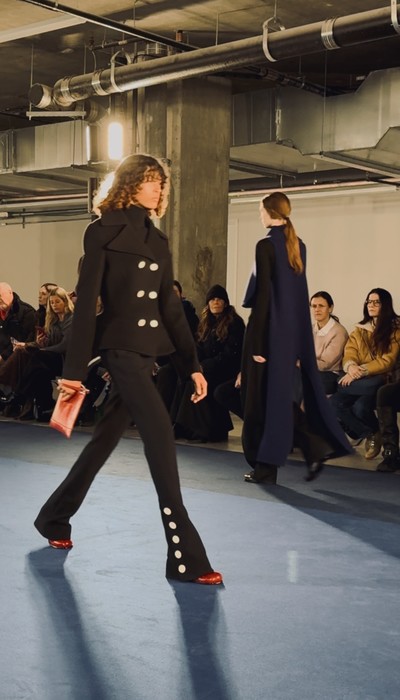
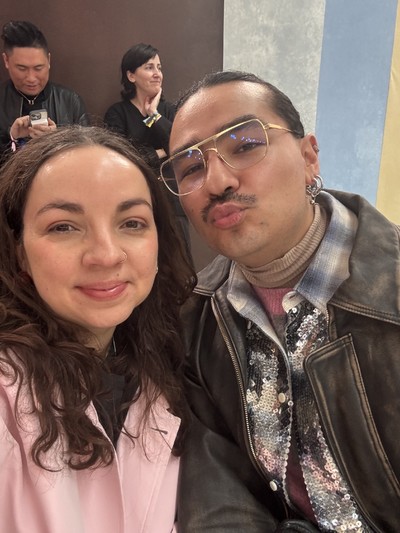
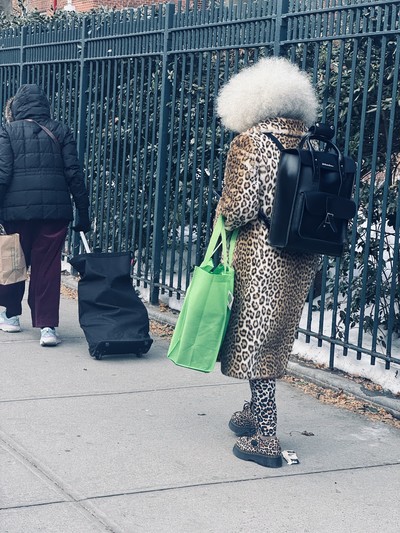
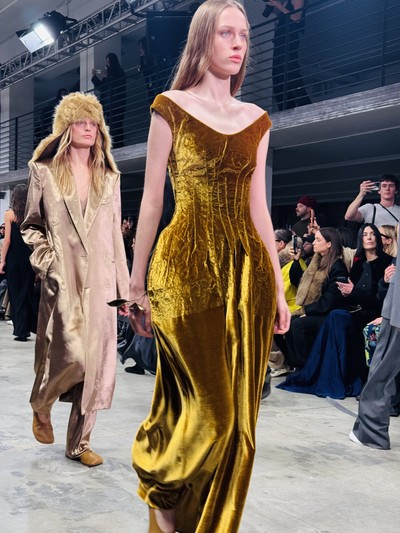
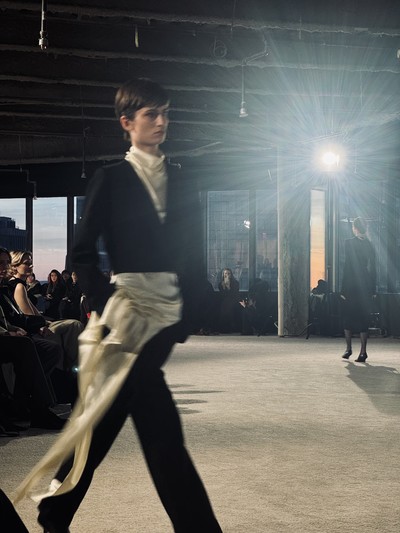
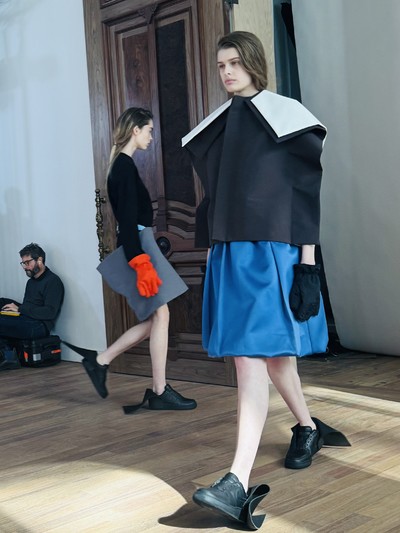
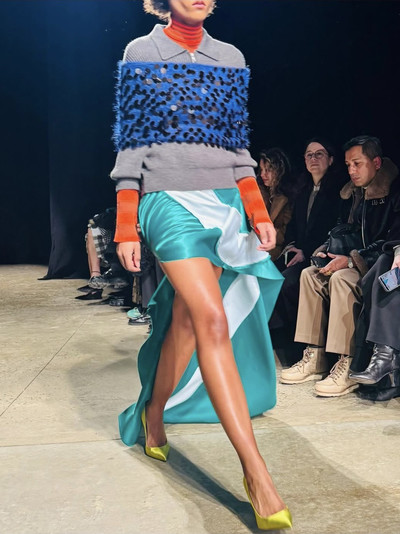
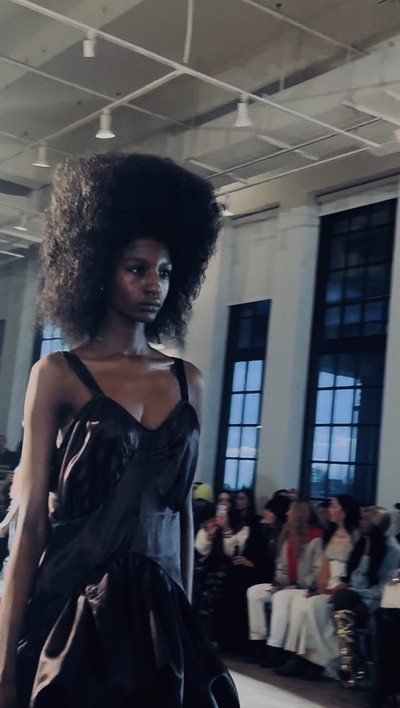
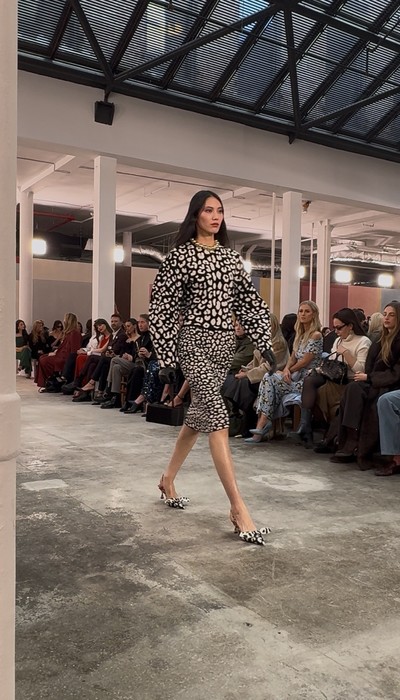
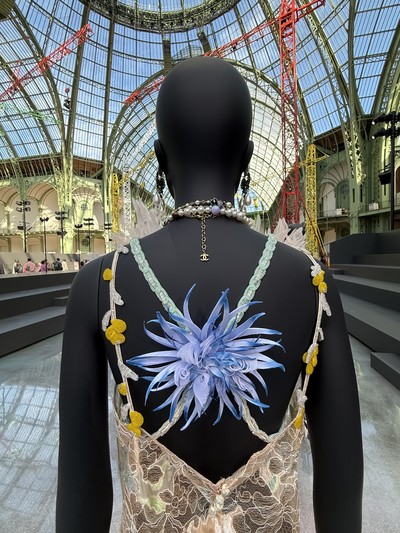
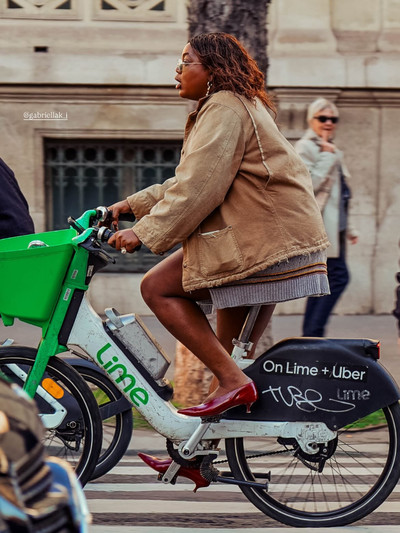
New York’s position within the Fashion Month circuit has, for some time, appeared to contract. But as Laia Garcia-Furtado and Gabriella Karefa-Johnson suggest, this shift signals less a decline than a redistribution, and has provided an opening through which smaller, more experimental practices have been able to take root.
In 2021, Karefa-Johnson became the first Black woman to style an American Vogue cover but abruptly left her tenure at the magazine in October 2023, after emerging as an early voice condemning the Israeli aggression in Gaza as genocide. Her work – she’s writes a popular Substack and styles for figures such as New York’s First Lady Rama Duwaji
and Kendall Jenner – has always positioned her within the fashion system, while maintaining a keen sensitivity to younger labels often orbiting just outside it. Meanwhile, Garcia-Furtado’s four years reviewing collections for Vogue Runway gave her a comprehensive view of the city’s fashion infrastructure, while providing a platform for her exuberant and highly informed writing.
Now, speaking from newly assumed positions – Garcia-Furtado at Harper’s Bazaar as deputy culture director and Karefa-Johnson in her role as official trends spokesperson at Depop – their engagement with New York Fashion Week has become more selective, allowing them to engage with a part of fashion that might not exist only at the centre, but in the margins where newness tends to flourish. In conversation with i-D’s senior editor Nicolaia Rips, they reflect on New York fashion now, and what it means for a brand to show today.
‘I am super on board for the return of weird, and the idea of quirk re-entering our fashion vocabulary. This season really felt like a return to that.’
Nicolaia Rips: Talk to me a bit about this past Fashion Month and what your approach was to seeing things.
Laia Garcia-Furtado: I left Vogue Runway earlier this year, and now I’m at Harper’s Bazaar covering culture. But I still went to shows in New York this season, the brands that are now my friends. That was my frame for Fashion Week.
Gabriella Karefa-Johnson: I am very over the conjecture about New York Fashion Week being ‘dead’. I was just like, dead compared to what? In 2000? It’s a very different frame of reference now. I thought that New York was still really interesting, but it’s all of those younger brands that have historically felt unsupported by the fashion infrastructure here. The CFDA is accommodating to big megabrands, but it’s harder to show as a younger brand. I was interested in discovery this season. While I was at Vogue, it was like a market hall and you had to go to everything. Now that I’m freelance, I can decide what I do. I wanted to discover the brands that I didn’t have time for in my schedule before, or who were showing for the first or second time. I went to my first Zoe Gustavia Anna Whalen show and I was obsessed.
Laia: I still haven’t been to one of her shows, it’s just never lined up with my schedule. But I really like her.
Gabriella: It’s young New York. It felt like being a part of something. It really was a happening, and it felt like an art project because she participated in her own show. At the end of the show, she got into a bathtub and it was this moment of cleansing. I saw so many different bodies and so many people represented in that show that clearly were part of her community, and clearly not part of the fashion system. It felt energetic and energising and exciting.
Laia: Everyone loves to talk about how New York is dead. And I felt very ‘grrr’ about it because people are not going to the things that are here. Donna [Karan], Calvin [Klein] – diva, that was 30 years ago. I’m sure it was great back then, but now designers like Eckhaus Latta are super important. It’s a shame that we don’t have Willy [Chavarria] in the city anymore. But Eckhaus is really important and the Zoe Gustavias of the world are really important. Collina Strada is really the New York energy. Sure, you do need the Michael Kors type of designers, but you need the uptown and the downtown. Not to buy into a New York cliché, but that’s what makes it New York. You can’t just be like, ‘Oh, there’s nothing here,’ because there’s so much here but you’re just not going to it.
Gabriella: I feel like I fall prey to that in London. Nobody goes. People just gloss over it, except for Burberry, who will fly people out because they’re an advertiser. If I were to spend the week there, I’m sure I’d feel excited about London fashion again. Even just Fashion East and all of the amazing artists that Lulu [Kennedy] has curated. There is a young designer in London whose name is Traiceline Pratt who I’m obsessed with. She used to work for Phoebe [Philo] and has a brand called Goyagoma. Incredible tailoring, amazing technical skill, really luxe fabrics. For someone who probably needs funding, it looks gorgeous. So that was an exciting debut for me. Fashion clearly wants to feel something again. We want to experience newness. We don’t just want to be served algorithmically approved trend stories. Was there anyone that you were particularly excited about?
Laia: My favourite at the moment is Giovanna Flores. She doesn’t do runway, and she’s very school of New York, like Susan Cianciolo. That to me is what New York is about. I’m happy that I was able to see her and that she gets reviewed. Chloë Sevigny wore her, it was very exciting, and last season she showed a really cool movie. And LII, obviously we love.
Gabriella: Yeah, we love LII. Also, incredible showing at the LVMH Prize. The LVMH Prize this season was one of the strongest groups I’ve seen in a while. And for LII, there’s something so interesting about having such a specific customer already. I think part of that has been the stylists who have tapped into the collection. And the fact that I can identify the girl – that’s rare for a brand that’s four seasons old.
Laia: The thing about him that’s so great is that what you see is what you get. I have a couple of his pieces and when you put them on, it looks exactly like you saw in the pictures. There’s no trick to it. It’s great because it’s simple.
Gabriella: And singularly identifiable. In general, I am super on board for the return of weird, and the idea of quirk re-entering our fashion vocabulary. This season really felt like a return to that. Meryll Rogge at Marni, I was so excited to see that show. Marni back in the hands of a woman. It felt so chaotic in this way that I love fashion to be. This is a very tired conversation, but I had an existential resistance to quiet luxury because to me it’s hyper-conservative. Like: all be the same, be controllable, be manageable, be boring. I stopped caring about fashion for one second.
‘My gripe about CBK is that it is an identity that is anchored in white supremacy. I’m just going to say it – it’s only for thin people, white people.’
Quiet luxury felt like it was dying, and then with the CBK [Carolyn Bessette-Kennedy] of it all, it snapped back.
Gabriella: My gripe about CBK is that it is an identity that is anchored in white supremacy. I’m just going to say it – it’s only for thin people, it’s only for white people. I actually wrote a Substack about it. When you really think about her, she’s a blonde, skinny publicist, and I do think that my resistance comes from some resentments about how I’m seeing that translated on the runway.
Laia: Exhaustion is real, and I feel it’s normal for everyone to sometimes be like, ‘What are we doing?’ There are shows that just make you depressed.
Gabriella: Let’s think about diversity, equity and inclusion for a second.
Laia: And now DEI [Diversity, Equity, and Inclusion] is over, baby!
Which is, going back to Zoe, why it’s so great to have shows where it’s all about community and inclusion – fashion that clearly stands for something.
Laia: That is why I feel Dario [Vitale]’s collection for Versace last season hit so deep, because it was an attempt to do that at a really big house. He tapped Eileen Myles to write a poem for Versace and you’re like, ‘What? I love this!’ Pieter [Mulier] will be great, but that was special. Dario will get another job, but I really wish I could have seen where his vision for Versace was going to go.
Gabriella: Part of me wonders if the brilliance of that was because of the shortness of the burn. Maybe he felt like, ‘I’m going to do my big one because I’m not going to be here next season.’ There is a deep risk aversion in fashion because luxury is not selling like it used to – although luxury is not struggling. People are still buying through every recession in the world, through every war. But I do think that there is this idea that the brands are no longer in lockstep with their buyers and the way to ensure longevity is to do the safest thing. When you remove the business pressures, that actually is liberating and feeds the creative mind to do things that you might not do otherwise. When I think about the Fall collections, we saw a lot of people hitting their stride and getting out of the fear zone. We saw that with Sarah [Burton] at Givenchy. I loved that show. I’m not even a Givenchy girl, but I was like, ‘Oh, you’re fucking it up.’ Those fucking hats! The other hat moment was Vuitton. Like, what the fuck is happening?
Laia: The hats were the best part of that show. With all due respect, you can’t have a bag on a stick!
You said this past season made you feel a little optimistic. Tell me more.
Gabriella: Fun as a central tenet of design was something faith-renewing for me. I saw it at Jack [McCullough] and Lazaro [Hernando]’s Loewe.
Laia: That first Loewe show was so good. That yellow!
Gabriella: Nasty!
Laia: What is happening right now is that we’re all splintering. Either you love technology or you’re going to lean into the things that make humans human. That is craft, that is play. Loewe is a house of craft, so naturally they’re going to lean into that. And then there’s Julian [Klausner] at Dries [Van Noten]!
Gabriella: What is really incredible to me is when you can anchor your collection in reality without it feeling dire and desperate – because our reality is bleak at the moment. If you can find the real good versus the artificial good, that is a net positive for humanity and also for fashion. I feel like Julian is doing that. There’s a familiarity and a reality to it. It’s almost the opposite of Loewe to me, but both serve the same function, bringing us back to humanity.
Laia: It’s a fantasy where you’re like, ‘I can actually be this woman today.’
Gabriella: I have a weird relationship with The Row – I shouldn’t love it based on who I am and my values – but I will never do a season without going to their show. You’re going to see an amazing tailored suit and an amazing silk gown that nobody can afford. And there isn’t anything that is inherently otherworldly, but there’s a sense of intrigue in how strangely normal it is.
Laia: I understand why they get roped into the quiet luxury of it all, but they have such a freaky-deaky side. I think that’s why I love them. And I love that they hate shoes. They’ve always just been like, what is the least amount of shoe we can put on a foot?
Gabriella: Those are the things you see in the show and the way that it’s styled, the way that Brian Molloy so expertly interweaves these pieces together to create a holistic vision. Is that how we see The Row in the wild? Not really. I know very few full-look The Row girls, mostly because nobody’s walking around in $50,000! But I need somebody to write an essay about the concept of the thinking woman in fashion. That phrase is used so often. What are the clothes for women with no brains? Is it logomania? Or hot-girl clothes?
Laia: I mean, respectfully, no one is wearing the Gucci bodycon dress and thinking about it.
Gabriella: I had a whole existential moment at the Gucci show. On one hand, this could be a nuanced interrogation of the concept of taste and a recognition that Gucci is actually worn in the poorest of tastes. On the other hand, I was like: is this a presentation of archetypes that he will then evolve throughout his tenure at Gucci? I wondered whether I was overthinking it.
Laia: I thought the show was incredibly depressing. Gucci historically has this joie de vivre, but those clothes were depressing as hell. To say, ‘OK, subculture is where everything is.’ But there are subcultures that are quite negative, like would you have a pro-ana [pro anorexia] influencer on the runway…?
Elena Velez…
Laia: I don’t know if they were actually Clavicular-esque. I don’t think those guys were at the show, but that was the vibe. By elevating that, you’re not being like, ‘Here’s society, here’s a mirror.’ You’re making it look cool. It’s not the same thing as when he was at Balenciaga, with the war and the snow. That had an impact in different ways. This is not that. Even if you’re like, ‘Oh, these are the people that buy it,’ is it not just mocking them?
Gabriella: I’m not aggrandising his mission here, but I couldn’t imagine that there wasn’t a thesis there. I think that trolling is a part of his modus operandi. But Gucci, from what we saw from Sabato [De Sarno], is a difficult house to infiltrate. I think it goes back to risk aversion. Can we make an intellectual argument that will then justify us not taking risks? Do you know what I mean? Like, selling to the customer that’s already there? Milan shows in general – honestly, actually, the entire season – was confusing. Very few of the ideas that excited me on the runway
I expect to see translated into stores.
‘The phrase ‘thinking-woman’s fashion’ is so overused. Like, what are the clothes for women with no brains? Is it logomania? Or hot-girl clothes?’
Can you give me an example?
Gabriella: If I’m thinking about a collection that I really liked – Bottega – that $40,000 fibreoptic coat or whatever, there’ll be two bought across the entire world and then the rest of the store will be carry-over leather jeans. I don’t think that devalues the experience of a show, but I do think it sometimes feels like a pointless exercise to attend them. Like, what is the point of the runway show anymore?
Do you have an answer?
Gabriella: No. I really want to be the kind of person who’s like, ‘The art is paramount!’ But I’m really just a fan. I’m just a fashion freak who wants to go to the show. I cried outside the Chanel show because the doors closed in my face. I’m still that girl, unfortunately. I do think that fashion shows matter, but I don’t know if – on a cultural and a broader sociocultural spectrum – a show is really necessary.
Laia: I think shows are necessary for the people that do something with them. Not necessarily a spectacle – I don’t think it’s all about a big budget, but I think when the casting is really good, the music is really good… For example, the first time that I saw the work of Giovanna Flores, it was in a random building in SoHo. You took a tiny elevator up that opened directly into a room a little bit bigger than this. The models walked out of what I thought was a closet, but it was a door. There were 20 people there. And I was like, ‘This is one of the best things I’ve ever seen.’ So if you manage to create a mood and transmit a message, it’s worth it.
Gabriella: I agree the music is huge. You know who’s the King of the runway soundtrack right now? Matthieu [Blazy]. I feel like almost every other performative aspect of fashion shows now has to hint to Gen Z, because it has to travel on social media. And then the music is where they’re like, ‘But we still see you, millennials.’
Laia: With Matthieu’s music, that’s just him. There’s something really honest about his work, which is why there’s a Chanel frenzy – you just see somebody trying to reach you, person to person.
Gabriella: It’s just fucking good. It’s good design. It’s good brand ethos. It’s also newness. We haven’t seen a modern proposal from a French heritage house in a very long time.
Laia: And Matthieu bringing in Michel Gondry for his videos is saying: ‘Sure, you could do this using AI, and it could make it faster, but the fact that you can do this crazy stop motion animation – that’s special.’ It actually means something.
Gabriella: That is a very Chanel tenet. They support all of the handcrafts that go into their collections and embroidery and silk flowers and all that stuff. He’s expanding the vocabulary of that to include what matters to him in terms of making. I just love Chanel. I’m really so happy that it’s a place that excites me.
What else are you really vibing with?
Laia: My heart belongs to Simone Bellotti. Formerly of Bally, now Jil Sander. I saw his first few collections for Bally, and I was like, ‘That’s really good’. It’s a jacket, it’s jeans. But there was always something a little twisted. I remember there was a jacket or a dress and it had this crazy green fur in the back that was kind of sensual. You want to touch it. It’s not kinky in a leather way, just a little sicko. I feel like in this second season of Jil, he picked up where he left off with the slit skirts. But underneath the slit, you see opaque white tights, or stirrup pants. And then there’s a weird little blue sock. I just love it. I started saving money last year, and I got the weird pea green Oxfords.
‘Matthieu’s Chanel is good design, good bran dethos, and newness. We haven’t seen such a modern proposal from a French heritage house in years.’
Gabriella, as a stylist, you’re in the weeds of what people want. But what do you want?
Gabriella: I’m a maximalist and I believe that visual tension is the anchor of any outfit. So, I have been obsessed with the weird, sick fabrications on the runways. A weird white tight coming through a slit is something that is very visually appealing to me. I want more disparate textures in one look. That’s my thing. Meryll did a really good job at this at Marni. We have silk, but then we have a weird, crinkled mirrored leather. Then there’s this jingly-jangly necklace and hyper adornment and weirdness in contrast. That is what I’m looking for on the runway. I think it has been delivered across a few collections. I actually think the weird-ification of Celine is such a crazy 360 that I just wasn’t…
Laia: It’s funny because it’s weird, but it’s not weird.
Gabriella: He actually said, ‘It freaks me out when things start to look too much like a fashion show.’ Like, you should be able to see somebody on the street wearing it. Hedi’s era became very monotonous and boring to me. I was very uninterested in this waif-y, early aughts rock kid. It didn’t feel like there was any depth, but it sold really well. I just thought ‘OK, we’ve got Michael Rider coming from Polo [Ralph Lauren], and he knows how to make clothes that people want to buy. It’s going to be the same kind of skinny jean, I’m sure we’ll see that Chelsea boot, and we’re going to have a hat.’ And then it was like leopard…
Laia: 50 scarves, 20 necklaces.
Gabriella: I guess what I’m getting at when I talk about the intrigue and the weird-ification, is I don’t actually know what it is. It’s the styling of it. If we’re walking into the Celine store, I don’t think it’s registering weird.
Laia: In a way it’s the styling that makes it accessible. Because it doesn’t actually mean that I need to have Celine to have the Celine look. You can just do it. Same with Dario’s Versace. After that show I immediately bought vintage Versace jeans, which I can no longer wear.
Gabriella: They were the same jeans. I remember you posting about them.
Laia: Almost the same but for a fraction of the price. As soon as I give birth, I’m Versace-ing it up again.
Gabriella: That actually would have been a really good story. We should see the collectors who bought that entire collection because it really is one of those rare blips in fashion history.
I also want to talk about women designing womenswear…
Gabriella: Many of my favourite designers are men, so it’s hard for me to engage in this conversation critically, but when a woman is designing for women, it’s interesting to see how much more vast the concept of ‘a woman’ is. Givenchy was a brand I did not look at until Sarah Burton came in. And whether that is her talent or whether she knows how to speak to women in a way that a male designer doesn’t, I don’t know. As women, we always have to prove that we belong somewhere. Perhaps there is an interest in doing the homework and getting the answers right that motivates excellence.
Laia: All of these boys hire other boys. They all have their little boys club and like, that’s cute and fine. But then we get to a point where we have Louise Trotter at Bottega and Sarah. Do you know who I think should…
Gabriella: Say it!
Laia: My number one question that keeps me up at night is why won’t Silvia Venturini Fendi do the Fendi womenswear? Even though Maria Grazia Chiuri is there. But to me, Silvia is a queen.
Before we close out… John Galliano at Zara. Thoughts, takes?
Gabriella: I had a very controversial take on this. I was thinking about the fact that the economy of fashion is based on – for better or for worse – clout. John Galliano is one of the top three living designers, and while Zara might be an incredible polluter and not a great corporation in terms of how it’s harming the world, it’s also an access point for so many more people to fashion. I care most about inclusion and access to fashion because its opaqueness is something that once made me feel that I couldn’t participate in it. So, the more transparent we can be, the more people that are let in, I think that is a positive for our industry. I think it’s cool that my next-door neighbour can experience John Galliano’s designs. Do I think that it cheapens his standing in fashion? Do I think that it speaks to the death of the art of fashion? Probably, yes. But I also think it’s the most real thing that’s happened in a long time.
Laia: I love a collab. I love Zara. But I think it’s difficult… I make a distinction in the world of fast fashion between the Zaras and the Sheins of the world in terms of quality. Are they both mass producing? Yes. One of them is mass producing at a different level than another. If the argument is that you shouldn’t buy fast fashion, where are you telling people to buy clothes? You can’t just shop second hand. I grew up in Puerto Rico, and I don’t remember there ever being a cool, hip thrift store where I could just go buy clothes. It was like the Salvation Army, which did not have cute clothes. Or like, if you need a suit for work, it might be hard to find. And if your options are to buy Shein or buy Zara, buy Zara 100 per cent.
Gabriella: Even if you’re not a fan, all people should be treated with dignity in terms of how they can get dressed. All people have the right to incredible design. Gatekeeping skill and craft is antithetical to what I think fashion should represent. A lot of independent designers were like, this is a slap in the face because Zara makes its money knocking off smaller designers. So John Galliano participating in that system is a tacit endorsement of that. And I was like, ‘OK, that’s a thing, but babe, I don’t know what to tell you – rarity and originality are hard to protect in our current ecosystem.’