‘The tone on social media accelerates to the point that it’s as if people want to play an active part in making designers lose their jobs. It becomes this reality show where you can call in and eliminate a contestant if you don’t like them.’
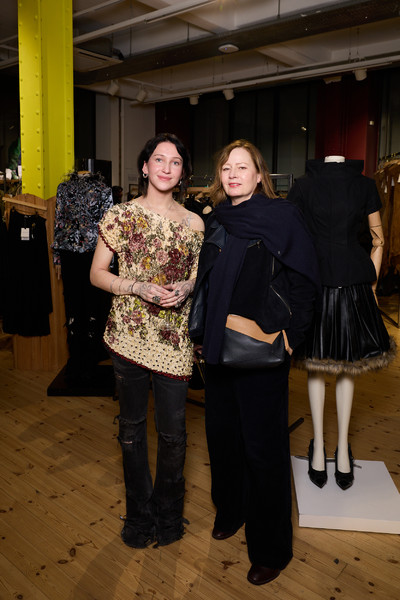
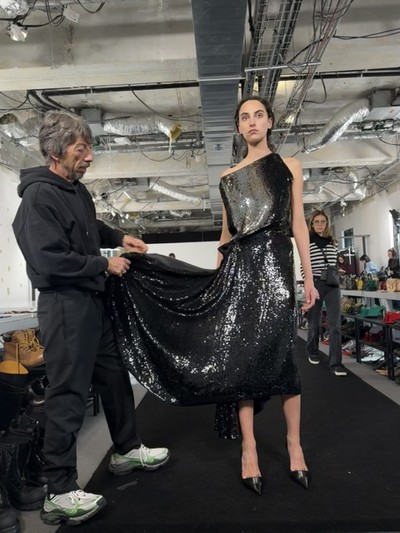
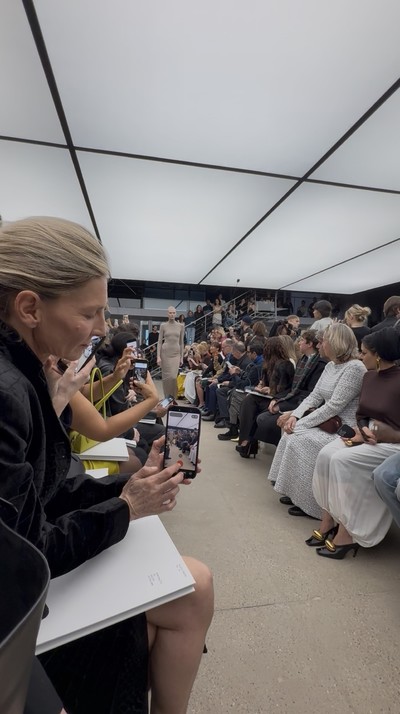
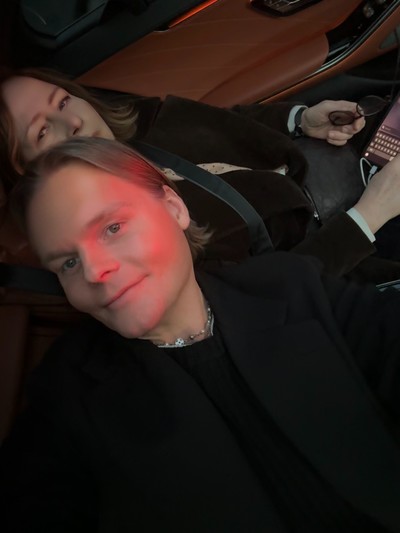
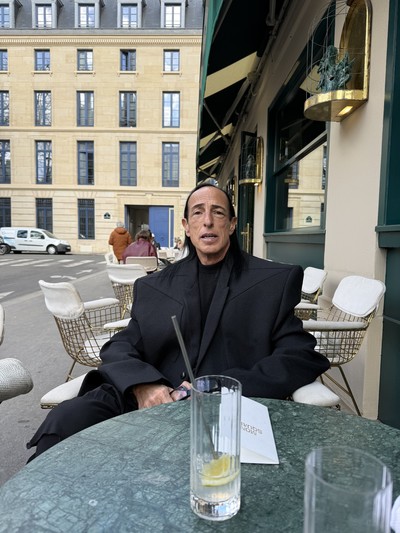
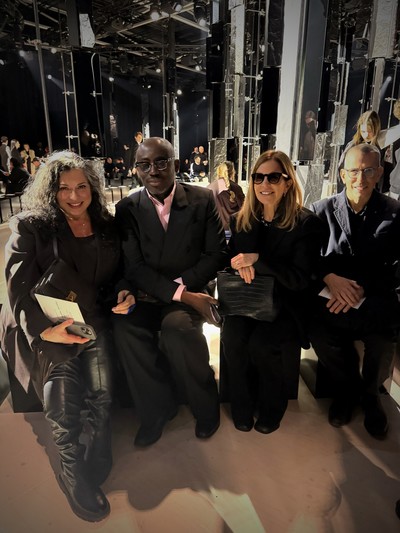
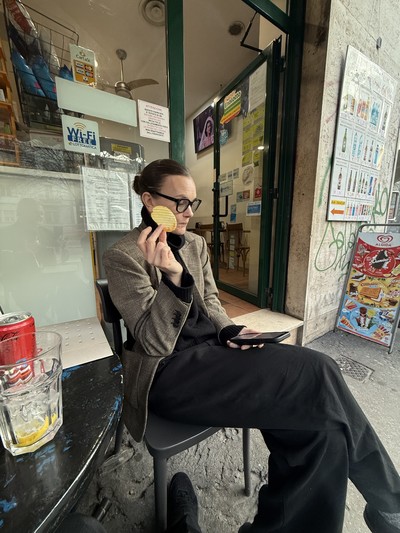
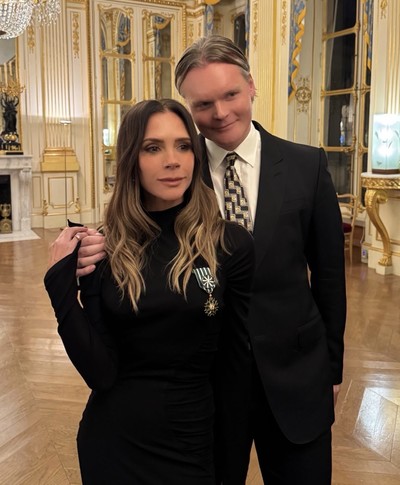
Sarah Mower, chief critic at American Vogue, belongs to a generation of critics for whom fashion journalism has never simply been about reaction but about record: the slow accumulation of thought, context and judgement that allows a season to be understood – both in the moment and years after the fact. Over the course of her tenure at the publication (she won the British Vogue Talent Contest in 1979, which effectively launched her career in fashion journalism) she has shaped a mode of criticism grounded in historical awareness, rigorous attention, and a sustained commitment to emerging talent as well as established voices. Anders Christian Madsen, formerly Mower’s colleague as fashion critic at British Vogue and now at Edward Enniful’s EE72, has developed his own distinct, yet similarly rigorous, approach to writing about fashion, and his critical voice similarly reflects a belief in fashion writing as a considered and enduring practice rather than a purely reactive one.
In the following conversation, the pair reflect on what it means to write seriously about fashion at a time when immediacy is often prized over consideration, and visibility over substance. Their exchange – one that builds on an ongoing dialogue developed over years of professional proximity and friendship – moves from the private rituals of writing criticism to the broader conditions shaping the industry today. They discuss the erosion of the archive, the brutality of public discourse, the narrowing pressures of commerce, and the rare but necessary thrill of encountering something genuinely new.
Sarah Mower: I don’t like speaking, Anders. My whole thing is not speaking. That’s why I’m a writer. I only know what I think when I write it. I think it’s very interesting that people are now doing these walking-and-talking videos, because it’s a whole different skill. I haven’t done it. I feel very shy. I’m an introvert, believe it or not! I have to criticise myself before I say anything.
Anders Christian Madsen: Do you think people realise you’re an introvert who prefers the written word, or do you think they see you as a hard-boiled reporter?
‘I’m always terrified that if I don’t get the first two sentences right, nobody’s going to read my review. That’s probably why I take longer than anybody else!’
Sarah: Is it called resting bitch face?
I used to call it boot face. Maybe mine is a resting boot face. But it’s because I’m thinking. I’m processing. I started being a fashion journalist when I was 26, and suddenly I was catapulted into being a fashion editor of The Guardian. My idea of the job was to be a fly on the wall, so the hardest thing was getting dressed and going to shows in the morning. Very often, I would get downstairs and have to go back upstairs and cry and get myself together and try something else. To be a visible person, to this day, is hard.
Anders: Because it’s not your job?
Sarah: Yes. I’m eyes. I’m ears. I’d rather be invisible.
Anders: You know, I have resting bitch face, too, and I’m not ashamed to say, on the record, that I’ve asked doctors if they could fix it.
Sarah: You want a resting smile face!
Anders: But since we’re being honest, the most frequent thing I probably tell people, as your friend…
Sarah: Is that she’s actually really nice?
Anders: Yes, and that I just got off the phone with her and we were in tears laughing about something one of us had done, which is usually something very self-effacing. I always love hearing about your dreams during the shows, for instance.
Sarah: It started in my style.com days when I was reviewing four shows a night. I would fall asleep in front of my computer after three weeks of running around, and have these stupors in which there was a fashion show taking place around my bed.
Anders: Are you still up all night trying to get the first line of your review right?
Sarah: I’m always terrified that if I don’t get the first two sentences right, nobody is going to read any more. That’s why I probably take longer than anybody else now! But the next day,
I want to know what you’ve written, what Tim [Blanks]’s written, what Vanessa [Friedman]’s written, what Cathy [Horyn]’s written. And they all wait, and we wait for them.
Anders: You’re all worth waiting for. And it’s worth waiting for considered thought. There seems to be this notion now that we should be coming out of a show with these fully developed opinions. I can improvise if I have to, but it’s not going to be the cultivated verdict I’ll put in a review six hours later. I always want to say something to the audience and something to the designer, and those two are not necessarily the same thing. They have to be interwoven, and you shouldn’t do that in the five minutes after coming out of a show.
Sarah: Today, I think it’s very difficult to audit your thoughts. Where do you start a review? There’s so much provided as content which has nothing to do with the clothes or what the designer was thinking. So, are you a social commentator? Are you dropping the names of celebrities and what they’re wearing? That can take up three paragraphs before you get to the clothes! Then there’s what the designers are saying, which we get from the backstage scrums.
Anders: What do you see as your responsibility as a reviewer?
Sarah: I feel that it’s my job to try and interpret what’s happened, and I try to put that in context with what’s going on in the bigger world, how it compares with what that designer has done before, and how that designer fits in – or doesn’t – with what we’ve seen as the season unfolded. I try not to drop names or give obscure references. I think my job is to say something which is intelligible to an intelligent reader. I started in a time when there weren’t online reviews – we were pioneers at style.com – so I think there’s a responsibility to build a history, which also doesn’t just say ‘I thought…’ I never insert myself into my reviews and I never use first person. My test to myself is: if I look back at my reviews, does something I wrote in 2006 make sense now? Will it stand up over time?
Anders: I never appreciated the importance of quality reviews until I started writing books. Researching old show reviews, you realise that most of them start to disappear around the advent of social media, so you don’t have the same documentation to draw from.
Sarah: I’ve curated a couple of exhibitions and have had to go back and research the great fashion journalism that you can retrieve. And there does come a point around 2010 when the reactions stop being retrievable. What’s that doing to documentation? Because that’s what we are: we’re fashion documentarians. As much as something is read in the moment, what you’re doing is documenting an encyclopaedia of what’s happened in fashion. I’m not saying Instagram in itself is bad. What I’m saying is that you can’t search the history of it.
Anders: You realise that no one preserved the captions someone wrote on Instagram, so no one remembers and the documentation disappears. And so, when people say, ‘Reviews are not important anymore,’ I say, on the contrary, they’re even more important in a time when so much documentation isn’t registered. I’m grateful to be working for Edward and Akua Enninful, who believe in giving space to reviews on their new platform [EE72].
‘It’s hard to pinpoint why Celine feels so good. It appeals to a different faculty of excitement than the Vuitton show, which I loved for its pure creativity.’
Sarah: That’s why I’m proud to be a critic for Vogue Runway, because that’s what we do, and what we have done since this millennium started.
Anders: I also think it’s super important to maintain the conduct of criticism that we both practice. On Instagram, people can be pretty brutal in their judgements. But we’re part of an industry – a community – where it’s not necessary to be vicious to people in order to critique their work. I sometimes get DMs from people saying, ‘Why didn’t you go harder on this designer?’ But it would be unconstructive and inconsiderate to put some sort of unfiltered emotional response in writing, both when it comes to designers who have proven their skill and to young ones who are yet to show what they can do. It’s called diplomacy. I think the world needs more of it right now. I don’t want to adopt the Trumpian way of voicing an opinion.
Sarah: The harsh tone also feeds into this bigger picture of creative directors being blamed: hired and fired; that massive, very cruel and brutal rotation of who’s going where? Last season was the biggest change of all and it became, ‘Were the bosses listening to the crowd?’ And were the designers being blamed for companies not being able to follow through in making the clothes and making them sell? Which is the companies’ responsibility. It’s right that everybody has their opinion but when it’s all focused on what a designer did and that it’s their fault, I don’t agree with that.
Anders: I sometimes feel like the tone on social media accelerates to the point that it’s almost as if people want to play an active part in making designers lose their jobs. It becomes this reality show where you can call in and eliminate a contestant if you don’t like them. Why this aggression? I can disagree with something someone designs many times over and still be fine with them being around as long as they have a following. Creativity is the same as emotion. Anyone who participates in the conversation should be sensitive to that. Especially when we deal with young designers, as is your specialty.
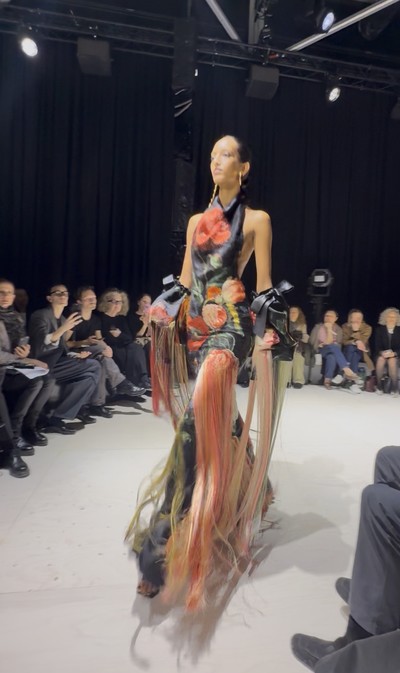
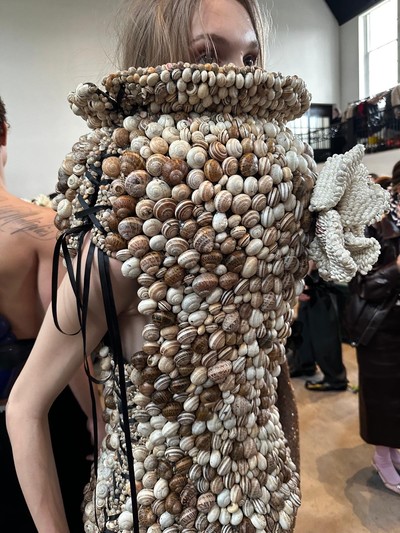
Sarah: I’m always looking for that moment of discovery. I was really happy when I went to Thevxlley’s show. He’s a Spanish designer called Daniel del Valle. I always like to map out what the emerging patterns are. Who the creative people are and how they’re doing it. He’s one of the young ones who has a day job and is pursuing fashion as adjacent to art.
Anders: What’s his day job?
Sarah: He’s a florist. But he’s been making these corset breastplates which are like vases, clothes made out of extraordinary materials. I persuaded the British Fashion Council to give him a slot at London Fashion Week. It was one of those moments where you had to be there. What was yours?
Anders: It was the very last one. Louis Vuitton. It was pure creativity. In a season where everybody was talking about commerciality and pragmatism – a season that felt so affected by corporate expectations – it was this shining platform where one of the finest dressmakers in the world was given total freedom to make exactly what he wanted to make. It was life-affirming.
Sarah: We’re in it for that, aren’t we? Something that makes your whole nervous system just fizz through what you’re seeing. I always know when it’s an amazing show. It’s when you experience that physically.
Anders: I can get increasingly sad as a season progresses if I don’t feel like I’m seeing free creativity. And also, if nobody is talking about current affairs. It’s not that designers have to talk about politics, but I feel as though we’re being passive and afraid to use our platforms. The seasons I remember most fondly, growing up in the industry, were the ones when you could feel that fashion is impacted by – and impacts – what’s going on in the real world.
Sarah: Yes, that it feels important and marks the world that you’re in.
Anders: We are the creative resistance, and I don’t think the answer to troubling times should ever be doing something that feels safe.
Sarah: I am a fashion journalist. I’m not there to say, ‘Oh, what would I like to wear?’ That’s totally irrelevant. To me, the most important thing is the intelligence and life and contemporary forces that are being expressed through the brain of that creative person.
Anders: I get sad when people say, ‘Clothes don’t have to mean something. Can’t it just be a great coat?’ No, it can’t. That’s not psychologically possible, because the idea for that coat was borne of someone’s emotions, which were conjured by what was happening around them.
Sarah: Clothes can’t ever escape our time.
Anders: In the same way anyone who doesn’t believe they engage with fashion is wrong because everybody makes a choice when they buy or put on a piece of clothing, even if they’re contrary. That’s the belief that I went into this industry with and what I hope my writing stands for.
‘When you have big houses with commercial teams and merchandisers, why is it that we can’t put incredible, inspiring collections on the runway?’
Sarah: Treasured creativity should always surprise you. I like it when it’s coming from a place you don’t expect or understand; something you don’t know about. I respect young people who are doing that against all the odds. Especially in a time when the wholesale model has collapsed and it’s so difficult for people to sell things the old way – in stores – and the whole premise of fashion has changed. The buyers used to be guided by the press, and then the whole thing would turn over and designers would get paid to produce the clothes. That chain has become impossible for young people. Yet now they’re finding a way. They’re saying, ‘I’m going to have a day job and then do what I’m really passionate about.’
Anders: That’s just as life-affirming as what Nicolas Ghesquière did.
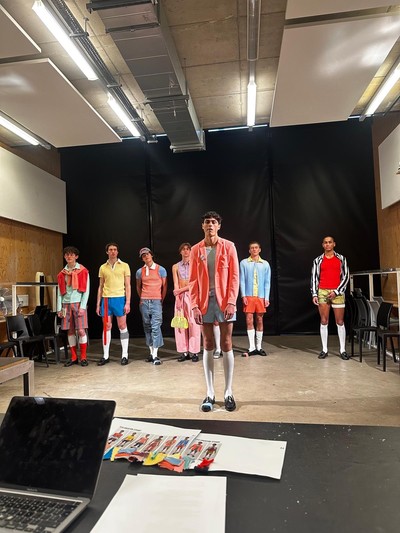
Sarah: In London, there are two young men [Freddy Coomes and Matt Empringham] whose label is called Aletta, who have both worked for Jonathan Anderson. And there’s Harry Pontefract with his Ponte collection, which he built while working for Glenn Martens at Margiela. I respect these young people who have a belief in what they want to say and are making it happen because they have to do it. That’s what I find exciting. And heroic.
Anders: A creative force so great it has to materialise, somehow, somewhere. This is why, on the other end of the spectrum, I was thrilled when John Galliano
announced he was collaborating with Zara. Because it can only ever be a gift to fashion to give John a platform. Whether that’s an haute couture atelier in Paris, or a small workshop in the middle of nowhere, or a giant retailer in Spain, his genius inspires so much joy and meaning. He is magic.
Sarah: That collaboration is part of a bigger pattern. Think about Clare Waight Keller, a designer who always worked for luxury companies, but is now at Uniqlo doing an amazing job. I swear that everybody in the fashion industry is dressed in a lot of Uniqlo next to their luxury fashion. It used to be that designers would do these jobs anonymously on the side, but now you have Kim Jones going to Bosideng and so on. In the bigger picture, luxury fashion has become so inaccessible – so extraordinarily expensive – that it’s created this void for opportunity with high street brands, which are trying to distinguish themselves as the new luxury. H&M started it years ago with their designer collaborations, but now it’s takeover time.
Anders: I also like the notion that, in a time when the big houses are looking more commercial, a brand like Zara is turning the tables and hiring John Galliano. Marta Ortega Pérez is emerging as a real patron of the arts in this season of corporatism and pragmatism.
Sarah: That’s a sign of the times, isn’t it? The fashion industry is facing hard times, so you can understand why big fashion houses would want to put broad, easily understood merchandise out there. They want to sell. That’s a ‘trend’ that’s taking place.
Anders: But when you have big houses with commercial teams and merchandisers, why is it that we can’t put incredible, inspiring collections on the runway? Why does the runway have to show a core selling collection, all of a sudden? Aren’t designers supposed to propose new ideas that brands then put into stores to see if they sell? How would the Saddle Bag ever have been a commercial success if someone hadn’t said, ‘Let’s stick this crazy bag in the store and see if someone buys it!’
Sarah: Yes. Isn’t the idea that you give people something they didn’t know they wanted? At the same time, the commercial idea of targeting ‘a’ woman is also very artificial. That’s why I respect Sarah Burton, who, at Givenchy, says, ‘It’s not ‘a’ woman. It’s women.’ She’s approaching a great variety of women. She can take that high ground of saying, ‘You can identify many different kinds of women in there.’ It’s using your creativity as an emphatic brand, talking about what it means to be a woman today. It’s coherence but it hasn’t been seen as coherence before.
Anders: On a broader level, in society people who don’t engage with fashion the way we do naturally wear more varied things – they dress for needs. That was expressed on the runways this season, too: the gesture of showing many different ideas on the same runway. We saw that at Dior Couture and Chanel. The ‘new’ designers are less preoccupied with presenting a single story. They’re happy to experiment with freer proposals.
‘I like the notion that, in a time when the big houses are looking more commercial, a brand like Zara is turning the tables and hiring John Galliano.’
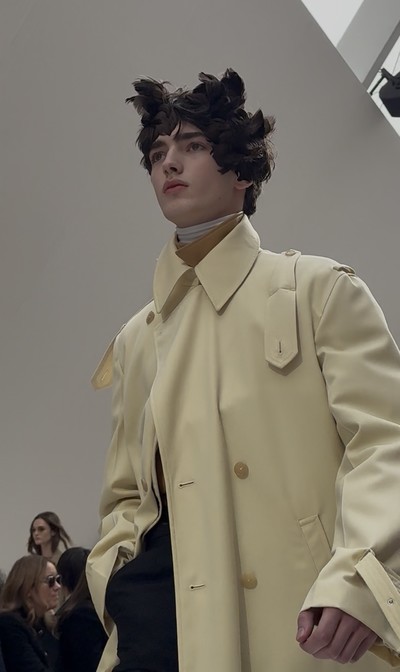
Sarah: I think that’s changing already, though. We saw that with Jonathan Anderson’s ready-to-wear collection for Dior, which was really superb. That was really exciting, that day in the greenhouse.
Anders: It’s interesting to see the shift in his approach. Between Loewe and Dior, his language has the same properties, but where it used to be very conceptual at Loewe, it’s transformed into something very romantic at Dior.
Sarah: Jonathan is an excellent merchandiser. That’s how he made Loewe such a success, creating conversations with women who lived in the sphere of art. He’s very connected to the layers of what goes into the shop. He’s super-charged on that.
Anders: On that shopping note, do you still look at ‘trends’ when you review?
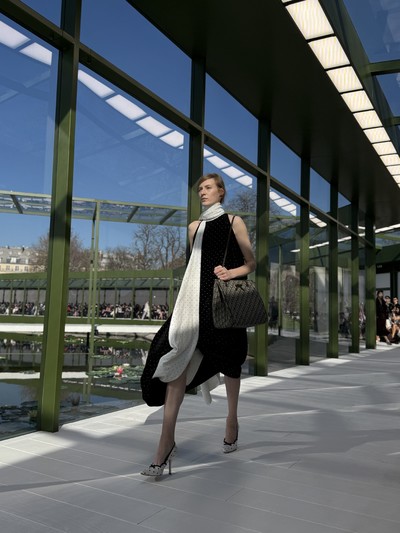
Sarah: Fashion writing and reporting is much more segmented now, but there’s that very old tradition of fashion journalists sort of dictating to their readers what they ought to wear. The hemlines and the colours of the season… I can’t do that because I don’t see fashion shows as being about that. But you can see shifts. At Celine, you could see that Michael Rider was cutting things neatly to the torso and that the cuts were precise. You could see that the oversized-ness of 2013 is no longer predominant. He’s very concisely saying that it’s kind of a watershed. That’s why
I thought that show was very important.
Anders: It’s hard to pinpoint why Celine feels so good. It appeals to a different faculty of excitement in my brain than the Louis Vuitton show, which I loved because of its pure creativity. With Celine, I think it’s pure desire. You look at it and you want to wear it, which is rare for people like you and me who are set in what we wear. I’m guessing Michael Rider designs in pieces,
because every piece is perfected in fit and it’s interesting. It’s brilliant, inspired design with a fairly firm foot in reality. It feels incredibly confident. You and I had such a nice walk after that show.
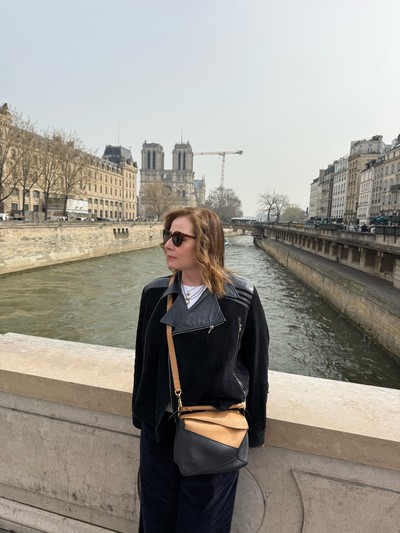
Sarah: To the Notre-Dame!
Anders: It was much needed. That first half of Paris is so intense for reviewers.
I probably call you eight times a day when it gets like that. Often not sure why I’m calling!
Sarah: It’s usually for a laugh.
Anders: And maybe to process what we’re going through, because reviewing shows is also about industry conversation. I love it if I can get a few minutes in with you or Jo Ellison or Elizabeth von [Guttman] after a show. It creates an informed opinion, especially if we all have different ones.
Sarah: People assume there’s this vicious competitiveness, but there isn’t. All my female journalist friends are mothers. We’ve all got stuff going on in our lives. And people are actually very kind.
Anders: What do you think would make Fashion Week better?
Sarah: Intimacy. I was thinking only yesterday about Alber Elbaz. When he started at Lanvin, he used to take out a room at the Hôtel de Crillon and have sessions of 30 people. He’d be there and he’d call girls on and talk about the collection. I absolutely loved that. He would talk about food and life and the women who made his clothes. That’s what I miss: the human contact with designers which I really, really treasure. The backstage rugby scrum is terrible, both for us and for the designers who haven’t slept for weeks and are being expected to perform.
Anders: I just miss storytelling. When we made it to Rick Owens, I was so happy. It’s not just that he’s political – designers don’t need to be activists per se – but he talks about the time we’re living in. He started out talking about Marlene Dietrich and within two minutes, he’d mirrored her entire life in current affairs. It means so much because you can relate to it, and you can see what he meant by those garments. He imbues everything with soul and that’s all I want.
Sarah: What I will say is that if a show is amazing you feel electricity amongst all of us. You just know. Suzy Menkes has always been really hot on that. She’s always said, ‘Are you feeling this?’ As long as the designer is being true to themselves, I like it. I like being scared, I like not knowing what they’re talking about, I like being on edge. That is what I’m in it for, really. It’s not to know how I’m going to dress.
Anders: I just want to feel something. And the occasional drink in Le Meurice.