Interview by Olya Kuryshchuk
‘Unless you’re extremely fashion-savvy and spend a lot of time online, you probably don’t know or care who the creative director is. A lot of our clients at Mytheresa are simply loyal to their favourite brands.’
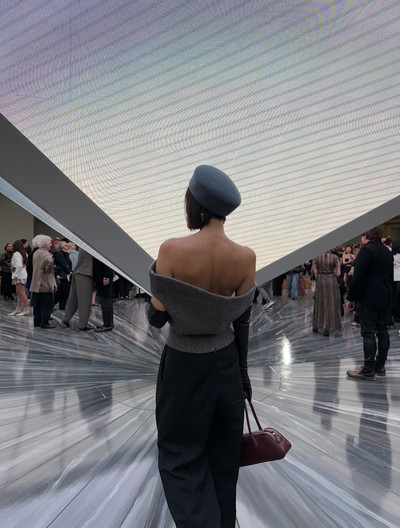

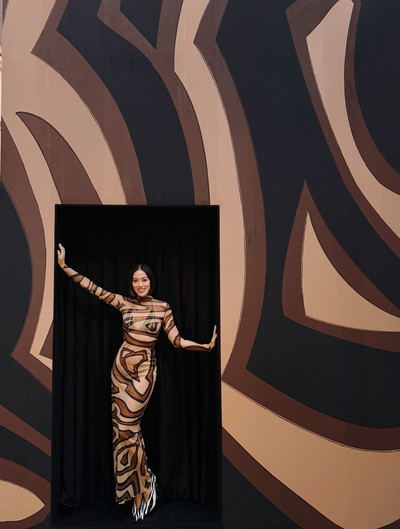
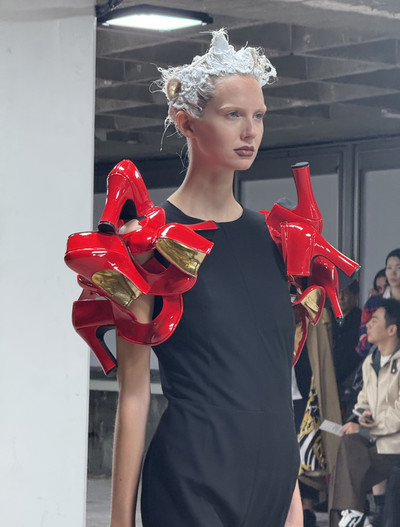
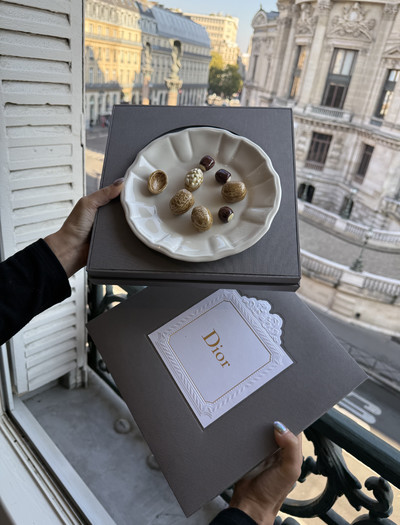

It’s been a difficult few years for e-comm, with online retail giants collapsing in a series of painful, brand-breaking bankruptcies. Yet online retailer Mytheresa has weathered the storm – seemingly without a hitch. Founded in Munich by Susanne and Christoph Botschen as ‘Theresa’ in 1987, and rebranded ‘Mytheresa’ as a digital venture in 2006, the e-commerce giant has consistently expanded year-on-year, offering almost everything you could possibly want from a luxury retailer. Their success gave them the opportunity to acquire YOOX Net-A-Porter (YNAP) just months after Matches filed for bankruptcy in March 2024 and the e-comm house of cards looked set to collapse.
So what exactly has Mytheresa got that Matches, YNAP, and now most recently SSENSE, did not? Perhaps it’s Tiffany Hsu, the Taiwanese Central Saint Martins and Istituto Marangoni graduate who has steered Mytheresa’s offering since her appointment as Fashion Buying Director in October 2017. Today, Hsu’s title is Chief Buying & Group Fashion Venture Officer and her role consists of overseeing all buying departments, while developing capsule collections, exclusive products and special collaborations with brands like Versace, Simone Rocha and Moncler, to name but a few. In an e-comm landscape that looks no less bleak, Hsu has been able to refine the retailer’s offering, matching data analysis and monitored feedback as well as level-headed economic and cultural observation to her clients’ needs, resulting in a Mytheresa that appears stronger than ever. A couple of weeks after the Spring/Summer 2026 shows, Hsu sat down with Olya Kuryshchuk, founder of 1 Granary, to discuss the collections, the climate and how creative director changes actually affect the retail landscape at large.
Olya Kuryshchuk: ‘Fashion reset’ is the phrase we kept hearing for the whole month. But from where you’re sitting, has that reset actually happened?
Tiffany Hsu: To be honest, the ‘fashion reset’ has been mentioned since Covid. There was a lot of talk, and brands used it as a buzzword. But nothing much has really changed. Of course, consumer behaviour and shopping habits have shifted slightly. We saw the rise of quiet luxury – people want less branded stuff but still good quality, timeless products. For me that’s merely a trend rather than a reset of the industry. It’s still an industry based on consumer culture; it’s just a different way to encourage people to shop and buy more. So in the bluntest way, I don’t see a massive change in what the industry represents.
There were so many creative director reboots. You don’t carry Dior or Chanel, but pretty much every other brand that has welcomed a new creative director is on your platform. What does that change for Mytheresa?
Every rebrand is a positive opportunity for us. Whether or not it’s more profitable than the brand under the previous creative director is yet to be seen, because business is also related to marketing, merchandising, product availability, logistics and what each creative director brings. Some were more obvious in their takeover; others stuck to house codes. It’s always positive because it brings renewed attention. There’s a lot we can do as a business to use that momentum to push the brand forward. Maybe some labels had gone a little stagnant, and now audiences rediscover them and think, ‘This resonates with me again.’ It opens new doors and business opportunities. But in the long run, depending on the product range and many other factors, we’ll see if the collection works or not.
‘Every rebrand is a positive opportunity for us. Whether or not it’s more profitable than the brand under the previous creative director is yet to be seen.’
Do you track brand metrics on Mytheresa, such as spikes in traffic or client conversations? Many people say the majority of clients never even know who the creative director is.
Yes, that can be the case. Sometimes it doesn’t even make a difference if the product range is right. If the price structure and product timing are on point, that’s what matters most for the business. And unless you’re fashion-savvy and spend a lot of time online, you probably don’t know or care who the creative director is. A lot of our clients are simply loyal to the brand.
I also checked Mytheresa’s Versace page, and there’s a huge difference in the offering right now to what was on the runway.
Yes, that’s the old-school Versace. Dario [Vitale]’s Versace, though, is a complete 360 change, which I really loved. When things like this happen, you might lose some old customers but gain new ones. We’re all for that kind of shift. But of course, the brand needs to understand what drives its business and how the new creative director brings their own perspective to it. That’s the most important part: understanding what’s needed for the house, not just changing the aesthetic but knowing what drives the business, how to grow it, and how to translate that into product.
It felt modern, the right fit for what’s happening in the world at the moment.
One hundred percent. You’re not trying to go beyond what people can accept. It’s just the right amount of new, retelling the old story in a way that makes you desire the brand and the product again. The brand was quite quiet for a while during the interim, with no one there.
Do you check how people react – on social media, editors, customers?
I do, yes.
Did anything surprise you?
I actually did a few posts on my own social media, ‘Do you love it or hate it?’ Nothing surprised me, really. Versace was definitely split; a lot of people were divided. But most people who were at the show loved it, because sometimes things don’t translate if you don’t see them in person. When you do, you often have a different opinion. I check and read reviews but I don’t take them to heart, because as buyers we look at product with a completely different mindset. Reviews and initial thoughts are very short-lived. It can be a 10-second video that shapes an opinion. People are quick to judge, especially on social media. When we look at a collection, we dive deep, we review the full range, delivery timing, how it’s launched, the story it tells. We spend time digesting it. So I don’t tend to follow public opinion. You might not like something now, but if Hailey Bieber wears it in two months, everyone suddenly loves it. We take that with a pinch of salt, it’s never a guide to how we invest.
I ask because with so much data and AI now integrated into everything, I’m curious to know how much you rely on that? All the feedback, likes, reactions. And how much comes down to instinct and personal intuition?
It’s a balance. The data we use most is internal: what’s been trending, what’s worked, what hasn’t. Often it’s price dependent or about delivery timing, or the right product category dropping at the right time. That’s our main priority when constructing a buy. I always say taste and instinct can’t be taught, you either have it or you don’t. Everyone can be on the same social platform, but what each of us takes from that information is different. Instinct is vital for a buyer, as is taste. Understanding how to translate the creative director’s vision into a collection and building an assortment that tells the same story while meeting the client’s needs and revenue goals.
‘Smaller brands aren’t weighed down by 200 retail stores or logo obligations; they can create freely. And without that freedom, the industry stagnates.’
If we think back a few years, can you name the most successful handover, and what they did right?
Daniel [Lee]’s Bottega was incredibly successful, as was Matthieu [Blazy]’s. I think Louise [Trotter]’s Bottega will be too. Daniel’s change was the most obvious, a complete 360 that worked instantly. And of course, Demna taking over Balenciaga was like, ‘What is this?’ The reaction was instant and it changed how people dressed overnight. Those were pivotal moments. Big, unexpected changes with overwhelmingly positive reactions that reshaped trends for years. Jonathan’s Loewe was also hugely successful, but that took time, turning a leather goods house into a trend-leading fashion brand. He built it patiently, sharing his ideology of who his woman is. All of those were defining transitions where the business shifted dramatically afterwards.
With Demna, when I saw Dakota Johnson a week before the show wearing that black lace outfit on the red carpet, it already felt like the new Gucci. I thought, ‘Oh my God, it’ll be great.’
I’m a big Demna fan, so I was very happy. I thought the choice was great. Some appointments aren’t what you expect, but this one was. He’ll bring something very interesting. His ideology of high fashion is unique and he’s brilliant at branding and marketing. I’m excited for next January when we’ll see what comes next.
I agree. Most of the appointments were quite smart: Grace [Wales Bonner], Demna, and I love Alaïa. It’s an exciting time for design. What I’m interested in, because there’s so much talk now around the luxury market struggling, wholesale models collapsing, is that you’re one of the few e-comm giants doing well. Do you think your customers’ definition of luxury has shifted? What are they looking for now compared to before the pandemic?
Their vision of luxury hasn’t changed, they’re still buying expensive designer goods. But aesthetics have shifted. It’s less about fully-branded Prada and more about quieter pieces, very high quality, timeless, not trend-driven. People still chase trends, but there are now more microtrends alongside evergreen items like those from The Row or Khaite, which clients return to because they’re beautifully made. Post-pandemic, this kind of product has had its moment and remains popular with top clients. Before that, logomania dominated. It was about showing what you had. Suddenly people didn’t want that anymore; they wanted sophistication and subtlety. Still, they look to top-tier designers for those things. People have also become savvier about price. They’re more conscious of perceived value. Designer prices have risen sharply since the pandemic, so brands have to position themselves carefully. You can’t just raise prices infinitely, you’ll lose aspirational customers. Only a tiny percentage have unlimited budgets.
‘Brands can’t just keep raising prices infinitely, they’ll lose aspirational customers. Only a tiny percentage have unlimited budgets.’
Is quiet luxury still relevant? When I saw Versace, I thought maybe it’s finally over and we’re moving on to something else.
It’s not over, but it’s not the only trend either. People still want drama. We still sell statement pieces; people still crave visibility. But the quieter part is for wardrobe items. You can’t always be the Saint Laurent girl, sometimes you need something less hi-vis. When we buy for clients we think about lifestyle, not just brand loyalty or trends. Each brand serves a different purpose at a different time. No single brand dresses the same person all year round. Of course, some clients only wear The Row, that exists, but just because everyone talks about quiet luxury doesn’t mean the client who buys The Row doesn’t also buy Saint Laurent or a sparkly evening gown. They buy all three for different needs.
I think today is the day of The Row’s sample sale. I saw videos of people queuing from 2am in New York. There are even professional queue holders with tents.
Those pieces don’t go out of fashion; they’re beautifully made and can be worn for the next 10 years.
If you go to any industry sample sale, there are so many resellers. How do reselling and vintage platforms affect your business?
They don’t affect us. In fact, we actually work with Vestiaire as partners. We don’t give them our goods, but our clients can sell their old luxury items there and get a Mytheresa voucher in return. It’s great for the planet and closes the loop of luxury fashion. Not everyone can buy new luxury pieces so this gives younger, aspirational clients access. It’s healthy for the business. I’d hate to see things go to waste. If I have a handbag I don’t want, I’d rather someone else own it than see it thrown away. Sometimes I go on Vestiaire to look for old John Galliano pieces. It’s also great for archiving – preserving great designs and moments in fashion history so they don’t disappear.
I want to drill a bit more into your customer. Do they often say they love something but then buy differently?
For sure, that happens. We don’t track it specifically, but it happens. Clients might see a look at a re-see or a show and love it, then when it delivers they’re no longer interested. It happens to everyone, even me. I’ll buy something and six months later wonder why. You get caught up in a moment. It’s not something we track, and it’s impossible to quantify taste. Some of our personal shoppers probably know their clients better than data ever could. Women change their minds; we have a saying in Chinese: ‘Women change faces like flipping a book.’
**At the moment, and maybe it’s my algorithm, I only see two things happening in the world: politics and fashion. There’s so much news, constant spectacle, collaborations, relaunches.
Do your customers feel excited or fatigued by that?
It’s a lot. As we said earlier, many clients aren’t even aware of how much happens. Some spend time on social media, but many are time-poor with demanding jobs, which is where our service comes in – we find the best things for them. Personally, I do feel some fatigue. After fashion week you don’t want to open Instagram for a while; it’s too much to absorb. But for clients, fashion online is a spectacle, a dream. They think about what to wear for parties or holidays. It’s nice to keep the storytelling constant, but information fades quickly. The new pushes out the old because there’s simply too much. That’s the cycle the industry is stuck in. People sometimes talk about slowing down, but we’re always chasing the next sale, the next moment, so it repeats. I’m sure some customers feel overwhelmed, unsure what to wear or who they are in all of it. Luckily, our personal shopping team helps them edit, advising what’s good for next season and what they really need. We don’t educate our clients, but we make sure the right pieces are available when they want them.
Do you ever share this information with the brands you work with, so they can plan alongside you?
Yes we do, especially with brands we collaborate with closely. Mytheresa is well known for its exclusives and capsules, and those projects often start six to 12 months in advance. We share a lot of our feedback and range plans from delivery timelines and colourways to silhouettes and hemlines. For these projects to work, we need to fully understand both our business and the brand’s DNA. History and customer behaviour play a big part. We analyse when clients shop certain products, what worked, what didn’t, and how we can tweak it to make each launch stronger.
Has any brand exceeded expectations?
We had these blue Versace pieces, many of which were Mytheresa exclusives. They performed incredibly well. And every year we do a major Dolce & Gabbana capsule; it’s almost become ‘the Mytheresa collection by Dolce & Gabbana’. But these capsules complement rather than compete; they offer a different function, story and palette.
‘These days, everyone wants to be a designer, but if you can’t produce quality or deliver on time, you shouldn’t be in business. Be an artist instead.’
If you could change one particular thing about how e-commerce operates today, what would it be?
Unlike many businesses, we’re very focused on our brands. We work with fewer of them because our buying philosophy is not to bring on labels unless there’s room for growth. Our goal is to grow them within our business. I think that’s a responsibility retailers should take seriously, especially with smaller designers. I’m known for not picking up small brands too quickly. When we do, we make sure they can scale sustainably. If it’s not sustainable for the designer, it’s not a healthy business relationship.
What does this season tell you about where fashion and Mytheresa are heading next?
Fashion moves in cycles. For too long, people chased growth without thinking about what happens after. Like climbing a mountain, the other side is downhill. The key to longevity is understanding customers: their needs, values and lifestyles. These evolve constantly. For instance, Gen Z now spends more on experiences than on products, but even then, they’ll need something to wear. How do you tap into that? Some creative directors struggle to move brands forward because they don’t adapt to those shifts. The successful brands are the ones who actually listen, adapt and evolve. Fashion is far more complex than it used to be. Two decades ago luxury was for a small, elite group. Now everyone knows the brands, the bags, the codes, people outside the industry. And so it’s much harder to stay relevant. Brands can no longer just make a bag and slap a logo on it. They need to build genuine meaning and storytelling around it. Relevance is fragile; it can vanish within a season.
Is there still space for independent, smaller brands, or have we moved into an era of giants?
No, we absolutely need small brands. They are what helps keep the industry interesting. They take creative risks that may not be mainstream today but could define the future. John Galliano and Alexander McQueen obviously started small. Demna showed his first collection in an underground club. Without those beginnings, fashion wouldn’t move forward. Smaller brands aren’t weighed down by 200 retail stores or logo obligations; they can create freely. Without that creative freedom, the industry stagnates.
Expectations on quality and deliveries are so extreme now.
It’s harder today, especially with so many retailers gone. But new ones will emerge. Fashion is still growing, it’s just crowded. Everyone wants to be a designer, but if you can’t produce quality or deliver on time, you shouldn’t be in business. Be an artist if you don’t want the constraints of commerce. Young brands are essential, though. I wish I could support more of them. Fashion has become expensive, which makes it harder for small designers to enter. The key for them is to know their market and their client. Too many say, ‘I want to be the next Phoebe,’ or ‘the next The Row’. But Phoebe and The Row already exist. Who are you? If you don’t have a clear point of difference, why would anyone come to see your collection?